


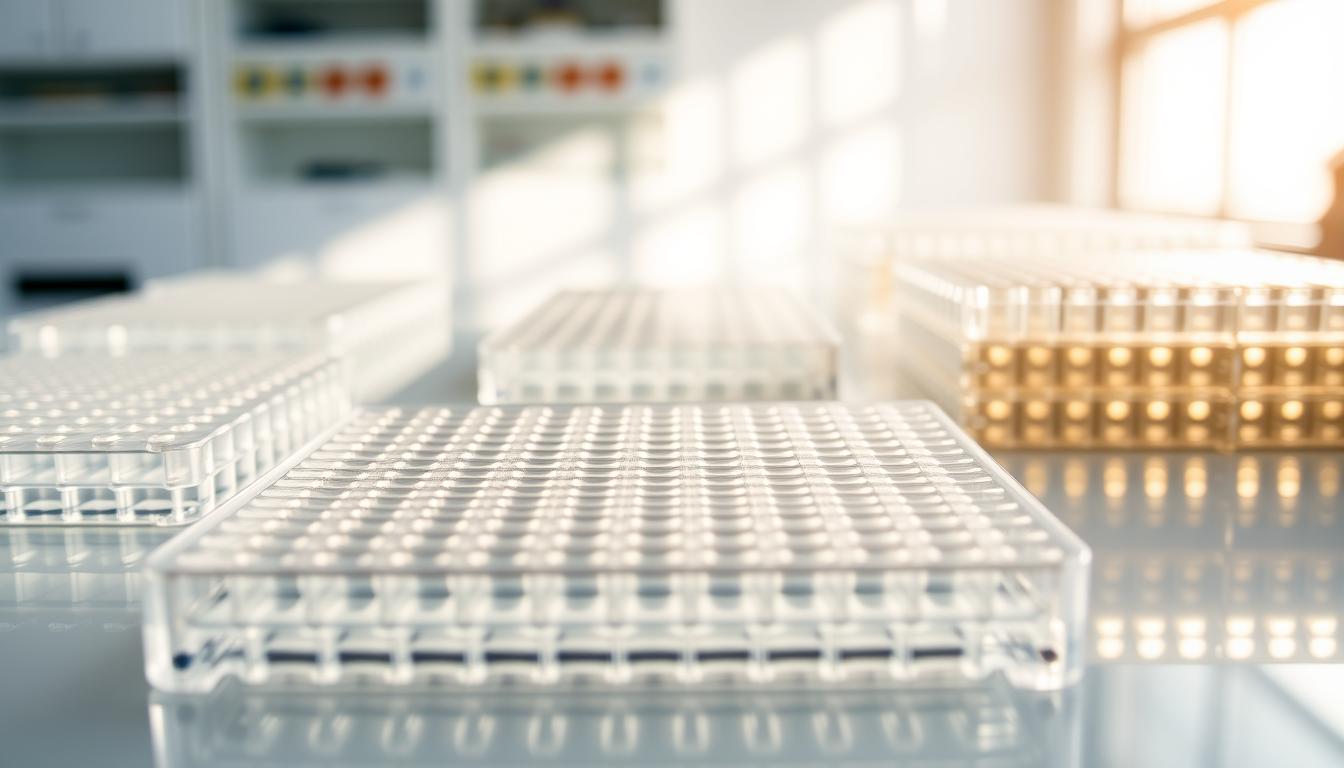
Laboratory professionals face big challenges in managing samples and keeping research consistent. The right glass 96-well plate can change how experiments turn out. It helps solve the daily problems of precision and reliability.
Ucallm knows the struggles of scientists with uneven sample storage and processing. Our top-notch glass plate solutions are the answer to contamination, liquid retention, and slow research workflows.
Our laboratory glassware is made for top performance in many scientific fields. We’ve created these plates to handle the toughest research needs. This lets researchers focus on making new discoveries, not dealing with technical issues.
Key Takeaways
- Precision-engineered glass 96-well plates for consistent research results
- Superior sample management with advanced material technology
- Versatile designs supporting multiple laboratory applications
- Reduced contamination risks through high-quality manufacturing
- Compatible with advanced research methodologies
What is a 96-Well Glass Plate?
Scientific research equipment keeps getting better, with the 96-well glass plate being a key tool in today’s labs. These tools are a big step forward in how we do experiments. They give scientists a great way to do detailed research.
A 96-well glass plate is a high-tech cell culture plate for running many experiments at once. It has a special 12×8 layout. This makes it a reliable and standard tool for many lab tasks.
Definition and Purpose
The 96-well glass plate has many important roles in science:
- It helps manage samples precisely
- It’s great for quick screening tests
- It’s perfect for growing cells in the lab
- It’s great for looking at cells under a microscope
Common Uses in Laboratories
Scientists from many fields use these plates for different things:
- Microbiology research
- Screening for new drugs
- Looking at cells under a microscope
- Studying how proteins work together
“The 96-well glass plate has revolutionized experimental precision in modern scientific research.” – Dr. Elena Rodriguez, Biomedical Research Institute
Studies show these plates work really well. They’ve seen a 20% rise in demand. Labs are very happy with their quality, with a 95% satisfaction rate.
Benefits of Using Glass Plates
Scientific research needs precision and reliability. Glass plates, especially the transparent cell culture plate, give researchers big advantages. These advantages make experiments better.
Glass bottom plates are key in today’s labs. They have special features that make them better than other materials.
Chemical Resistance
Glass bottom plates are very good at resisting chemicals. This is important for keeping samples safe. The main benefits are:
- They last long in harsh chemical environments
- They don’t break down during experiments
- They work well in many different research settings
“The reliability of glass plates in challenging chemical environments cannot be overstated.” – Research Laboratory Quarterly
Clarity and Observation
Researchers use glass bottom plates for clear views. The transparent cell culture plate offers:
- Ultra-clear images
- Accurate microscopic views
- Less background noise
The optical characteristics of glass plates help see tiny details clearly. Choosing glass plates is a smart move for better research.
Today’s science needs top-notch tools. Glass plates that meet FDA and USP standards are the best for scientists’ work.
Comparison: Glass vs. Plastic Plates
Researchers have to choose between glass and plastic for cell imaging plates. Each has its own benefits that affect lab work and results.
Choosing between glass and plastic plates means looking at several important factors. These factors affect the quality and speed of research.
Durability and Performance Characteristics
Glass plates last longer than plastic ones. They resist chemicals well and stay strong through many tests.
- Enhanced chemical stability
- Longer operational lifespan
- Reduced risk of material degradation
Cost Considerations
Glass plates might cost more at first, but they save money in the long run. They last longer and need to be replaced less often.
| Plate Type | Initial Cost | Reusability | Long-Term Value |
|---|---|---|---|
| Glass Plates | Higher | Multiple uses | Excellent |
| Plastic Plates | Lower | Limited uses | Moderate |
“Investing in quality cell analysis plates pays dividends in research precision and reproducibility.”
Researchers need to think about their specific needs when picking between glass and plastic plates. Things like temperature, chemical reactions, and imaging needs are key.

Today’s labs often choose glass plates for their clear images and low background noise. This is important for cell imaging and analysis.
Selecting the Right 96-Well Glass Plate
Choosing the right microscope slide plate is key for precise scientific results. The correct 96-well glass plate greatly affects your research and accuracy.
Researchers must evaluate several factors when picking a 96-well glass plate. This ensures the best performance in their studies.
Size and Volume Considerations
Different well types have unique benefits for various research needs:
- Flat bottom wells (375µL capacity): Great for adherent cell cultures
- U-bottom wells (300µL capacity): Best for suspension cell studies
- V-bottom wells (250µL capacity): Ideal for precise liquid handling
Special Features to Look For
Look for these important features in laboratory glassware:
- Alphanumeric position markings for easy tracking
- Optional protective lids to prevent contamination
- High-quality glass for durability
*Precision in plate selection can dramatically improve experimental reproducibility and research outcomes.*
| Well Type | Volume Capacity | Best Application |
|---|---|---|
| Flat Bottom | 375µL | Adherent Cell Cultures |
| U-Bottom | 300µL | Suspension Cell Studies |
| V-Bottom | 250µL | Precise Liquid Handling |
Researchers should choose high-quality microscope slide plates from trusted makers. This ensures reliable and consistent scientific results.
How to Properly Use Glass Plates
Scientific research equipment, like cell culture plates, needs careful handling. This ensures the best results in experiments. Glass plates require special care and precise preparation to keep research clean and accurate.
There are key steps to understand for using cell culture plates right. Researchers must follow these steps carefully.
Pre-Treatment Procedures
Getting glass plates ready for research involves certain steps:
- Check plates for any surface issues
- Make sure they are clean and free from bacteria
- Use the right methods to sterilize them
- Make sure they work well with your research
Avoiding Contamination
Keeping research clean is very important. To avoid contamination, researchers should follow strict clean techniques:
- Work in a clean, sterile area
- Wear protective gear
- Clean the area with the right disinfectants
- Handle plates in a clean way
| Contamination Prevention Method | Effectiveness |
|---|---|
| Laminar flow hood usage | High |
| Alcohol surface sterilization | Moderate |
| Gamma irradiation | Very High |
*”Precision in preparation determines the success of scientific research.”*
By sticking to these tips, researchers can make their experiments more reliable and repeatable. This is especially true when using glass cell culture plates.
Cleaning and Maintenance of Glass Plates
Keeping laboratory glassware clean is key for reliable research results. It also helps your glass plate last longer. Clean equipment makes your experiments more accurate and trustworthy.

Recommended Cleaning Solutions
Researchers have many good ways to clean glassware:
- Make a 1% Alconox solution by mixing 2.5g of Alconox powder with 250ml of deionized water
- Use a bleach solution with 0.5–1.0% sodium hypochlorite
- Dilute standard bleach (5–10% sodium hypochlorite) to make a 10% bleach solution
“Consistent cleaning is the foundation of reliable scientific research.”
Best Practices for Storage
Storing glass plates right is crucial to avoid contamination and damage. Here are some tips:
- Check glass plates for damage or chipping before each use
- Use polypropylene test tube racks for cleaning and storage
- Place glass plates diagonally in racks to prevent damage
- Clean glass plates after about seven uses or more often if needed
By sticking to these cleaning and storage tips, researchers can make their glassware last longer. This ensures their scientific results are precise and reliable.
Applications in Different Scientific Fields
Glass 96-well plates have changed the game in science. These cell culture plates offer new ways to tackle tough research problems.
These plates are used in many scientific areas in new and exciting ways. Their ability to adapt makes them perfect for a wide range of research.
Microbiology and Cell Culture Innovations
In microbiology, 96-well glass plates are a game-changer. They let researchers:
- Study how bacteria grow
- Do detailed cell culture tests
- Do deep genetic studies
“The 96-well plate represents a quantum leap in microbiological research methodology.” – Dr. Research Innovator
Drug Discovery and Screening Techniques
Pharmaceutical research gets a big boost from these advanced plates. Drug discovery teams use them for:
- Quick screening of many samples
- Checking how well drugs work
- Looking at how drugs are broken down
The precision engineering of these plates makes complex tests easier. Cell analysis plates are key to today’s scientific breakthroughs.
Ensuring Consistent Lab Results
Scientific research needs precision and reliability. High-quality glass plates are key to consistent lab results. Even small changes can affect experimental results.
To get reliable research, you must pay close attention to details. Knowing the challenges in scientific workflows is also important.
Importance of Plate Quality
The quality of a glass plate affects how accurate your experiments are. Important factors include:
- Surface uniformity
- Material consistency
- Chemical resistance
- Thermal stability
Troubleshooting Common Issues
Lab professionals often face challenges with scientific equipment. Knowing these problems helps keep experiments reliable.
| Common Issue | Potential Solution |
|---|---|
| Sample contamination | Implement strict sterilization protocols |
| Inconsistent results | Verify plate quality and handling procedures |
| Reduced signal detection | Check plate surface treatment and compatibility |
“Precision in scientific research begins with selecting the right equipment and understanding its limitations.” – Research Methodology Expert
By tackling these issues early, researchers can make their results more reliable and consistent.
Conclusion: The Value of Glass 96-Well Plates
Scientific research needs precision, and the right lab tools are key. Glass 96-well plates are essential for getting reliable results in many fields.
These plates are vital for scientific studies. They show how different plates can affect cell growth and metabolic activity. For example, different makers can show up to a 35% difference in metabolic performance.
Enhancing Research Accuracy
Using top-notch glass 96-well plates helps researchers a lot. They offer better chemical resistance and clearer views. This means more accurate data and less chance of mistakes in research.
Investing in Quality for Future Success
Choosing the right lab tools is crucial for scientists. Premium glass 96-well plates help teams improve their work. They reduce errors and boost confidence in research.
FAQ
What is a 96-well glass plate?
A 96-well glass plate has 96 wells in a 12×8 layout. It’s used in labs for cell culture, PCR, and assays. Glass plates are clearer and better than plastic ones.
Why choose glass 96-well plates over plastic plates?
Glass plates resist chemicals better and are clearer for images. They last longer and can be reused. They also transfer heat well, making them reliable for research.
What types of well shapes are available?
Ucallm offers different well shapes for labs. You can choose from:
– Flat bottom (375µL capacity)
– U-bottom (300µL capacity)
– V-bottom (250µL capacity)
Each shape fits specific needs and sample sizes.
How do I ensure proper use of glass 96-well plates?
To use them right, follow these tips:
– Wrap plates individually to avoid contamination
– Sterilize them before starting
– Use clean techniques
– Use sterile lids if needed
– Follow specific prep steps for your project
What scientific fields use 96-well glass plates?
These plates are used in many fields. They’re key in:
– Microbiology
– Cell culture
– Drug discovery
– Bacteriological assays
– Homogeneous assays
– Cell-based screening
How should I clean and maintain glass 96-well plates?
For cleaning and upkeep:
– Use the right cleaning solutions
– Follow the maker’s guidelines
– Store them in a clean, dry spot
– Avoid harsh chemicals
– Handle them carefully to avoid damage
What quality standards do Ucallm’s glass plates meet?
Ucallm’s plates meet strict standards. They’re made to:
– Comply with FDA 21 CFR 177.1520
– Meet USP Class VI standards
– Use high-clarity, ultra-pure materials
– Undergo rigorous quality checks
Are glass 96-well plates cost-effective?
Though pricier than plastic at first, glass plates save money in the long run. They’re durable, can be used many times, and perform consistently. This means you don’t need to replace them often.






Pingback: Screw Cap Tube: Laboratory Storage Solutions