


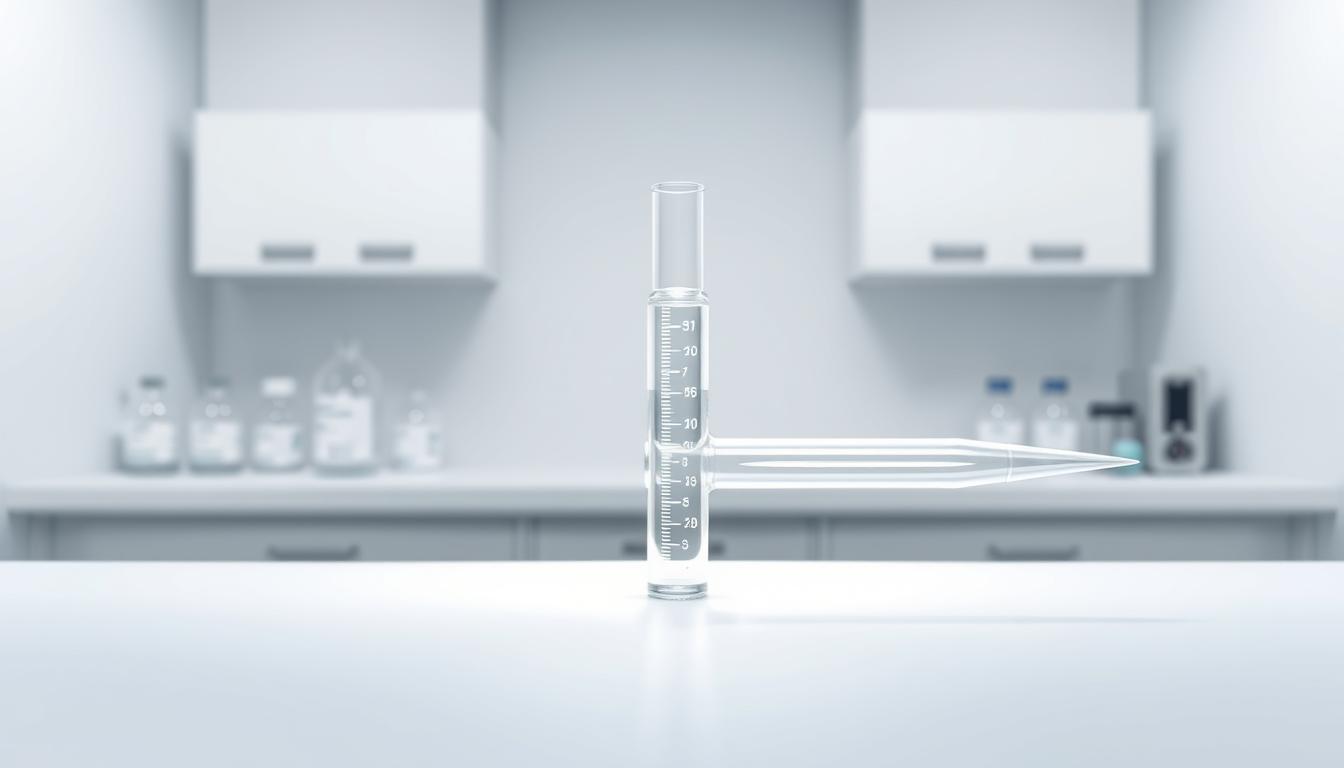
Ever wondered how scientists get so precise with tiny liquid amounts in labs? It’s all about the serological pipettes and their amazing volume range.
Serological pipettes are key in science labs. They help researchers move liquids with great accuracy. These tools can handle volumes from 0.1 ml to 25 ml, which is vital for detailed experiments.
Knowing the serological pipette’s volume range is key for reliable science results. These tools are crucial for precise measurements in fields like microbiology and pharmaceutical research.
Key Takeaways
- Serological pipettes deliver volumes from 0.1 ml to 25 ml
- Pipette accuracy is critical for scientific research
- Common pipette sizes include 5 ml, 10 ml, and 25 ml
- Larger pipettes can transfer volumes up to 100 ml
- Precision varies based on pipette size and type
Understanding Serological Pipettes
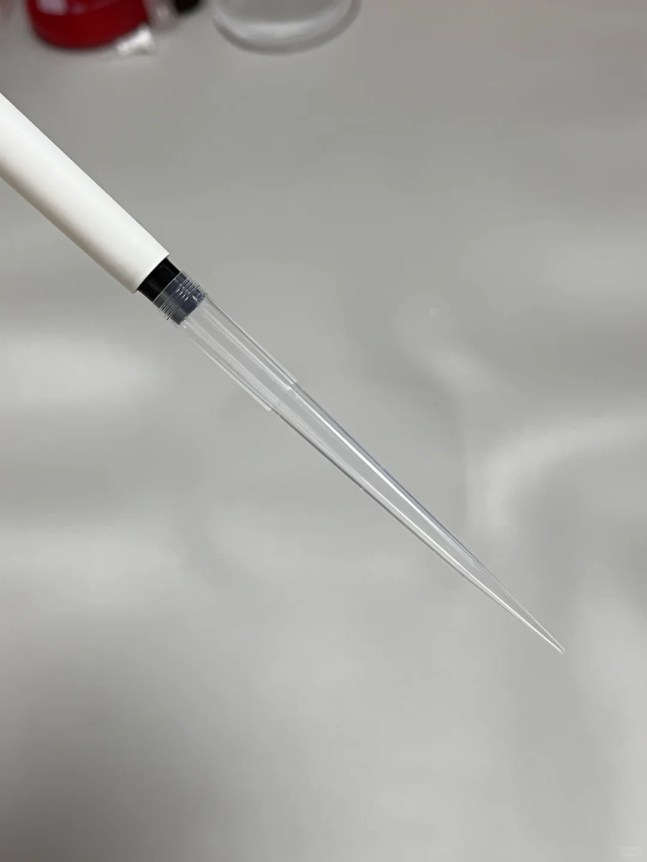
Serological pipettes are key tools in science, used for precise liquid handling. They help transfer liquids accurately in labs. These tools are crucial in many scientific fields, allowing for precise management of liquids.
Serological pipettes stand out because of their unique features. They are made for precise pipetting in various scientific areas. They can handle liquid volumes from 1 mL to 50 mL with great accuracy.
Definition and Purpose
A serological pipette is a special pipette that uses air pressure or gravity to move liquids. It has:
- Graduated markings for exact volume measurement
- A blow-out design for full liquid dispensing
- It’s made for single use or disposal
- Usually made of sterile plastic
Common Applications
These pipettes are vital in many scientific areas:
- Cell culture research
- Microbiology experiments
- Biochemistry studies
- Medical diagnostic tests
| Field | Typical Volume Range | Precision Requirements |
|---|---|---|
| Cell Culture | 1-10 mL | High |
| Microbiology | 0.1-25 mL | Very High |
| Biochemistry | 5-50 mL | Moderate to High |
Scientists use serological pipettes for their ability to reduce contamination. They also ensure excellent liquid handling in different scientific studies.
Volume Ranges of Serological Pipettes
Serological pipettes are key in labs, offering a wide range of volumes for different needs. Knowing the volume range is crucial for precise liquid handling.
Labs use pipettes with specific volumes for accurate results. The common volumes include:
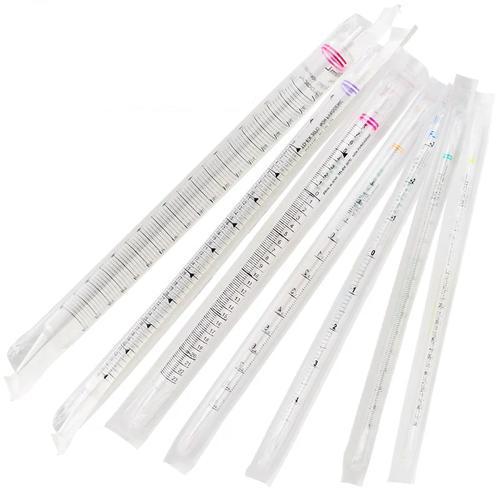
- 1 mL pipettes (yellow striped)
- 2 mL pipettes (green striped)
- 5 mL pipettes (blue striped)
- 10 mL pipettes (orange striped)
- 25 mL pipettes (red striped)
- 50 mL pipettes (purple striped)
Standard Volume Configurations
Choosing the right pipette depends on the experiment’s needs. Smaller volumes like 1-2 mL are best for precise work. Larger 25-50 mL pipettes handle more liquid.
Specialized Volume Ranges
Some pipettes have special volumes. Models for micro-volume work below 1 mL allow for very small measurements.
Choosing the right serological pipette volume range directly impacts experimental accuracy and reproducibility.
Pipette accuracy changes with volume. The tolerance for dose accuracy varies by pipette size:
- 50 mL pipette: ± 2% (± 1,000 μl)
- 25 mL pipette: ± 2% (± 500 μl)
- 10 mL pipette: ± 2% (± 200 μl)
- 5 mL pipette: ± 2% (± 100 μl)
- 2 mL pipette: ± 3% (± 60 μl)
- 1 mL pipette: ± 5% (± 50 μl)
Lab experts must pick pipettes based on their needs for the best results.
Importance of Accurate Volumes in Lab Work
Precision pipetting is key in scientific research. Even tiny mistakes in volume can change results a lot. This can ruin months of hard work.

Pipette accuracy is crucial for good science. Researchers need exact volumes to get reliable results. This is true for many fields of study.
Impact on Experimental Results
Inaccurate pipetting can cause big problems in labs:
- Potential complete experiment failure
- Wasted research resources
- Compromised scientific data integrity
- Increased financial and time investments
For DNA sequencing, wrong pipetting means redoing the whole sample. This wastes a lot of time and money.
Avoiding Contamination
Keeping pipettes accurate is not just about volume. It also stops contamination. This keeps results true and research valid.
Here are some tips for better pipetting:
- Regular instrument calibration
- Using the right pipetting techniques
- Choosing the correct pipette volume ranges
- Following strict cleaning protocols
Experts say to calibrate pipettes every 3-6 months. This keeps them working well and accurately.
Choosing the Right Serological Pipette
Choosing the right serological pipette is key for precise liquid handling in labs. Researchers need to look at several factors to find the best pipette for their work.
Critical Selection Factors
Scientists should think about a few important things when picking a serological pipette:
- Volume range needs
- Liquid viscosity and chemical safety
- How precise they need to be
- Risk of contamination
- How often they’ll use it
Material Considerations
Serological pipettes are made from clear polystyrene and are sterilized with gamma rays. There are two main materials to choose from:
- Disposable Plastic Pipettes
- Less chance of breaking
- Already sterilized
- Best for one-time use
- Reusable Glass Pipettes
- Strong against chemicals
- Good for the environment
- Needs to be cleaned well
Design Features for Enhanced Performance
Today’s serological pipettes have special designs to make handling liquids better. They have color-coded lines to avoid mixing samples and ergonomic handles to make long tasks easier.
Selecting the right pipette is not just about volume—it’s about ensuring the integrity of your scientific research.
Best Practices for Using Serological Pipettes
Mastering precision pipetting is key for lab success. Serological pipettes are vital tools needing careful use for accurate results.
Proper preparation and handling of serological pipettes greatly affect results. Lab experts must follow systematic steps to avoid errors and ensure consistent results.
Preparation Before Use
Before using serological pipettes, researchers should take important steps:
- Inspect the pipette for any visible damage or defects
- Verify sterility of the pipette
- Check the volume markings for clarity
- Ensure the pipette matches the required volume range
“Precision begins with proper preparation.” – Laboratory Research Standards
Proper Handling Techniques
Effective pipetting techniques involve several key points:
- Hold the pipette vertically at a consistent 45-degree angle
- Release pressure smoothly when dispensing liquids
- Maintain a steady hand to prevent volume variation
- Use gentle, controlled movements during aspiration and dispensing
The accuracy of serological pipettes relies on consistent technique. Labs found that 70% of pipetting errors come from improper selection and handling. By focusing on precision pipetting, researchers can greatly improve their results.
Pro tip: Practice and muscle memory are essential for developing expert pipetting skills.
Calibration and Maintenance
Precision in lab work needs strict pipette calibration and upkeep. Regular checks ensure accurate measurements. This prevents errors that could ruin research results.
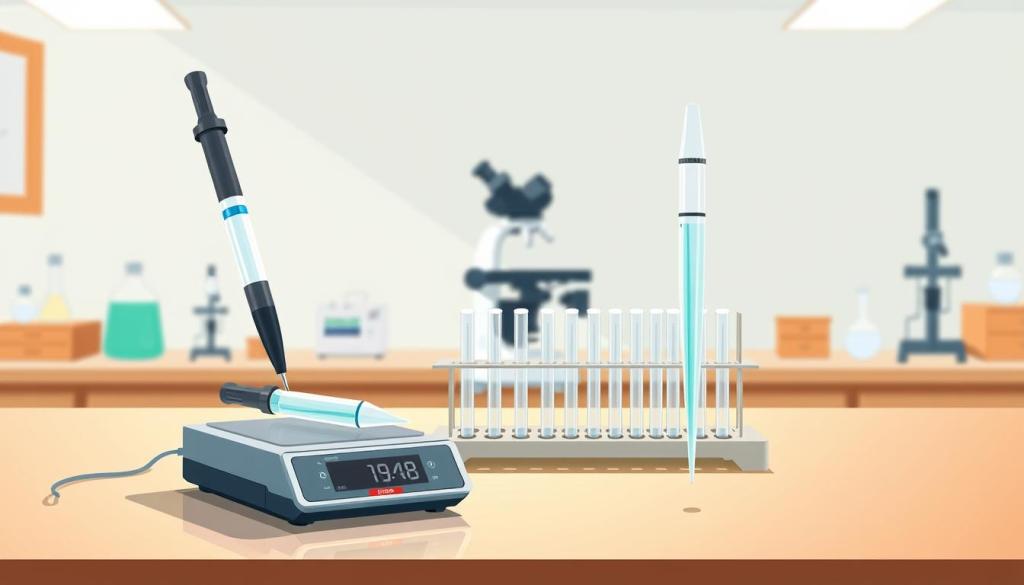
Maintaining pipettes involves key steps for their best performance. Scientists must follow strict rules to keep their tools in top shape.
Importance of Regular Calibration
Calibrating pipettes regularly is key for accurate measurements. Studies show that pipettes need calibration every 3 months to stay precise.
- Calibration ensures consistent volume delivery
- Prevents experimental errors
- Maintains instrument reliability
Recommended Calibration Conditions
Accurate calibration needs specific conditions. Labs must keep certain parameters to get precise results.
| Parameter | Specification |
|---|---|
| Temperature | 15-30°C (±0.5°C) |
| Relative Humidity | Above 50% |
| Equilibration Time | Minimum 2 hours |
Maintenance Best Practices
Good pipette care means gentle handling, regular cleaning, and professional checks. Lab techs should follow the maker’s advice for the best results.
- Clean pipettes after each use
- Store in protective cases
- Avoid extreme temperatures
- Schedule professional calibration
With thorough pipette calibration and upkeep, labs can get reliable and consistent scientific results.
Limitations of Serological Pipettes
Serological pipettes are useful tools for handling liquids, but they have their limits. Knowing these helps scientists pick the best pipetting method for their work.
Challenging Liquid Handling Scenarios
Serological pipettes face challenges in some lab settings where precision is key. They struggle with:
- Extremely viscous liquid samples
- Microscale volume transfers
- High-precision analytical requirements
- Samples requiring minimal contamination risk
Alternative Liquid Handling Solutions
When serological pipettes don’t cut it, researchers can turn to other tools. This ensures better liquid handling:
| Alternative Tool | Best Used For | Accuracy Range |
|---|---|---|
| Micropipettes | Microvolume transfers | ±0.5-1% |
| Automated Liquid Handlers | High-throughput screening | ±1-2% |
| Volumetric Pipettes | Precise quantitative analysis | ±0.1-0.5% |
“Selecting the right pipetting tool is crucial for maintaining experimental integrity and achieving reliable results.” – Laboratory Research Methods Journal
Even though serological pipettes are key in liquid handling, knowing their limits helps scientists. This leads to better pipette accuracy and results in their experiments.
Safety Considerations in the Lab
Laboratory safety is key when using serological pipettes. It’s important to use the right pipetting techniques and keep pipettes in good shape. This helps protect both the people working and the experiments themselves. By following strict safety rules, we can avoid dangers and keep the lab safe.
Personal protective equipment (PPE) is the first defense in labs. It’s crucial for researchers to choose the right gear and handle it carefully. This keeps them safe.
Essential Personal Protective Equipment
- Disposable nitrex or latex gloves
- Long-sleeved laboratory coat
- Safety goggles or face shield
- Closed-toe protective footwear
Safe Handling of Contaminated Materials
It’s vital to dispose of contaminated pipette tips properly. This stops cross-contamination and keeps the lab clean. Pipette maintenance starts with how we handle materials.
“Safety is not an accident, but a deliberate and consistent practice.” – Laboratory Safety Expert
- Use designated biohazard containers for contaminated tips
- Change tips between different samples
- Follow institutional waste management protocols
- Decontaminate work surfaces after use
Using advanced pipetting techniques means we must focus on safety. Researchers need thorough training on how to handle equipment, the risks, and what to do in emergencies. This makes the lab a safe place to work.
Future Trends in Serological Pipette Design
The world of liquid handling technology is changing fast. Researchers are working hard to make pipettes better and more precise. They’re using new materials and smart designs to turn old pipettes into high-tech tools that make labs work better.
New trends show a big move towards automated pipettes. Labs are starting to use systems that can handle huge amounts of work daily. These systems cut down on human mistakes and make work easier.
Biotech and nanotech are leading the way in pipette design. Scientists want tools that can handle tough experiments. They expect future pipettes to be easier to use and still very precise.
The next pipettes will likely be made with top-notch materials like stainless steel and ceramic. These materials will make pipettes last longer and work better. As tech keeps getting better, labs will have even more advanced tools to help with research.
FAQ
What are serological pipettes and how do they differ from other pipettes?
Serological pipettes are special tools for moving liquids in labs. They have graduated markings and a design that lets you blow out the liquid. Unlike regular pipettes, they are longer and used for moving bigger amounts of liquid. This is important in cell culture, microbiology, and biochemistry.
What volume ranges are available for serological pipettes?
You can find serological pipettes in sizes like 1 ml, 5 ml, 10 ml, and 25 ml. There are also smaller and larger options for different needs. The right size depends on what you need for your experiment.
How important is pipette accuracy in laboratory experiments?
Being accurate with pipettes is very important in lab work. Small mistakes can change the whole outcome of an experiment. This is why precise pipetting is key for reliable results in many fields.
What factors should I consider when selecting a serological pipette?
Think about the volume you need, the type of liquid, how precise you need to be, and what material you prefer. Look at the design, like color-coding and how easy it is to hold, and if it fits your experiment.
How often should serological pipettes be calibrated?
Labs usually calibrate serological pipettes once a year or every two years. This keeps them accurate and prevents mistakes in your experiments.
What are the best practices for using serological pipettes?
Always check the pipette before using it, clean it properly, and handle it the same way every time. Keep the pipette at a steady angle and avoid spills. Follow the maker’s instructions for the best results.
Are there limitations to using serological pipettes?
Yes, they’re not good for very small amounts or thick liquids. For those, you might need micropipettes or automated systems. Choose the right tool for your experiment.
What safety precautions should be taken when using serological pipettes?
Wear the right protective gear, avoid making aerosols, and handle the pipette carefully. Follow your lab’s rules for cleaning up spills. Always work in a safe lab setting.
What are emerging trends in serological pipette technology?
New things include better materials, designs that are easier to use, and working with lab computers. Future pipettes will be more accurate, last longer, and be more comfortable to use.
Can serological pipettes be used for different types of liquids?
Yes, they work with many liquids like water, cell cultures, and some chemicals. But, think about the liquid’s properties and how it might react with the pipette to avoid contamination.




Leave a Comment
Your email address will not be published. Required fields are marked *