


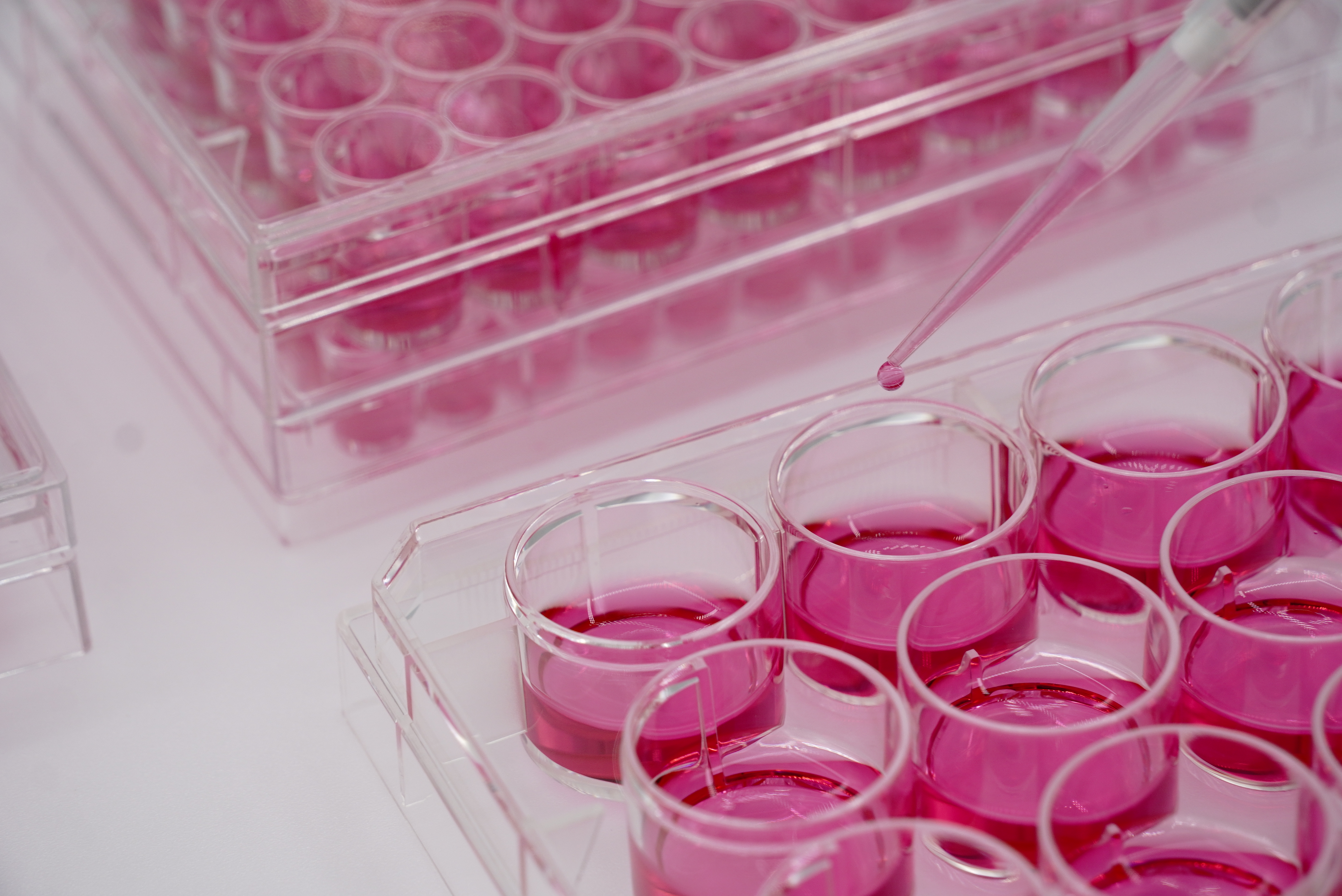
Ever wondered how a small tool changed science? The microplate, a simple invention, came out of a tough time in medical history.
In 1951, Dr. Gyula Takátsy made the microplate during the Hungarian influenza epidemic. He solved a big problem of missing lab tools. His invention had 6 rows of 12 wells, making 72 wells in total.
The story of the microplate shows human creativity. Dr. Takátsy made a new tool for labs when resources were scarce. He created something better than old test tubes.
Dr. Takátsy used PMMA, a plastic known since 1933, to make his plates. These plates could handle strong cleaners. This made labs work faster and more accurately.
Key Takeaways
- Microplates were invented during a medical crisis in Hungary
- Dr. Gyula Takátsy pioneered the original microplate design
- The first microplate had 72 wells in a 6×12 configuration
- PMMA plastic enabled durable and cleanable laboratory equipment
- The invention addressed critical equipment shortages during the 1950s
Introduction to Microplates
The microplate is a game-changer in science, making labs more efficient. Since the 1950s, it has changed how we do research and study samples.
Microplates are key tools in labs, making science easier. They have many small wells in a special pattern, usually made of clear plastic. The history of microplates shows a big leap in lab tech.
Defining Microplate Characteristics
A microplate has some important features:
- It has a standard shape and size.
- It has different numbers of wells, like 6, 12, or 96.
- It’s always the same size, 127.76 mm × 85.48 mm.
- Wells are spaced the same way.
Critical Role in Biological Research
Microplates have greatly helped science. They make it possible to:
- Test many things at once.
- Use less sample.
- Do more in less time.
- Manage samples better.
“Microplates represent a quantum leap in scientific methodology, reducing complexity while enhancing research capabilities.” – Scientific Research Quarterly
By 2000, labs used about 125 million microplates every year. This shows how important they are in today’s science. Microplate tech keeps getting better, opening up new ways to study life.
Early Developments in Microplate Design
The journey of microplate pioneers started in the early 1950s. This marked a big change in biological research. During a time when lab equipment was scarce, scientists came up with creative solutions. These solutions changed how science was done.
Dr. Gyula Takátsy was a key figure in microplate development. In 1951, he made a groundbreaking innovation. He created a hand-machined microplate from Poly(methyl methacrylate) (PMMA). This early design had:
- 6 rows of 12 wells
- Handcrafted precision
- Innovative response to equipment limitations
Origins of Microplate Concept
The microplate idea came from real scientific problems. Scientists wanted ways to do many experiments at once. This need led to new designs in lab equipment.
Key Innovations in the 1960s
The 1960s were a big time for microplate tech. John Liner made a big step with disposable vacuum styrene panels. This was a major improvement in microplate design.
| Year | Innovation | Innovator |
|---|---|---|
| 1951 | 72/100 well acrylic plate | Dr. G. Takátsy |
| 1953 | First vacuum formed 96 well microplate | John Liner |
| 1963/64 | First molded 96 well microplate | Drs. Sever & Cooke |
“Innovation is born from necessity and creativity” – Anonymous Scientific Pioneer
These early pioneers set the stage for future tech. They changed how we do biological research. They made it possible to do more complex experiments.
Evolution of Materials Used in Microplates
The journey of microplate development is a remarkable story. It shows how materials in science have changed a lot. At first, glass was used, but soon, scientists looked for better, cheaper options.
The switch to plastic was a big step forward. Polystyrene became a key material. It brought big benefits for science.
Breakthrough in Material Selection
Plastic microplates had many advantages. These included:
- Lower production costs
- Improved durability
- Enhanced chemical resistance
- Greater flexibility in manufacturing
Surface Coating Innovations
Surface coatings made microplates much better. Scientists created special treatments. These greatly improved how samples interact and assays work.
“The right surface coating can transform a standard microplate into a precision research instrument.” – Laboratory Research Quarterly
Microplate innovations kept getting better. New surface changes allowed for:
- Enhanced cell adhesion
- Improved protein binding
- Reduced non-specific interactions
- Increased assay sensitivity
By the 1990s, polystyrene was the go-to material for microplates. This shows how important material science is for science.
The Role of Microplates in Assay Development
Microplates have changed biological research a lot. They let scientists test many samples at once. This makes experiments faster and more accurate.
Microplates play a big role in many areas of science. They help in finding new drugs and checking the environment. Advanced microplate technologies are key for quick and detailed analysis.
Types of Assays Utilizing Microplates
Scientists use microplates in many ways. This includes:
- Enzyme-linked immunosorbent assays (ELISA)
- Gene expression studies
- Cellular and molecular research
- Protein quantification
- Environmental contaminant testing
High-Throughput Screening Implications
High-throughput screening is a big step forward. Microplates help screen many compounds fast. This speeds up finding new drugs and studying genes.
Microplate technology keeps getting better. It gives scientists better tools for precise and deep research.
Microplates in Clinical Diagnostics
The History Of The Microplate has changed how doctors detect and track diseases. These tools are key in today’s healthcare. They help with quick and precise tests in many medical areas.
Microplates have made big strides in clinical diagnostics. They allow for detailed sample analysis very efficiently.
Impact on Disease Detection and Monitoring
Microplates have greatly improved disease detection. They offer several important benefits:
- They can test many samples at once.
- They measure tiny biological signs accurately.
- They make diagnostic tests faster.
- They help find complex medical conditions more accurately.
Microplate inventors made systems that handle small amounts of liquid. This lets researchers do detailed tests with just a little sample.
Benefits for Personalized Medicine
Microplates have also helped personalized medicine grow. They support:
- Genetic profiling with high precision.
- Creating treatments that target specific needs.
- Assessing individual patient risks.
- Creating treatments that fit each patient’s needs.
Modern microplates have 24 to 1536 wells. This makes them very flexible in medical research and tests.
The standardization of microplates by the American National Standards Institute (ANSI) has been pivotal in advancing clinical diagnostic capabilities.
Microplates are very versatile. They keep improving medical diagnostics. This brings hope for better, more accurate, and personalized healthcare.
Technological Advancements in Microplate Usage
The timeline of microplates has seen big changes, making labs better and more precise. New tech has changed how scientists use microplates, making research faster and more detailed.
Two big steps forward in microplate tech are automation and digital innovations.
Integration with Automation Systems
Automation has changed how we use microplates. Key improvements include:
- Multi-mode microplate readers combining multiple detection methods
- Integrated reagent dispensers and plate washers
- Atmospheric control systems
- Automatic sensitivity optimization
Emergence of Digital Microplates
Digital microplates bring new levels of precision and speed. The VANTAstar is a top example of these advancements:
| Technology Feature | Performance Benefit |
|---|---|
| Enhanced Dynamic Range (EDR) | Prevents signal saturation |
| LVF Monochromator | Improved sensitivity compared to conventional filters |
| Compact Design | Reduced bench space requirements |
These advancements let researchers do more complex experiments with better results and less hands-on work.
Future Trends in Microplate Technology
The world of microplate technology is changing fast. New ideas from pioneers are making big changes in science. These changes are helping scientists study complex biological issues better.
New developments in miniaturization and data analysis are key. Now, researchers can use high-density microplates with amazing features.
Miniaturization and Emerging Formats
New tech has changed how microplates are made. Some of the latest advancements include:
- Ultra-high-density microplates with up to 9600 wells
- Less reagent needed
- Better spatial resolution
- Improved sample preservation
Enhanced Data Analysis Potential
Artificial intelligence and machine learning are changing how we analyze data. Sophisticated algorithms can now:
- Quickly process complex data
- Find subtle patterns in experiments
- Predict results with high accuracy
- Make designing experiments easier
“The future of microplate technology lies in its ability to generate more sophisticated, precise, and insightful data.” – Research Innovation Journal
These new technologies will change drug discovery, personalized medicine, and biology. They promise big improvements in these fields.
Microplate Quality Control and Assurance
Microplate development needs strict quality control to ensure it works well in science and medicine. Making sure each microplate is the same is key for labs today.
- Comprehensive material testing
- Dimensional accuracy verification
- Surface treatment consistency checks
- Strict cleanliness protocol implementation
Standardization Protocols
To standardize microplates, labs must follow global quality standards. Important standards include:
- ISO 9001 Quality Management System
- International regulatory compliance guidelines
- Rigorous performance testing protocols
Regulatory Compliance Overview
Rules for making microplates are set by regulatory bodies to keep research honest. Important areas include material rules, how they’re made, and how well they perform.
Precision in microplate production directly impacts scientific research outcomes and diagnostic accuracy.
Quality control includes detailed tests and constant checks. Labs must use methods to prove microplates are reliable. This ensures the same results in different research places.
Conclusion: The Ongoing Evolution of Microplates
Dr. Gyula Takátsy’s work in 1951 started a big change in science. His simple idea of a 6-row by 12-well design has grown into a huge industry. Today, it’s worth almost $500 million and changes how scientists work and analyze data.
Microplates have become a key part of many scientific fields. New tech like solid-state readers and automated systems have made labs more efficient. These tools cut down on manual work, reduce mistakes, and speed up research.
Looking ahead, microplates will play a big role in new areas like personalized medicine and genetic studies. Their small size and flexibility make them useful in many places, from labs to mobile research stations. As science gets more complex, microplates will keep helping researchers understand life better.
Summary of Historical Impact on Biology
The growth of microplates shows how science keeps getting smarter. From simple tools to advanced systems, they’ve opened up new ways to study life. This has led to discoveries that were thought impossible before.
Future Prospects of Microplate Applications
New tech like organ-on-a-chip and 3D cell culture will use microplates in new ways. This will lead to even more advanced research methods. As microplate tech gets better, it will help solve big health problems and deepen our scientific knowledge.
FAQ
What is a microplate?
A microplate is a flat plate with many wells. It’s used in biological research and clinical diagnostics. It’s made of plastic and holds small volumes of samples for scientific experiments and testing.
Who invented the first microplate?
Dr. Gyula Takátsy developed the early concept of microplates in the 1950s. He created a solution to laboratory equipment shortages during an influenza epidemic. His method allowed for multiple small-volume tests.
What materials are microplates typically made from?
Modern microplates are mainly made from polystyrene. This replaced earlier glass designs. Polystyrene is cost-effective, lightweight, and works well with various biological samples and research techniques.
How do microplates improve laboratory research?
Microplates make research more efficient by allowing high-throughput screening. They reduce sample volumes and enable testing of multiple samples at once. This has revolutionized fields like genomics, proteomics, and drug discovery.
What types of scientific applications use microplates?
Microplates are used in many applications. These include enzyme-linked immunosorbent assays (ELISA), clinical diagnostics, drug screening, genetic testing, protein research, and microbiology experiments.
How have microplates evolved over time?
Microplate technology has evolved a lot. It moved from glass to plastic, developed advanced surface coatings, and integrated with automation systems. It has also become more sophisticated with digital technologies and miniaturization.
What role do microplates play in clinical diagnostics?
In clinical settings, microplates help with rapid and accurate disease detection. They enable large-scale sample testing and support personalized medicine. They also improve diagnostic precision in various medical disciplines.
What are future trends in microplate technology?
Future trends include miniaturization and development of high-density plates. There will also be integration with artificial intelligence and machine learning for data analysis. Advanced applications will include organ-on-a-chip technology and 3D cell culture.
How are microplate quality and reliability ensured?
Quality control in microplate manufacturing is strict. It involves material testing, dimensional accuracy verification, and surface treatment consistency. It also follows regulatory standards set by scientific and medical authorities.
Are microplates used in drug discovery?
Yes, microplates are key in drug discovery. They enable high-throughput screening of potential pharmaceutical compounds. This allows researchers to test thousands of substances for therapeutic potential with minimal sample volumes.





Leave a Comment
Your email address will not be published. Required fields are marked *