



Have you ever thought about how scientists keep themselves and others safe from deadly germs? Biosafety levels are like a shield against dangerous pathogens in research.
Biosafety is a system to handle and reduce risks from infectious microbes. It’s designed to protect researchers and stop disease spread in labs.
How many biosafety levels are there? There are four main levels. Each one is more strict for handling very dangerous germs.
These rules help scientists work with risky biological materials safely. They protect both the scientists and the public from biological dangers.
Key Takeaways
- Biosafety levels provide a structured approach to managing infectious agent research
- Each biosafety level corresponds to specific risk management strategies
- Comprehensive safety protocols are crucial in preventing potential disease transmission
- Scientific research requires meticulous planning and risk assessment
- Protecting researchers and the public is the primary goal of biosafety practices
Introduction to Biosafety Levels
Scientific research with infectious agents needs strict safety rules. Biosafety levels help keep researchers safe and stop disease spread. These rules make sure labs can work with different biological materials safely.
Biosafety levels have clear rules for handling infectious agents. Each level has its own way of controlling risks and keeping things safe.
Defining Biosafety Levels
The biosafety level system sorts labs by the danger of biological agents. There are four levels, from basic (BSL-1) to very complex (BSL-4):
- BSL-1: Lowest risk, for well-known agents
- BSL-2: Moderate risk, with better containment
- BSL-3: High-risk agents need special facilities
- BSL-4: Maximum containment for very dangerous pathogens
Importance in Research Safety
Working with infectious agents in science is risky. About 80% of lab infections come from aerosols. Biosafety levels help lower these risks with strict handling rules.
Understanding Infectious Agents
What decides a biosafety level includes:
- How infectious the agent is
- How severe the disease can be
- How easily it spreads
- The type of research being done
By following strict biosafety rules, labs can keep their workers safe. They also stop accidents and keep science at its best.
Overview of Biosafety Level 1 (BSL-1)
Biosafety Level 1 (BSL-1) is the basic safety level for labs. These labs work with microorganisms that are not very risky to people or the environment. It’s important to know the biosafety level requirements to keep a safe research space.
In BSL-1 labs, scientists deal with agents that don’t usually make people sick. Safety is key, even at the lowest containment level.
Definition and Characteristics
BSL-1 labs are for basic research with low-risk microbes. The main biosafety level precautions are:
- Standard microbiological practices
- Open bench work allowed
- Minimal personal protective equipment
- No special design needed
Examples of Agents in BSL-1
Common microbes studied in BSL-1 include:
- Nonpathogenic Escherichia coli strains
- Bacillus subtilis
- Noncytopathic bacterial cultures
Laboratory Practices for BSL-1
Researchers must follow specific biosafety level requirements, like:
- Washing hands after handling materials
- Prohibiting food and drink in lab areas
- Doing daily decontamination of work surfaces
- Using mechanical pipetting techniques
“Safety starts with understanding and respecting each biosafety level’s unique traits.” – Laboratory Safety Expert
BSL-1 labs are crucial for safe microbiological research. They focus on basic hygiene and careful handling of low-risk biological materials.
Overview of Biosafety Level 2 (BSL-2)
Biosafety Level 2 (BSL-2) is a key level in lab safety. It deals with moderate-risk infectious agents. These labs are vital in keeping researchers and the area safe from biological dangers.
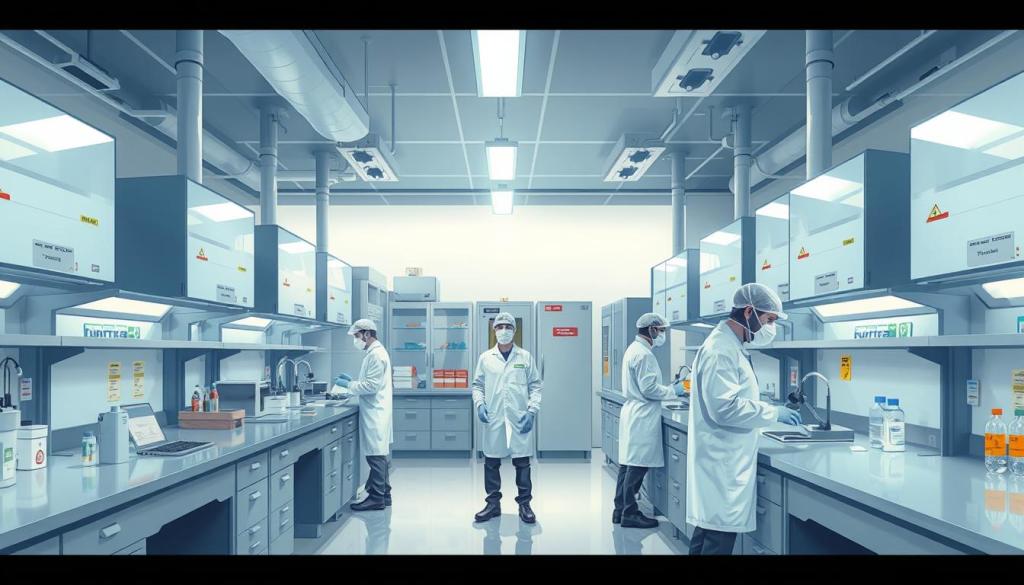
BSL-2 labs handle agents that are risky but not extremely so. The Centers for Disease Control and Prevention (CDC) sets rules to protect everyone during research.
Definition and Characteristics
BSL-2 labs are safer than BSL-1 ones. They have:
- Restricted access during research
- Special training for staff
- Supervision by experts
- Advanced equipment for handling pathogens
Examples of Infectious Agents
BSL-2 labs manage several infectious agents, including:
- HIV
- Hepatitis B virus
- Staphylococcus aureus
- Salmonella Typhi
- Shigella species
Safety Protocols for BSL-2
BSL-2 labs have strict safety rules. These include:
- Using Biological Safety Cabinets (BSCs)
- Wearing personal protective gear
- Proper disposal of infectious materials
- Decontamination steps
- Keeping detailed records of research
Researchers must stick to strict safety rules. This is to reduce risks during research. Training and following guidelines are crucial for a safe lab environment.
Overview of Biosafety Level 3 (BSL-3)
Biosafety Level 3 (BSL-3) is a key part of lab safety for dangerous germs. It helps keep researchers and the area safe from deadly pathogens.
Scientists in BSL-3 labs work with germs that are very risky. Knowing how many biosafety levels there are is key for safety.
Definition and Characteristics
BSL-3 labs are for handling germs that can cause serious or deadly diseases. They need strict safety measures to keep risks low.
Examples of Agents in BSL-3
- Mycobacterium tuberculosis
- West Nile virus
- SARS-CoV-2
- Multidrug-resistant tuberculosis strains
Required Safety Measures for BSL-3
BSL-3 labs need strict safety rules. Important steps include:
- Special ventilation systems with negative air pressure
- Mandatory respiratory protection
- Decontamination procedures for all waste
- Restricted access with controlled entry points
Rigorous medical surveillance and comprehensive training are mandatory for all personnel working in these high-risk laboratory settings.
According to CDC classifications, BSL-3 facilities are designed for containment of airborne bacteria, viruses, and toxins that present significant health risks.
Overview of Biosafety Level 4 (BSL-4)
Biosafety Level 4 is the highest level of safety in scientific research. It’s for the most dangerous pathogens that could harm human health greatly.
BSL-4 labs handle deadly infectious agents without treatments or vaccines. They need strict safety measures to protect people and public health.
Defining Characteristics of BSL-4 Facilities
BSL-4 labs have unique features:
- Absolute isolation from the outside
- Use of positive pressure suits
- Separate air systems
- Many decontamination steps
- Very limited access
Critical Pathogens Handled in BSL-4
Researchers work with deadly agents like:
- Ebola virus
- Marburg virus
- Crimean-Congo hemorrhagic fever
- Variola major (smallpox)
Extreme Safety Protocols
BSL-4 labs have strict safety rules. Staff must get special training and follow detailed procedures to avoid exposure.
“In BSL-4 laboratories, every single protocol could mean the difference between containment and potential global health catastrophe.”
Keeping a BSL-4 lab is very challenging. Only a few exist worldwide. They are key in fighting the deadliest infectious agents.
Key Differences Between Biosafety Levels
It’s important to know the differences between biosafety levels to keep labs safe. These guidelines help manage infectious agents in research and medical areas.
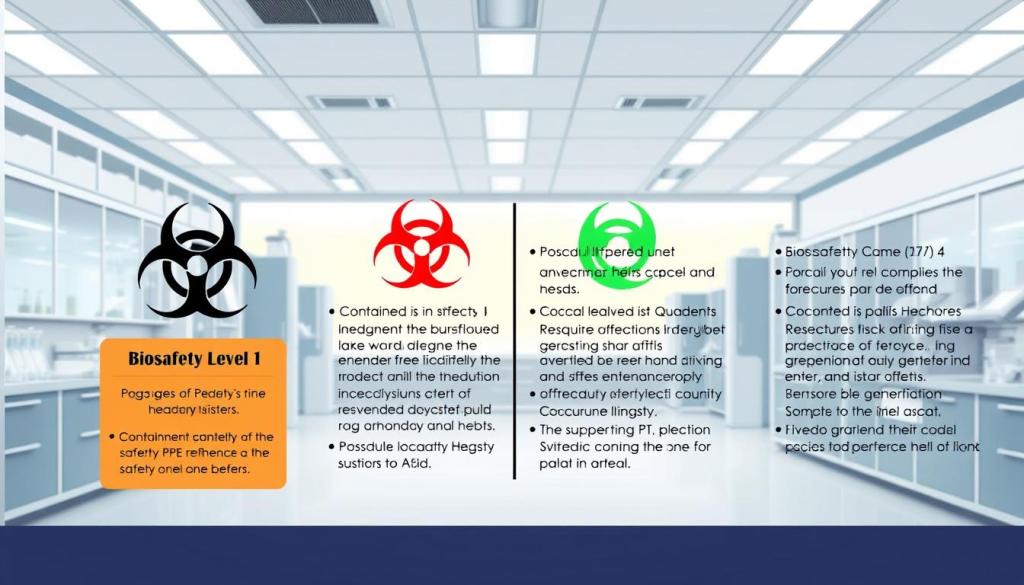
Biosafety levels get more complex as they go up. This means each level has stricter safety rules and ways to keep things contained.
Risk Assessment Criteria
When assessing biosafety levels, we look at a few key things:
- How dangerous the biological agent is
- How it can spread
- If it can turn into an aerosol
- How bad the infection could be
Laboratory Design and Equipment
Lab design gets more detailed as biosafety levels rise:
| Biosafety Level | Key Design Features |
|---|---|
| BSL-1 | Open benches, minimal containment |
| BSL-2 | Controlled access, biosafety cabinets |
| BSL-3 | Negative air pressure, sealed windows |
| BSL-4 | Isolated building, fully sealed environment |
Personnel Training Requirements
Training gets more intense as biosafety levels go up:
- BSL-1: Basic microbiological practices
- BSL-2: Specialized safety protocols
- BSL-3: Advanced containment techniques
- BSL-4: Comprehensive protective measures
“Safety is not an accident, but a deliberate and continuous process of risk management.” – Laboratory Safety Expert
Importance of Compliance with Biosafety Regulations
Biosafety level regulations are key to safe scientific research and lab safety. They protect researchers, institutions, and the public from biological dangers.
Research places must focus on strict biosafety measures. This is to lower risks from infectious agents. Past incidents show how vital it is to stick to safety rules.
Regulatory Agencies Overseeing Biosafety
Many agencies work to keep lab safety standards high:
- Centers for Disease Control and Prevention (CDC)
- National Institutes of Health (NIH)
- Occupational Safety and Health Administration (OSHA)
Consequences of Non-Compliance
Not following biosafety rules can lead to big problems, such as:
- Potential public health risks
- Legal issues
- Harm to a lab’s reputation
- Research could be stopped
Best Practices for Institutions
Good biosafety management needs a solid plan:
- Do regular safety checks
- Offer thorough training
- Have a biosafety committee
- Keep detailed records of procedures
Being proactive in safety is key to avoiding infections and keeping research integrity.
Biosafety Level Categorization for Specific Infectious Agents
Knowing how many biosafety levels there are for infectious agents is key for lab safety. Scientists look at the risks of biological threats to pick the right containment levels. This is done in different biosafety level facilities.
Infectious agents are sorted into biosafety levels based on their risk to humans and the environment. The sorting process includes detailed risk assessments. These assessments look at more than just the organism itself.
Notable Infectious Agents by Biosafety Level
Different infectious agents are put into risk categories based on their threat level:
- Risk Group 1 (RG1): Minimal risk agents with no disease potential
- Risk Group 2 (RG2): Moderate risk agents causing mild human disease
- Risk Group 3 (RG3): Serious disease agents with high individual risk
- Risk Group 4 (RG4): Lethal agents with no available treatments
Emergent Infectious Threats and Levels
The world of biological research is always changing. This means scientists must keep updating biosafety levels as new info comes in. They need to adjust to new threats.
| Biosafety Level | Risk Category | Examples |
|---|---|---|
| BSL-1 | Minimal Risk | Non-pathogenic bacteria |
| BSL-2 | Moderate Risk | Hepatitis B, HIV |
| BSL-3 | High Individual Risk | Tuberculosis, SARS |
| BSL-4 | Extreme Risk | Ebola, Marburg virus |
Adjusting Biosafety Levels for New Agents
Labs need to stay alert and flexible when classifying infectious agents. Regular risk assessments are key. They make sure biosafety levels match the latest scientific knowledge.
Effective biosafety management requires continuous learning and adaptation to emerging scientific knowledge.
International Standards for Biosafety
Global biosafety practices need strong international teamwork and clear guidelines. The World Health Organization (WHO) is key in setting up detailed biosafety rules. These rules help keep researchers and communities safe all over the world.
Biosafety training is now more crucial than ever. This is because research places are realizing the need for the same safety rules everywhere. The world has built strong systems to tackle new infectious diseases. These systems make sure everyone is protected, no matter where they work.
WHO Guidelines Overview
The WHO has made detailed guidelines that are a global standard for biosafety. These guidelines give important advice on:
- Setting up the same safety rules everywhere
- Handling research on infectious agents
- Keeping people and the environment safe
Global Biosafety Partnerships
International groups have teamed up to improve biosafety standards. They work together on:
- Sharing the best ways to do things
- Creating the same training programs
- Dealing with global health issues
National Standard Comparisons
Every country has its own way of following biosafety guidelines. They differ in rules, equipment, and training. In the United States, agencies like CDC and NIH follow strict biosafety rules. These rules are very close to what the world recommends.
“Effective biosafety is a global responsibility that requires continuous collaboration and knowledge sharing.” – International Biosafety Expert
Research places need to be flexible. They must make sure their biosafety training fits both national and global standards. This way, they can protect everyone well and keep science moving forward safely.
Future Trends in Biosafety Practices
The world of biosafety is changing fast. New technologies and global research are leading the way. Scientists and lab workers are always finding new ways to handle infectious agents safely.
New tools are changing how we study and contain infectious diseases. Advanced monitoring and artificial intelligence are key in spotting and preventing biosafety risks.
Innovations in Laboratory Technology
Technology is making biosafety better:
- Real-time pathogen tracking systems
- Advanced genetic sequencing technologies
- AI-powered risk assessment tools
- Enhanced personal protective equipment
Research Developments in Infectious Agents
Research into infectious diseases is getting more exciting. Synthetic biology and genetic engineering are helping us understand and control biological threats.
“Innovation in biosafety is not just about technology, but about creating smarter, more adaptive research environments.” – Biosafety Research Institute
Increasing Global Collaboration on Biosafety
Working together worldwide is key to solving biological challenges. Researchers are sharing data and protocols. They’re working together to improve biosafety standards everywhere.
The future of biosafety is about using technology to make research safer and more effective.
Conclusion
Understanding biosafety levels is key to keeping researchers and the world safe from infectious agents. Labs around the globe must follow strict safety rules in four main categories. How many biosafety levels are there for certain infectious agents? There are four, from low risk to very dangerous.
The move from BSL-1 to BSL-4 shows a detailed safety plan for science. Each level faces bigger challenges, needing special tools, training, and ways to keep things contained. At BSL-1, we deal with harmless microbes, while BSL-4 labs handle deadly viruses like Ebola. This shows how important it is to manage risks carefully.
Research places must focus on good training and sticking to safety rules. People working with dangerous microbes need to keep learning about new threats and safety steps. The world of microbial research is always changing, so we must adapt to keep everyone safe.
In the end, biosafety is a global effort. Researchers, labs, and rules makers must work together to keep risks low. By valuing safety and learning, we can make new discoveries while keeping everyone safe.
FAQ
What are biosafety levels and why are they important?
Biosafety levels are a set of rules to keep researchers and the public safe. They range from BSL-1 to BSL-4. Each level has stricter safety rules based on the risk of certain diseases.
These levels help prevent accidents and stop diseases from spreading. They ensure dangerous pathogens are handled safely.
How many biosafety levels are there?
There are four biosafety levels: BSL-1, BSL-2, BSL-3, and BSL-4. Each level has different safety rules based on the risk of diseases.
What types of agents are typically handled at BSL-1?
BSL-1 labs work with safe microorganisms like non-virulent E. coli. These agents need only basic safety practices and simple protective gear.
What makes BSL-2 different from BSL-1?
BSL-2 labs handle higher-risk agents like HIV and hepatitis B virus. They need more safety measures than BSL-1 labs. This includes special cabinets, protective gear, and training for staff.
What are the key characteristics of a BSL-3 facility?
BSL-3 labs handle dangerous agents like Mycobacterium tuberculosis. They have special ventilation, waste decontamination, and require staff to wear protective gear. Staff must also get special training and medical checks.
What makes BSL-4 the most extreme biosafety level?
BSL-4 labs handle the most dangerous pathogens, like Ebola. They have the strictest safety rules. This includes wearing positive pressure suits and having special air and decontamination systems.
Who regulates biosafety practices in the United States?
The CDC and NIH set guidelines for biosafety in the U.S. They oversee safety practices in research and clinical settings.
How are infectious agents assigned to specific biosafety levels?
Agents are classified based on their risk to humans, how they spread, and the severity of the disease. The classification can change as new information comes in.
What international organizations are involved in biosafety standards?
The WHO sets global biosafety guidelines. The International Federation of Biosafety Associations promotes international cooperation and standardization in biosafety.
What are the consequences of not following biosafety regulations?
Not following biosafety rules can lead to serious problems. This includes legal issues, public health risks, damage to reputation, and increased risk of lab accidents or pathogen release.






Leave a Comment
Your email address will not be published. Required fields are marked *