



Ever wondered how scientists create perfect environments for tiny life to grow and make new discoveries? The answer is in the amazing world of bioreactors. These advanced vessels change how we do research and make products.
So, how do bioreactors work? Simply put, they are complex systems that help cells grow well. They control things like temperature, pH, oxygen, and nutrients in many fields.
Bioreactors are key in areas like medicine, farming, and science. They help make life-saving vaccines and green fuels. These tools let us control biological systems like never before.
The design of bioreactors includes three main parts: the container, mixing system, and air supply. Together, they create the perfect space for life to grow and make useful products.
Scientists and companies use bioreactors to improve how they make things. They help keep things clean and work better. This leads to new discoveries and innovations in many fields.
Key Takeaways
- Bioreactors create controlled environments for biological processes
- They are used across multiple industries, including pharmaceuticals and agriculture
- Precise parameter control is critical for successful biological production
- Bioreactors range from small laboratory units to large industrial systems
- They enable advanced research and sustainable technological innovations
What is a Bioreactor?
Bioreactors are advanced systems that help biological processes in many fields. They create special environments for microorganisms, cells, and enzymes to grow and make useful products.
At their heart, bioreactors play key roles in biotech, pharma, food, and environmental science. They help control biological changes, letting experts grow organisms under the right conditions.
Core Definition and Purpose
A bioreactor is a high-tech container that supports biological reactions. It keeps conditions like:
- Temperature control
- pH regulation
- Nutrient distribution
- Oxygen supply
- Waste product removal
Exploring Bioreactor Types
Each bioreactor type is made for specific uses. The main types are:
- Batch Bioreactors: For short, specific processes
- Continuous Bioreactors: For ongoing processes
- Fed-Batch Bioreactors: For adding nutrients in a controlled way
- Photobioreactors: For light-dependent organisms
These systems vary from small lab setups to huge industrial ones. They show how flexible and useful bioreactors are in science and business.
Basic Principles of Bioreactor Operation
Bioreactor operation is a complex process. It involves controlled biological and engineering principles. These vessels create the best environments for cells to grow and produce products in science and industry.

The design of bioreactor components is key. It ensures precise control of important parameters for biological processes. Knowing these elements is vital for success in biotechnology.
Biological Processes in Bioreactors
Bioreactor operation deals with detailed biological processes. These include:
- Cellular metabolism and growth
- Nutrient conversion
- Product synthesis
- Waste management
Essential Bioreactor Components
Modern bioreactors have three main parts. They work together to create the perfect environment for biological reactions:
- Vessel: The main container for biological systems
- Agitation System: Makes sure everything is mixed well and nutrients are spread out
- Aeration System: Adds oxygen and helps with gas exchange
Important operational parameters vary for different biological systems. Here are some examples:
| Parameter | Bacteria/Fungi | Mammalian Cells |
|---|---|---|
| Stirring Speed | 500 – 1500 min–1 | 30 – 300 min–1 |
| Temperature Range | +20 °C to +60 °C | +25 °C to +37 °C |
| pH Range | 4.5 – 7.0 | 6.7 – 7.4 |
Understanding bioreactor components and their interactions is crucial. It helps researchers improve biological processes in various scientific fields.
The Role of Microorganisms in Bioreactors
Microorganisms are key to understanding bioreactors. These tiny beings drive bioprocessing, turning raw materials into valuable products. They do this through complex metabolic pathways.
Choosing the right microorganisms is vital for bioreactor operation. Each microbe has unique abilities for different industrial uses.
Key Types of Microorganisms in Bioreactors
- Bacteria: E. coli and Bacillus species for protein production
- Yeasts: Saccharomyces for fermentation processes
- Fungi: Aspergillus for enzyme manufacturing
- Algae: Used in biofuel and nutritional supplement production
Factors Influencing Microbial Growth
Several key factors affect microbial growth in bioreactors:
- Temperature ranges
- pH levels
- Nutrient availability
- Oxygen concentration
Advanced bioreactors support high microbial densities. For example, cell cultures can reach 1 x 10^7 cells per milliliter. This is much higher than traditional methods.
Precise control of environmental conditions enables optimal microorganism performance and productivity.
The cultivation cycle has four phases: lag, exponential growth, stationary, and death. Knowing these phases is key to efficient bioreactor operation.
Bioreactor Design Considerations
Creating an effective bioreactor needs careful planning and smart decisions. It involves many important factors that affect how well it works and its efficiency.
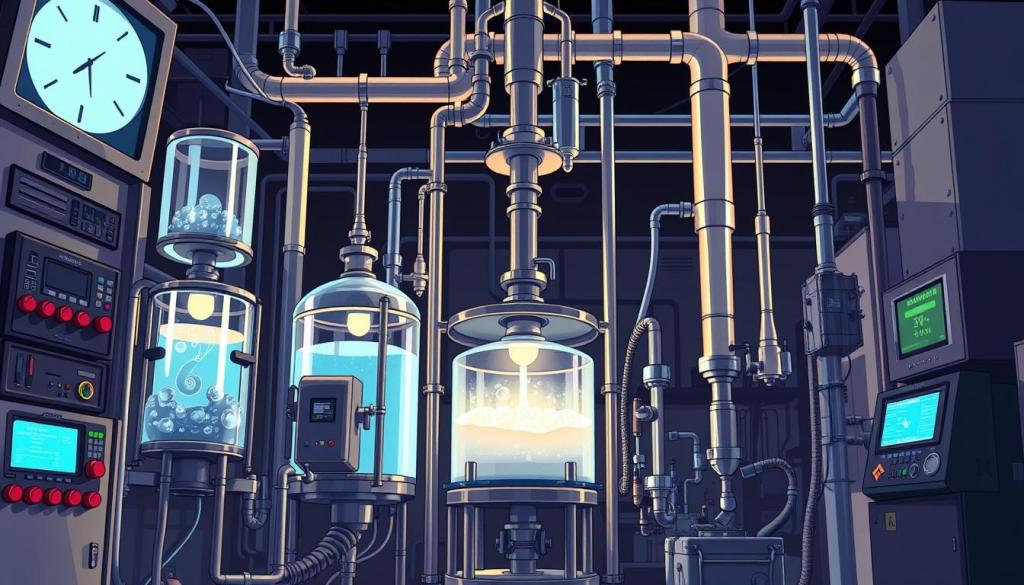
Designing a bioreactor includes several key elements. Researchers and engineers must evaluate these carefully. The main goal is to make an environment that supports biological processes well. They also need to control important parameters precisely.
Critical Factors in Bioreactor Scale and Capacity
Scaling up a bioreactor is a big challenge in bioengineering. Moving from small lab setups to large industrial scales requires detailed planning. Important things to consider include:
- Keeping conditions the same across different sizes
- Ensuring oxygen and nutrients are evenly distributed
- Keeping the structure of cells the same during scaling
- Managing how waste is removed efficiently
Strategic Material Selection
Choosing the right materials is crucial in bioreactor design. Different materials have their own benefits for different uses:
- Plastic: Light, affordable, good for one-time use
- Stainless Steel: Strong, easy to clean, great for repeated use
- Glass: Resists chemicals well and is clear
The right material can greatly improve a bioreactor’s performance, lifespan, and research results.
Designing a bioreactor needs a detailed approach. It must balance technical needs, biological requirements, and practical limits. Researchers must look at each design element carefully. This way, they can create systems that support complex biological processes well.
Monitoring and Control in Bioreactors
Monitoring bioreactors is key to making sure they work well and produce quality products. It’s all about controlling many factors to keep the right conditions for biological processes.
Managing bioreactors is complex. It needs smart strategies to handle the details of biological systems. By watching things closely, we can make quick changes to keep things running smoothly and safely.
Importance of Process Monitoring
Monitoring bioreactors means keeping an eye on important factors that affect how well they work. The main things to watch are:
- Temperature stability
- pH levels
- Dissolved oxygen concentration
- Nutrient availability
- Cell density and viability
Common Control Strategies
Industrial bioprocessing uses advanced control methods to keep things just right. More than 90% of the time, it uses classic control methods. These methods are made to improve how bioreactors work.
| Control Strategy | Key Characteristics | Application |
|---|---|---|
| Feedback Control | Automated parameter adjustment | Real-time process correction |
| Distributed Control Systems | Networked control architecture | Complex bioprocessing environments |
| PID Controllers | Linear system management | Single-input single-output processes |
Today’s bioreactor monitoring uses the latest in sensors and software. Automated sampling systems help us get data all the time. This gives us deep insights into how biological processes work.
Applications of Bioreactors in Biotechnology
Bioreactors have changed many fields, showing their wide use in solving big problems. They are key in making biological processes better in areas like medicine and the environment.
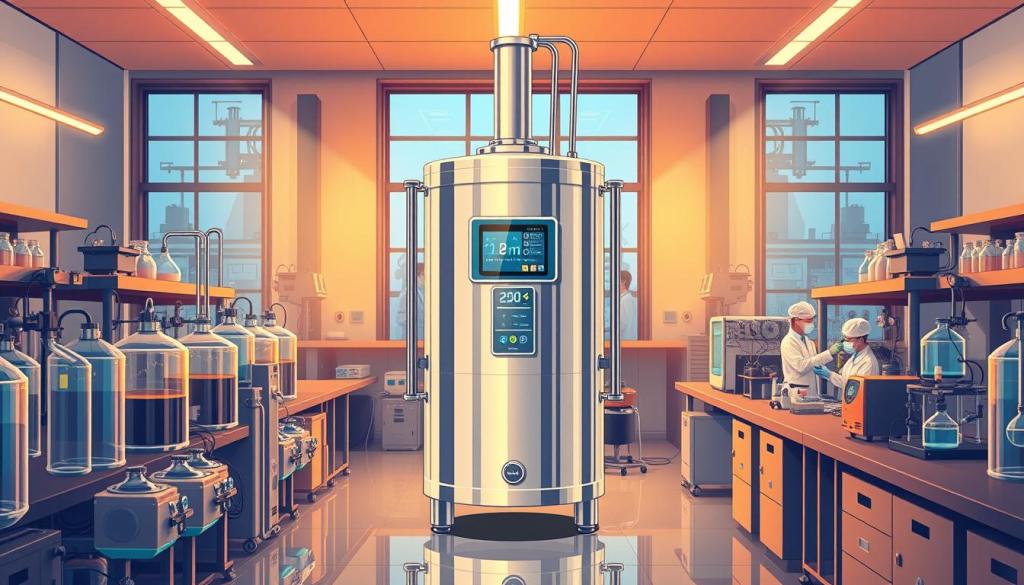
Learning about bioreactors shows their power in solving big scientific and industrial challenges. They help control biological processes well, making them very useful in many areas.
Pharmaceutical Production Breakthroughs
Bioreactors are crucial in making medicines, especially vaccines. They have helped a lot, including:
- COVID-19 vaccine production with global administration reaching 11.25 billion doses by April 2022
- Advanced viral particle generation using cutting-edge cell cultures
- Consistent high-yield production of therapeutic proteins
Environmental Applications
Bioreactors also help with big environmental issues:
- Wastewater treatment processes
- Bioremediation of contaminated environments
- Sustainable waste management techniques
The smart design of bioreactors lets scientists find big solutions for tough environmental problems. They show great promise in tackling global environmental issues.
The Impact of Bioreactors on Fermentation Processes
Bioreactors have changed industrial fermentation, making old methods better. They create a controlled space that boosts efficiency and quality.
Thanks to bioreactors, fermentation has gotten much better. These systems bring many benefits to different industries.
Comparing Traditional and Modern Fermentation Methods
Modern bioreactors are different from old methods in key ways:
- They offer better control over the process
- They make products more consistent
- They can produce more
- They lower the risk of contamination
Key Benefits of Bioreactors in Fermentation
Bioreactors bring big changes to fermentation:
| Benefit | Impact |
|---|---|
| Precise Parameter Management | Ensures optimal microbial growth conditions |
| Scalability | Enables seamless transition from laboratory to industrial production |
| Product Quality | Maintains consistent output with reduced variability |
Pharmaceuticals, food, and biotech have seen big changes with bioreactors. The ability to maintain strict environmental controls leads to precise fermentation.
Bioreactors use advanced monitoring to make quick changes. This helps microbes work better and products improve. These tech advances are changing biological manufacturing.
Advancements in Bioreactor Technology
Bioreactor technology has seen big changes lately. New designs and automation have led the way. These changes are making bioreactors better for research and production.
- Smart sensors for constant monitoring
- Advanced control systems for better adjustments
- Miniature bioreactors for exact experiments
- Scalable systems for big production
Breakthrough Design Innovations
New bioreactor designs are more flexible and responsive. Microfluidic bioreactors are a big step up. They let scientists do detailed experiments with small amounts of material.
These small systems offer great control over cells. They help scientists closely watch biological processes.
Automation and Intelligent Bioreactors
Automation has changed bioreactors, making them smarter. Now, they can adjust themselves and keep conditions perfect. AI helps predict and solve problems, ensuring top-quality results.
The future of bioreactor technology lies in its ability to seamlessly integrate intelligent design with sophisticated monitoring capabilities.
These new technologies are opening up new uses for bioreactors. They’re helping in fields like medicine and cleaning the environment. This means more efficient and accurate biological work.
Challenges Faced in Bioreactor Operations
Bioreactor operations are complex and require careful attention. Researchers and biotechnologists face many challenges to ensure successful bioprocessing. They must keep product quality high.
Bioreactor troubleshooting is crucial for maintaining production efficiency and cost-effectiveness. Laboratories and industrial facilities encounter various challenges during bioreactor operations.
Contamination Risks in Bioprocessing
Contamination is a major concern in bioreactor operations. Risks include:
- Microbial intrusion during culture preparation
- Compromised sterility protocols
- Equipment cross-contamination
- Inadequate cleaning and sterilization processes
The cost of contamination can be very high. A single contaminated batch can lead to financial losses of hundreds of thousands of dollars.
Bioreactor Scale-Up Complexities
Scaling up bioreactors is complex and requires advanced engineering. Manufacturers must consider several factors during scale-up:
- Maintaining consistent cell viability across different volumes
- Preserving product quality during expansion
- Managing increased metabolic variations
- Ensuring uniform mixing and nutrient distribution
Scaling up can cause delays in production. Data shows that technology transfer for a billion-dollar biological product can cost around $80 million per month of delay.
To succeed in bioreactor operations, continuous monitoring and advanced troubleshooting are key. Innovative scaling strategies help mitigate risks and improve bioprocessing efficiency.
Future Trends in Bioreactor Development
The world of bioreactor design is changing fast. New technologies and green practices are leading the way. Experts are making bioreactors smarter and more effective.
Two big trends are shaping the future of bioreactors. They are sustainable practices and using artificial intelligence. These changes will make bioprocessing better in many fields.
Sustainable Bioreactor Practices
Nowadays, making bioreactors green is key. Some important steps include:
- Using less energy in bioreactor systems
- Choosing renewable materials
- Being more efficient with resources
- Reducing waste
Artificial Intelligence Integration
Artificial intelligence is making bioreactors smarter. AI helps in many ways, like:
- Watching processes in real-time
- Knowing when to do maintenance
- Adjusting settings automatically
- Making results more consistent
Recent numbers show how exciting these changes are:
| Trend | Percentage of Industry Interest |
|---|---|
| Bioreactor Technology Innovations | 29.2% |
| Single-Use Bioprocessing Equipment | 40.5% |
| AI Integration in Bioprocessing | 26.9% |
The future of bioreactor design looks very bright. With ongoing progress, biotechnology and science will keep getting better.
Summary and Conclusion
Bioreactors are key in many scientific fields. They have changed how we do research and work in industries. This has led to big steps forward in making medicines, cleaning the environment, and new biotech discoveries.
Bioreactors are advanced tools for changing living things and chemicals. New tech has made them work better. Now, single-use bioreactors can match the old systems. This has made growing cells much more efficient, going from 0.05 g/L to over 10 g/L in 15 years.
Key Insights into Bioreactor Technology
New trends in bioreactor research show smarter and more automated systems. Smart sensors and networks are changing how we watch bioprocesses. These changes help control the environment better, improve growing microbes, and make processes more efficient.
Future Research Directions
Future studies on bioreactors will focus on being more green, automated, and big. Using artificial intelligence and advanced controls could open up new areas in making medicines and solving big problems. This could help with health, energy, and the environment.
FAQ
What exactly is a bioreactor?
A bioreactor is a special container for biological processes. It helps cells grow and makes products through fermentation. It controls things like temperature and oxygen to help these processes.
How does a bioreactor work?
Bioreactors keep the right conditions for biological processes. They control things like mixing, air, temperature, and nutrients. This helps microorganisms grow and work well.
What are the main types of bioreactors?
There are mainly three types of bioreactors. Batch bioreactors have a fixed amount of medium. Fed-batch bioreactors add nutrients sometimes. Continuous bioreactors keep materials flowing in and out.
What industries use bioreactors?
Many industries use bioreactors. These include pharmaceuticals, biotechnology, agriculture, and more. They help make vaccines, antibiotics, and biofuels.
What are the key components of a bioreactor?
Key parts of a bioreactor include the container and mixing system. It also has air, temperature control, and sensors. These help track important conditions like oxygen and nutrients.
What challenges do bioreactors face?
Bioreactors face challenges like keeping things clean and controlling conditions. They also need to manage nutrients and keep product quality consistent.
How are microorganisms selected for bioreactor processes?
Choosing microorganisms depends on what the process needs. It looks at growth rate, metabolic abilities, and product yield. It also considers environmental tolerance and genetic stability.
What recent technological advancements exist in bioreactors?
New advancements include smart monitoring and sensors. There are also automated controls and artificial intelligence. These improve efficiency and productivity.
How do bioreactors contribute to sustainable practices?
Bioreactors help with sustainability by treating waste and making renewable energy. They use less chemicals and resources. This makes manufacturing more eco-friendly.
What is the future of bioreactor technology?
The future of bioreactors includes more automation and AI. There will be better monitoring and energy use. They will help solve big global challenges in healthcare and more.






Leave a Comment
Your email address will not be published. Required fields are marked *