


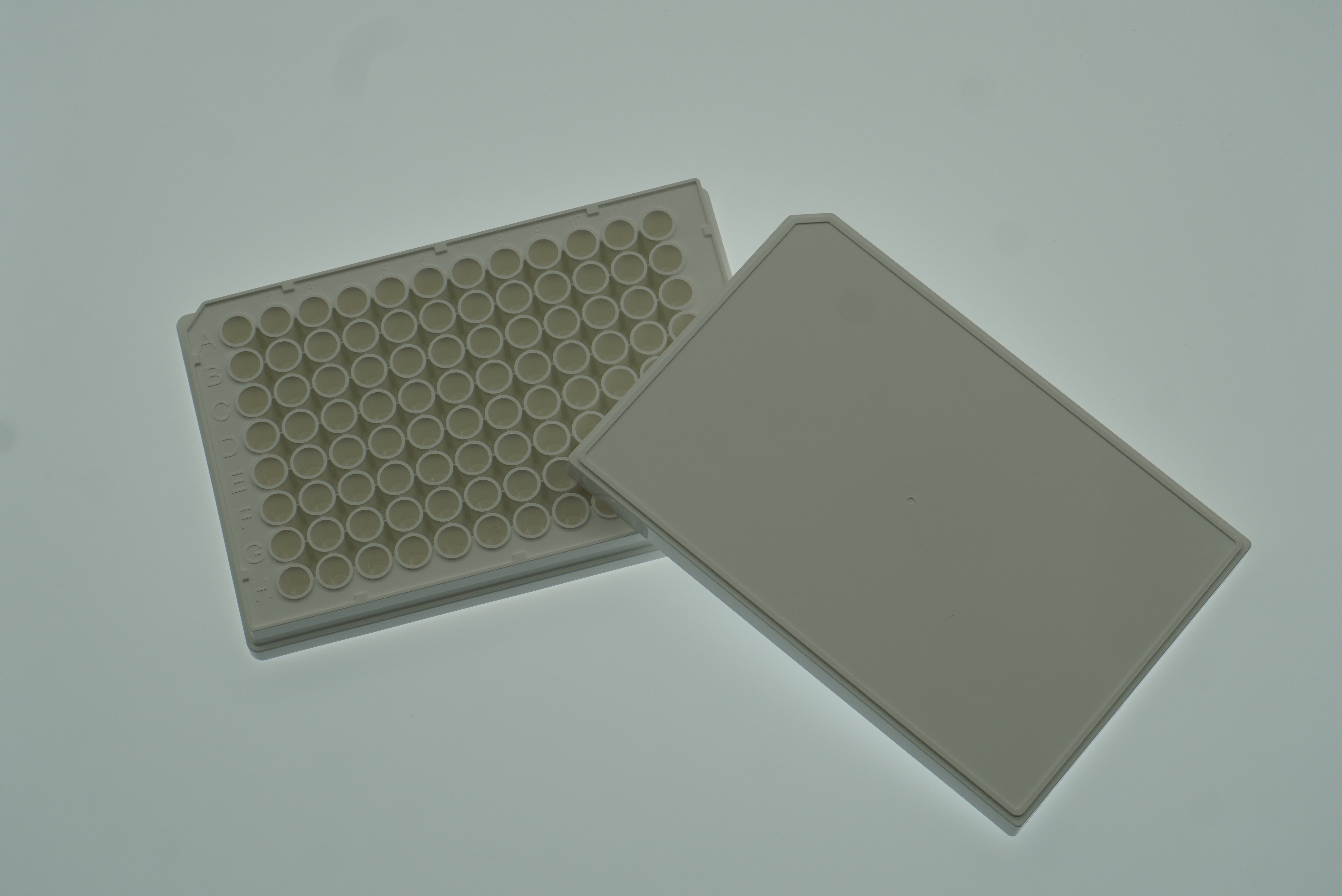
Can one tool change science in many fields? The 96 well plate diagram is a game-changer in biomedical sciences. It has changed how we do experiments.
These microplates are more than just lab tools. They are a big step forward. They let scientists test many samples at once. This makes research faster and more efficient.
Today’s labs use these plates to make things better. They save space, use less stuff, and speed up finding new things. With 96 wells in a small space, scientists can do more in less time.
Key Takeaways
- Standardized 96 well plate design supports high-throughput screening
- Enables simultaneous testing of multiple experimental conditions
- Compatible with diverse research applications
- Minimizes material waste and experimental variables
- Critical tool for molecular biology, immunology, and drug discovery
Introduction to the 96 Well Plate
The 96 well plate is a big step forward in lab research. It changes how scientists do their work with its smart design. These plates make complex studies easier to handle.
Scientists use these plates for their detailed design. They help make research more efficient and consistent. The plates are about 127.8 mm long, 85.5 mm wide, and 14.4 mm tall.
Defining the Microplate
A 96 well plate is a grid with:
- 96 wells in 8 rows and 12 columns
- Standard spacing for consistent results
- Works with many lab tools
Purpose in Scientific Research
These plates are key in biology:
- They make high-throughput screening possible
- They save on reagents
- They help with complex experiments
- They support reliable research
The well layout schematic boosts efficiency. It lets researchers test many samples at once, saving resources.
Components of a 96 Well Plate
Exploring the world of microplate mapping shows us why 96 well plates are key in science today. These laboratory equipment diagrams are a vital tool for many researchers.
Well Design and Volume Characteristics
The 96 well plate’s design is a true marvel of science. Each well is designed to improve the accuracy of experiments:
- Standard volume capacity ranging from 0.1 to 0.3 mL per well
- Standardized well-to-well spacing of 9 mm
- Typical plate dimensions of 127.76 mm × 85.48 mm
Material Composition Variations
The choice of material is key to a microplate’s performance. Labs usually pick from three main options:
- Polystyrene (PS): The go-to for most uses
- Polypropylene (PP): Best for experiments sensitive to temperature
- Cyclo-olefins (COP/COC): Great for experiments needing UV light
Each material has its own benefits. This lets researchers choose the best plate for their needs. The right choice affects everything from how well it keeps heat to how clear it is, showing the detailed world of lab equipment design.
The Layout of a 96 Well Plate
Researchers use bioassay plate visualization to make their work easier. The 96 well plate is a key tool in science. It has a grid that helps manage samples well and speeds up screenings.
Knowing how the plate is set up is crucial for good experiments. The 96 well plate has a special layout that makes research more efficient.
Grid Structure and Dimensions
The plate has a well-organized grid with:
- 8 rows (labeled A-H)
- 12 columns (numbered 1-12)
- Total of 96 individual wells
Well Identification System
Each well has its own name, made of a letter and number. For example, A1 is the top-left well, and H12 is the bottom-right.
Scientists use this system to:
- Keep track of where samples are
- Make sure experiments are the same
- Record data accurately
The systematic layout enables researchers to perform complex experiments with remarkable precision and consistency.
Learning about the 96 well plate layout helps scientists do better bioassay plate visualizations. They can work more reliably and efficiently.
Uses of 96 Well Plates in Research
The 96 well plate has changed scientific research a lot. It offers a flexible way to study many biological things. Scientists use it to do their work better and more precisely in many fields.
Scientists use special graphics on microwell plates to make complex research easier. This helps them quickly and thoroughly study biological samples. These tools are key for important research in many areas.
Cell Culture Techniques
Cell culture techniques really benefit from 96 well plates. Researchers can do many things at once, like:
- Grow different cell types
- Run experiments side by side
- Lower the chance of contamination
- Make experiments more consistent
High-Throughput Screening
High-throughput screening is a big use of 96 well plates today. These platforms let scientists:
- Quickly test thousands of compounds
- Find new drugs
- Study how things interact in the body
- Improve their research methods
The standard design of microwell plates helps researchers work on many samples at once. This saves time and money while keeping data quality high.
| Research Application | Typical Sample Capacity | Processing Speed |
|---|---|---|
| Drug Discovery | 96 simultaneous tests | High-throughput |
| Genetic Screening | Up to 96 unique samples | Rapid analysis |
| Protein Interaction Studies | Multiple parallel experiments | Comprehensive screening |
By 2000, labs worldwide used about 125 million microplates. This shows how important these tools are for scientific progress.
Advantages of Using 96 Well Plates
Scientific research needs efficient tools. The 96 well plate diagram is a top innovation. It gives researchers new ways to do complex studies.
Researchers love 96 well plates for many reasons. They show great potential in many fields of study.
Cost-Efficiency in Scientific Research
The benefits of 96 well plates are clear:
- Less reagent needed
- Less waste
- Shorter experiment time
- Lower costs overall
Versatility in Research Applications
The 96 well plate design helps researchers in many ways:
- Test thousands of compounds at once
- Try different experimental setups
- Test under various conditions
- Use resources better
Higher-density microplates make workflows smoother. They boost research efficiency.
These plates are key in modern biotech research. They help with everything from basic cell studies to complex drug tests.
Common Techniques Utilized with 96 Well Plates
96 well plates have changed biological research a lot. They let researchers do many experiments at once. This makes work more efficient and reliable.
These special plates are key for important lab work. They help with ELISA and PCR, which need exact conditions.
ELISA: Antibody Detection Technique
ELISA uses 96 well plates to find and measure proteins well. It helps scientists study complex samples in different ways.
- Sandwich ELISA: Most sensitive detection method
- Indirect ELISA: Uses secondary antibodies to boost the signal
- Competitive ELISA: Finds antigens with single spots
PCR: Genetic Amplification Method
PCR uses 96 well plates for even heating and DNA copying. The plate’s design helps keep the temperature the same for all samples.
| Technique | Sample Volume | Key Characteristic |
|---|---|---|
| ELISA | 50-200 μL | Protein Detection |
| PCR | 10-50 μL | DNA Amplification |
96 well plates keep pushing the limits of biological research. They make it possible to screen many samples and do detailed molecular studies.
Troubleshooting 96 Well Plate Experiments
Successful lab research needs precise microplate mapping and understanding common challenges. Researchers face many obstacles with 96 well plates. These can harm the integrity of their experiments.
Scientists must spot key issues that can ruin their results. Paying close attention to details helps avoid common problems. These problems can make research results invalid.
Critical Challenges in 96 Well Plate Experiments
- Sample Contamination Risks
- Uneven Reagent Distribution
- Instrumentation Errors
- Environmental Interference
Essential Troubleshooting Strategies
Using strong prevention methods helps avoid errors. Researchers should focus on:
- Consistent Sample Preparation
- Regular Instrument Calibration
- Controlled Environmental Conditions
- Comprehensive Personnel Training
“Precision in laboratory techniques determines the reliability of scientific research.” – Research Methodology Institute
Knowing potential problems helps researchers plan better. Meticulous documentation and solving problems early are key to success in microplate experiments.
Quality Control Recommendations
Keeping standards high means always checking and adjusting. Important tips include:
- Regular reagent quality assessments
- Standardized handling protocols
- Advanced training programs
- Systematic error tracking
By following these steps, researchers can lower experiment variability. This improves data quality in 96 well plate research.
Innovations in 96 Well Plate Design
Scientific research is always evolving, and 96 well plate design is no exception. New advancements have changed how we visualize bioassay plates and conduct high-throughput screenings. These changes have led to more advanced tools for research.
Modern materials have greatly improved 96 well plate performance. Key innovations include:
- Enhanced durability of specialized plastics
- Improved optical properties for precise imaging
- Greater chemical resistance
- Advanced surface treatments
Material Science Breakthroughs
New materials have made research more precise. Specialized polymers have made plates stronger and clearer. This allows for better imaging in experiments.
Technological Integration
Now, 96 well plates work with automated systems. This supports complex high-throughput screenings. Smart technologies help collect data in real-time, making experiments more accurate.
- Automated liquid handling capabilities
- Integrated sensor technologies
- Enhanced computational analysis interfaces
These advancements are big steps forward in biomedical research. They let scientists explore complex designs more efficiently and reliably.
Best Practices for Handling 96 Well Plates
Handling 96 well plates right is key for good science. The way you set up the plates affects your results. It’s important for getting accurate data.
Scientists need to be careful with these tools. A microwell plate graphic helps understand how to manage them well.
Essential Storage Recommendations
Storing 96 well plates right is important. Here are some tips:
- Keep them at a steady temperature (usually 4°C for biological samples)
- Don’t let them get direct sunlight
- Use sealed boxes to stop contamination
- Store them standing up to avoid mixing samples
Comprehensive Cleaning and Maintenance Protocols
Keeping 96 well plates in good shape is crucial. Here’s how to do it:
- Only use cleaning solutions made for labs
- Wash them gently to avoid damage
- Check for wear or dirt before using
- Follow the maker’s instructions for getting them ready
96 well plates are 127.8 mm x 85.5 mm. They need careful handling. The depth and volume of each well vary, usually 10-20 µL, based on your needs.
Precision in plate handling directly correlates with experimental success and reproducibility.
Professional tip: Always use calibrated pipettes and maintain consistent technique when working with 96 well plates to ensure uniform sample distribution and minimize experimental variability.
Conclusion: The Future of 96 Well Plates in Bioresearch
The 96 well plate technology is evolving fast, changing how we do scientific research. New innovations are making microplate illustrations better. Now, advanced semiconductor platforms have 4096 electrodes per well. This gives us amazing precision in studying cells.
New designs in 96 well plates are showing off their power. These platforms can handle 8× parallel operations, making 768 wells at once. They can take over 20 images every 15 minutes. This lets us study 16 different cell types and test hundreds of compounds quickly.
The future of bioresearch is bright, thanks to new technologies. Robotic culture systems and microfluidic plates are making research faster and more accurate. They help us study many areas, like neuroscience and cancer research, with great detail.
The 96 well plate is a key tool in science, always getting better to meet new challenges. Its ability to adapt, precision, and advanced technology make it essential for making new discoveries in biology.
FAQ
What is a 96 well plate?
A 96 well plate is a tool used in labs. It has 96 wells in an 8×12 grid. It’s used for many things like cell culture and testing, making it efficient for research.
What are the standard dimensions of a 96 well plate?
A 96 well plate is about 127.76 mm × 85.48 mm. Each well is slightly different, but usually holds 300 to 360 microliters. The working volume is often 100 to 200 microliters.
What materials are 96 well plates typically made from?
They’re made from polystyrene or polypropylene. Polystyrene is good for cell culture and optical tests. Polypropylene is better for molecular biology, like PCR.
How are wells in a 96 well plate identified?
Wells are labeled with letters and numbers. Rows go from A to H, and columns from 1 to 12. This makes it easy to track samples and keep data accurate.
What are the primary applications of 96 well plates?
They’re used for cell culture, screening, ELISA, PCR, and drug testing. They help researchers do many things at once, saving time and resources.
How do researchers prevent contamination in 96 well plates?
To avoid contamination, use sterile techniques and work in clean areas. Wear protective gear and use filtered tips. Store plates properly and handle them carefully.
What innovations are emerging in 96 well plate design?
New designs include better materials and surface treatments. There are also plates for 3D cell culture and microfluidics. These advancements help with automation and specific research needs.
Can 96 well plates be used for different types of assays?
Yes, they’re very versatile. They can be used for cell growth, toxicity tests, protein studies, and more. Their standard design makes them useful for many experiments.
What are common challenges when using 96 well plates?
Challenges include edge effects and contamination risks. Maintaining consistent conditions is also a challenge. But, using proper techniques and tools can help overcome these issues.
How should 96 well plates be stored?
Store them in clean, dry places at the right temperature. Sterile plates should be sealed and kept away from light and humidity. Some plates need special storage, like refrigeration.






Leave a Comment
Your email address will not be published. Required fields are marked *