


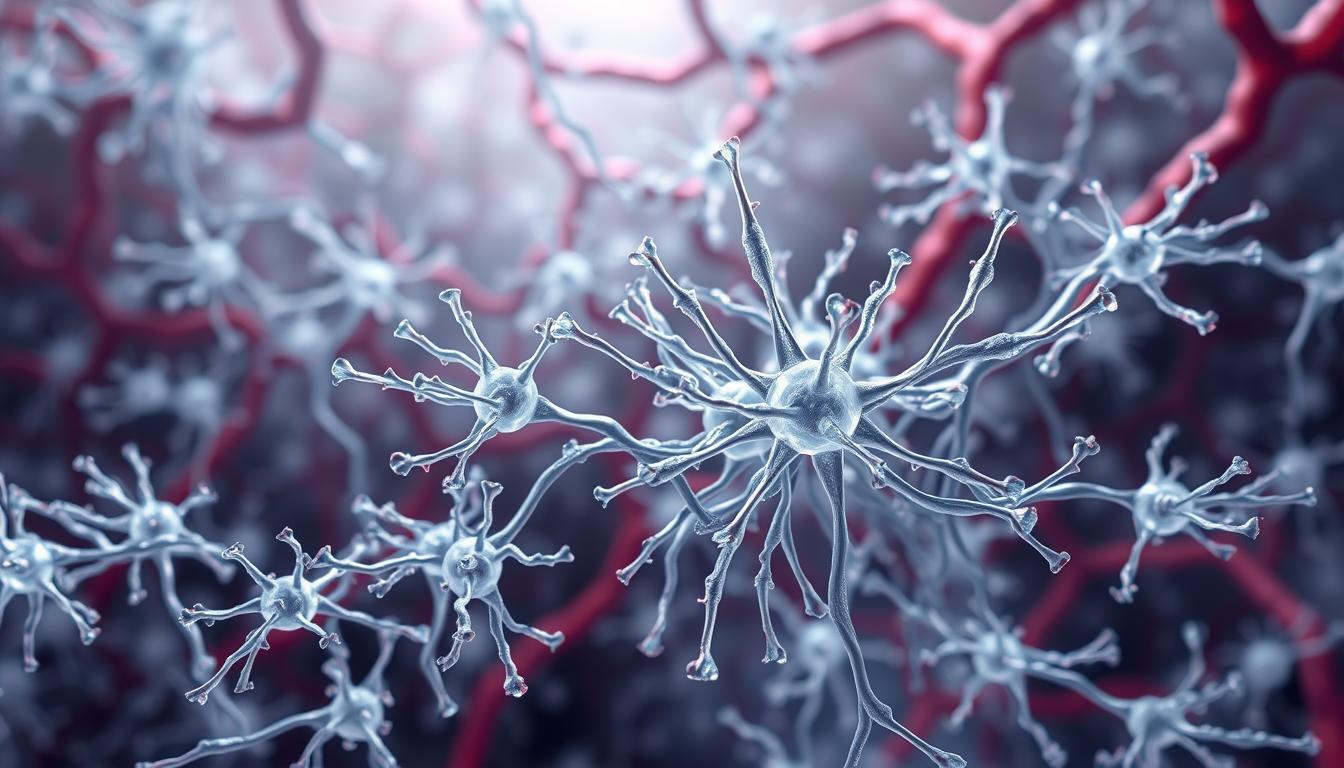
Ever wondered how your body stays strong and heals itself? It’s thanks to fibroblast cells. These cells are key to our health but often go unnoticed.
So, what do fibroblasts do? They are the hidden heroes of our body’s structure. They make and keep the extracellular matrix. This is a complex network that supports tissues and helps them talk to each other.
Fibroblast cells are very special. They can change to fit different situations. They help create tissue strength, make important proteins like collagen, and are key in healing wounds and repairing tissues.
They help many parts of our body, like the skin, lungs, and muscles. They also help with our immune system and how cancer grows. So, fibroblasts are very important for understanding health and disease.
Key Takeaways
- Fibroblasts are crucial for maintaining tissue structure and function
- They produce diverse extracellular matrix components
- These cells play a key role in wound healing and tissue repair
- Fibroblasts contribute to inflammation and immune responses
- They have significant implications in various diseases
What are Fibroblasts?
Fibroblasts are key cells in our bodies. They help keep our structures strong and aid in healing. They were first found in 1858 by Rudolf Virchow, who noted their unique shape.
Fibroblasts do more than just hold things together. They make proteins that help our bodies heal and grow. This is important for many parts of our body.
Defining Characteristics of Fibroblasts
Fibroblasts have special traits that make them stand out:
- Elongated, spindle-shaped morphology
- High adaptability across different tissue environments
- Ability to synthesize complex extracellular matrix components
- Critical role in wound healing and tissue repair
Types of Fibroblasts
There are many kinds of fibroblasts, each with its own job:
| Tissue Type | Fibroblast Characteristics |
|---|---|
| Skin | Produce collagen and elastin for structural support |
| Intestinal | Support stem cell niches and rapid tissue regeneration |
| Cardiac | Contribute to heart tissue maintenance and repair |
Comparative Cellular Characteristics
Fibroblasts are very flexible. They can change into different types of cells. This makes them very useful in fixing and growing tissues.
“Fibroblasts are not just passive structural elements, but dynamic cellular architects of tissue health and repair.” – Contemporary Cell Biology Research
The Role of Fibroblasts in Tissue Repair
Fibroblasts are key to keeping tissues healthy and helping wounds heal. These cells are vital for fixing damaged body parts. They show amazing skills in rebuilding and regenerating areas that have been hurt.
The healing of wounds goes through three main stages. In each stage, fibroblasts show their incredible flexibility:
- Inflammation phase
- Proliferation phase
- Remodeling phase
Wound Healing Process
When wounds heal, fibroblasts quickly start dividing. This happens in the proliferative phase, which lasts about 2 to 3 weeks. Collagen synthesis is key during this time for rebuilding tissues.
Extracellular Matrix Production
Fibroblasts make the main parts of the extracellular matrix. They produce important proteins like collagen type I and type III. This complex tissue repair process is all about making the right proteins to fix damaged tissues.
Interaction with Immune Cells
Fibroblasts and immune cells work together in a complex way. Activated fibroblasts make pro-inflammatory cytokines like TNF-α and IL-6. These are important for moving from the inflammatory to the proliferative wound healing stages.
“Fibroblasts are not just passive participants, but active conductors in the symphony of tissue regeneration.” – Research Insights
Things like age, diseases, and mechanical stress can really affect how well tissues repair. This shows how complex fibroblast functions are.
Fibroblasts and Connective Tissue
Connective tissue is key in holding our bodies together. Fibroblasts are the main builders of this complex network. They create the extracellular matrix that gives tissues their special features.
Structure of Connective Tissue
Fibroblasts are among the most basic cells in connective tissue. They make a flexible matrix with type I and type III collagen. These cells are very good at making and fixing tissues, especially in the skin and during wound healing.
Contribution to Tissue Strength
Fibroblasts help make tissues strong in several ways:
- They produce collagen fibers
- They make glycosaminoglycans
- They create reticular and elastic fibers
- They help in scar formation
Types of Connective Tissues Affected
Fibroblasts affect many types of connective tissue, including:
- Skin tissue – Important for healing wounds
- Tendons
- Ligaments
- Connective tissue around organs
When tissues get damaged, fibrocytes can turn into new fibroblasts. This shows how amazing our body’s healing is.
Fibroblasts are vital in keeping tissues strong and helping the body heal. They play a big role in scar formation and tissue growth.
Fibroblasts in Inflammation
Fibroblasts are key players in the body’s fight against inflammation. They are cells that respond to immune challenges. Their role in cell signaling is crucial for both short-term and long-term inflammation.

- They are a diverse group with different functions.
- They can release substances that trigger inflammation.
- They work closely with the immune system.
Activation During Inflammatory Response
When inflammation starts, fibroblasts quickly respond. They send out signals that attract immune cells. Research shows that fibroblasts can react in many different ways to inflammation.
Influence on Chronic Inflammation
In long-lasting inflammation, fibroblasts keep the inflammation going. They can:
- Keep sending out inflammatory signals.
- Change the environment around tissues.
- Help keep the immune response going strong.
Role in Fibrosis
Fibroblasts are also key in fibrosis, a condition of too much scarring. Their actions can lead to abnormal healing and changes in the tissue structure.
The balance between healing and fibrosis depends on how fibroblasts interact.
| Fibroblast Type | Inflammatory Characteristic | Key Function |
|---|---|---|
| Immune-modulating (iCAFs) | High cytokine production | Immune system regulation |
| Matrix-producing (myCAFs) | Extracellular matrix generation | Tissue structure maintenance |
| Progenitor Fibroblasts | Adaptable response | Tissue regeneration |
Learning about fibroblasts’ role in inflammation helps us understand many diseases. It also points to new ways to treat them.
The Influence of Fibroblasts on Aging
Aging changes the skin, with fibroblasts playing a key role. Knowing what fibroblasts do is vital as we look into aging.
Age-Related Changes in Fibroblasts
Fibroblasts change a lot with age. Studies show important facts about their aging:
- There’s a 35% drop in fibroblast numbers in older skin.
- People lose about 1% of these cells each year.
- Senescent markers build up more in older cells.
Impact on Skin Aging
The decrease in skin cells is linked to fibroblast function. Older fibroblasts face many challenges that harm the skin:
| Aging Factor | Impact on Fibroblasts |
|---|---|
| Reactive Oxygen Species (ROS) | Speeds up cell damage |
| Collagen Production | Less elastin and collagen made |
| Environmental Stress | Makes cells more vulnerable |
Fibroblast Senescence
Senescent fibroblasts are key in aging. They pile up and mess with the skin’s structure. This leads to wrinkles and less skin flexibility.
“Aging is not just a passage of time, but a complex cellular transformation driven by fibroblast dynamics.” – Cellular Aging Research Institute
Strategies to keep fibroblasts working well can slow aging. This shows how crucial it is to understand these skin cells.
Fibroblasts in Organ Development
Fibroblasts are key cells in organ development. They help shape and keep biological structures together. These cells are vital for growing organs, providing support and signals during growth.
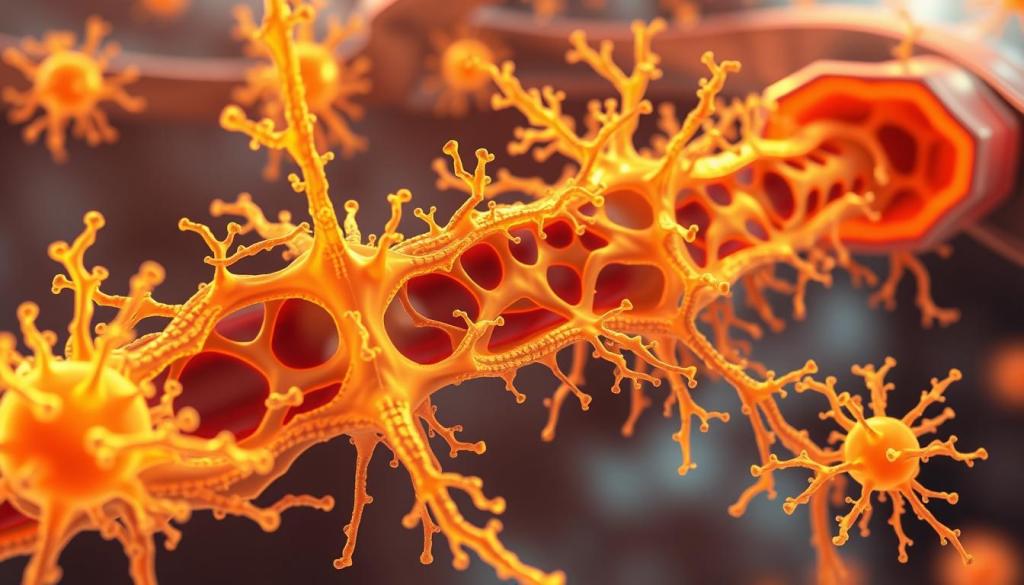
In the early stages of growth, fibroblasts are amazing at making the matrix and tissues. They work together to help organs grow and develop.
Contribution to Organogenesis
Fibroblasts help organs form in several ways:
- They create the basic structure for tissues.
- They make important growth factors.
- They help cells become specialized.
- They control important signals for growth.
Role in Maintaining Organ Homeostasis
Fibroblasts also keep organs healthy after they form. They adjust to changes to keep tissues strong and working right.
| Organ System | Fibroblast Function |
|---|---|
| Respiratory System | Supporting alveolar structure and gas exchange |
| Cardiovascular System | Maintaining vascular wall integrity |
| Skin | Producing collagen and supporting wound healing |
Significance in Embryonic Development
In early growth, fibroblasts are crucial for tissue patterning and cell types. They help create the complex structures of organs. This shows how important they are in growing and developing tissues.
Fibroblasts are not just passive structural cells, but active participants in the intricate dance of organ development and maintenance.
Research Advances in Fibroblast Biology
The study of fibroblast cells has seen big leaps forward. We now know more about how these cells work and interact. Scientists are learning about the complex signals that control fibroblast actions in various tissues.
Recent Discoveries
New research has changed how we see fibroblast cells. Thanks to single-cell RNA sequencing, we’ve found:
- 20 different types of fibroblast cells from 517 human samples
- 9 common types and 6 specific to certain tissues
- Less than 12% of markers are shared across different tissues
Advanced Research Technologies
New tools are pushing fibroblast research ahead. Key methods include:
- Single-cell RNA sequencing (scRNA-seq)
- Spatial transcriptomics
- Advanced lineage tracing techniques
- Complex cell signaling mapping
Future Research Directions
The future of fibroblast studies is promising. Researchers are looking into:
- Using fibroblasts for regenerative medicine
- Understanding complex cell signals
- Studying fibroblast roles in diseases
“The complexity of fibroblast cells continues to challenge and inspire scientific exploration.” – Contemporary Cell Biology Research
These major breakthroughs show the huge potential of fibroblast research. They help us understand human health better and lead to new medical treatments.
Therapeutic Applications of Fibroblasts
Fibroblasts are key in modern medicine, showing great promise for healing tissues and wounds. Their special abilities make them crucial for regenerative medicine and treatments.

Regenerative Medicine Breakthroughs
Studies have found that fibroblasts are amazing at regrowing tissues. They are essential for healing wounds by:
- Creating proteins that hold tissues together
- Helping rebuild damaged areas
- Supporting cells as they move to heal
Tissue Engineering Innovations
Scientists use fibroblasts in new tissue engineering methods. They can make artificial tissues for medical use.
“Fibroblasts represent a transformative technology in regenerative medicine” – Medical Research Quarterly
Cancer Treatment Research
Research is looking into how fibroblasts can change tumor environments. Scientists are studying their role in cancer and possible treatments.
| Therapeutic Area | Fibroblast Application | Research Status |
|---|---|---|
| Wound Healing | Tissue Regeneration | Advanced Clinical Trials |
| Skin Disorders | Cellular Reconstruction | Promising Preliminary Results |
| Cancer Research | Microenvironment Modulation | Ongoing Investigations |
Research shows fibroblasts could greatly improve medical treatments. They hold great promise for healing tissues and wounds.
Conclusion: The Critical Importance of Fibroblasts
Fibroblasts are key to our health, showing great flexibility in many body systems. They do more than just hold tissues together. They help in making collagen, healing wounds, and keeping organs in shape.
Studies show fibroblasts are vital in both health and disease. They make important parts of our tissues and control inflammation. Special types, like myofibroblasts, help change tissues, which can lead to diseases like fibrosis in lungs, liver, and kidneys.
Key Research Insights
Scientists are learning more about how fibroblasts work. They see hope in treating diseases by changing how fibroblasts act. More research aims to find ways to use fibroblasts for good, without causing harm.
Future Perspectives
As science grows, so will our understanding of fibroblasts. They play a big role in many medical areas, like fixing damaged tissues and managing long-term diseases. Researchers are eager to find new ways to help fibroblasts work better for us.
FAQ
What are fibroblasts and what is their primary function?
Fibroblasts are special cells in our body. They make the stuff that holds our tissues together, like collagen. They help keep our tissues strong and heal wounds.
How do fibroblasts contribute to wound healing?
When we get hurt, fibroblasts move to the wound. They make collagen and other proteins to help fix the tissue. This helps close the wound and rebuild damaged areas.
What is the relationship between fibroblasts and aging?
As we get older, fibroblasts don’t work as well. They make less collagen, leading to wrinkles and less elastic skin. This makes aging more visible.
Can fibroblasts be used in medical treatments?
Yes, fibroblasts are being studied for medical uses. They could help in fixing damaged tissues and healing wounds. This is part of regenerative medicine.
How do fibroblasts interact with other cells in the body?
Fibroblasts talk to other cells through signals. They work with immune cells and help keep tissues healthy. They are key in fixing and growing new tissue.
What types of tissues do fibroblasts support?
Fibroblasts are in many tissues like skin, tendons, and organs. They keep tissues strong and elastic. They also make important proteins for these tissues.
How do fibroblasts contribute to inflammation?
During inflammation, fibroblasts get active. They send signals and work with immune cells. But, if they stay active too long, it can cause more harm.
What makes fibroblasts unique compared to other cell types?
Fibroblasts are special because they make collagen and adapt to different tissues. They are very good at fixing and keeping tissues strong. This is different from many other cells.




Leave a Comment
Your email address will not be published. Required fields are marked *