



Ever wondered how scientists get such precise results? The key is the spectrophotometer blank. It’s a crucial part that turns raw data into reliable scientific findings.
A spectrophotometer does more than just measure light. It’s a complex tool for scientists to figure out how much light a sample absorbs or lets through. The blank in spectrophotometry is a basic method to make sure measurements are correct.
Scientists use blank solutions as a starting point. These solutions have everything in the sample except the specific thing being studied. This creates a clear zero point for future measurements.
Working with spectrophotometers needs careful preparation and knowledge. Researchers must learn how to prepare blanks correctly. This is essential for getting trustworthy results in many scientific fields.
Key Takeaways
- Blanks establish critical baseline measurements in spectrophotometry
- Proper blank preparation ensures accurate scientific data
- Spectrophotometers demand precise calibration techniques
- Blank solutions eliminate interference from solvent or container effects
- Understanding blank methodology is crucial for research integrity
Introduction to Spectrophotometry
Spectrophotometry is a key analytical method. It lets scientists study molecular interactions by measuring light. By grasping the spectrophotometer principle, researchers gain vital insights in many fields.
Understanding Spectrophotometry
A spectrophotometer is a sophisticated tool. It measures how much light a substance absorbs or transmits at different wavelengths. It works in a wide range of 185-2100 nm, making precise analysis possible for various materials.
Significance in Scientific Research
Spectrophotometry is more than just measuring. It gives researchers essential tools to:
- Analyze molecular concentrations
- Identify chemical compositions
- Investigate reaction kinetics
- Perform quantitative assessments
Diverse Applications Across Fields
Scientists use spectrophotometry in many areas, including:
| Field | Primary Applications |
|---|---|
| Biochemistry | Protein and nucleic acid analysis |
| Environmental Science | Water quality monitoring |
| Medical Research | Disease marker detection |
| Chemistry | Reaction rate measurements |
“Spectrophotometry transforms invisible molecular interactions into measurable scientific data.” – Scientific Research Insights
The Beer-Lambert Law is key to spectrophotometry. It shows a direct link between absorbance and concentration. This principle helps researchers measure substances accurately in many studies.
What Is a Blank in Spectrophotometry?
Spectrophotometry needs precise measurements. Knowing what a blank is in spectrophotometer procedures is key for accurate research. A blank acts as a reference point, helping researchers set a baseline for their measurements.
In spectrophotometric analysis, a blank is a solution without the analyte being studied. It helps remove background interference and sets a zero reference point for measurements.
Definition of a Blank
A blank usually includes the solvent and any extra reagents from the experiment. It’s important that the blank solution matches the sample matrix, except for the substance being analyzed.
Purpose of a Blank
- Establish a baseline measurement
- Remove background noise
- Compensate for solvent and reagent interactions
- Improve measurement accuracy
Common Materials Used as Blanks
Researchers choose blank materials based on their needs. Common blanks include:
- Distilled water
- Specific buffer solutions
- Pure solvents matching the sample matrix
- Reagent solutions without the target analyte
*”A well-prepared blank is the foundation of precise spectrophotometric measurements.”*
Scientists must ensure the blank solution is clean and matches the experiment’s conditions. Proper blank preparation reduces errors and makes spectrophotometric data more reliable.
Importance of Proper Blank Calibration
Spectrophotometer working needs precise blank calibration for accurate measurements. Researchers in many fields know how crucial proper calibration is. It helps reduce errors and makes data more reliable.

Accurate blank calibration is key to spectrophotometric analysis. If calibration goes wrong, spectrophotometer results can be off or wrong.
Impact on Measurement Accuracy
The accuracy of spectrophotometer readings depends on well-prepared blank samples. Choosing the wrong blank can change absorbance readings a lot. This can lead to big errors in calculations.
- Calibration ensures consistent light intensity
- Prevents unreliable test results
- Identifies potential equipment issues
- Enables rapid and precise data collection
Reducing Experimental Errors
Calibration curves are vital in spectrophotometer work. They set up standard measurement rules. These curves let researchers compare unknowns to knowns with great precision.
| Calibration Frequency | Purpose |
|---|---|
| Annually | Ensure reliable instrument performance |
| Before Critical Experiments | Validate measurement accuracy |
| After Major Repairs | Confirm instrument functionality |
Enhancing Data Reliability
Spectrophotometer use needs strict calibration for scientific integrity. A well-calibrated instrument can make all the difference between significant research and unclear results.
“Precision in measurement is the hallmark of excellent scientific methodology.” – Scientific Research Standards
Experts say to check calibration often. This keeps the instrument working well and ensures accurate results.
Types of Blanks in Spectrophotometry
Spectrophotometer instruments use different blanks to get precise measurements. This helps avoid errors. Knowing about these blanks is key for accurate research in many fields.
There are several blank types for spectrophotometers. Each has its own role in analysis:
Reagent Blanks
Reagent blanks are vital in spectrophotometry. They have everything in the method except the analyte. Researchers use them to:
- Find chemical interferences
- Set baseline measurements
- Account for solvent or reagent effects
Solvent Blanks
Solvent blanks help check for interferences from the solution. Key characteristics include:
- They are pure solvent without extra reagents
- They help spot solvent-specific spectral issues
- They act as a reference for measurements
Reference Blanks
Reference blanks are a standard for spectrophotometry. They help researchers:
- Standardize data
- Reduce background noise
- Boost measurement accuracy
“The precision of spectrophotometric analysis depends significantly on the careful selection and preparation of appropriate blank samples.” – Scientific Analytical Research
| Blank Type | Primary Function | Typical Use |
|---|---|---|
| Reagent Blank | Identify Chemical Interference | Laboratory Analytical Methods |
| Solvent Blank | Evaluate Solvent Contributions | Spectral Artifact Detection |
| Reference Blank | Normalize Experimental Data | Comparative Measurements |
Each blank type is important for accurate spectrophotometry. They help ensure researchers can rely on their results.
Preparing the Blank Sample
To get accurate results, preparing blank samples is key. These samples act as a reference point. They help scientists remove background noise and calibrate their tools.
Selecting Appropriate Solvents
Choosing the right solvent is vital. It affects how well the spectrophotometer works. The type of solvent needed varies based on the research:
- Water-based samples need deionized (DI) water
- For organic compounds, use a solvent that matches the sample
- In biochemical studies, buffer solutions are often used
Ensuring Consistency in Measurements
Consistent blank preparation is important. Here are the steps to follow:
- Use clean, matched cuvettes
- Fill cuvettes to the 2/3 mark
- Keep the temperature consistent
- Allow 15 minutes for the instrument to warm up
Tips for Accurate Preparation
Here are some key tips for researchers:
“Precision in blank preparation is the foundation of reliable spectrophotometric analysis.”
| Preparation Step | Recommended Practice |
|---|---|
| Solvent Purity | Use the highest grade available |
| Cuvette Handling | Avoid fingerprints, clean with lint-free wipes |
| Volume Consistency | Measure precisely, maintain uniform volume |
By following these tips, researchers can reduce errors. This makes spectrophotometric measurements more reliable.
The Role of the Blank in Absorbance Measurements
Spectrophotometer principles are key in scientific measurements. The blank solution is crucial for finding out how much of a sample is present. This is done through absorbance measurements.
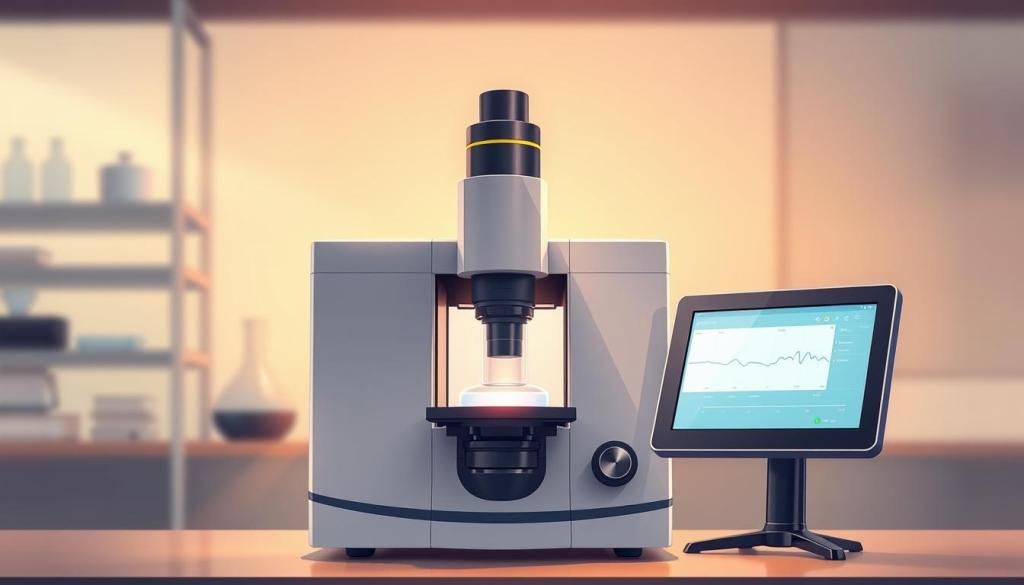
To understand spectrophotometer uses, we must see how blank solutions help. They are essential for getting accurate results in scientific analysis. These solutions act as a baseline for comparing and adjusting experimental data.
Baseline Correction Fundamentals
Baseline correction is a key part of spectrophotometric analysis. Scientists use blank solutions for:
- Eliminating background interference
- Setting a zero reference point
- Removing variations caused by the solvent
Comparing Sample Results
Comparing blank and sample measurements gives us important info about the substance being studied. By subtracting the blank’s absorbance from the sample’s, scientists can find out the exact concentration of the substance.
| Measurement Type | Purpose | Significance |
|---|---|---|
| Blank Measurement | Establish baseline | Removes instrumental and solvent contributions |
| Sample Measurement | Detect compound concentration | Provides specific absorbance characteristics |
Visualizing Data Accuracy
Without proper blank correction, spectrophotometric data can be misleading. Modern photometer software usually handles the blank subtraction automatically. This makes the results more reliable.
Accurate blank measurements are the cornerstone of precise scientific analysis.
Researchers need to make fresh blank measurements for every ten samples. They also need to do this when a lot of time has passed since the last analysis. This keeps the measurements accurate.
Common Errors in Blank Usage
Spectrophotometer applications need precision. Knowing what is blank in spectrophotometer measurements is key for accurate research. Small mistakes can greatly affect results, so making sure the blank is prepared correctly is vital.
Scientists often face problems with blank samples in spectrophotometric analysis. It’s important to spot and fix these common errors to get reliable data.
Inconsistencies in Blank Preparation
Preparing blanks needs careful attention. Issues that can mess up measurements include:
- Introducing air bubbles during sample pipetting
- Using contaminated solvent solutions
- Improper cleaning of measurement cuvettes
- Inconsistent temperature variations
Misinterpretation of Results
Researchers must watch out for possible misinterpretations. Negative absorbance values can show problems with the blank solution or how it’s measured.
*Accurate blank preparation is the foundation of reliable spectrophotometric analysis.*
Avoiding Contamination
Contamination is a big challenge in spectrophotometer use. Ways to reduce contamination include:
- Using high-purity solvents
- Implementing strict cleaning protocols
- Utilizing disposable cuvettes when possible
- Storing blank solutions under controlled conditions
A 1973 College of American Pathologists test showed the need for precision. It found coefficients of variation in absorbance up to 22%, which dropped to 15% later. This shows the ongoing need for careful blank management.
Best Practices for Blank Management
Managing blanks well is key to getting accurate results from spectrophotometers. Scientists and researchers need to follow certain steps to make sure their measurements are reliable.
Regular Instrument Calibration
Calibrating spectrophotometers right is vital for keeping measurements accurate. Experts suggest a few key practices to keep instruments working well:
- Calibrate every 2 to 4 hours during continuous use
- Allow a 10-minute warm-up period before calibration
- Ensure stable operating temperature
Environmental Considerations
Environmental factors greatly affect spectrophotometer work. Researchers should focus on:
- Avoiding direct sunlight exposure
- Maintaining clean storage environments
- Controlling dust and humidity levels
“Precision in spectrophotometric analysis begins with meticulous environmental control and instrument maintenance.”
Documentation and Record-Keeping
Keeping detailed records is crucial for scientific research. Effective record-keeping strategies include:
- Logging calibration dates and results
- Tracking environmental conditions
- Maintaining detailed sample preparation notes
By following these best practices, you can boost measurement accuracy by up to 15%. This can also lower the chance of errors in spectrophotometric analyses.
Troubleshooting Blank Issues
Spectrophotometer types need careful attention to blank measurements. Researchers often face challenges that affect their work’s accuracy.

Knowing common problems and their fixes is key for reliable spectrophotometer use.
Identifying Common Blank Measurement Problems
- Unexpected absorbance values
- Inconsistent blank readings
- Contamination issues
- Equipment calibration errors
Solutions for Frequent Errors
Fixing blank measurement issues needs a careful plan. Important steps include:
- Take multiple measurements to find an average
- Use distilled water or the right solvent for blanks
- Make sure cuvettes are clean and free of residue
- Check if the instrument’s lamp is working right
When to Seek Expert Help
Some spectrophotometer problems need a pro’s help. Look for expert advice when:
| Scenario | Recommended Action |
|---|---|
| Persistent measurement inconsistencies | Contact instrument manufacturer |
| Significant deviation from expected results | Seek spectroscopy specialist consultation |
| Complex calibration challenges | Request professional diagnostic assessment |
“Precision in blank measurements is the foundation of accurate spectrophotometric analysis.”
Understanding spectrophotometer definition nuances and using thorough troubleshooting can improve analysis precision and reliability.
Advanced Techniques Involving Blanks
Spectrophotometer components are key in advanced analytical techniques. They help in exploring complex measurement strategies. The world of spectrophotometry keeps growing, leading to new ways of scientific research.
Today, spectrophotometer applications have changed how scientists tackle tough analytical problems. They use new techniques that go beyond old methods.
Kinetic Studies with Blanks
Researchers use blanks in kinetic studies to get important insights into chemical reactions. They focus on:
- Watching how reactions change over time
- Setting up baseline measurements
- Tracking small chemical changes
Multivariate Analysis Techniques
Multivariate analysis is a complex way to study spectrophotometry. It lets scientists:
- Look at many variables at once
- Make experiments simpler
- Find detailed spectral information
Innovations in Blank Methodology
New spectrophotometer parts now make automatic blank correction possible. Modern tools can automatically adjust for blank values, avoiding mistakes from manual calculations.
“The future of spectral analysis lies in precision and automated correction techniques.” – Dr. Elizabeth Rogers, Spectroscopy Research Institute
Advanced algorithms help in getting more precise measurements. This is especially true when blank values are close to the analyte’s. These steps are big steps forward in spectrophotometric research.
Case Studies: Impact of Blanks
Spectrophotometers have changed science in many fields. They give important details with exact measurements. This is especially true when using blank samples in different tests.
Scientists use spectrophotometers to get accurate results and cut down on mistakes. Here are some examples of how blank measurements make a big difference in science:
Real-World Examples in Chemistry
Chemists often use blank samples to set a starting point. They’ve found that:
- Correcting for blanks can lower errors by up to 15%
- Preparing blanks well makes experiments more reliable
- Chemical tests are more trustworthy with standard blank methods
Applications in Environmental Science
Environmental scientists use spectrophotometry for key pollution checks. The main uses are:
- Finding small amounts of metals in water
- Measuring organic compounds in ecosystems
- Checking pollution with great accuracy
Role in Pharmaceutical Testing
Pharmaceutical research relies on spectrophotometers to check medicine quality. Important uses include:
- Checking drug purity
- Measuring active ingredient amounts
- Doing detailed quality checks
“Blank measurements are the foundation of accurate scientific analysis, providing essential reference points for complex investigations.”
These examples show how vital proper blank use is in science.
Conclusion
Understanding what is blank in spectrophotometer techniques is key for accurate scientific measurements. The spectrophotometer principle is vital in many research and industrial fields. It helps scientists analyze chemical concentrations with great precision.
Spectrophotometers are crucial for finding out if chemicals are present and how much. They are used in many scientific areas. This makes them very important.
The Beer-Lambert Law shows how absorbance, concentration, and path length are connected. Scientists use this to make standard curves and check concentration ranges. They also work to reduce errors.
Getting the blank right is essential for good spectrophotometric results. This ensures the data is reliable and trustworthy.
Future Research Directions
New technologies are making spectrophotometers even better. Improvements in water quality and automated systems are leading the way. Researchers are looking into more sensitive methods, especially in the 185 to 700 nm range.
These advancements could lead to even more accurate analysis. Future work might focus on cutting down on measurement errors and improving detection limits.
Best Practices Moving Forward
For successful spectrophotometric analysis, details matter a lot. From choosing the right blanks to following strict protocols, scientists must be careful. Keeping water quality high and avoiding contamination is also crucial.
By sticking to these basics, researchers can keep improving spectrophotometric analysis. This will help them in many scientific fields.
FAQ
What exactly is a blank in spectrophotometry?
A blank in spectrophotometry is a sample with all parts of the solution except the analyte. It helps calibrate the instrument and subtract background interference. This makes the measurement of the sample’s properties more accurate.
Why are blanks critical in spectrophotometric measurements?
Blanks are key because they remove systematic errors and background noise. They provide a baseline for comparing sample measurements. This ensures the data is accurate and reliable.
What are the different types of blanks used in spectrophotometry?
There are several types of blanks, including reagent blanks, solvent blanks, and reference blanks. Each type has a specific role in ensuring precise analysis.
How do I prepare a proper blank sample?
To prepare a blank, use the same solvent and reagents as your sample but without the analyte. Make sure all solutions are clean and use high-purity reagents. Follow the same steps as for the actual sample to avoid variations.
What common errors occur when using blanks in spectrophotometry?
Common mistakes include contaminating blank solutions and using the wrong solvents. Not accounting for temperature or light can also affect accuracy. These errors can lead to incorrect results.
Can blanks be used in different scientific fields?
Yes, blanks are vital in many fields like chemistry, biology, and environmental science. They are used in various applications, from chemical analysis to drug development.
How often should spectrophotometric instruments be calibrated with blanks?
Calibration frequency varies by application and instrument. Generally, instruments need fresh blanks before each measurement or as the manufacturer suggests. Frequent calibration is crucial for precise research.
What advanced techniques involve blanks in spectrophotometry?
Advanced techniques include using blanks in kinetic studies and multivariate analysis. They also involve sophisticated correction methods in various scientific fields.




Leave a Comment
Your email address will not be published. Required fields are marked *