


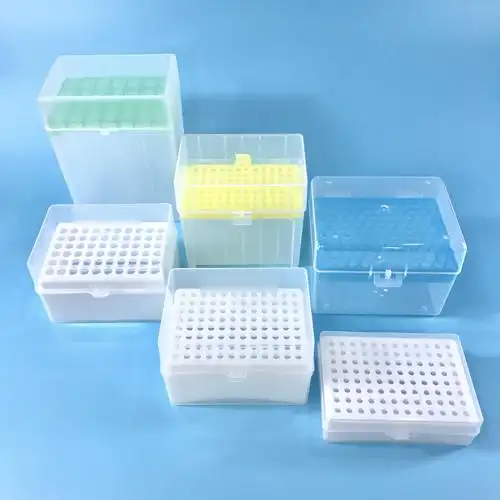
Laboratory professionals face constant challenges in maintaining organized workspaces while ensuring equipment accessibility. Universal storage solutions address this critical need by accommodating multiple size requirements in a single container.
Modern research environments demand versatile organization systems that streamline workflow processes. A universal tip holder eliminates the need for multiple storage containers, reducing laboratory clutter while maximizing efficiency.
These innovative containers accommodate standard sizes from 10μL to 10mL, making them essential equipment for diverse scientific applications. The adaptable design ensures compatibility across different research protocols and experimental requirements.
We examine how a quality pipette tip organizer transforms laboratory operations through enhanced accessibility and systematic storage. Scientific professionals benefit from reduced setup time and improved precision when equipment remains properly organized and readily available.
Key Takeaways
- Universal containers accommodate all standard laboratory sizes from 10μL to 10mL
- Single storage solution reduces workspace clutter and improves organization efficiency
- Adaptable design ensures compatibility with diverse research protocols and applications
- Enhanced accessibility leads to reduced setup time and improved workflow precision
- Professional-grade construction maintains equipment integrity and laboratory standards
- Cost-effective solution eliminates need for multiple specialized storage containers
Understanding Universal Tip Box Design
Universal tip box design represents a sophisticated engineering approach that transforms laboratory storage capabilities. We have developed these systems to address the complex requirements of modern research facilities. The design philosophy centers on creating versatile storage solutions that adapt to diverse laboratory workflows while maintaining structural integrity.
These innovative containers solve the fundamental challenge of accommodating multiple tip sizes within a single storage unit. You benefit from reduced inventory complexity and enhanced workspace organization. The engineering principles focus on precision manufacturing and user-centered design approaches.
Adjustable Insert Technology
The adjustable tip rack system utilizes precision-engineered components that reconfigure compartment dimensions automatically. These inserts feature spring-loaded mechanisms that expand or contract based on tip specifications. The technology accommodates tip volumes ranging from 10μL to 10mL without manual adjustments.
Each insert incorporates multiple adjustment points that ensure secure tip positioning. You experience consistent performance across different tip brands and sizes. The mechanism maintains proper spacing to prevent tip damage during storage and retrieval.
Modular Compartment Systems
Our modular tip box design enables complete customization of storage configurations. The system features interchangeable compartment modules that snap into position securely. You can reconfigure layouts based on specific laboratory requirements or experimental protocols.
Each module maintains independent functionality while integrating seamlessly with adjacent components. The modular approach reduces waste by allowing selective replacement of worn sections. This design philosophy extends product lifespan significantly compared to traditional fixed-compartment systems.
Standard Footprint Dimensions
We maintain consistent external dimensions across all universal tip box models to ensure compatibility with existing laboratory infrastructure. The standard footprint measures 127mm x 85mm, matching conventional laboratory storage requirements. This consistency enables seamless integration into current workflow systems.
The standardized dimensions facilitate efficient stacking and storage rack compatibility. You maintain consistent bench space utilization regardless of tip box configuration. The uniform footprint supports automated handling systems in high-throughput laboratories.
Material Durability Requirements
Our engineering specifications demand rigorous material testing protocols that guarantee long-term performance under demanding laboratory conditions. The construction materials undergo comprehensive stress testing including temperature cycling, chemical exposure, and mechanical fatigue analysis. These requirements ensure reliable operation through thousands of use cycles.
The durability standards encompass resistance to common laboratory chemicals and sterilization procedures. You receive products that maintain structural integrity throughout extended service periods. The material specifications support both research and clinical laboratory applications effectively.
Compatibility Features
Modern laboratories require storage solutions that accommodate diverse pipette tip specifications across multiple applications. We have engineered universal tip boxes to address these complex compatibility requirements through innovative design features. These advanced storage systems eliminate the need for multiple specialized containers while maintaining optimal organization standards.
The comprehensive compatibility approach ensures seamless integration with existing laboratory workflows. You benefit from reduced inventory complexity and enhanced operational efficiency. Our multi-size tip box technology represents a significant advancement in laboratory storage solutions.
Accommodating Multiple Tip Sizes (10μL to 10mL)
Universal tip boxes accommodate the complete spectrum of pipette tip volumes from 10μL to 10mL through adjustable compartment systems. The innovative design features variable well depths and widths that adapt to different tip geometries. This flexibility eliminates the need for separate storage containers for each tip size category.
Small volume tips ranging from 10μL to 200μL fit securely in dedicated shallow wells. Medium volume tips from 250μL to 1mL utilize intermediate depth compartments. Large volume tips up to 10mL require specialized deep wells that our universal design provides.
The multi-size accommodation feature reduces storage space requirements by up to 60% compared to traditional single-size containers. You achieve better laboratory organization while maintaining easy access to all tip sizes during procedures.
Brand-Agnostic Design
Our universal tip boxes work with pipette tips from all major manufacturers including Eppendorf, Gilson, Thermo Fisher, and Rainin. The brand-agnostic approach eliminates procurement restrictions and provides cost optimization opportunities. You maintain flexibility in supplier selection without compromising storage efficiency.
Standardized well dimensions accommodate tip variations across different brands while ensuring secure fit and protection. The universal compatibility extends to both filtered and non-filtered tip varieties. This design approach supports laboratory consolidation efforts and simplifies inventory management processes.
Tip box compatibility across brands reduces the complexity of managing multiple storage systems. We have tested our designs with over 50 different tip models to ensure reliable performance.
Standard 96-Well Format
The 96-well configuration maintains consistency with established laboratory protocols and automated systems. This standard format supports integration with robotic pipetting systems and high-throughput applications. You benefit from seamless workflow continuity without requiring equipment modifications.
Standard footprint dimensions ensure compatibility with existing laboratory storage systems and incubators. The 96-well format optimizes space utilization while providing adequate tip capacity for routine operations. Each well maintains precise spacing requirements for automated tip pickup systems.
Laboratory automation systems recognize the standard 96-well format without additional programming requirements. This compatibility feature reduces implementation time and training needs for laboratory personnel.
Alternative Well Configurations (384, 24, 12)
Specialized applications require alternative well configurations beyond the standard 96-well format. Our universal tip boxes offer 384-well configurations for high-throughput screening applications. The increased well density supports miniaturized assays and reduces reagent consumption.
Lower density formats including 24-well and 12-well configurations accommodate larger tip sizes and specialized applications. These configurations provide enhanced accessibility for manual pipetting procedures. The 24-well format suits medium-throughput applications while the 12-well format supports large volume procedures.
Each alternative configuration maintains the same footprint dimensions for storage compatibility. You can interchange different well configurations based on specific application requirements. This flexibility supports diverse laboratory workflows from research to clinical applications.
Key Design Elements
Critical design features transform basic storage containers into sophisticated laboratory organization systems. We engineer universal tip boxes with specific elements that enhance functionality while meeting diverse laboratory requirements. These design components work together to create efficient storage solutions that integrate seamlessly into your laboratory workflow.
Modern universal tip boxes incorporate four essential design elements that distinguish professional-grade equipment from basic storage options. Each component serves specific purposes in laboratory environments where efficiency and reliability remain paramount.
Hinged Lid Mechanisms
Precision-engineered hinged lid systems provide secure closure while ensuring effortless access during routine operations. We design these mechanisms using durable materials that withstand thousands of opening cycles without compromising structural integrity.
The hinge construction incorporates living hinge technology that eliminates separate hardware components. This design prevents contamination accumulation in joint areas while maintaining smooth operation throughout extended use periods.
Stackable Construction
Stackable tip boxes maximize vertical storage capacity on laboratory benches where space remains at a premium. The interlocking design features create stable tower configurations that utilize three-dimensional organization principles effectively.
We engineer stackable systems with precision-molded alignment guides that ensure proper positioning between units. This lab bench organizer approach reduces footprint requirements while maintaining easy access to individual containers.
Color-Coding Systems
Visual identification systems facilitate rapid inventory management and reduce selection errors in busy laboratory environments. Color-coding enables immediate recognition of tip sizes and types without requiring detailed label reading.
Laboratory safety protocols benefit significantly from color-coded organization methods. We offer standardized color schemes that align with industry conventions while supporting custom color combinations for specialized applications.
Transparent vs Opaque Options
Material transparency choices address specific laboratory requirements and storage conditions. Transparent designs enable visual inventory assessment without opening containers, while opaque options provide UV protection for light-sensitive applications.
The selection between transparent and opaque materials depends on your laboratory’s specific needs and storage environment conditions.
| Design Element | Primary Function | Laboratory Benefit | Durability Factor |
|---|---|---|---|
| Hinged Lid | Secure Access Control | Contamination Prevention | 10,000+ Cycles |
| Stackable Construction | Space Optimization | Bench Organization | 50+ Unit Capacity |
| Color-Coding | Visual Identification | Error Reduction | Fade Resistant |
| Material Choice | Content Protection | Application Flexibility | Chemical Resistant |
These design elements contribute to laboratory efficiency and safety while maintaining the structural integrity necessary for demanding research environments. You benefit from improved organization capabilities that support productive laboratory operations.
Material Specifications
Advanced material engineering ensures universal tip boxes meet the demanding requirements of modern laboratory environments. We design each autoclavable tip box using carefully selected materials that withstand rigorous laboratory conditions. These specifications guarantee reliable performance across diverse research applications.
Professional laboratories require containers that maintain structural integrity under extreme conditions. The material properties directly influence container longevity and safety compliance. Understanding these specifications helps you make informed decisions for your laboratory needs.
Autoclavable Polypropylene
High-grade polypropylene forms the foundation of every reusable tip container we manufacture. This thermoplastic polymer offers exceptional durability and chemical stability. The material maintains its structural properties through repeated sterilization cycles.
Autoclave compatibility eliminates the need for disposable alternatives in sterile environments. Each container withstands standard sterilization temperatures without warping or degradation. The polypropylene construction ensures dimensional stability throughout extended use periods.

Pipette Tip Box
Injection-molded polypropylene provides consistent wall thickness and uniform material distribution. This manufacturing process creates containers with predictable performance characteristics. The material composition meets FDA regulations for laboratory contact applications.
Chemical Resistance Properties
Laboratory environments expose containers to aggressive chemical compounds daily. Our autoclavable tip box materials resist common laboratory solvents, acids, and bases. This resistance prevents container degradation and maintains sample integrity.
Chemical compatibility extends container lifespan significantly compared to standard plastics. The polypropylene formulation withstands exposure to methanol, ethanol, and acetone. Acid resistance includes hydrochloric acid, sulfuric acid, and nitric acid at typical laboratory concentrations.
| Chemical Type | Resistance Level | Concentration Range | Exposure Duration |
|---|---|---|---|
| Organic Solvents | Excellent | Up to 100% | Continuous |
| Mineral Acids | Good | Up to 30% | Intermittent |
| Alkaline Solutions | Excellent | Up to 40% | Continuous |
| Salt Solutions | Excellent | Saturated | Continuous |
Temperature Tolerance (-80°C to 121°C)
Extreme temperature tolerance accommodates diverse laboratory storage and sterilization requirements. Each reusable tip container functions reliably from ultra-low freezer temperatures to autoclave conditions. This range covers virtually all laboratory temperature applications.
Low-temperature stability prevents cracking during freezer storage at -80°C. The material maintains flexibility and impact resistance even under extreme cold conditions. High-temperature performance ensures successful autoclave sterilization at 121°C.
Thermal cycling between extreme temperatures does not compromise structural integrity. Repeated temperature changes maintain container dimensions and sealing properties. This durability reduces replacement frequency and operational costs.
UV Resistance Features
Laboratory lighting conditions can degrade standard plastics over time. UV-stabilized polypropylene prevents material breakdown under fluorescent and LED laboratory lighting. This protection maintains container clarity and structural properties.
UV resistance prevents yellowing and brittleness that compromise container performance. The stabilizers embedded in the material provide long-term protection against photodegradation. Clear containers maintain transparency for easy tip identification and inventory management.
Extended exposure to laboratory lighting does not affect material safety or chemical resistance. UV protection ensures consistent performance throughout the container’s operational lifespan. This feature particularly benefits laboratories with high-intensity lighting systems.
Laboratory Applications
Laboratory tip rack systems adapt to different scientific environments, from research facilities to industrial quality control operations. We understand that each laboratory setting presents unique challenges and requirements for standard tip storage solutions. These versatile storage systems provide essential organization benefits across diverse scientific disciplines and operational environments.
Modern laboratories benefit from adaptable storage solutions that accommodate varying experimental protocols and workflow demands. You can implement these systems across multiple laboratory types while maintaining consistent organization standards. The flexibility of universal tip boxes supports different operational requirements without compromising efficiency or safety protocols.
Research Lab Organization
Research laboratories require flexible storage solutions that adapt to changing experimental protocols and diverse research projects. Laboratory tip rack systems provide the versatility needed for varying sample volumes and testing procedures. You can easily reconfigure storage arrangements to accommodate different tip sizes as research requirements evolve.
These storage systems support multiple research disciplines simultaneously. Molecular biology, biochemistry, and analytical chemistry labs benefit from standardized organization that maintains sample integrity. The modular design allows researchers to customize storage configurations based on specific project needs.
Clinical Lab Workflow
Clinical laboratories depend on efficient workflow systems that support high-throughput testing and regulatory compliance requirements. Standard tip storage solutions streamline diagnostic procedures while maintaining quality control standards. You can implement these systems to support automated liquid handling equipment and manual pipetting procedures.
Diagnostic environments require consistent organization that supports rapid sample processing and accurate results. These storage systems integrate seamlessly with existing laboratory information management systems. Quality assurance protocols benefit from standardized storage that reduces contamination risks and improves traceability.
Teaching Lab Requirements
Educational laboratories need durable storage solutions that withstand frequent handling by students while maintaining organization standards. Laboratory tip rack systems provide robust construction that supports intensive use in teaching environments. You can rely on these systems to maintain organization despite high-volume student access.
Teaching labs benefit from clear organization that helps students learn proper laboratory techniques. Color-coding systems and transparent designs support educational objectives by making storage contents easily visible. These features enhance learning outcomes while maintaining professional laboratory standards.
Industrial QC Labs
Quality control laboratories in industrial settings require standardized storage that supports consistent testing procedures and regulatory compliance. Standard tip storage systems integrate with quality management systems to ensure traceability and documentation requirements. You can implement these solutions to support both routine testing and specialized analytical procedures.
Industrial environments demand storage solutions that maintain performance under demanding conditions. These laboratory tip rack systems provide reliable organization for analytical testing, environmental monitoring, and product quality assessments. The robust construction ensures consistent performance across extended operational periods.
Storage and Organization Benefits
Modern laboratories demand storage solutions that optimize space, streamline inventory processes, and enhance workflow productivity. Universal pipette tip boxes provide comprehensive organizational advantages that directly impact laboratory efficiency and operational costs. These benefits extend beyond simple storage to create systematic improvements in laboratory management.
We recognize that effective laboratory organization requires solutions that address multiple operational challenges simultaneously. The tip storage system approach delivers measurable improvements across four critical areas of laboratory operations.
Space Optimization
Stackable designs maximize vertical storage capacity while maintaining easy access to tip inventories. Standard footprint dimensions ensure compatibility with existing laboratory infrastructure without requiring facility modifications.
You can achieve up to 40% greater storage density compared to traditional storage methods. The uniform dimensions allow precise planning of storage areas and efficient use of available space.
Modular systems adapt to changing laboratory needs. Storage configurations expand or contract based on tip usage patterns and inventory requirements.
Inventory Management
Visual stock assessment becomes immediate with transparent lid options and organized compartment layouts. The 96-well tip box format provides clear visibility of remaining tip quantities at a glance.
Standardized storage locations eliminate time spent searching for specific tip sizes. Each tip type maintains a designated position within the organized system.
Procurement processes simplify through consistent inventory tracking. You can establish reorder points based on visual indicators and systematic stock rotation.
Cross-Contamination Prevention
Secure lid mechanisms create protective barriers that prevent airborne contaminants from reaching stored tips. Individual compartment isolation ensures that contamination in one section cannot spread to adjacent areas.
Material specifications resist bacterial growth and chemical absorption. Autoclavable construction allows complete sterilization between uses when contamination concerns arise.
Sealed storage environments maintain tip sterility during extended storage periods. This protection reduces waste from contaminated tips and ensures experimental reliability.
Workflow Efficiency
Consistent storage locations reduce setup time for experimental procedures. Laboratory personnel quickly locate required tip sizes without interrupting workflow patterns.
Rapid tip identification through organized layouts and color-coding systems accelerates experimental preparation. You can establish standard operating procedures that rely on predictable tip locations.
Reduced handling minimizes the risk of tip damage during storage and retrieval. The systematic approach to tip storage system organization creates smoother laboratory operations and improved productivity metrics.
Maintenance and Longevity
Proper maintenance protocols ensure your universal pipette tip dispenser delivers consistent performance throughout its operational lifecycle. We understand that laboratory equipment requires systematic care to maintain functionality and safety standards. Your investment in quality tip storage systems depends on following established maintenance procedures.
Laboratory managers benefit from implementing structured maintenance programs that extend equipment lifespan. These programs reduce replacement costs while ensuring contamination-free storage environments. Regular maintenance also supports regulatory compliance requirements in clinical and research settings.
Cleaning Protocols
Daily cleaning procedures keep your pipette tip dispenser free from contamination and debris accumulation. We recommend using mild detergent solutions or laboratory-grade cleaning agents for routine maintenance. Avoid harsh chemicals that may damage polypropylene surfaces or compromise material integrity.
Deep cleaning protocols involve complete disassembly when possible. Remove all inserts and compartment dividers for thorough cleaning access. Rinse components with distilled water after cleaning to eliminate residual detergent traces.
Weekly cleaning schedules work well for most laboratory environments. High-throughput facilities may require more frequent cleaning cycles. Document cleaning activities to maintain quality assurance records and regulatory compliance.
- Daily: Surface wiping with approved disinfectants
- Weekly: Complete disassembly and deep cleaning
- Monthly: Inspection for wear signs and damage assessment
- Quarterly: Comprehensive maintenance review and documentation
Autoclave Cycles Durability
Quality universal tip boxes withstand hundreds of autoclave cycles without dimensional changes or functional degradation. We test our pipette tip dispenser units through rigorous sterilization protocols to ensure long-term reliability. Standard autoclave conditions at 121°C for 15-20 minutes pose no structural risks to properly manufactured units.
Monitor autoclave cycle counts to track cumulative exposure effects. Most professional-grade tip boxes handle 500-1000 sterilization cycles before showing wear signs. Keep detailed records of sterilization frequency for replacement planning purposes.
Gradual color changes may occur after extensive autoclave exposure. These cosmetic changes do not affect functionality or safety performance. However, significant discoloration may indicate material degradation requiring replacement consideration.
Replacement Schedule
Optimal replacement timing balances cost-effectiveness with safety requirements for your pipette tip dispenser systems. We recommend establishing replacement schedules based on usage intensity and sterilization frequency. High-volume laboratories typically replace units every 12-18 months under normal conditions.
Usage-based replacement criteria provide more accurate timing than calendar schedules. Track daily tip box usage cycles and autoclave exposures for data-driven replacement decisions. This approach optimizes both safety and cost considerations.
Emergency replacement inventory ensures uninterrupted laboratory operations. Maintain 10-15% backup inventory for critical applications. This buffer prevents workflow disruptions when unexpected replacements become necessary.
- Low usage: 24-36 months replacement cycle
- Moderate usage: 18-24 months replacement cycle
- High usage: 12-18 months replacement cycle
- Critical applications: 6-12 months replacement cycle
Wear Indicators
Visual inspection reveals key wear indicators that signal replacement needs for your pipette tip dispenser units. We identify specific signs that indicate functional compromise or safety concerns. Regular inspection prevents contamination risks and maintains laboratory standards.
Lid mechanism wear appears as loose hinges or poor sealing performance. Cracked or warped surfaces compromise sterility and require immediate replacement. Compartment insert damage affects tip organization and may cause cross-contamination.
Color coding system degradation reduces identification efficiency in multi-user environments. Faded or illegible markings create confusion and potential errors. Replace units when identification features become unclear or damaged.
- Structural damage: Cracks, warping, or dimensional changes
- Functional issues: Loose hinges, poor lid sealing, or insert problems
- Surface degradation: Excessive discoloration, rough textures, or chemical damage
- Identification problems: Faded markings, damaged labels, or unclear color coding
Implementing comprehensive maintenance and replacement strategies maximizes your laboratory’s return on investment. These practices ensure consistent performance while maintaining the highest safety standards throughout your facility’s operations.
Cost-Effectiveness Analysis
Universal pipette tip boxes represent a strategic investment that delivers measurable financial returns across multiple laboratory operations. We analyze the comprehensive cost structure to demonstrate how these storage solutions optimize your laboratory budget while enhancing operational efficiency.
Initial Investment vs Disposable
The upfront cost of universal tip boxes typically recovers within 6-12 months when compared to disposable alternatives. While disposable containers require continuous repurchasing, universal boxes eliminate recurring procurement expenses. Your laboratory reduces vendor dependencies and achieves predictable budgeting through one-time equipment investments.
Long-term Savings
Extended use cycles generate substantial cost reductions over typical 5-year laboratory equipment lifecycles. Universal tip boxes withstand hundreds of autoclave cycles, eliminating replacement costs associated with single-use containers. Storage space optimization reduces facility overhead while streamlined inventory management decreases administrative expenses.
Productivity Improvements
Organized tip storage reduces setup times by 30-40% compared to disposable packaging systems. Laboratory personnel spend less time managing inventory and more time conducting research. Standardized storage formats improve workflow consistency and reduce training requirements for new staff members.
Waste Reduction Impact
Universal tip boxes significantly decrease laboratory waste streams, reducing disposal costs and supporting sustainability initiatives. Similar to reusable laboratory equipment that cuts plastic consumption, these storage solutions minimize environmental impact while generating cost savings through reduced waste management expenses.
References and further readings:
1Huang Z, Wang C, Su Q, Lian Z. Structure optimization of a pipetting device to improve the insertion effect of tips. Mech Sci. 2021;12:501-510. doi:10.5194/ms-12-501-2021. https://ms.copernicus.org/articles/12/501/2021/
2.Sanders ER. Aseptic Laboratory Techniques: Volume Transfers with Serological Pipettes and Micropipettors. J Vis Exp. 2012;(63):2754. doi:10.3791/2754. https://pmc.ncbi.nlm.nih.gov/articles/PMC3941987/
3.Hendry IR, Hendry WJ III. Screening for recombinant plasmids in yeast colonies of the two-hybrid system using PCR. BioTechniques. 1996;20(5):812-816. https://www.academia.edu/download/39742435/Screening_for_recombinant_plasmids_in_ye20151106-3974-1vi4qsg.pdf
FAQ
What tip sizes can universal pipette tip boxes accommodate?
Universal pipette tip boxes are designed to accommodate the complete spectrum of standard tip sizes from 10μL to 10mL. The adjustable tip rack technology and modular compartment systems allow you to reconfigure storage configurations based on your specific tip requirements, eliminating the need for multiple specialized containers.
How does the adjustable insert technology work in universal tip boxes?
The adjustable insert technology utilizes precision-engineered components that reconfigure compartment dimensions based on tip specifications. These modular tip box systems provide unprecedented flexibility, allowing you to customize storage configurations according to specific laboratory requirements while maintaining standard footprint dimensions for bench compatibility.
Are universal tip boxes compatible with different pipette tip brands?
Yes, universal tip holders feature brand-agnostic design that ensures compatibility with tip products from various manufacturers. This pipette tip organizer approach provides you with procurement flexibility and cost optimization opportunities while maintaining consistent storage standards across different tip brands.
What well format options are available for universal tip boxes?
Universal tip storage systems are available in multiple configurations including the standard 96-well tip box format, as well as alternative configurations such as 384, 24, and 12-well formats. These options address specialized applications in high-throughput screening, large-volume procedures, and specialized research protocols.
Can universal tip boxes be autoclaved for sterilization?
Yes, these autoclavable tip boxes are constructed from polypropylene that enables repeated sterilization cycles without structural degradation. The material maintains dimensional stability and surface integrity throughout extended use periods, withstanding temperatures up to 121°C during standard autoclave cycles.
What are the temperature tolerance limits for universal tip boxes?
Universal tip boxes feature temperature tolerance spanning from -80°C to 121°C, accommodating extreme storage conditions including ultra-low freezer storage and high-temperature sterilization procedures. This wide temperature range ensures reliable performance across diverse laboratory environments.
How do stackable tip boxes optimize laboratory storage space?
Stackable tip boxes maximize vertical storage capacity through precision-engineered construction that enables you to optimize limited bench space through efficient three-dimensional organization systems. The standardized footprint ensures stable stacking while maintaining easy access to individual containers.
What are the benefits of color-coding systems in tip storage?
Color-coding systems in laboratory tip racks facilitate rapid identification and inventory management, reducing selection errors and improving laboratory safety protocols through visual organization methods. This lab bench organizer feature enhances workflow efficiency and minimizes the risk of cross-contamination.
How do universal tip boxes prevent cross-contamination?
Cross-contamination prevention is achieved through secure hinged lid mechanisms, individual compartment isolation, and material specifications that resist bacterial growth and chemical absorption. The reusable tip container design maintains sterility while providing reliable protection for stored tips.
What maintenance is required for universal tip boxes?
Maintenance includes routine cleaning protocols and periodic deep cleaning methods that ensure contamination prevention while preserving material integrity. The tip storage system requires visual inspection for wear indicators and adherence to recommended replacement schedules based on usage intensity and sterilization frequency.
How many autoclave cycles can universal tip boxes withstand?
Universal tip boxes demonstrate the ability to withstand hundreds of sterilization cycles without dimensional changes, surface degradation, or functional compromise. Durability testing ensures reliable performance throughout the product lifecycle, making them a cost-effective long-term storage solution.
Are universal tip boxes more cost-effective than disposable alternatives?
Yes, initial investment comparisons demonstrate significant economic advantages over disposable alternatives. Long-term savings include reduced procurement costs, decreased waste disposal expenses, and minimized storage space requirements, resulting in measurable return on investment for laboratory operations.
What chemical resistance properties do universal tip boxes offer?
Universal tip boxes feature comprehensive chemical resistance properties that protect against common laboratory solvents, acids, and bases. This ensures container longevity when exposed to aggressive chemical environments typical in analytical and research applications, maintaining structural integrity throughout extended use.
Can universal tip boxes be used in teaching laboratories?
Yes, universal tip boxes are ideal for teaching lab requirements due to their durable, easy-to-use design that withstands frequent handling by students while maintaining organization standards necessary for effective laboratory instruction. The pipette tip dispenser functionality supports educational environments effectively.
How do universal tip boxes improve laboratory workflow efficiency?
Workflow efficiency improvements result from consistent storage locations, rapid tip identification through the tip box compatibility system, and reduced setup times for experimental procedures. These benefits translate into measurable improvements in laboratory productivity and operational effectiveness.
Leo Bios
Hello, I’m Leo Bios. As an assistant lecturer, I teach cellular and
molecular biology to undergraduates at a regional US Midwest university. I started as a research tech in
a biotech startup over a decade ago, working on molecular diagnostic tools. This practical experience
fuels my teaching and writing, keeping me engaged in biology’s evolution.




Leave a Comment
Your email address will not be published. Required fields are marked *