



Ever thought about the tiny fighters in your body that keep diseases at bay? Peripheral blood mononuclear cells (PBMCs) are the heroes of our immune system. They are a key part of our blood, vital for medical research and understanding diseases.
So, what are PBMC cells? They make up about 70-90% of a human blood sample. Mostly lymphocytes with one nucleus, they include important immune cells like T cells, B cells, monocytes, and natural killer cells.
PBMCs don’t just sit back and watch. They actively help defend our bodies. They form a complex network of immune cells. These cells work hard to fight off infections, spot foreign invaders, and keep us healthy.
Key Takeaways
- PBMCs are essential immune cells with a single nucleus
- They comprise multiple cell types critical for immune response
- Constitute 70-90% of enriched blood samples
- Play a crucial role in medical and immunological research
- Include diverse cell populations like T cells, B cells, and monocytes
Overview of PBMC Cells
Peripheral blood mononuclear cells (PBMCs) are key to the human immune system. They play a big role in medical research and tests. These cells help us understand how our immune system works and how diseases start.
PBMCs make up a complex mix of cells that control our immune system. Thanks to advanced cell isolation methods, scientists can study these cells in great detail. This lets them see how cells talk to each other in the body.
Definition of PBMC Cells
PBMCs are a group of immune cells in our blood. They include:
- T cells (45-70% of lymphocytes)
- B cells (5-15% of lymphocytes)
- Natural killer (NK) cells (5-10% of lymphocytes)
- Monocytes (10-30% of total population)
Importance in Medical Research
Techniques for separating lymphocytes have changed medical research a lot. PBMCs are essential in many areas of study, like:
- Immunology studies
- Infectious disease research
- Cancer investigation
- Vaccine development
Scientists use PBMCs to study complex cell interactions, disease causes, and new treatments. Their ability to adapt makes them crucial for medical progress and finding new treatments.
Composition of PBMC Cells
Peripheral Blood Mononuclear Cells (PBMCs) are key to our immune system. Knowing what they’re made of helps us understand how to keep our immune system strong. These cells fight off infections and keep us healthy.
Types of Immune Cells in PBMCs
PBMCs are made up of different cells, each with its own job. The main types are:
- T Lymphocytes (45-70% of lymphocytes)
- B Lymphocytes (5-15% of lymphocytes)
- Natural Killer (NK) Cells (5-10% of lymphocytes)
- Monocytes (10-30% of total PBMCs)
- Dendritic Cells (approximately 1-2% of PBMCs)
Cell Population Proportions in Blood
The mix of cells in PBMCs can change based on many factors. These include health, age, and more. Scientists use special methods to study these changes.
| Cell Type | Percentage Range | Primary Function |
|---|---|---|
| CD4+ T Cells | 25-60% | Immune regulation |
| CD8+ T Cells | 5-30% | Cytotoxic response |
| B Cells | 5-15% | Antibody production |
| NK Cells | 5-10% | Viral defense |
| Monocytes | 10-30% | Inflammatory response |
Scientists use special methods to study these cells. This helps us understand how our immune system works and how to fight diseases.
Functions of PBMC Cells
Peripheral blood mononuclear cells (PBMCs) are key players in our immune system. They help fight off infections and keep us healthy. These cells are at the forefront of both our body’s quick and long-term defenses.
Exploring PBMC cells shows their complex role in our immune system. They carry out essential tasks to safeguard our bodies against harm.
Immune Response Mechanisms
PBMCs are skilled at spotting and fighting off invaders. Their main jobs include:
- Antigen recognition and processing
- Production of targeted antibodies
- Direct pathogen elimination
- Memory immune response generation
Inflammatory Response Dynamics
The inflammatory response of PBMCs involves complex cell interactions and signals. They release important cytokines to control inflammation and activate the immune system.
| PBMC Cell Type | Inflammatory Function | Percentage in Blood |
|---|---|---|
| T Cells | Cytokine Production | 70-85% |
| B Cells | Antibody Generation | 5-10% |
| Natural Killer Cells | Direct Pathogen Elimination | 5-20% |
| Monocytes | Inflammatory Signaling | 10-20% |
PBMCs are incredibly versatile. They can quickly and effectively tackle different threats. This makes them essential for our health and fighting diseases.
Isolation Techniques for PBMC Cells
Getting peripheral blood mononuclear cells (PBMCs) right is key. It needs special techniques to separate cells well. Scientists use advanced methods to get these important immune cells from blood samples.
Density Gradient Centrifugation: A Fundamental Approach
Density gradient centrifugation is the main way to get PBMCs. It uses the different densities of blood parts to separate cells well. Media like Ficoll-Paque and Histopaque are vital in this process.
- Specific density of Ficoll gradient medium: 1.077 g/ml
- Centrifugation speed: 1000 x g for 20 minutes
- Separates components into distinct layers: plasma, PBMCs, and red blood cells
Using Ficoll-Paque for isolation shows some interesting stats. On average, it gets 6 x 10^5 cells/ml from whole blood. SepMate tubes, however, get 8 x 10^5 cells/ml, which is more.
Advanced Isolation Methods: Microfluidic Technology
New microfluidic tech is changing how we get PBMCs. These new methods are more precise and gentle. They help keep cells alive and working well.
| Isolation Method | Cell Recovery Rate | Cell Viability |
|---|---|---|
| Ficoll Approach | 6 x 10^5 cells/ml | 100% |
| SepMate Tubes | 8 x 10^5 cells/ml | 100% |
| CPT Method | 13 x 10^5 cells/ml | 100% |
Choosing the right method for getting PBMCs is important. It affects what you can do in research, like studying the immune system or finding new treatments.
Applications of PBMC Cells in Research
Peripheral blood mononuclear cells (PBMCs) are key in medical research. They help us understand many diseases. These cells are important for finding new treatments.
Cancer Research Investigations
In cancer studies, PBMCs show how the immune system fights tumors. By processing blood samples, researchers can:
- Study how immune cells interact with tumors
- Work on new treatments that target cancer
- Look at how immune cells react to cancer
Autoimmune Disease Studies
Methods for purifying immune cells help us understand autoimmune diseases. PBMCs help us:
- Learn about inflammation
- Find out why some people get certain diseases
- Find new ways to treat these diseases
Infectious Disease Research
PBMCs are vital for studying how pathogens work and making vaccines. Researchers can:
- See how the immune system reacts to different pathogens
- Check if vaccines work well
- Discover how viruses and bacteria cause infections
| Research Domain | PBMC Research Focus | Key Outcomes |
|---|---|---|
| Cancer | Immunotherapy development | Targeted treatment strategies |
| Autoimmune Diseases | Inflammatory pathway analysis | Precision medicine approaches |
| Infectious Diseases | Immune response mapping | Vaccine design improvements |
PBMCs have extraordinary potential in medical research. They help us understand diseases better and find new treatments.
Clinical Importance of PBMC Cells
Peripheral blood mononuclear cells (PBMCs) are key in medical research and diagnostics. They help us understand human immune responses better. This makes PBMC cells essential for new medical technologies.
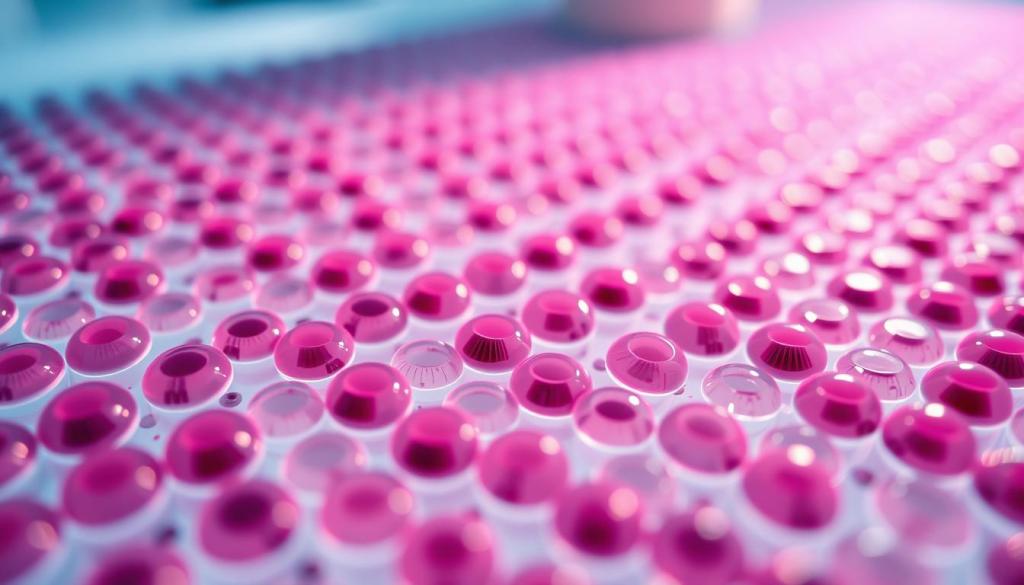
Scientists see great potential in PBMC cells for improving medical treatments. These cells give us deep insights into human health and diseases.
Biomarker Discovery
Biomarker research is a big deal for PBMC analysis. Researchers use these cells to find unique molecular signs. These signs help:
- Detect early disease signs
- Predict how well treatments will work
- Make treatments more personal
Therapeutic Applications
PBMC cells have many uses in medicine, especially in finding new treatments.
| Cell Type | Percentage in PBMC Sample | Clinical Significance |
|---|---|---|
| Lymphocytes | 70-90% | Primary immune response |
| T Cells (CD3+) | 45-70% | Adaptive immune targeting |
| B Cells | 5-15% | Antibody production |
| Natural Killer Cells | 5-10% | Viral response |
Recent studies show how these cells can be used for targeted treatments. This is especially true in fighting cancer and immune diseases.
PBMCs are at the forefront of personalized medical research. They offer new ways to understand complex biological processes.
PBMC Cells in Vaccine Development
Peripheral blood mononuclear cells (PBMCs) are key in vaccine research. They help scientists understand how vaccines work. By isolating PBMCs through lymphocyte separation, they gain insights into the immune system’s response to vaccines.
Vaccine development is complex. It depends on knowing how immune cells react to vaccines. PBMCs give a detailed look at how cells respond, helping to test vaccine potential.
Role in Immunogenicity Studies
In immunogenicity studies, PBMCs are crucial. Researchers use them to see how vaccines trigger immune responses. They use:
- ELISPOT assays to spot specific immune cell actions
- Flow cytometry to check T cell and B cell activity
- Cytokine production tests
- Proliferation assays
Efficacy Testing Strategies
Testing vaccine efficacy involves analyzing PBMCs closely. Scientists look at:
- T cell activation levels
- Antibody production potential
- Memory cell creation
- Inflammatory response details
These advanced methods help predict vaccine success before clinical trials. This speeds up global health efforts.
Challenges in PBMC Cell Research
Researchers face many complex challenges when studying peripheral blood mononuclear cells (PBMCs). These challenges affect the quality and reliability of their studies. They need to focus on every detail of mononuclear cell isolation and blood sample processing.
The main hurdles in PBMC research come from biological variability and technical issues. Scientists must overcome several critical challenges in their work.
Quality Control Challenges
Quality control is a big challenge in PBMC research. Researchers need to tackle several important issues:
- Keeping cells alive and healthy during isolation
- Stopping contamination from other cells
- Standardizing how cells are isolated
- Reducing cell damage during processing
Variability in Cell Populations
Donor variability adds a lot of complexity to PBMC research. Key factors include:
- Differences in genetics between donors
- Changes in cell types with age
- How health affects cell populations
- Varied immune responses
How blood samples are processed greatly affects research results. Researchers must choose isolation methods that reduce stress on cells and keep their functions intact. Techniques like flow cytometry and buoyancy activated cell sorting help by offering more accurate cell analysis.
By understanding these challenges, researchers can create stronger protocols. This improves the quality and consistency of PBMC-based studies.
Future Directions in PBMC Cell Research
The field of immune cell purification is changing fast. It’s opening up new ways to understand PBMC cells. Scientists are using new technologies to analyze and use these blood components in new ways.
New research in PBMC cell technologies is looking at several key areas:
- Advanced single-cell sequencing techniques
- Microfluidic isolation methods
- Artificial intelligence-driven data analysis
- Personalized medicine applications
Advancements in Isolation Methods
New ways to purify immune cells are changing how scientists work with PBMC cells. Microfluidic devices are making it possible to separate cells with great precision. This means researchers can get specific cell types with very little contamination.
Emerging Areas of Study
The future of PBMC cells research looks very promising. Scientists are working on new ideas, including:
- Single-cell sequencing to study each cell’s unique traits
- Creating PBMC-derived organoids
- Using advanced computer methods for cell analysis
Artificial intelligence is becoming more important in understanding PBMC data. Machine learning can spot patterns and connections that were hard to see before. This is leading to new discoveries in medicine and personalized treatments.
The convergence of advanced technologies is transforming our understanding of PBMC cells and their potential in medical science.
Regulatory Considerations for PBMC Research
Research on Peripheral Blood Mononuclear Cells (PBMCs) needs careful ethical and regulatory oversight. This ensures the research is done right and keeps participants safe. The rules for working with leukocytes are strict and must be followed closely.
Ethical Framework in Human Cell Research
When using human cells, researchers face a complex ethical landscape. Important ethical points include:
- Getting clear consent from donors
- Keeping donor privacy safe
- Using biological samples wisely
- Being open about research methods
Compliance with Research Guidelines
To do PBMC research well, you must follow strict rules. Key guidelines are:
| Guideline | Primary Focus |
|---|---|
| Good Laboratory Practice (GLP) | Laboratory quality and consistency |
| Good Clinical Practice (GCP) | Clinical trial standards and participant safety |
| Institutional Review Board (IRB) Guidelines | Ethical review of research protocols |
Researchers must keep detailed records and stick to approved methods. This ensures the research on PBMCs is reliable and can be repeated.
Comparison of PBMC Cells with Other Blood Components
To understand PBMCs, we must compare them with other blood parts. Blood processing shows how PBMCs, whole blood, and plasma differ. These differences are key in science and medicine.
PBMCs are a special group of blood cells. They have about 2 million cells per milliliter of blood. This makes them a rich source for studying the immune system.
PBMCs versus Whole Blood
There are big differences between PBMCs and whole blood:
- Whole blood has many cell types, but PBMCs are more focused
- PBMCs make up 70-90% of enriched cell samples
- They have more immune cells than whole blood
PBMCs versus Plasma
Plasma is different from PBMCs because it’s cell-free:
- Plasma has proteins and nutrients but no cells
- PBMCs give direct access to immune cells
- Research needs determine which to use
Techniques like density gradient centrifugation help isolate PBMCs. This makes them a valuable tool for studying the immune system and how cells work together.
Resources for PBMC Cell Research
Researchers studying peripheral blood mononuclear cells (PBMCs) use big databases and work together to learn more. The tools for studying immune cells have grown a lot. This helps scientists do detailed studies on cells.
Many national and international research centers have special collections of PBMC data. These include genomic databases and centers for immunology research. They help scientists share and find important information about cells and how they work together.
Places like the National Institutes of Health (NIH) and global research networks are key in PBMC studies. They offer money, training, and tools for complex studies. Scientists can use advanced tools and follow set steps for studying PBMCs. They also get to work with others from different fields.
Databases and Repositories
Top immunology databases have lots of PBMC research materials. They have genetic info, data on cell types, and big collections of research. This helps scientists dive deep into how PBMCs work.
Research Institutions and Collaborations
Worldwide research centers have strong networks for PBMC studies. These networks help share knowledge, make research methods the same, and speed up finding new things in immunology and medicine.
FAQ
What are Peripheral Blood Mononuclear Cells (PBMCs)?
PBMCs are a type of white blood cell. They include lymphocytes and monocytes. These cells are key to our immune system, helping fight off infections and inflammation.
Why are PBMCs important in medical research?
PBMCs help us understand how our immune system works. They are used to study diseases and find new treatments. This includes fighting cancer and autoimmune diseases.
How are PBMCs isolated from blood samples?
PBMCs are usually isolated through density gradient centrifugation. This method uses special media like Ficoll-Paque. It separates the cells from other blood parts, making it easier to get them.
What cell types are included in PBMCs?
PBMCs have four main types: T cells, B cells, natural killer cells, and monocytes. Each type has its own role in our immune system, like fighting off infections and producing antibodies.
What are the main functions of PBMCs in the human body?
PBMCs are vital for our immune defense. They help recognize and destroy pathogens, produce antibodies, and control inflammation. They keep our immune system in balance.
How are PBMCs used in vaccine development?
Researchers use PBMCs to test how well vaccines work. They look at T cell and B cell responses. This helps them see if a vaccine can trigger a strong immune reaction.
What challenges do researchers face when working with PBMCs?
Researchers face challenges like keeping cells alive and consistent. They also deal with differences between donor samples. Ensuring cell function during storage is another challenge.
Can PBMCs be used in personalized medicine?
Yes, PBMCs play a big role in personalized medicine. They help tailor treatments to individual needs. They also give insights into how our immune system works uniquely.
What emerging technologies are being developed for PBMC research?
New technologies include single-cell sequencing and automated systems. Microfluidic devices and AI are also being used. These advancements aim to improve research and our understanding of immune cells.
How do researchers ensure ethical use of PBMCs?
Ethical research involves getting consent and protecting privacy. It follows guidelines like Good Laboratory Practice and Good Clinical Practice. This ensures responsible use of biological materials.





Leave a Comment
Your email address will not be published. Required fields are marked *