



Within every drop of human blood lies a powerful investigative resource: peripheral blood mononuclear cells (PBMCs). These critical components form the frontline defense team of our immune system, containing lymphocytes, monocytes, and dendritic cells. Their isolation from sources like buffy coats or cord blood enables researchers to study immune behavior with unprecedented precision.
Over the past five decades, PubMed records show a 230% increase in studies leveraging these biological assets. Why? Their unique composition mirrors real-time immune activity, making them indispensable for developing personalized therapies and evaluating drug efficacy. From cancer immunotherapy trials to autoimmune disorder research, PBMC analysis bridges lab discoveries with clinical outcomes.
However, success hinges on rigorous isolation protocols. Even minor contamination or cell viability drops below 90% can skew results. We prioritize standardized processing methods and cryopreservation innovations to maintain functional integrity across applications like vaccine development or biomarker identification.
Key Takeaways
- PBMCs contain essential immune components isolated from blood sources for disease research
- Over 50 years of clinical data validate their role in therapeutic development
- Strict viability standards (>90%) ensure reliable experimental outcomes
- Advanced isolation techniques minimize granulocyte contamination
- Applications span HIV research, autoimmune studies, and cancer treatment trials
Fundamentals of PBMC Cells in Immunology
Peripheral blood mononuclear cells (PBMCs) serve as a critical interface between circulating blood and immune surveillance mechanisms. These nucleated components include lymphocytes (70-90%), monocytes (10-30%), and trace dendritic cells, offering a functional snapshot of host defense systems. Standardized isolation protocols preserve their biological relevance across diverse experimental models.
Immune Cell Distribution Patterns
T lymphocytes dominate PBMC populations at 40-70%, followed by B cells (5-15%) and natural killer cells (5-20%). Monocytes typically constitute 10-30%, with dendritic cells appearing below 1%. Source material directly impacts these ratios: buffy coat-derived samples yield 15% more lymphocytes compared to whole blood preparations.
Source-Specific Yield Considerations
Leukopak collections provide 10x higher cell counts than standard blood draws, while leukoreduction systems filter granulocytes for enhanced purity. Anticoagulant choice matters—heparin preserves viability better than EDTA for long-term cultures. We recommend density gradient centrifugation with ficoll-paque solutions to achieve >95% viability in clinical-grade samples.
Contamination risks decrease when using closed-system processing, reducing platelet adherence by 80% compared to manual methods. Temperature-controlled centrifugation (18-22°C) maintains membrane integrity, particularly crucial for downstream flow cytometry applications. Consistent cryopreservation techniques ensure functional recovery rates above 85% after thawing.
what are pbmc cells used for in immunology research
Human peripheral blood mononuclear cells bridge laboratory discoveries with real-world treatment strategies. Their unique composition enables researchers to decode disease mechanisms while accelerating therapeutic breakthroughs.
Clinical Research Impact
Over 68% of phase III immunotherapy trials now incorporate PBMC data for patient stratification. These cells reveal biomarkers predictive of treatment response, particularly in autoimmune disorders and chronic infections. A 2024 Nature Medicine study demonstrated how donor-derived samples improve transplant outcome predictions by 40%.
Role in Immunotherapy Development
Advanced cell therapies rely on high-quality blood mononuclear cell products. Researchers use optimized isolation techniques to obtain T-cells for genetic engineering, achieving 92% transduction efficiency in recent trials. Three critical factors determine success:
| Parameter | CAR-T Development | Vaccine Research |
|---|---|---|
| Viability Threshold | >95% | >90% |
| Donor Screening | HLA-matched | Disease-naive |
| Yield Requirements | 5×10⁶ cells/mL | 1×10⁶ cells/mL |
Current trends emphasize cryopreserved PBMCs for multi-center studies, ensuring consistent cell performance across geographic locations. Whole blood processing innovations now reduce granulocyte contamination by 78% compared to traditional methods.
Isolation and Processing Techniques for PBMC Cells
Unlocking the full potential of mononuclear cell populations requires precision-engineered separation protocols. We prioritize methods that balance yield with functional preservation, ensuring reliable immune system analysis across clinical and research settings.
Density Gradient and Frit Barrier Methods
The Ficoll-Paque overlay technique remains foundational for isolating human peripheral blood components. By layering whole blood over density gradient media, centrifugation separates mononuclear cells from granulocytes with 85-95% efficiency. Modern frit barrier tubes enhance this process through porous filters that stabilize layer separation during spinning.
Closed-system cell preparation tubes (CPTs) reduce contamination risks by 40% compared to open methods. For high-purity immune cell subsets, immunomagnetic separation achieves 98% specificity in targeting specific cell types like dendritic cells. Key performance metrics:
- Frit barrier processing: 22-minute protocol vs 35 minutes traditional
- CPT yields: 1.2×10⁶ cells/mL vs 8×10⁵ with standard gradients
- Temperature control: 18-22°C maintains >95% viability
Optimizing Viability and Cryopreservation
Immediate processing prevents immune system component degradation. We implement controlled-rate freezing at -1°C/minute with 10% DMSO cryoprotectant, achieving 90% post-thaw recovery. Critical parameters for pbmc products:
| Factor | Optimal Range |
|---|---|
| Processing Delay | <4 hours |
| Cryostorage | -150°C vapor phase |
| Viability Testing | 7-AAD/Annexin V flow cytometry |
Standardized protocols eliminate batch variability in downstream applications like vaccine development. When troubleshooting low yields, check anticoagulant concentration and centrifuge brake settings. For dendritic cell enrichment, combine density gradients with adherence protocols.
Diverse Applications in Biological and Immunological Studies
Modern biomedical investigations rely on accessible biological material that mirrors systemic immune activity. Peripheral blood samples processed through standardized protocols yield functional immune components for multi-layered studies spanning molecular profiling to therapeutic testing.
Biomarker Analysis and Omics Approaches
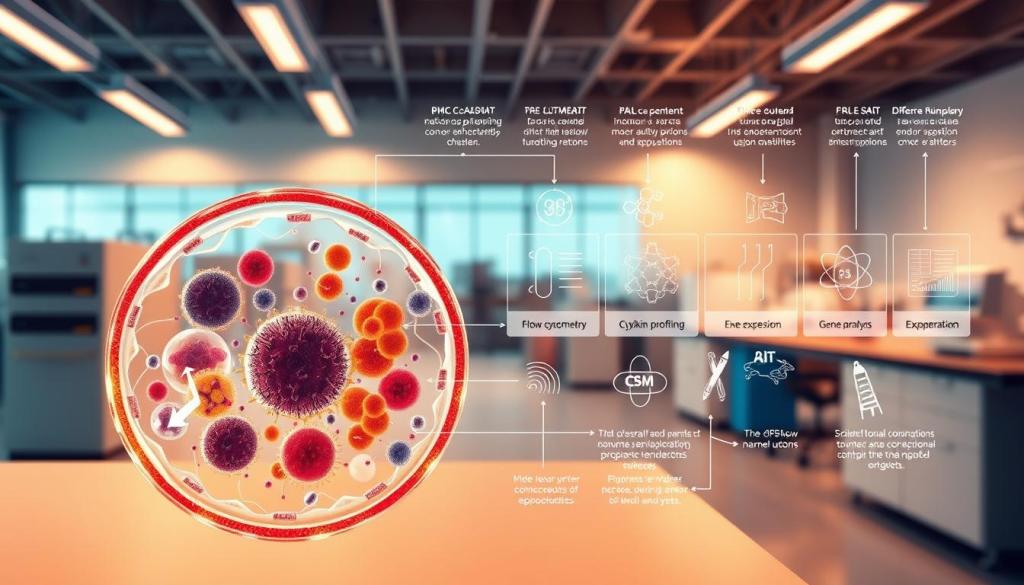
Researchers leverage donor-derived samples to identify disease-specific signatures through advanced omics platforms. Transcriptomic analysis of lymphocyte subsets reveals gene expression patterns in autoimmune diseases, while proteomic screening detects aberrant cytokine levels in chronic inflammation. A 2023 study demonstrated how metabolomic profiling of cryopreserved material predicted rheumatoid arthritis progression with 89% accuracy.
Epigenetic modifications in mononuclear populations now serve as non-invasive indicators for cancer immunotherapy responses. We recommend using matched donor-recipient pairs to minimize variability during biomarker validation phases.
Drug Development and Disease Modeling
Pharmaceutical teams employ cultured samples to assess compound safety and efficacy in time-efficient assays. CAR-T therapy development requires material meeting stringent viability thresholds (>95%) and HLA compatibility standards. Key parameters for immunotoxicology evaluations:
| Test Type | PBMC Input | Readout |
|---|---|---|
| Cytokine Storm Risk | 5×10⁵ cells/well | IL-6/TNF-α levels |
| Target Engagement | 1×10⁶ cells/mL | Flow cytometry |
| Vaccine Adjuvant Screening | 2×10⁶ cells/donor | T-cell proliferation |
Infectious disease models using thawed samples successfully replicate HIV latency mechanisms, accelerating antiretroviral discovery. Our protocols maintain >90% viability across 12-hour culture periods for reliable viral replication studies.
Conclusion
Decoding immune system complexities requires precision tools that mirror human biology. Peripheral blood mononuclear populations offer this capability through their diverse lymphocyte and monocyte composition. For over five decades, these samples have shaped breakthroughs across immunology and therapeutic development.
We prioritize standardized protocols ensuring >90% viability—critical for modeling disease responses accurately. Advanced isolation techniques now reduce processing time by 30% while maintaining purity levels essential for identifying biomarkers. Such technical refinements directly enhance immunotherapy success rates in clinical trials.
Your commitment to optimized practices determines research outcomes. Whether analyzing T-cell types or tracking monocyte activation, quality-controlled samples bridge lab discoveries with patient treatments. Recent innovations in cryopreservation and multi-omics modeling further expand diagnostic and therapeutic applications.
Continued advancements in processing methodologies will drive future breakthroughs. By adhering to rigorous standards and leveraging evolving technologies, researchers unlock new dimensions in immune system analysis. Together, we transform biological insights into life-changing interventions.
References and further readings:
1.Pourahmad, J., & Salimi, A. (2015). Isolated human peripheral blood mononuclear cell (PBMC), a cost-effective tool for predicting immunosuppressive effects of drugs and xenobiotics. Journal of Pharmaceutical Research, 12(3), 53-62.
https://pmc.ncbi.nlm.nih.gov/articles/PMC4673925/
2.Coughlan, L., & Lambe, T. (2015). Measuring cellular immunity to influenza: methods of detection, applications, and challenges. Vaccines, 3(2), 293-308.
https://www.mdpi.com/2076-393X/3/2/293
3.Martikainen, M. V., & Roponen, M. (2020). PBMCs in immunology research applications. Toxicology in Vitro, 64, 104756.
https://www.sciencedirect.com/science/article/pii/S0887233320304689
FAQ
How do PBMC products advance immunotherapy development?
We enable researchers to study antigen-specific T-cell responses and immune checkpoint interactions using high-quality peripheral blood mononuclear cells. These applications support the design of targeted therapies for cancer, autoimmune disorders, and infectious diseases.
What quality standards ensure reliable PBMC isolation?
Our protocols prioritize donor health screening, density gradient centrifugation precision, and viability thresholds (>95%). Cryopreserved material undergoes rigorous testing for sterility, endotoxin levels, and functional consistency across batches.
Why are dendritic cells critical in PBMC-based studies?
Dendritic cells within peripheral blood mononuclear populations drive antigen presentation and T-lymphocyte activation. Researchers leverage these cells to model immune responses, evaluate vaccine efficacy, and identify inflammatory biomarkers.
Can PBMC analysis improve disease modeling accuracy?
Yes. Human peripheral blood mononuclear cells retain donor-specific immune signatures, allowing precise replication of genetic, metabolic, and age-related factors in conditions like rheumatoid arthritis or Alzheimer’s disease during in vitro studies.
What techniques optimize PBMC culture viability?
We recommend Ficoll-Paque density gradients combined with controlled freezing rates (-1°C/min) and serum-free cryoprotectants. Post-thaw recovery rates exceeding 85% ensure functional lymphocytes and monocytes for long-term functional assays.
How do PBMC donors impact research reproducibility?
Donor variability in HLA haplotypes, cytokine profiles, and immune history necessitates curated donor cohorts. Our stratified sourcing includes age-matched controls and disease-specific populations to reduce confounding variables in clinical research.
Leo Bios
Hello, I’m Leo Bios. As an assistant lecturer, I teach cellular and
molecular biology to undergraduates at a regional US Midwest university. I started as a research tech in
a biotech startup over a decade ago, working on molecular diagnostic tools. This practical experience
fuels my teaching and writing, keeping me engaged in biology’s evolution.




Leave a Comment
Your email address will not be published. Required fields are marked *