


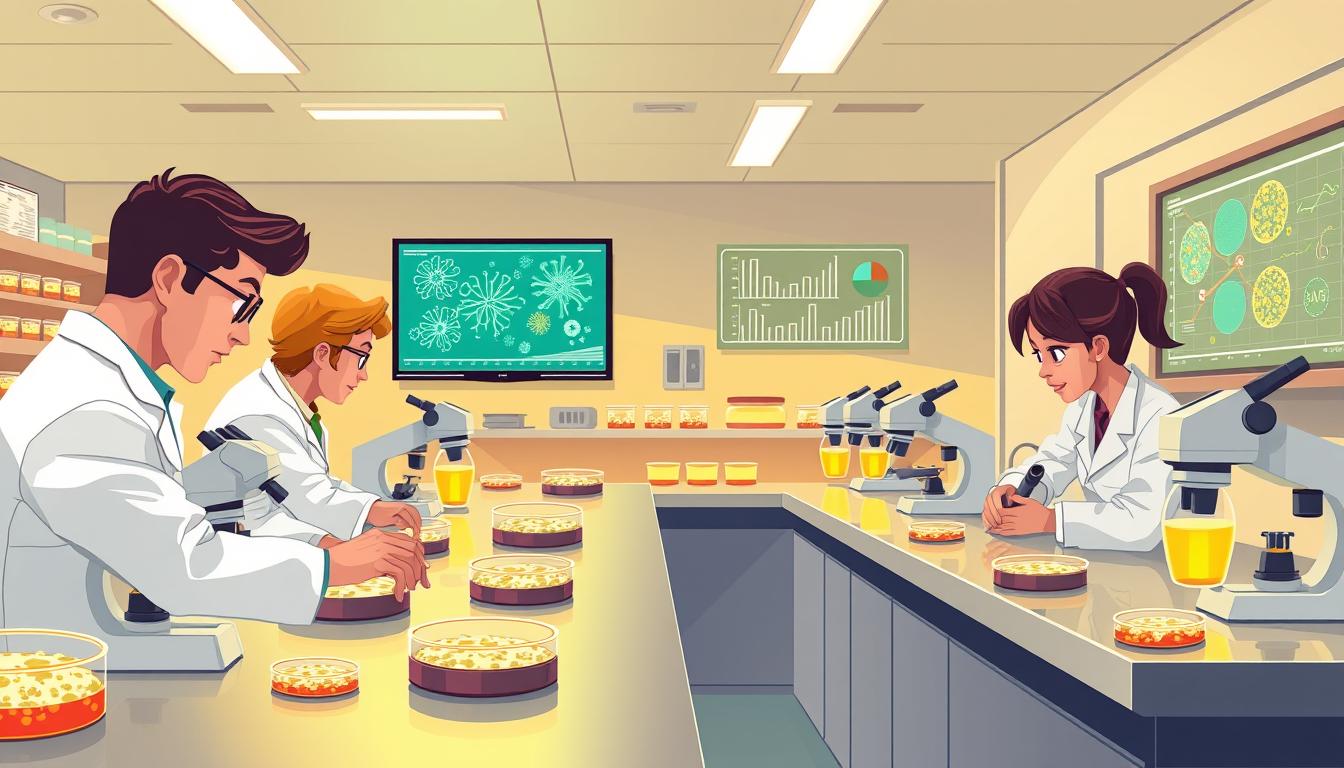
Ever wondered what secrets lie in the controlled worlds of culture labs? The study of microbes and bacteria could change how we see health and sickness.
Culture labs are special places where scientists explore the tiny world of cells. They help us learn about how our bodies work, what causes diseases, and how substances affect us.
But what happens in these labs is more than just looking at things. Scientists use special methods to grow and study microbes. They find important clues about bacteria and new treatments. These labs are key to finding new ways to fight infections and understand how cells talk to each other.
The work done in these labs is very careful and detailed. It can take one to two days to grow enough bacteria for tests. Some tests need up to five days of watching and studying.
Key Takeaways
- Culture labs provide critical insights into cellular and bacterial behavior
- Microbial cultures can take up to five days to develop fully
- Bacterial identification is a complex and precise scientific process
- Research in culture labs contributes to understanding disease mechanisms
- Advanced techniques allow for detailed cellular and bacterial analysis
Understanding the Concept of a Culture Lab
Culture labs are advanced scientific spaces. They help researchers study microorganisms, cells, and tissues. These labs are key to understanding life through precise experiments.
Many scientific fields use culture labs for important research. Each field has its own way of working in these labs. This includes virology, immunology, and epidemiology.
Definition of a Culture Lab
A culture lab is a special place for growing and studying microorganisms. Scientists use these labs for vital research. This includes:
- Fungal testing and identification
- Antibiotic susceptibility studies
- Cell cultivation and research
- Molecular analysis of microorganisms
Purpose and Goals
The main goals of culture labs are to find new medical treatments and understand diseases. What can come out in a culture lab includes new drugs and insights into how microbes work.
Importance in Today’s Society
Culture labs are crucial for scientific progress. They offer controlled environments for research. This helps scientists:
- Study complex biological systems
- Develop specific medical treatments
- Learn about microbial interactions
- Support public health efforts
The work in these labs varies, from practical research to theoretical studies. Their dedication to science keeps them leading in medical and biological research.
The Role of Experimentation in Culture Labs
Culture labs are key places where scientists turn raw materials into new discoveries. These special labs let researchers study complex life systems. They do this by running controlled experiments and using precise methods.
Doing experiments in culture labs needs a lot of care. Researchers must pay close attention to how things grow. They have to control many factors to get good results and avoid contamination.
Key Methodological Approaches
Good culture lab experiments use a few key methods:
- Sterile technique implementation
- Precise environmental control
- Systematic monitoring of experimental parameters
- Advanced contamination prevention strategies
Critical Experimental Parameters
The results of culture lab experiments depend on careful management of important factors:
- Temperature regulation
- Humidity control
- Nutrient composition
- pH balance
Experimental Success Strategies
Researchers use detailed plans to make experiments work well. This helps them get the same results every time. It also lowers the chance of surprises in their findings.
Precision in experimental design determines the quality of scientific discoveries.
Startups in life sciences use both wet and dry labs to create new things. Wet labs are especially important. They are where scientists test chemicals and biological samples with advanced tools.
Key Findings from Culture Labs
Culture labs are key in improving how we test for diseases and understand microbes. They help us learn more about how to process samples and find infections.

Today’s culture labs have changed medical research a lot. They use new ways to find diseases with great accuracy. This lets scientists see how bacteria and fungi work together in detail.
Insights on Cultural Trends
Studies from culture labs show big steps forward in finding diseases:
- CIDTs are quicker and more accurate in finding pathogens
- Some tests can spot many pathogens from one sample
- Whole genome sequencing gives unique “DNA fingerprints” to track infections
Behavioral Shifts Among Communities
Culture labs have found interesting things about microbes. They show how microbes work together and adapt. Bacteria have amazing ways to survive that scientists didn’t know about before.
The research shows important things that come out of culture labs, like:
- Better finding of lung infections
- Tracking foodborne illness better
- Finding health risks more accurately
New testing methods are changing how we see microbes and their effect on health.
The Impact of Technology on Culture Labs
Technology is changing culture labs in big ways. It’s making research on microbes and lab techniques better than ever. Now, scientists can do more with their work thanks to digital tools.
Researchers use new tools to make lab work easier. Things like artificial intelligence and automation help a lot. They make cell culture work faster and more efficient.
Digital Tools Transforming Laboratory Techniques
Modern culture labs use tech to solve old problems:
- Machine learning algorithms do cell culture tasks on their own
- Automated imaging checks quality
- AI stops contamination
- It tracks cell growth in real-time
Virtual Culture Lab Environments
Virtual labs are becoming key for science. They let researchers:
- Watch experiments from anywhere
- Study complex cell interactions
- Try out new research ideas
- Work with scientists worldwide
Automation is changing how we keep 3D cell models alive. AI watches over these models day and night. It makes sure they grow well and spots problems fast.
Technology is not replacing human expertise but amplifying our capacity to understand intricate biological systems.
The future of culture labs is exciting. It’s about mixing human creativity with tech’s precision. This mix opens doors to new scientific discoveries.
Collaborative Efforts in Culture Labs
Scientific research grows stronger with teamwork, especially in culture labs. Here, identifying bacteria and testing fungi need a team effort. Today, science relies more on working together across different places and groups.
Research groups are seeing the value in working together. Teams can achieve more and faster than one person alone.
Partnerships with Educational Institutions
When culture labs team up with schools, they spark new ideas. These partnerships help in:
- Using advanced research methods
- Sharing tech resources
- Swapping knowledge from different fields
- Offering students a chance to do real research
Involvement of Local Communities
Getting local people involved in research is key. It helps make the work more relevant and useful. By working with the community, researchers can:
- Get different viewpoints
- Focus on local scientific issues
- Gain the public’s trust in science
Trust is the foundation of good scientific teamwork. It lets teams share findings and credit for big discoveries.
| Collaboration Type | Key Benefits | Research Impact |
|---|---|---|
| Academic Partnerships | Knowledge Sharing | Improved Research Methods |
| Community Engagement | Diverse Views | Research That Matters Locally |
| Interdisciplinary Teams | More Resources | Deeper Problem-Solving |
As science tackles tougher challenges, teamwork in culture labs is vital. It drives important research and innovation forward.
The Ethical Considerations
Ethical research is key in science, especially in culture labs. These labs handle sensitive experiments. They need strict ethical rules to keep science honest and protect people.
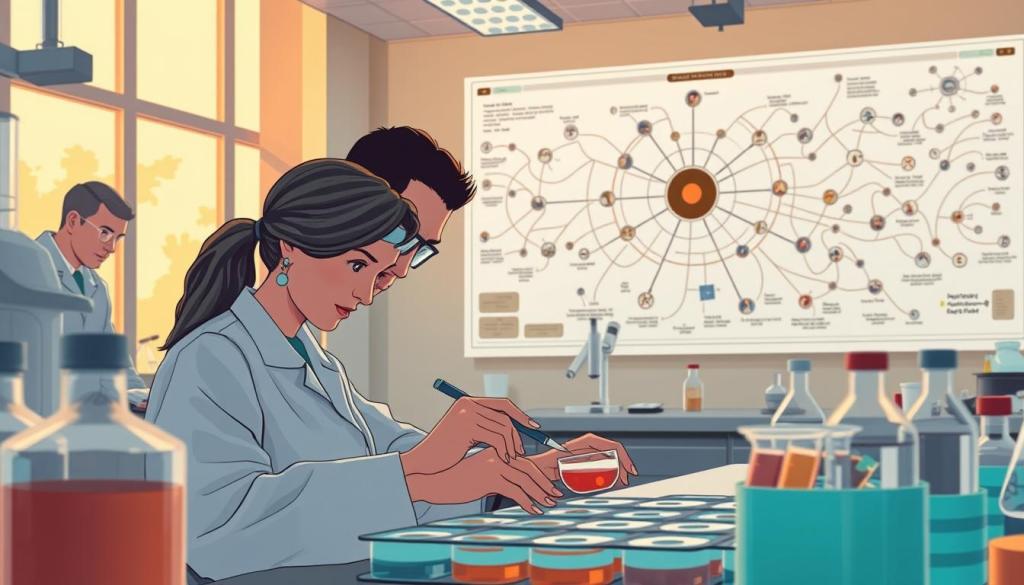
Researchers face tough choices in labs. They deal with antibiotic tests and finding contamination sources. Here are the main rules for ethical labs:
- Ensuring social and clinical value of research
- Maintaining scientific validity
- Implementing fair subject selection
- Achieving a favorable risk-benefit ratio
- Conducting independent reviews
- Obtaining informed consent
- Respecting research participants
Ethical Guidelines for Experimentation
Culture labs must keep people safe and research honest. They need to check risks and design safe studies. This way, they learn a lot without harming anyone.
Transparency and Accountability
Being open and responsible is vital in labs. They should tell everyone about their studies. People should be able to leave studies anytime, keeping their choices free.
Ethical research is justified when it contributes to scientific understanding and improves disease prevention, treatment, or care.
Institutional Review Boards (IRBs) help keep labs ethical. They check research plans to make sure they’re safe and right.
Measuring Success in Culture Labs
Evaluating culture labs needs smart metrics and detailed strategies. Scientists use precise measures to check their research’s results and confirm their findings.
Culture labs use many ways to see how well they do and their lasting effects. The evaluation process looks at key parts that show how well growth conditions and diagnostic procedures work.
Key Performance Metrics
- Incident frequency tracking
- Training completion rates
- Quality of diagnostic procedures
- Research publication output
Comprehensive Evaluation Framework
Research places have strong ways to check if culture labs succeed. These frameworks look at many parts of scientific success, like:
- Scientific productivity
- Research quality
- Safety compliance
- Innovation potential
| Metric Category | Assessment Method | Key Indicators |
|---|---|---|
| Biosafety Culture | Internal Audits | Incident Reports |
| Research Impact | Publication Analysis | Citation Rates |
| Training Effectiveness | Employee Surveys | Skill Development |
The success of culture labs depends on their ability to find important scientific insights and keep high research standards. They must always get better and adapt to stay successful in these changing research places.
Effective measurement transforms raw data into strategic intelligence for scientific advancement.
Engaging Stakeholders in Culture Labs
Culture labs are places where scientists work together to find new things. They use special ways to handle samples and do experiments. This teamwork is key to making new discoveries.
Having different people involved makes research better. It helps scientists understand things in a deeper way. This way, they can tackle complex problems more effectively.
Importance of Diverse Perspectives
Different viewpoints are very important in culture labs. Studies show that including many perspectives can greatly improve research:
- More new ideas come from different views
- They can solve problems better
- Research designs get more complete
- They understand complex issues better
Approaches to Stakeholder Engagement
To really engage stakeholders, labs use special methods. These methods help everyone work together well:
| Engagement Method | Impact Percentage |
|---|---|
| Surveys | 67% |
| Focus Groups | 58% |
| Community Convenings | 53% |
| Shared Decision-Making | 48% |
By focusing on inclusive research, culture labs change the way science is done. They turn traditional labs into places of teamwork. This teamwork leads to deep insights and important discoveries.
Challenges Faced by Culture Labs
Culture labs face many obstacles that affect their work. These issues range from technical problems to not having enough resources.
Research environments have big challenges that can harm their work. The main problems are:
- Cell line contamination risks
- Resource allocation limitations
- Cultural sensitivity navigation
- Technological constraints
Funding and Resource Limitations
Scientific research needs a lot of money. Academic labs often have small budgets. This makes it hard for them to do detailed microbial cultures studies.
| Challenge | Impact | Potential Solution |
|---|---|---|
| Contamination Rates | 10-15% in academic labs | Enhanced training protocols |
| Equipment Constraints | Limited advanced microscopy | Collaborative resource sharing |
| Personnel Turnover | Knowledge transfer gaps | Comprehensive documentation |
Navigating Cultural Sensitivities
Bacterial identification needs careful handling. It must respect different cultures. Researchers must find ways to be scientific yet ethical.
They need to keep research honest while respecting cultures. They also have to talk clearly with all groups involved.
Good culture labs focus on ethical research and understanding cultural issues.
Future Trends in Culture Labs
The world of culture labs is changing fast, thanks to new tech and research methods. We’re expecting big changes in how we do science, especially in testing fungi and how antibiotics work.
- Artificial Intelligence integration for better diagnosis
- Advanced automation to cut down on manual work
- New molecular testing methods
- Unique ways to discover what comes out in a culture lab
Predictions for Laboratory Evolution
New tech is going to change how we do lab work. A recent study found that 89% of lab workers think automation is key to keeping up with more tests. Automated systems will change how we do research, especially in testing fungi and antibiotics.
“The future of lab research is about smart, connected systems that work better and faster.” – Scientific Research Quarterly
Evolving Methodological Approaches
Labs will soon use the latest tech to make research easier. Some big changes include:
- AI helping with diagnosis
- Better data analysis
- Integrated lab systems
- Advanced molecular testing
Molecular testing could give results up to four weeks sooner than old methods. This means faster and more accurate tests for how well antibiotics work. Digital pathology and AI will also help doctors and improve patient care.
The Global Influence of Culture Labs
Culture labs are key in understanding the world’s complex issues. Researchers from over 50 countries work together. They study how things grow and what can go wrong in different fields.
These labs offer insights into how the environment affects culture. They show how big problems can change how we live and grow.
What happens in a culture lab goes beyond science. Studies around the world show how the environment affects us. They use new methods to see how places deal with big social issues.
Global teamwork is crucial in science today. Culture labs connect experts from many fields. They share ideas, challenge old views, and find new ways to tackle big problems.
By using science about complexity, evolution, and thinking, labs change how we see people and societies.
Examples from Around the World
Research projects worldwide show the power of culture labs. Places all over work together to study trends, nature’s impact, and human behavior. The Cultural Evolution Society, with over 1600 members, is a big example of this global effort.
Cross-Cultural Collaborations
Research across cultures offers a new way to see how we’re all connected. Culture labs study both common and different views. This helps us understand how societies evolve and change.
FAQ
What exactly is a culture lab?
A culture lab is a special place for growing and studying tiny living things. It’s where scientists do precise work in fields like medicine and environmental studies. They keep everything just right to get accurate results.
What types of specimens can be cultured in a laboratory?
Culture labs work with many kinds of samples. These include throat swabs, urine, and blood. Each sample needs its own way to be handled to find out what’s inside and how to treat it.
How do researchers prevent contamination in culture labs?
To avoid contamination, labs follow strict rules. They use special gear, sterilize tools, and work in clean areas. They also control things like temperature and humidity very carefully.
What technologies are used in modern culture labs?
Today’s labs use cool tech like digital microscopes and AI. They also have automated systems and virtual labs. These tools make research and testing more efficient and accurate.
What are the primary goals of culture lab research?
The main goals are to find and study tiny organisms and understand how they work. Labs also work on making new tests, finding out how diseases spread, and learning more about health and science.
How long does a typical culture test take?
The time it takes for a culture test varies. Some tests can show results in a day or two. Others might take longer, like weeks. Tests to see how well antibiotics work can take even more time.
What ethical considerations are important in culture lab research?
Labs must follow strict ethics. This includes getting consent, keeping things private, and being honest about findings. They also try to avoid overusing antibiotics and follow rules to keep research honest.
How do culture labs contribute to global health research?
Culture labs are key in fighting diseases worldwide. They help find new infections, study how bacteria become resistant, and work on vaccines. They also team up with others to tackle big health problems.
What career opportunities exist in culture lab research?
There are many jobs in culture lab research. You could be a microbiologist, research scientist, or lab tech. There are also jobs in biotech, drug development, and teaching.
How are culture lab findings authenticated and verified?
Labs make sure their results are true by following strict steps. This includes checking samples, doing experiments again, and getting others to verify their work. They also keep detailed records and follow standard methods.






Leave a Comment
Your email address will not be published. Required fields are marked *