



Ever thought about the tiny cells building your body’s structure? Fibroblasts are the master builders, creating the framework that keeps tissues healthy and working right.
Fibroblasts are key in making the body’s structure strong. They make collagen, elastin, and other proteins that give tissues strength and flexibility.
Fibroblasts do more than just build. They change and adapt to keep tissues balanced. They’re crucial for healing wounds and keeping the body in check.
Key Takeaways
- Fibroblasts are primary producers of extracellular matrix components
- They synthesize critical proteins like collagen and elastin
- Fibroblasts adapt to different tissue environments
- These cells play a vital role in wound healing and tissue maintenance
- Their plasticity allows transformation into different cell types
Introduction to Fibroblasts and Their Importance
Fibroblasts are key cells in our bodies. They help keep connective tissue strong in many organs.
In 1858, German pathologist Rudolf Virchow found fibroblasts. He called them spindle-shaped cells of the connective tissue. Since then, we’ve learned a lot more about them.
Definition of Fibroblasts
Fibroblasts make proteins that keep connective tissue healthy. They create collagen and help fix and grow tissues.
- Most common cell type in connective tissues
- Primary producers of extracellular matrix (ECM)
- Key contributors to tissue structure and healing
Location in the Body
Fibroblasts are everywhere in our bodies. They help support skin and organs, and help cells talk to each other.
Role in Connective Tissue
Fibroblasts build and fix connective tissue. They make proteins that keep tissues strong. They also help keep tissues healthy and fix them when needed.
“Fibroblasts are the silent guardians of our body’s structural framework” – Cell Biology Research Team
They are very important for our health. They help fix tissues when they get hurt.
Key Products Produced by Fibroblasts
Fibroblasts are amazing cells in our body’s connective tissues. They make many important things that keep our tissues strong and help them heal. These cells are very good at making things that support our body’s structure and help it fix itself.
Collagen Production
Collagen is a key product of fibroblasts. There are three main types of collagen, each important for different tissues:
- Collagen Type I: This is the main protein in our skin, tendons, and bones.
- Collagen Type III: It’s found in soft tissues and blood vessels.
- Collagen Type IV: It’s crucial for making the basement membrane.
Elastin Synthesis
Elastin gives tissues their stretchiness. It lets them stretch and then bounce back. Fibroblasts make elastin, which helps our skin, blood vessels, and lungs stay strong.
Extracellular Matrix Components
Fibroblasts also make many other important things besides collagen and elastin. They create glycosaminoglycans and other molecules:
| Component | Primary Function |
|---|---|
| Fibronectin | Helps cells stick and move |
| Laminins | Builds the basement membrane |
| Glycosaminoglycans | Keeps tissues hydrated and sends signals |
“Fibroblasts are not just passive cells, but active architects of our body’s structural framework.”
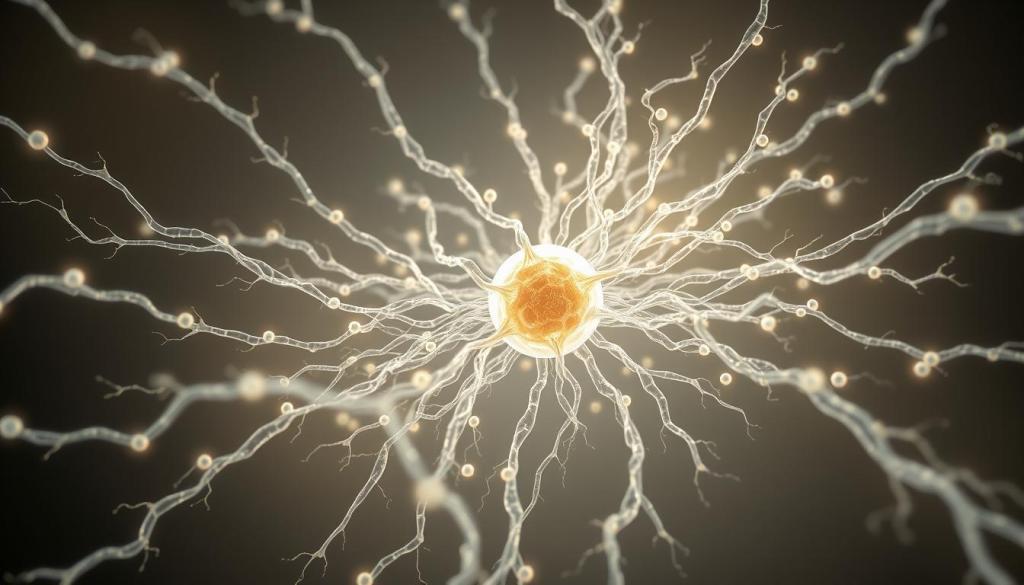
These different products help fibroblasts play a big role in keeping our tissues healthy. They support healing and help our body deal with challenges.
The Role of Fibroblasts in Wound Healing
Fibroblasts are key players in wound healing. They are the main builders of new tissue. These cells go through many steps to fix wounds, using their special skills.
The healing process is complex. Fibroblasts show great adaptability. They move to wounds and start fixing them.
Fibroblast Migration and Transformation
During healing, fibroblasts move and change:
- They quickly go to where the wound is.
- They turn into myofibroblasts.
- They start important repair actions.
Extracellular Matrix Remodeling
Fibroblasts are great at fixing damaged tissue. They make new tissue and break down old, damaged parts.
| Wound Healing Phase | Fibroblast Activity | Duration |
|---|---|---|
| Proliferative Phase | Matrix Synthesis | 2-3 Weeks |
| Remodeling Phase | Tissue Reconstruction | Up to 1 Year |
Growth Factor Release
Fibroblasts send out growth factors. These factors help new tissue grow. They help the wound heal by making cells multiply and repair.
Fibroblasts are the master regulators of wound healing, transforming injury sites into restored, functional tissue.
Wound healing is a complex process. Fibroblasts are very adaptable. They move, remodel, and regenerate, making them crucial for fixing wounds.
Fibroblasts in Tissue Homeostasis
Fibroblasts are crucial for the health of connective tissue in our bodies. They act as master builders, creating and changing structural proteins. This keeps our tissues strong and working well.

Fibroblasts are very flexible. They stay calm until they get a signal to start making proteins and moving. This lets them adjust to different situations.
Maintenance of Structural Integrity
Fibroblasts help keep tissues in balance through several key actions:
- They make and keep the extracellular matrix.
- They produce important structural proteins like collagen.
- They change the tissue’s structure.
- They make sure tissues are strong.
Interaction with Other Cell Types
Fibroblasts talk a lot with other cells around them. They work with immune cells, epithelial cells, and more. This helps keep tissues working right and our health good.
Response to Mechanical Stress
Fibroblasts are great at handling stress. They change how they make proteins and move when faced with physical forces. This helps tissues stay strong.
“Fibroblasts are the silent guardians of our biological infrastructure, continuously working to maintain tissue health and integrity.” – Research Insights
The detailed work of fibroblasts in connective tissue shows how important they are. They help keep our body’s complex systems working. This makes them key to understanding how tissues work and stay healthy.
The Influence of Fibroblasts on Inflammation
Inflammation is a key biological response where fibroblasts play a big role. These cells are not just sitting back. They actively help in the inflammatory process all over the body.
Mediators of Inflammatory Responses
Fibroblasts make many inflammatory mediators that affect how our immune system works. When they get a signal, they make important parts of the extracellular matrix. They also send out inflammatory signals.
- Cytokines that bring immune cells
- Chemokines that control inflammation
- Growth factors that help fix tissues
Interactions with Immune Cells
The relationship between fibroblasts and immune cells is complex and always changing. They talk to each other through detailed molecular talks. This helps them work together in fighting off inflammation.
“Fibroblasts are not just structural cells, but active participants in immune regulation.” – Immunology Research
Impact on Chronic Inflammatory Conditions
In long-term inflammatory diseases like rheumatoid arthritis and inflammatory bowel disease, fibroblasts can go wrong. Their changed production of the extracellular matrix and inflammatory signals lead to ongoing tissue inflammation. This can make them harmful instead of helpful.
- Constant activation of inflammatory pathways
- Abnormal tissue remodeling
- Continuous recruitment of immune cells
Learning about these processes shows us new ways to treat these diseases. It could help stop the cycle of inflammation that harms our bodies.
Fibroblasts in Fibrosis
Fibrosis is a complex process where tissue repair fails, causing too much scar tissue. Learning about fibroblast activity is crucial for finding new treatments for chronic diseases.
Mechanisms of Fibrosis Development
Fibroblast activation starts the healing process. But, in disease, these cells can turn into myofibroblasts. These cells are more sensitive to signals and make more extracellular matrix.
- Persistent fibroblast activation leads to too much collagen
- Myofibroblasts cause abnormal scarring
- Certain chemicals, like cytokines, trigger fibrosis
Consequences of Excessive Fibroblast Activity
Out-of-control fibroblast activity can cause serious problems in many organs. The constant presence of these cells damages tissue structure and function.
| Organ System | Fibrotic Condition | Primary Impact |
|---|---|---|
| Lungs | Pulmonary Fibrosis | Reduced Respiratory Capacity |
| Skin | Scleroderma | Excessive Tissue Stiffening |
| Liver | Cirrhosis | Impaired Organ Function |
Potential Therapeutic Approaches
Scientists are working hard to stop fibroblast activation and prevent scarring. They’re looking at new ways to block the molecular pathways that lead to fibrosis.
“Understanding fibroblast behavior is key to developing targeted interventions for managing fibrotic diseases.” – Regenerative Medicine Research Institute
Researchers are studying ways to control fibroblast activity. This could bring new hope to those with chronic fibrotic diseases.
Fibroblast Cell Culture and Research
Exploring fibroblasts has changed how we see cells. The world of what fibroblasts make is still a big mystery to scientists.
Since the start of cell culture, research has come a long way. Today, scientists use new methods to study these cells. They focus on how fibroblasts make collagen and other important parts of our bodies.
Techniques for Culturing Fibroblasts
Now, growing fibroblasts involves advanced techniques:
- Primary cell cultures from various tissue sources
- Immortalized cell line development
- Serum-free growth media
- 3D culture systems
Applications in Biomedical Research
Scientists use fibroblast cultures to study many things. They look into:
- How wounds heal
- How drugs work
- How cells react
- How to grow new tissues
Studying Fibroblasts in Disease Models
New research looks at how fibroblasts act in diseases. Specialized culture techniques help scientists study them in diseases like cancer and fibrosis.
“Fibroblasts are not just passive structural cells, but dynamic participants in tissue homeostasis and disease progression.” – Cellular Biology Research Consortium
Research shows interesting facts about fibroblasts. Scientists found two main types of fibroblasts. Most PDGFRα+ cells stay active during injury and inflammation.
Advances in Fibroblast-Powered Therapies
Modern medical research is changing how we heal wounds and repair tissues. Scientists are finding new ways to use fibroblasts in regenerative medicine. This could change how doctors treat patients in many areas.
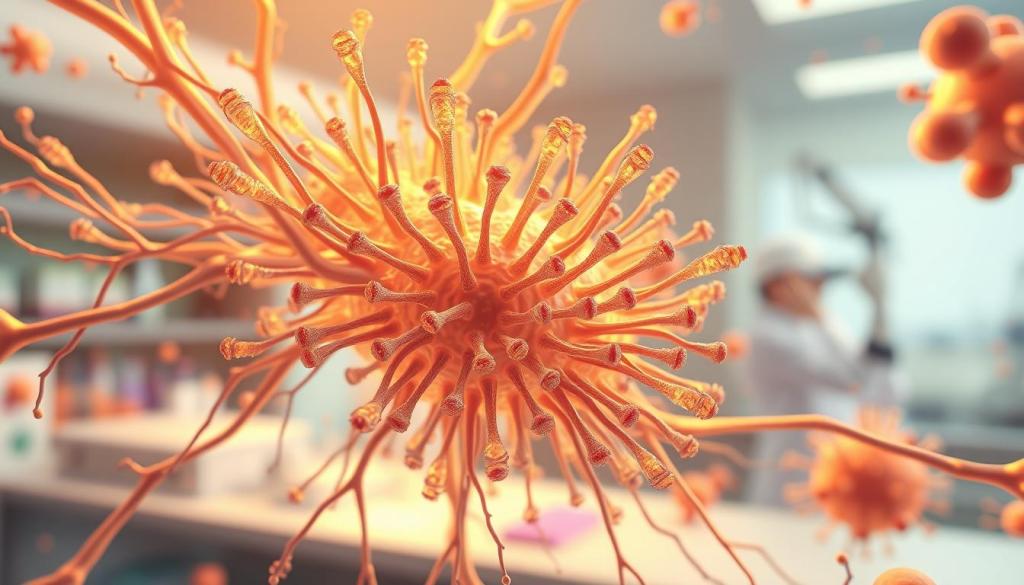
Regenerative Medicine Applications
Fibroblasts are key in regenerative medicine. They help create new tissues. This opens up new ways to treat complex medical issues.
- Tissue engineering of bio-artificial organs
- Advanced wound healing techniques
- Cellular reconstruction strategies
Skin Rejuvenation and Anti-Aging Treatments
Research shows fibroblasts can greatly improve skin. They help make more collagen. This makes skin look smoother and more elastic.
| Treatment Type | Fibroblast Contribution |
|---|---|
| Skin Regeneration | Enhanced collagen synthesis |
| Wound Healing | Accelerated tissue repair |
| Anti-Aging | Cellular matrix remodeling |
Innovations in Surgical Repair
Surgery is getting better thanks to fibroblast-based methods. These methods help fix complex tissue problems. They are especially useful in tough medical cases.
Fibroblasts represent a frontier of regenerative potential, bridging the gap between current medical limitations and future healing possibilities.
Research on fibroblast-powered therapies is growing. It’s helping us understand how to regenerate tissues better. This brings hope for more effective treatments in the future.
Conclusion: The Multifaceted Role of Fibroblasts in Health and Disease
Fibroblasts are key cells in keeping us healthy. They help with many important body functions. They make the stuff that holds our tissues together and helps them heal.
Fibroblasts are very good at many things, like fixing wounds and keeping tissues healthy. They change how they work based on what the body needs. This shows how important they are in keeping us well.
Summary of Key Functions
Fibroblasts do more than just hold things together. They help with inflammation, fixing tissues, and sending signals between cells. They make collagen and proteins, which are vital for healing and keeping us healthy.
Future Directions in Fibroblast Research
New research could lead to better treatments for many diseases. We might find ways to make fibroblasts work better for healing wounds and regrowing tissues. New tools like single-cell RNA sequencing will help us learn more about how fibroblasts work.
The Importance of Continued Study in Therapeutics
Studying fibroblasts is key to finding new treatments. Their many roles offer hope for solving big health problems. This includes helping with diabetic foot ulcers and fighting cancer, showing how crucial these cells are for our health.
FAQ
What are fibroblasts primarily responsible for producing?
Fibroblasts mainly make the stuff that holds tissues together. This includes collagen, elastin, and other proteins. These are key for keeping tissues strong and helping cells talk to each other.
Where are fibroblasts found in the human body?
You can find fibroblasts all over the body. They’re in the skin, connective tissues, organs, muscles, and tendons. They help keep everything working right.
How do fibroblasts contribute to wound healing?
When you get hurt, fibroblasts move to the spot and start fixing things. They turn into myofibroblasts and make new tissue. They also send out signals to help heal faster.
What is the role of fibroblasts in inflammation?
Fibroblasts help with inflammation by making chemicals that signal for help. They work with immune cells to fight off infections and heal wounds.
Can fibroblasts become problematic in certain conditions?
Yes, if fibroblasts don’t work right, it can cause problems. They might make too much scar tissue, which can stiffen organs. This can lead to diseases like pulmonary fibrosis.
How are fibroblasts used in medical research?
Scientists use fibroblasts in labs to study how wounds heal and how drugs work. They also use them to create disease models and find new treatments.
What makes fibroblasts unique in tissue maintenance?
Fibroblasts are special because they keep making and changing the tissue’s framework. They handle stress and work with other cells. This helps keep tissues healthy and working well.
What potential therapeutic applications do fibroblasts have?
Fibroblasts could help in many ways, like fixing damaged tissues and making new organs. They might also help with skin problems and healing wounds. Scientists are looking into these uses.




Leave a Comment
Your email address will not be published. Required fields are marked *