


Ever thought about how scientists move tiny amounts of liquid with exactness? Pipettes are key in labs, helping researchers handle small liquid amounts with great precision.
Pipettes are vital in many scientific studies. They let scientists move specific amounts of liquid, from 0.5 μL to 1000 μL. This ensures that experiments are consistent and can be repeated.
Pipettes do more than just move liquids. They connect theory with real-world science. By measuring liquids exactly, pipettes are crucial in medical tests, genetic studies, and drug development.
Key Takeaways
- Pipettes enable precise liquid volume transfer in scientific research
- Volume ranges span from 0.5 μL to 1000 μL
- Critical for maintaining experimental accuracy
- Used across multiple scientific disciplines
- Essential for consistent and reproducible results
Introduction to Pipettes
Pipettes are precise tools used in labs for accurate liquid handling. They help scientists measure and move small amounts of liquid with great care and precision.
Pipettes are used in many scientific fields, like molecular biology and clinical research. They are crucial for running experiments with little error and high precision.
Definition and Purpose
A pipette is a special tool for measuring, moving, and pouring liquids with exact amounts. It has:
- Volume range from 0.1 μL to 1,000 μL
- Ability to transfer liquids with high accuracy
- Various designs for different scientific needs
Brief History of Pipettes
The history of pipettes is a key part of scientific progress. Important events include:
- 1957: First micropipette patent
- 1961: Commercial production starts
- 1972: Adjustable micropipette invented at University of Wisconsin-Madison
Pipettes changed science by allowing for precise liquid handling.
| Pipette Type | Typical Volume Range | Primary Application |
|---|---|---|
| Volumetric Pipettes | 10-50 mL | Precise solution preparation |
| Micropipettes | 0.1-1000 μL | Molecular biology research |
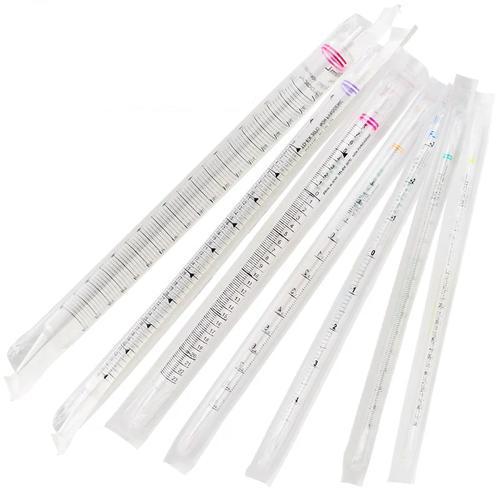
| Graduated Pipettes | 1-100 mL | General laboratory work |
Today, pipettes keep getting better, helping scientists with advanced liquid handling.
Types of Pipettes
Laboratory professionals use different pipettes for precise liquid handling. They need to know about the various designs to pick the right one for their work.
Scientific labs have many pipette types, each for specific tasks. The main ones are air displacement, positive displacement, and electronic pipettes.
Air Displacement Pipettes
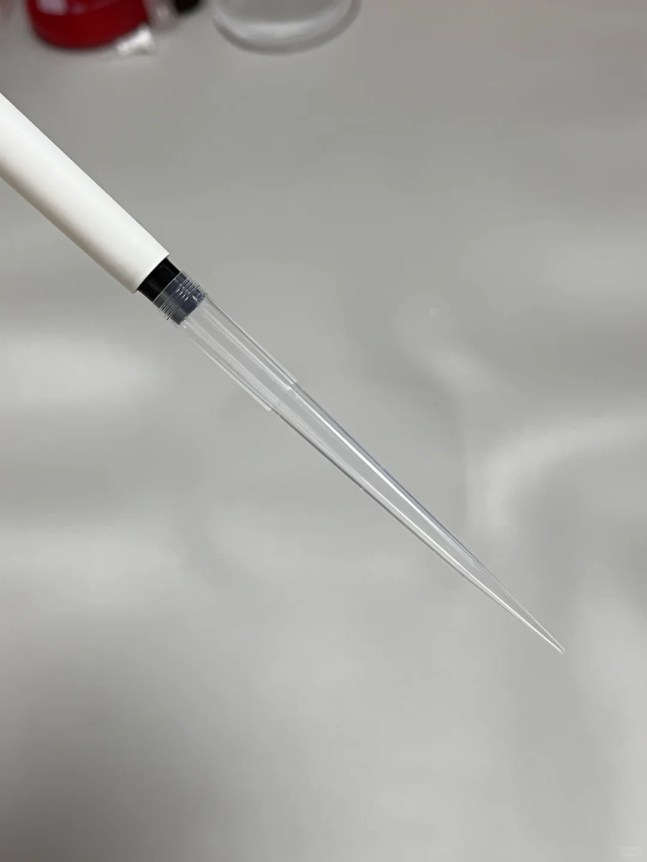
Air displacement pipettes are the most common in labs. They use a vacuum to move liquids with great precision. They are known for:
- Volume range from 0.1 μL to 1,000 μL
- High accuracy for most lab tasks
- Need calibration every six months
Positive Displacement Pipettes
Positive displacement pipettes are best for thick or volatile liquids. They use a piston to touch the liquid, reducing errors.
Their benefits are:
- Best for hard-to-handle liquids
- Less chance of contamination
- More accurate for detailed experiments
Electronic Pipettes
Electronic pipettes are the latest in lab tools. They offer unmatched precision and comfort.
Electronic pipettes can measure volumes as small as 0.1 microliters, providing unprecedented accuracy for scientific research.
| Pipette Type | Volume Range | Primary Application |
|---|---|---|
| Air Displacement | 0.1 μL – 1,000 μL | Standard Laboratory Work |
| Positive Displacement | Variable | Viscous Liquid Handling |
| Electronic | 0.1 μL – 1,000 μL | Precision Research |
Choosing the right pipette is crucial for researchers. It ensures the best accuracy and success in their experiments.
How Pipettes Work
Pipettes are tools that help scientists move exact amounts of liquid. Knowing how they work and how to use them is key for lab success.
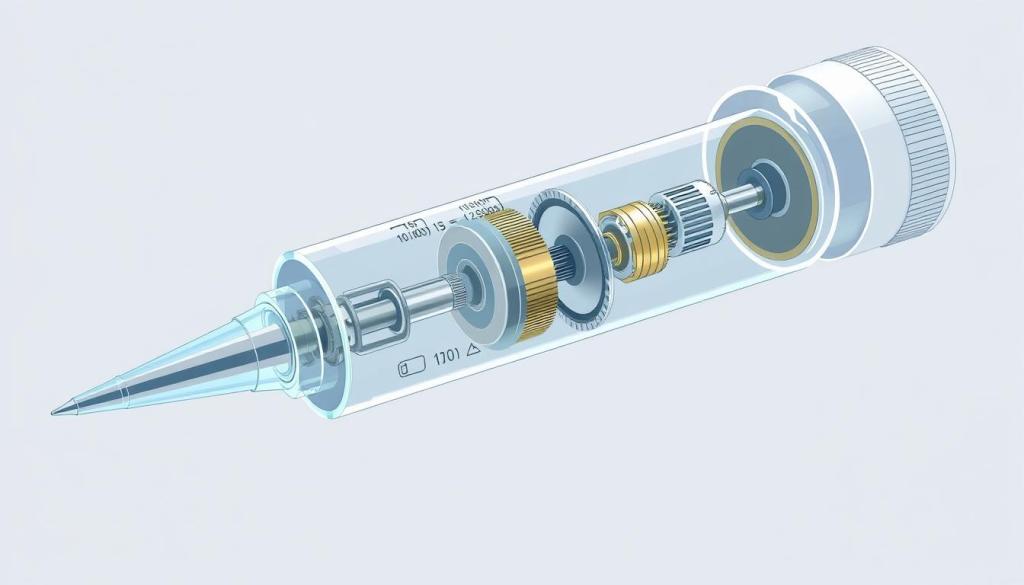
There are two main types of pipettes: air displacement and positive displacement. Each has its own benefits for different lab tasks.
Mechanism of Air Displacement
Air displacement pipettes use a special method for accurate liquid transfer. Here’s how it works:
- Set the desired volume precisely
- Depress the plunger to the first stop
- Immerse the tip into the liquid
- Slowly release the plunger to draw liquid
- Dispense by pressing the plunger against the receiving chamber wall
“Accuracy in pipetting is not just about technique, but understanding the instrument’s intricate mechanism.” – Laboratory Science Quarterly
Positive Displacement Functionality
Positive displacement pipettes are great for tricky liquids. Their design tackles common pipetting issues:
- Direct contact with liquid using a microsyringe
- Minimal air cushion reduces volume variability
- Ideal for viscous or volatile substances
- Significantly reduces cross-contamination risks
By choosing the right pipette and mastering the technique, researchers can get near-perfect liquid transfer.
Applications of Pipettes
Pipettes are key in science and medicine, helping with precise liquid handling. They are vital for those who need to measure liquids accurately. This makes them essential for researchers and medical teams.
Exploring what pipettes do shows their wide use in science and medicine. They are crucial in many areas of research and medical studies.
Laboratory Use Cases
Scientists use pipettes for many important tasks:
- Creating chemical solutions with exact amounts
- Diluting complex biological samples
- Transferring small amounts of liquid
- Doing microbiological experiments
- Preparing genetic research samples
“Precision is the hallmark of scientific excellence, and pipettes are the instruments that make that precision possible.” – Scientific Research Journal
Pipettes in Medical Fields
Medical teams use pipettes for vital diagnostic and research tasks:
- Testing blood and tissue samples
- Developing new drugs
- Studying genetics and DNA
- Preparing pharmaceuticals
- Forensic science work
Pipettes must be very accurate. Most micropipettes are precise to 3% of the specified volume. This accuracy is crucial for reliable results in science and medicine.
Choosing the Right Pipette
Choosing the right pipette is key for accurate results in labs. The right one can greatly improve your skills and the precision of your work.
Lab experts need to look at several important factors when picking a pipette. This ensures it works well and accurately.
Critical Factors in Pipette Selection
- Volume range requirements
- Liquid characteristics
- Frequency of use
- Ergonomic considerations
- Precision needs
Volume Range Considerations
Researchers should pick a pipette that fits their usual volume needs. It’s best to choose one that reduces measurement errors.
| Pipette Type | Volume Range | Best Suited For |
|---|---|---|
| Fixed Volume | 1 μL to 1,000 μL | Consistent, repetitive tasks |
| Variable Volume | 0.2 μL to 10 mL | Flexible laboratory work |
| Electronic | Multiple modes | Complex pipetting protocols |
Common Mistakes to Avoid
- Overlooking liquid viscosity
- Ignoring ergonomic design
- Neglecting calibration requirements
- Choosing inappropriate tip compatibility
“The right pipette is not just a tool, but a precision instrument that can make or break your research.”
Good pipetting skills come from knowing your lab needs and picking the right tools. This ensures consistent and accurate liquid handling.
Proper Pipetting Techniques
Mastering pipetting techniques is key for lab professionals. It helps get precise and reliable results. Accurate pipetting skills cut down on errors and boost research quality.
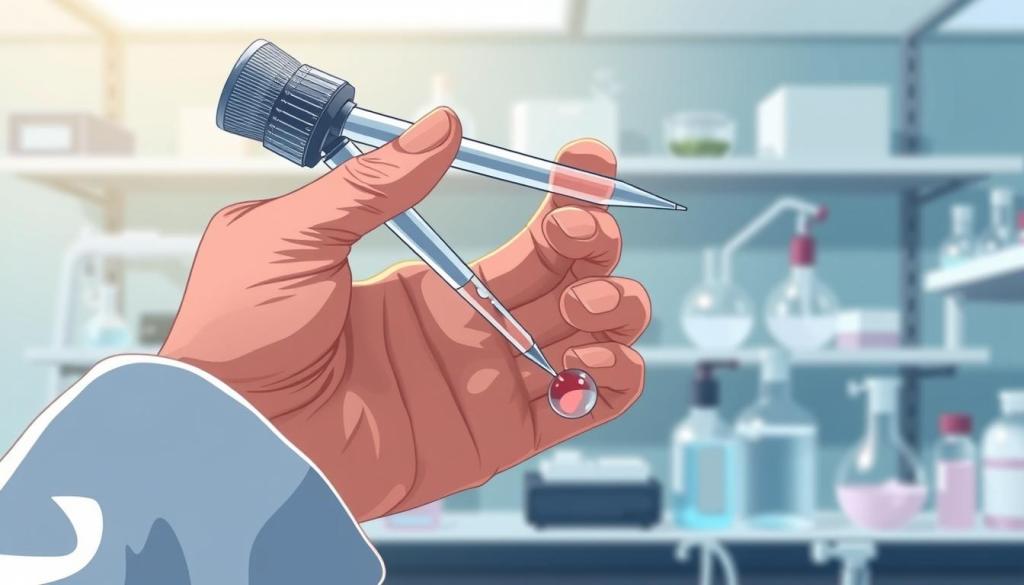
Laboratory researchers face big challenges with pipetting accuracy. Studies reveal that wrong handling can cause errors up to 50%. It’s vital to learn and use the right pipetting methods for scientific integrity.
Step-by-Step Pipetting Guidelines
- Select the right pipette for your needs
- Make sure the pipette is calibrated
- Use clean, intact pipette tips
- Keep plunger speed and pressure steady
- Hold the pipette straight when transferring liquids
Tips for Improving Accuracy
- Pre-rinse tips to lower volume variation
- Use smooth, controlled plunger movements
- Avoid touching container sides during pipetting
- Take breaks between long pipetting sessions
“Precision in pipetting is not just a skill, it’s a scientific discipline.”
Improving pipetting technique means understanding two key plunger stops and practicing consistent depth. Electronic pipettes add accuracy with digital displays and auto features.
Regular upkeep, like quarterly checks and proper storage, keeps pipettes working well. Getting better at pipetting takes patience, practice, and focus on details.
Calibration and Maintenance
Keeping laboratory tools precise is key for science. Pipette calibration is vital for reliable liquid handling in labs and hospitals.
Regular pipette upkeep stops mistakes and keeps performance steady. Lab experts know that pipette accuracy comes from careful attention and systematic steps.
Importance of Calibration
Calibration checks if a pipette can measure liquid volumes right. Important points include:
- Checking if the volume is correct
- Finding any performance issues
- Keeping scientific data trustworthy
Routine Maintenance Best Practices
Good pipette care includes several key steps:
- Cleaning with 70% ethanol every day
- Weekly thorough checks
- Monthly calibration tests
- Deep servicing every season
“Precision in calibration is the cornerstone of reliable scientific research.”
Science rules say to calibrate pipettes every 3-6 months for best results. Things like temperature and humidity can really affect how well a pipette works.
| Maintenance Frequency | Action Required |
|---|---|
| Daily | Surface cleaning and visual inspection |
| Weekly | Detailed component examination |
| Monthly | Calibration verification |
| Seasonally | Professional servicing |
Getting pipettes right needs special training and following ISO 8655 standards. Labs must spend time on these tools to get reliable science results.
Safety Guidelines for Using Pipettes
When working with pipettes, safety is key, especially with dangerous materials. It’s important to know how to stay safe and use the right gear. This includes understanding safety rules and wearing the right protective equipment.
Researchers often face dangers when using pipettes. Up to 70% of pipette users report symptoms related to overuse injuries. These can include pain, numbness, and long-term muscle problems.
Personal Protective Equipment Requirements
- Safety goggles with side shields
- Lab coat or protective apron
- Disposable gloves resistant to chemical exposure
- Closed-toe protective footwear
Safe Handling of Hazardous Materials
Using pipettes safely is critical when dealing with dangerous substances. Important safety tips include:
- Always work in a designated biosafety cabinet
- Use appropriate containment methods
- Minimize aerosol generation during pipetting
- Dispose of contaminated materials according to institutional guidelines
“Safety is not an accident, but a deliberate and continuous process in laboratory work.”
Injury Prevention Strategies
| Risk Factor | Mitigation Strategy | Potential Reduction |
|————|———————|———————|
| Repetitive Motion | Micro-breaks every 20-30 minutes | Up to 50% injury reduction |
| Grip Strain | Ergonomic pipette selection | 20-40% less physical stress |
| Extended Use | Alternate hands and techniques | Significant fatigue prevention |
By following these safety tips, lab workers can lower the risks of using pipettes. This helps protect them from health dangers.
Advanced Pipetting Techniques
Laboratory researchers are always looking to improve their pipetting skills. They use advanced techniques to make their work more accurate and efficient. These methods are crucial for precise liquid handling in scientific research.
Multi-Channel Pipetting
Multi-channel pipettes are a big step forward in pipetting. They let scientists move liquids to many wells at once. This makes their work much faster.
Some benefits include:
- Simultaneous liquid transfer in 8, 12, or 16 channels
- Enhanced efficiency for high-throughput assays
- Reduced potential for human error
- Ideal for complex procedures like ELISA
Serial Dilutions
Serial dilutions are key for precise scientific work. This technique involves gradually reducing the concentration of a sample. It helps researchers:
- Create precise concentration gradients
- Prepare standard curves
- Analyze sample characteristics
- Minimize experimental variability
*Precision in pipetting is not just a skill—it’s an art form that separates exceptional researchers from average ones.*
Getting good at these advanced pipetting skills takes practice and focus. It’s important to have a consistent technique, choose the right tips, and work in the best conditions. This way, researchers can get reliable results.
Innovations in Pipette Design
The world of lab equipment is always changing, with pipettes leading the way in science. Now, understanding what pipettes do is more complex. This is because scientists need better ways to handle liquids.
New tech has changed the old ways of pipettes. It has brought features that make labs work better and more precisely.
Recent Technological Advancements
- Cloud-connected pipettes for managing protocols from afar
- Electronic pipettes with features you can program
- Ergonomic designs to reduce hand and wrist strain
- Systems for better tracking and managing data
Emerging Trends in Pipetting Technology
Today’s pipettes are smarter and more capable. They help scientists handle liquids more accurately.
| Innovation Category | Key Developments | Impact on Laboratory Work |
|---|---|---|
| Digital Connectivity | Cloud-based protocol sharing | Streamlined research collaboration |
| Ergonomic Design | Reduced strain mechanisms | Decreased user physical stress |
| Automation Integration | Smart liquid handling | Increased precision and efficiency |
“Innovation in pipette design is not just about technology, but about empowering researchers to achieve unprecedented levels of accuracy and efficiency.” – Scientific Research Institute
The future of pipettes is bright. With ongoing improvements, they will do even more for science. New tech will make them smarter, more connected, and easier to use for scientists.
Common Challenges with Pipettes
Laboratory professionals face many challenges with pipettes. These issues can affect their skills and accuracy. It’s important to know these problems to keep scientific measurements precise and avoid errors.
Pipette performance can be affected by several key factors. These need careful attention and smart management.
Overcoming Liquid Retention
Liquid retention in pipette tips is a big problem for researchers. To solve this, they can use:
- Careful pre-rinse techniques
- Choosing the right tip
- Keeping a consistent pipetting angle
- Using the right technique for thick liquids
Preventing Contamination
Contamination is a big risk in labs. Researchers must follow strict protocols to keep samples safe.
| Contamination Source | Prevention Strategy |
|---|---|
| Improper tip handling | Use sterile, high-quality tips |
| Cross-sample transfer | Change tips between different samples |
| Environmental factors | Maintain a clean workspace |
“Precision in pipetting is not just a skill, but a commitment to scientific excellence.”
Calibration drift is a big challenge, with accuracy dropping by 3-5% if not checked often. Regular maintenance and following the manufacturer’s guidelines can help a lot.
Mastering pipetting skills takes ongoing learning, practice, and focus on details. By tackling common challenges, researchers can get reliable and consistent results in their work.
Summary and Conclusion
Pipettes are key in scientific labs, crucial for many research areas. They do more than just move liquids. They are vital for accurate and reliable experiments. Scientists use them to handle tiny amounts of liquid, keeping experiments consistent and reliable.
Keeping pipettes in good shape is essential for success. Studies show that careful maintenance and calibration can cut down on mistakes. Labs should regularly check their equipment, keep it clean, and follow standards like ISO 8655. This ensures top-notch results.
The future of science depends on better pipetting methods and tools. Researchers need to focus on how to use pipettes better, including how they feel and their impact on the environment. By following strict standards and always improving, labs can do better science and help advance knowledge.
Recap of Pipette Functions
A pipette is a vital tool for moving exact amounts of liquid in science and medicine. It’s essential for keeping experiments accurate. This makes it a must-have in labs all over the world.
Final Thoughts on Their Importance in Labs
Pipettes are more than just tools. They show the precision, hard work, and care that scientists put into their work. They are silent helpers in many important research areas.
FAQ
What exactly do pipettes do in a laboratory?
Pipettes are tools that help transfer liquids with great accuracy. They are key in labs for research and medical tests. They make it easy to measure and move liquids with precision.
What are the main types of pipettes used in laboratories?
There are mainly three types of pipettes: air displacement, positive displacement, and electronic. Each is used for different tasks in labs. They range from simple transfers to complex scientific work.
How do I choose the right pipette for my research?
Choosing the right pipette involves several factors. Consider the volume you need, the liquid type, and the accuracy required. Also, think about the liquid’s viscosity, temperature, and the experiment’s precision needs.
How often should pipettes be calibrated?
Pipettes should be calibrated every year or every six months. This depends on how often they are used and the manufacturer’s advice. Calibrating them regularly ensures accurate measurements and reliable results.
What are some common mistakes when using pipettes?
Mistakes include wrong tip attachment, uneven plunger use, and not rinsing tips. These errors can affect the accuracy of your work. They can also change the results of your experiments.
Are there safety considerations when using pipettes?
Yes, safety is very important. Always wear the right protective gear and handle hazardous materials carefully. Follow the right disposal rules for tips. Proper training and safety guidelines are crucial.
What advanced pipetting techniques exist?
Advanced techniques include multi-channel pipetting and serial dilutions. Electronic pipettes with programmable features are also used. These methods help with complex and precise tasks.
How can I improve my pipetting accuracy?
To improve accuracy, keep your technique consistent and use the right pipette. Rinse tips before use and control the plunger speed. Practice and pay attention to detail are essential.
What recent innovations exist in pipette technology?
New innovations include electronic pipettes and ergonomic designs. There are also cloud-connected devices and better calibration technologies. These advancements improve precision and ease of use.
Can pipettes be used with different types of liquids?
Pipettes can handle many liquids, but consider their viscosity and surface tension. Some pipettes are made for specific liquids, like viscous solutions or volatile chemicals.




Leave a Comment
Your email address will not be published. Required fields are marked *