


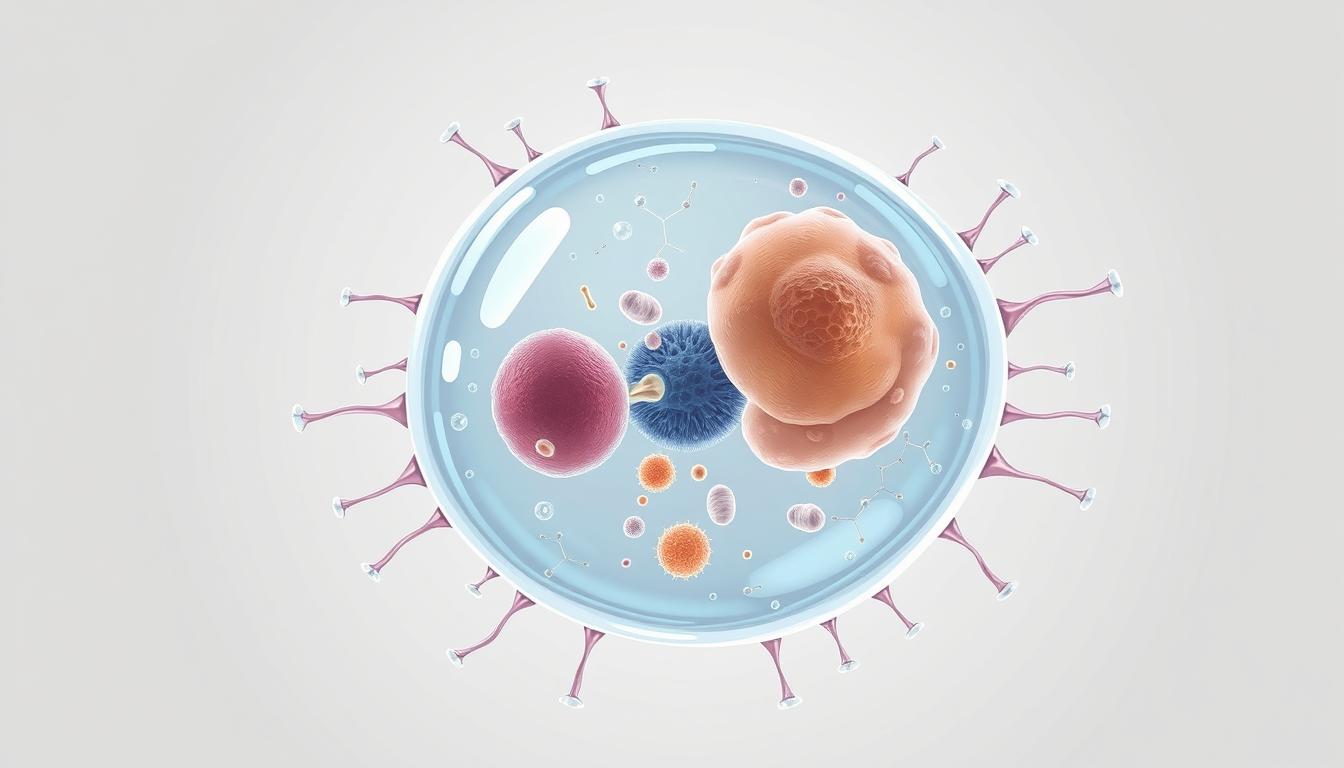
Ever thought about the tiny cells that keep your body’s tissues healthy? Fibroblasts are key cells that help our bodies work well.
Fibroblasts do more than just keep cells together. They are important parts of connective tissue. They help fix wounds, heal tissues, and support our body’s structure.
So, what do fibroblasts actually do? They are like the architects inside us. They make important parts outside of cells and fix damaged tissues. Unlike other cells, fibroblasts can change and adapt to help our bodies.
Key Takeaways
- Fibroblasts are essential connective-tissue cells with multiple critical functions
- They play a significant role in tissue repair and wound healing processes
- Fibroblasts produce complex extracellular matrix components
- These cells can adapt and transform in response to tissue needs
- Fibroblast activity is crucial for maintaining overall tissue health
Overview of Fibroblasts and Their Role in the Body
Fibroblasts are key cells that help keep our bodies working right and fix them when they’re not. They were first found in 1858 by Rudolf Virchow, a German scientist. These cells are everywhere in our connective tissue, building our body’s structure.
Fibroblasts do many important things in our bodies. They make proteins like collagen, help build the tissue around cells, and fix wounds. They also help our tissues grow back and keep our body’s shape.
- Producing essential proteins like collagen
- Supporting extracellular matrix formation
- Facilitating wound healing processes
- Contributing to tissue structure and regeneration
“Fibroblasts are the unsung heroes of our biological infrastructure, silently maintaining and repairing our body’s intricate systems.”
Studies show that fibroblasts do more than just hold things together. They are active in many body processes. They help many organs like the skin, heart, lungs, and digestive system work well.
| Organ System | Fibroblast Contribution |
|---|---|
| Skin | Collagen production, wound healing |
| Heart | Tissue structure, cardiac function |
| Lungs | Respiratory tissue maintenance |
| Digestive System | Tissue repair and regeneration |
Their ability to change and fix damaged tissue makes fibroblasts crucial for our health and strength.
Structure and Characteristics of Fibroblasts
Fibroblasts are key cells that help keep tissues healthy and strong. They have special shapes that let them do important jobs in our bodies.
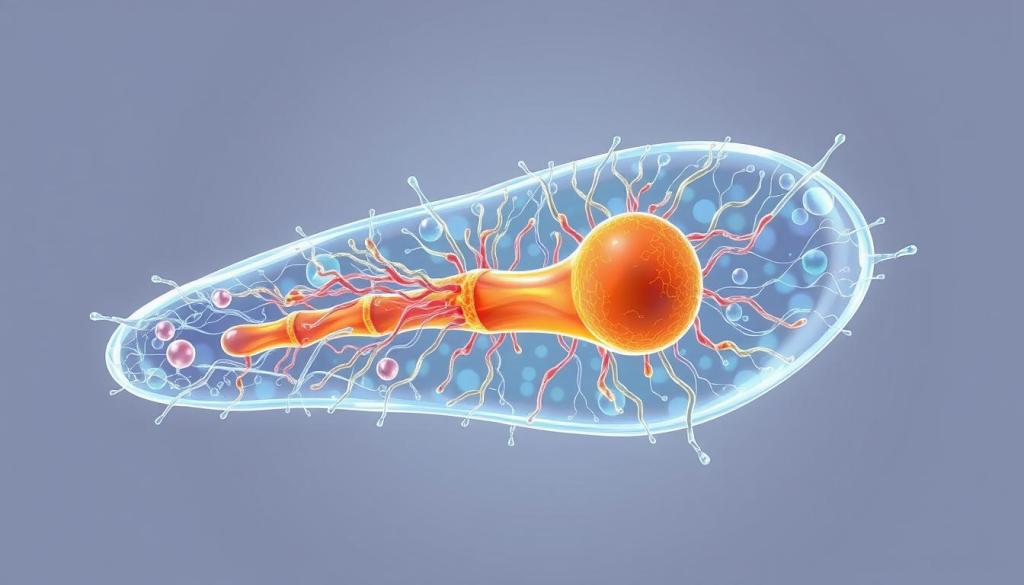
Learning about fibroblast structure helps us see how they keep tissues in good shape and fix them when needed.
Cell Shape and Morphology
Fibroblasts look like spindles or flat, branching shapes. Their look changes based on:
- Developmental stage
- Specific tissue location
- Current physiological condition
Nucleus and Cellular Characteristics
The nucleus of a fibroblast is:
- Dark and oval-shaped
- Prominently visible within the cell
- Contains genetic material for making proteins
Critical Cellular Components
Fibroblasts have special parts for their main jobs in the extracellular matrix:
- Extensive endoplasmic reticulum for making proteins
- Well-developed Golgi apparatus for protein modification
- Advanced secretory mechanisms
The structural complexity of fibroblasts enables them to synthesize and maintain the intricate network of connective tissues.
These special traits help fibroblasts make important stuff like collagen. This keeps tissues strong and helps with healing and growing new tissue.
Functions of Fibroblasts in Tissue Repair
Fibroblasts are key players in the body’s healing process. They help repair and regenerate tissues. These cells are vital for keeping tissues strong and supporting wound healing.
The fibroblast wound healing process is complex. When tissues get damaged, fibroblasts move to the injury site. They start the repair by activating and migrating to the wound.
Collagen Production Dynamics
Fibroblasts are essential for making collagen, a key component in tissue repair. They produce different types of collagen:
- Collagen Type I: Makes up about 70% of dry tissue
- Collagen Type III: Makes up 8-11% of tissue
- Helps strengthen wounds and maintain tissue structure
Extracellular Matrix Formation
Fibroblasts build a complex network of the extracellular matrix (ECM). They make proteins and structural components. This matrix supports tissue healing by providing mechanical and biochemical signals.
Wound Healing Progression
The wound healing process has three main stages:
- Inflammation (initial response)
- Proliferation (tissue reconstruction, 2-3 weeks post-injury)
- Remodeling (final restoration, up to 12 months)
“Fibroblasts are the body’s master rebuilders, transforming injury sites into restored, functional tissue.”
Fibroblasts help tissues regain about 80% of their original strength. This shows their amazing ability to repair and regenerate tissues.
The Role of Fibroblasts in Inflammation
Fibroblasts are key in the body’s fight against inflammation. They work closely with the immune system to protect tissues. Their role goes beyond just providing structure, as they are involved in complex immune processes.
The relationship between fibroblasts and inflammation is complex. It involves many processes that help heal and protect the body. By understanding their role, we see a detailed network of cell communication and immune control.
Interactions with Immune Cells
Fibroblasts work closely with different immune cells. These include:
- T cells
- Macrophages
- Natural killer cells
- Neutrophils
Cytokine Production
These cells are important for making inflammatory mediators. Cytokines released by fibroblasts can either boost or calm immune responses. This shows their complex role in regulation.
“Fibroblasts are not passive bystanders, but active participants in the inflammatory process.” – Immunology Research Institute
Modulation of Inflammatory Response
Fibroblasts play a big part in conditions like rheumatoid arthritis and inflammatory bowel disease. They express specific markers that help researchers understand their role in chronic inflammation.
- Produce inflammatory signaling molecules
- Regulate immune cell recruitment
- Support tissue repair mechanisms
- Manage inflammatory resolution
Research is still uncovering the many roles of fibroblasts in inflammation. It shows how important they are for keeping the immune system in balance and tissues healthy.
Fibroblasts and Skin Health
Dermal fibroblasts are key to keeping our skin healthy and looking good. They are important for skin repair and understanding aging. These cells build and maintain the skin’s structure and strength.
Contribution to Skin Elasticity
Fibroblasts help keep our skin elastic by making important proteins. They create:
- Collagen – which supports the skin’s structure
- Elastin – making the skin flexible
- Proteoglycans – keeping moisture in the skin
“Fibroblasts are the body’s natural skin architects, constantly rebuilding and maintaining our dermal framework.”
Role in Scar Formation
When we get a wound, fibroblasts rush to the scene. They help fix the damage by making new skin components and remodeling the tissue.
Fibroblasts in Aging Skin
As we get older, fibroblasts don’t work as well. Studies show we lose about 1% of these cells each year. This loss affects collagen and elastin production, causing wrinkles and less elastic skin.
The aging process starts around 25-30 years old. It’s when collagen and elastin production drops. Knowing how fibroblasts work helps find ways to slow down or reverse aging.
Fibroblasts in Connective Tissue and Organ Function
Fibroblasts are key to keeping our body’s structures strong and working right. They are the main cells in connective tissue. These cells adjust to different parts of the body, helping with important functions.
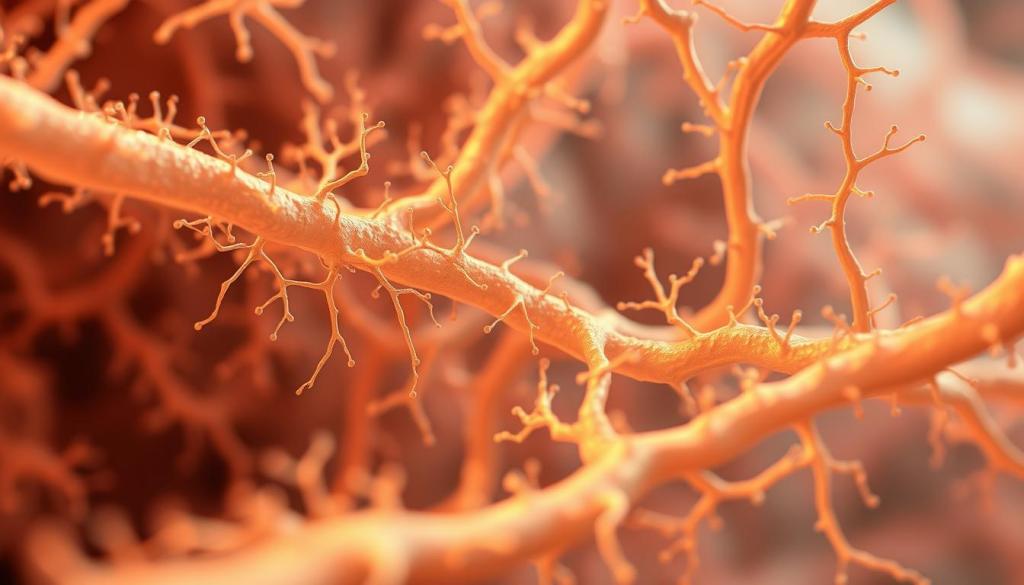
Fibroblasts do more than just hold things together. They are amazing cells that:
- Make the stuff outside cells
- Help organs stay strong
- Help fix and grow tissues
Specialized Fibroblasts in Different Organs
Fibroblasts in connective tissue are very different in each organ system. Each type of fibroblast has special traits for its place:
- Cardiac Fibroblasts: Important for the heart’s shape and how it sends signals
- Pulmonary Fibroblasts: Keep the lungs flexible and help them heal
- Digestive Organ Fibroblasts: Keep organs like the colon and bladder strong
Tissue-Specific Contributions
Studies show fibroblasts are not the same in every tissue. They have different genes based on their job. They make a lot of collagen type 1, which is very important.
Fibroblasts are the architectural engineers of our body’s tissues, adapting and responding to diverse physiological demands.
Learning about fibroblasts helps doctors find better ways to fix and grow tissues. This is key for new treatments.
Fibroblast Activation and Dysfunction
Fibroblasts are key to keeping tissues healthy. But when they get activated or dysfunctional, it can cause big health problems. Learning about how fibroblasts move and work helps us understand many diseases.
Factors Triggering Fibroblast Activation
Many things can turn on fibroblasts and change how they work:
- Tissue injury
- Mechanical stress
- Inflammatory signals
- Chronic disease processes
Implications of Overactive Fibroblasts
When fibroblasts work too much, they can harm tissues by making too much scar tissue. Uncontrolled fibroblast migration can lead to serious health issues in different parts of the body.
| Condition | Fibroblast Impact |
|---|---|
| Cardiac Fibrosis | Increased heart muscle stiffness |
| Kidney Disease | Reduced organ function |
| Lung Disorders | Reduced respiratory capacity |
Consequences of Fibroblast Dysfunction
When fibroblasts don’t work right, it can make diseases worse. Studies show that bad fibroblast behavior leads to:
- Cancer cell spreading
- Long-lasting inflammation
- Failed tissue repair
“Understanding fibroblast activation is crucial for developing targeted therapeutic interventions,” notes cellular research experts.
Research keeps going to learn more about fibroblasts in health and sickness. It shows how complex they are and how they might help in new medical treatments.
Research and Advancements Involving Fibroblasts
Fibroblast research is making big strides with new discoveries. These findings show how complex these cells are. They play a key role in understanding how cells work and finding new treatments.
Scientists have learned a lot about fibroblasts in different tissues. They found that fibroblasts in each tissue have unique traits. This shows how adaptable and important they are, especially during injury and inflammation.
Emerging Applications in Regenerative Medicine
Regenerative medicine is using fibroblast research to create new treatments. Researchers are finding ways to use fibroblast cell culture for:
- Creating personalized tissue engineering
- Developing cell-based therapies
- Studying complex diseases
Fibroblast Studies in Disease Models
New research methods are giving us a closer look at fibroblasts in diseases. Their active role in health and disease makes them key for studying disease progression and finding treatments.
Fibroblasts are not just passive structural cells, but active participants in tissue health and disease management.
| Research Focus | Key Discoveries |
|---|---|
| Tissue Adaptation | Fibroblasts can modify extracellular matrix composition |
| Pathological States | Excessive matrix generation can lead to organ dysfunction |
| Wound Healing | Fibroblasts regulate tissue repair through complex signaling |
The future of fibroblast research is full of promise. We can expect to learn more about how cells work, understand diseases better, and find new treatments.
Conclusion: Understanding the Importance of Fibroblasts
Fibroblasts are key to keeping our bodies working right. They help build and fix tissues, keeping us healthy. These cells can even pull up to 420 times their own weight, showing their strength.
But fibroblasts do more than just hold things together. They help heal wounds, make new tissue, and fight off infections. They change and grow in response to their environment, keeping tissues balanced.
Scientists are still learning about fibroblasts and their roles in our bodies. They help with skin repair and keeping organs healthy. Studying them could lead to new ways to heal and treat diseases.
As we learn more, we see fibroblasts as more than just building blocks. They actively work to keep our bodies in top shape. This makes them a big focus for medical and scientific research.
FAQ
What exactly are fibroblasts?
Fibroblasts are special cells in our body’s connective tissues. They help keep tissues strong by making proteins outside the cells. They also help heal wounds and support many body functions.
How do fibroblasts contribute to wound healing?
Fibroblasts move to wounds, make collagen, and create new tissue. They turn into myofibroblasts to pull the wound shut. This helps fix damaged tissue and keeps it strong.
What is the primary function of fibroblasts in the body?
Fibroblasts mainly make proteins for the tissue’s structure, help heal wounds, and fight off infections. They keep our body’s tissues working right.
How do fibroblasts interact with the immune system?
Fibroblasts talk to immune cells by making and responding to signals. They help control inflammation and work with immune cells to repair tissues.
Do fibroblasts change as we age?
Yes, they do. With age, fibroblasts make less collagen and have trouble fixing tissues. This leads to signs of aging, especially in the skin.
Can fibroblasts be found in different organs?
Absolutely. There are different types of fibroblasts in each organ, like the heart and lungs. Each type fits the needs of its tissue.
What happens when fibroblasts become dysfunctional?
When fibroblasts don’t work right, it can cause scarring, organ damage, and chronic diseases. Their wrong behavior can mess up healing and tissue function.
Are fibroblasts important in medical research?
Yes, they are key in medical research, especially in regenerative medicine. New methods like single-cell RNA sequencing help us understand their roles in health and disease.
How do fibroblasts support skin health?
Fibroblasts help the skin by making proteins, keeping it elastic, and helping with scarring. They keep the skin strong and working well.
Can fibroblasts be used in medical treatments?
Research is looking into using fibroblasts in treatments, like regenerative medicine. They might help fix fibrotic disorders and other diseases.




Leave a Comment
Your email address will not be published. Required fields are marked *