


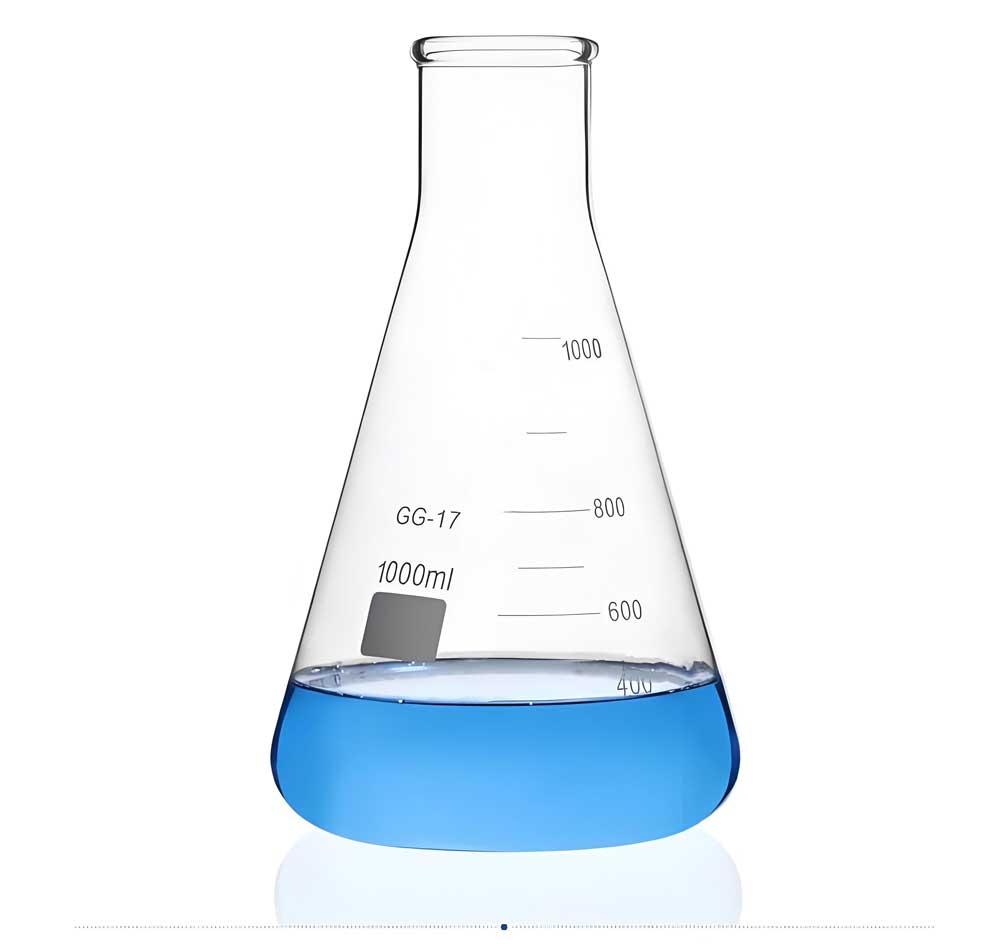
Ever wondered about the special vessel that turns simple chemicals into groundbreaking discoveries? The conical flask is a key piece of lab equipment. It has changed the game in chemistry since 1860.
German chemist Emil Erlenmeyer created this essential tool. It’s more than just a container. Its design helps scientists mix, heat, and store chemicals for research.
Conical flasks, or Erlenmeyer flasks, are vital in science labs. Their shape, with a flat bottom and narrow neck, makes mixing and heating easy. They also keep chemicals safe and organized.
Key Takeaways
- Invented in 1860 by Emil Erlenmeyer
- Available in sizes ranging from 25 mL to 5,000 mL
- Made from heat-resistant borosilicate glass
- Essential in chemistry, biology, and microbiology laboratories
- Facilitates mixing, heating, and storing chemical solutions
Definition and Description of a Conical Flask
A conical flask, also known as an Erlenmeyer flask, is a key piece of lab glassware. It has a unique shape with a narrow neck and flat bottom. This design makes it crucial for scientific research and experiments.
The Erlenmeyer flask’s design offers many benefits in labs. Its conical shape helps with mixing and stability. The narrow neck is important for:
- Reducing spills during experiments
- Lessening solvent evaporation
- Creating controlled swirling of solutions
- Making pouring and handling easier
Overview of Flask Shape and Design
The conical flask is designed for lab efficiency. Its flat bottom keeps it stable, and the sloping sides help with mixing. This makes it great for tasks like titrations and solution making.
Materials and Construction
Conical flasks are made from borosilicate glass. This glass is known for its heat resistance and chemical durability. It’s perfect for handling temperature changes and chemical reactions in labs.
Today, you can find conical flasks in many sizes. They range from 50 mL to 2000 mL. This variety meets the needs of different scientific fields.
Primary Uses in Laboratory Settings
Conical flasks are key in scientific research. They help with liquid handling and complex chemical work. These flasks are made to support many experiments with great precision and reliability.
Measurement of Liquids
Conical flasks are good for measuring liquids, even if they’re not as exact as other tools. They have lines on them for measuring. This lets researchers:
- Get a good guess of liquid amounts
- Do initial checks in chemical tests
- Move liquids quickly and safely
Mixing and Heating Solutions
Borosilicate glass conical flasks are great for mixing and heating chemicals. Their shape makes them stable and resistant to heat. This makes them perfect for many lab tasks.
Titration Techniques
Conical flasks are best for titration. Their wide base and narrow neck help with:
- Mixing chemicals evenly
- Seeing color changes easily
- Finding the exact end point of reactions
| Flask Feature | Benefit in Laboratory Use |
|---|---|
| Broad Base | Enhanced Stability |
| Narrow Neck | Reduced Evaporation |
| Borosilicate Glass | High Thermal Resilience |
Scientists use conical flasks for their flexibility in handling liquids. They are essential in many scientific fields.
Advantages of Using a Conical Flask
Conical flasks are key in chemistry labs, offering benefits that make them crucial for research and experiments. Their design ensures top performance and reliability for scientists.
The unique benefits of conical flasks come from their design. They provide stability and function in many scientific tasks.
Enhanced Stability in Laboratory Settings
Conical flasks have features that make them stable:
- Wide, flat base prevents tipping during experiments
- Thick walls withstand thermal shock
- Strong build reduces breakage risk
Versatile Applications in Chemical Research
Conical flasks are great for many lab tasks because of their design. Scientists like them for:
- Mixing solutions with little spill
- Running chemical reactions
- Storing liquids
- Doing precise titrations
Borosilicate glass variants have extra benefits. They resist chemical corrosion and temperature changes well. Their narrow neck cuts down on liquid loss, helping get accurate results.
These tools are a mix of function, durability, and precision for scientists and researchers.
Types of Conical Flasks
Laboratory scientists use various conical flasks for precise chemical experiments. Each type has its own design and features. This helps researchers pick the right glassware for their work.
Standard Conical Flasks
Standard conical flasks, also known as Erlenmeyer flasks, are key tools in labs. They have a triangular bottom for stability and a narrow neck to reduce evaporation. They are made from tough borosilicate glass and come in different sizes.
Graduated Conical Flasks
Graduated conical flasks add a special feature for measuring. They have markings for estimating liquid volumes accurately.
| Flask Type | Accuracy | Primary Use |
|---|---|---|
| Standard Erlenmeyer Flask | ±5% volume tolerance | General mixing and heating |
| Precision Graduated Flask | ±0.5% volume tolerance | Precise volume measurements |
The American Society for Testing and Materials (ASTM) sets strict standards for these tools. This ensures quality and performance in labs.
Researchers can pick between glass and plastic graduated flasks. Glass is better for chemicals, while plastic is lighter for some tasks.
Key Features of Conical Flasks
Conical flasks are key tools in science, made with special features for lab work. They mix precision with practical use.
- Narrow neck for controlled pouring
- Flat bottom for stable placement
- Graduated volume markings for quick measurements
Neck Design and Pouring Functionality
The narrow neck of conical flasks is a big plus for handling liquids. It cuts down on evaporation and lets you control liquid transfers well. Some flasks have a beaded rim for even better pouring.
Volume Calibration Marks
Calibration marks on conical flasks help with quick volume checks. Though not as exact as special glassware, they guide through experiments.
- Volume ranges from 25 ml to 6000 ml
- Helps in fast solution making
- Good for initial measurements and estimates
With a narrow neck and flat bottom, conical flasks are very useful in labs. They meet many research needs with their smart design.
Safety Considerations When Using Conical Flasks
Laboratory safety is crucial when using chemistry equipment. Conical flasks are key tools in lab work. But, they need careful handling to avoid accidents and keep experiments safe.

Following safety rules can greatly lower the chance of lab accidents. Many accidents happen because of wrong equipment use and care.
Handling Techniques to Prevent Breakage
Scientists must follow certain guidelines when handling lab glassware:
- Always wear protective personal equipment (PPE)
- Check conical flasks for cracks or damage before using them
- Use gloves to protect hands from cuts or chemical exposure
- Handle flasks with clean, dry hands to keep a good grip
Best Practices for Chemical Reactions
Chemical reactions need careful attention to safety:
- Use splash goggles to protect eyes from chemical splashes
- Do reactions in well-ventilated areas
- Keep the right temperature during experiments
- Keep your workspace clean to avoid spills
| Safety Equipment | Purpose |
|---|---|
| 100% Cotton Lab Coat | Primary body protection |
| Nitrile Gloves | Hand protection from chemicals |
| Splash Goggles | Eye protection from splashes |
Knowing and using these safety steps makes the lab a safe place. It also keeps scientific research at its best.
Cleaning and Maintenance of Conical Flasks
Keeping laboratory glassware, like conical flasks, clean is key. It helps get accurate results and makes your tools last longer. Clean glassware is essential for good science.
Essential Cleaning Techniques
Cleaning conical flasks needs a careful method to get rid of chemicals. Scientists must follow certain steps to avoid contamination. This keeps their equipment in top shape.
- Always clean glassware right after use to stop residue from hardening
- Start with warm tap water and a soft brush for cleaning
- Rinse well with deionized water to clean thoroughly
Recommended Cleaning Agents
Each chemical needs a special cleaning method. Water-soluble solutions need 3-4 rinses with deionized water. Water-insoluble solutions need 2-3 rinses with ethanol or acetone.
- For organic residues: Rinse with acetone or ethanol
- For strong acids: Use lots of tap water, then deionized water
- For strong bases: Neutralize with tap water, then rinse with deionized water
Proper Drying Techniques
Drying is vital to keep your equipment clean. Experts say air drying is best to avoid contamination.
- Avoid using paper towels or forced air
- Let glassware air dry completely
- Use acetone for quick drying if you need it right away
Quick tip: Check if you cleaned well by watching water. A smooth water sheet means you cleaned right. Uneven water shows you need to clean more.
Conical Flasks in Educational Settings
Chemistry education needs hands-on learning, and conical flasks are key. They are used in labs everywhere to teach students about chemistry. These flasks help students learn by doing, not just reading.
Students get to work with conical flasks in many ways. This helps them understand important chemical ideas. The design of these flasks makes them great for teaching many things.
Teaching Chemistry Concepts
Conical flasks help teach many important chemistry ideas:
- Chemical reaction dynamics
- Solution mixing techniques
- Volume measurement principles
- Safe laboratory practices
Demonstrations and Experiments
Here are some experiments that use conical flasks:
- Acid-base titration to understand neutralization reactions
- Investigating reaction rates
- Observing color changes during chemical interactions
- Studying precipitation processes
| Flask Size | Educational Application |
|---|---|
| 50-250 mL | Small-scale student experiments |
| 250-500 mL | Advanced chemistry demonstrations |
| 500-1000 mL | Complex research-level investigations |
Using conical flasks in class makes chemistry real and fun. It sparks curiosity and teaches students to work safely in labs.
Innovations and Developments in Flask Design
The world of laboratory glassware is always changing. New innovations in chemistry equipment are exciting. Modern conical flasks have seen big changes, thanks to new technology and scientific needs.
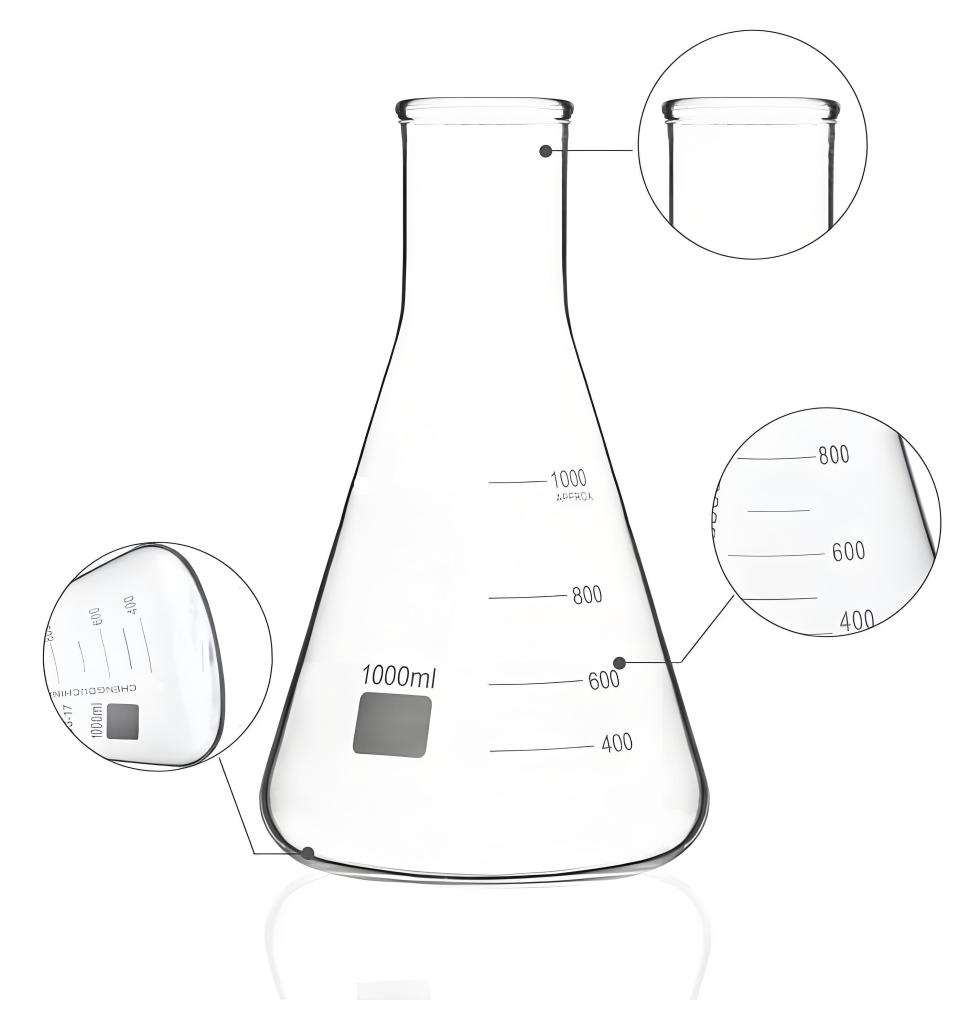
1000ml Conical Flask
- Enhanced material durability
- Chemical resistance
- Ergonomic handling
Breakthrough Materials in Flask Construction
Scientists have created new materials for flasks. Borosilicate glass derivatives are now more resistant to heat and chemicals. This means researchers can do more complex experiments safely.
Ergonomic Design Advancements
Modern chemistry equipment puts user comfort first. New designs include:
- Improved grip designs
- Lighter weight materials
- Enhanced pouring mechanisms
- Balanced weight distribution
These changes help reduce strain during long lab work. It makes research more accessible and efficient.
Technological Integration
Some conical flasks now have digital features. They include digital measurements and smart sensors. This makes traditional glassware into advanced scientific tools. It’s a big step forward in precision and data collection.
Conclusion: The Importance of Conical Flasks in Chemistry
Conical flasks are key in chemistry labs, helping scientists make new discoveries. Their shape, with a wide base and narrow neck, makes them perfect for precise work. This design is used in many scientific fields.
Conical flasks do more than just hold liquids. They are vital for complex experiments and reactions. They can handle high temperatures and pressures, making them essential for today’s science.
The Flask’s Role in Scientific Advancements
These glassware pieces are crucial for scientific growth. They offer reliable tools for experiments. Conical flasks help bridge the gap between theory and practice in science.
Future Trends in Laboratory Glassware
As science evolves, so will conical flasks. We can expect them to be made with better materials and designs. These updates will keep them at the heart of chemical research and innovation.
FAQ
What is a conical flask and how is it different from other laboratory glassware?
A conical flask, also known as an Erlenmeyer flask, has a unique shape. It has a narrow neck and a flat bottom. This makes it stable and great for mixing and heating chemicals.
It’s made from borosilicate glass. This material is strong against heat and chemicals.
What are the primary uses of a conical flask in a laboratory?
Conical flasks are used for many things in chemistry labs. They’re good for mixing, heating, and doing chemical reactions. They’re not as precise as other flasks but are great for mixing and heating.
Their shape helps mix liquids well and prevents spills.
How do I properly clean and maintain a conical flask?
To clean a conical flask, use the right cleaning agents. Mild detergents work for organic stuff, and special cleaners for tough stains. Rinse well with distilled water and dry completely.
Don’t use rough cleaners that might scratch it. Always check for cracks or damage before using.
What safety precautions should be taken when using a conical flask?
Always wear safety goggles and gloves when using a conical flask. Avoid sudden temperature changes. Use the right heat sources and place the flask on a stable surface.
Check for cracks or damage before use. Never heat a sealed flask to avoid explosions.
What types of conical flasks are available?
There are many types of conical flasks. You can find standard ones in sizes from 50mL to 2000mL. There are also graduated ones for measuring liquids.
Some flasks are made for specific uses, like certain chemicals or experiments.
How are conical flasks used in educational settings?
In schools, conical flasks help teach chemistry. They’re used in experiments like acid-base reactions and solution making. This helps students learn chemistry in action.
What materials are conical flasks typically made from?
Most conical flasks are made from borosilicate glass. This is because it’s strong against heat and chemicals. But, there are also flasks made from other materials for different needs.
How do I choose the right conical flask for my experiment?
Choosing the right conical flask depends on several things. Think about the liquid volume, chemical reaction, and temperature needs. Also, consider the flask’s size and material.
It’s a good idea to ask a lab equipment expert for advice. They can help you pick the best flask for your experiment.
Leo Bios
Hello, I’m Leo Bios. As an assistant lecturer, I teach cellular and
molecular biology to undergraduates at a regional US Midwest university. I started as a research tech in
a biotech startup over a decade ago, working on molecular diagnostic tools. This practical experience
fuels my teaching and writing, keeping me engaged in biology’s evolution.






Leave a Comment
Your email address will not be published. Required fields are marked *