


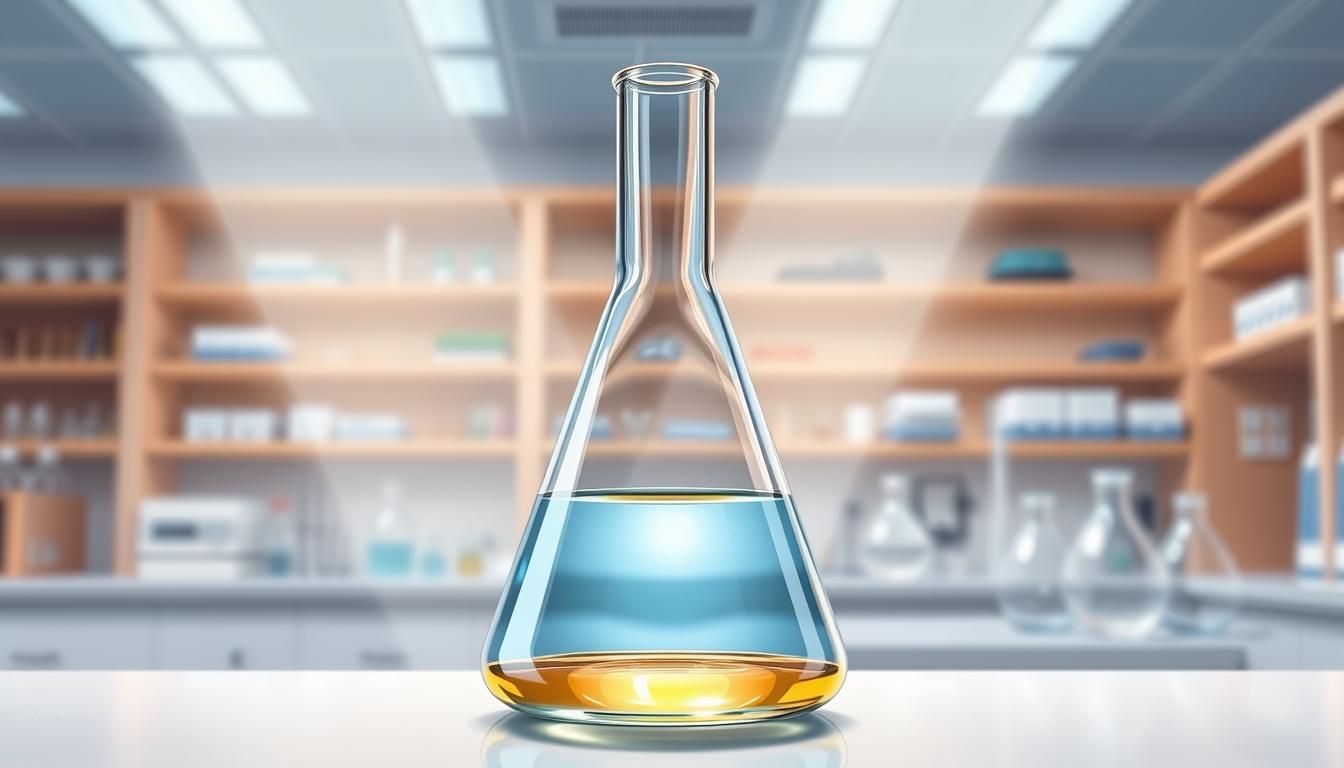
Ever wondered why conical flasks are key in science? They’re not just simple glass containers. They’re precise tools used in many scientific fields.
Conical flasks, or Erlenmeyer flasks, are vital in science. Their wide body and narrow neck are perfect for lab work. They’re especially useful in complex experiments.
These flasks are made with care, using strong materials like pyrex or borosilicate glass. Their shape helps scientists mix, heat, and store chemicals safely. This is crucial in experiments.
Key Takeaways
- Conical flasks are essential laboratory equipment for mixing and storing chemical solutions
- Available in sizes ranging from 25 mL to 5,000 mL for diverse experimental needs
- Made from temperature-resistant materials like pyrex and borosilicate glass
- Unique conical shape reduces spill risks during liquid handling
- Widely used in chemistry, biology, and medical research applications
Introduction to Conical Flasks
Conical flasks are key in chemistry glassware and used in many scientific fields. They are vital for scientists who need precise tools. These flasks help in many experiments.
The design of conical flasks is unique. It makes them essential in science. Their shape helps in many experiments.
Defining Characteristics
Conical flasks have a special design. This design makes them stand out. Key features include:
- Wide, stable base for optimal balance
- Narrow neck to minimize evaporation
- Flat bottom for steady placement
- Graduated markings for approximate volume measurements
Materials in Laboratory Equipment
Scientists make conical flasks from two main materials:
- Borosilicate Glass: Known for chemical resistance and thermal stability
- High-grade Plastics: Lightweight and good for certain uses
Comparative Analysis of Lab Glassware
Conical flasks have special benefits compared to other glassware. Their shape helps in mixing and chemical reactions. They are great for observing color changes and reactions.
Conical flasks are versatile tools used in 95% of scientific research environments.
Applications in the Laboratory
Conical flasks are key in scientific research and experiments. They are vital for mixing solutions and precise measurements. These flasks are essential in many lab settings.
Mixing and Stirring Solutions
The design of conical flasks is perfect for mixing liquids. Their shape helps swirl liquids without spills. The benefits include:
- Broad base for stable mixing
- Narrow neck to prevent splashing
- Easy to handle during experiments
Performing Titration Experiments
Titration experiments need conical flasks for accurate reactions. The flask’s shape helps with precise measurements. It also reduces evaporation and supports chemical interactions.
- Enables precise liquid measurements
- Minimizes evaporation during experiments
- Provides a stable environment for chemical interactions
The narrow neck of a conical flask is specifically designed to enhance the precision of titration experiments.
Preparing Bacterial Cultures
In microbiology, conical flasks are vital for growing bacterial cultures. They support sterile conditions and optimal growth. Researchers value these flasks for:
- Allowing controlled air circulation
- Providing ample space for media and microorganisms
- Facilitating easy sealing with specialized stoppers
Conical flasks are essential in many scientific fields, from chemistry to biology.
The Role of Conical Flasks in Experimentation
Conical flasks are key in today’s labs, playing a big role in many fields. They are essential for scientists who need exact and controlled settings for their work.
Scientists use conical flasks for many important tasks. Their special shape makes them great for different kinds of research.
Chemical Experiment Applications
In chemistry labs, conical flasks are very useful. They help with:
- Mixing complex chemical solutions
- Conducting precise titration experiments
- Heating and analyzing chemical reactions
- Short-term chemical storage
Biological Research Essentials
Biological research also depends a lot on conical flasks. Microbiology labs often use them for:
- Cultivating bacterial cultures
- Preparing growth media
- Conducting cellular research
- Monitoring microorganism development
Quality Control Significance
Quality control in many industries uses conical flasks for testing and analysis. Their graduated scales and precise design help keep experiments accurate and reliable.
Conical flasks are a key part of modern science, linking theory with practice.
Conical flasks come in sizes from 25 mL to 5,000 mL. They meet the needs of many research projects, making them crucial for scientific discovery.
Advantages of Using Conical Flasks
Conical flasks are key in labs, offering great versatility and function. They are made for the complex needs of science, helping researchers with many tasks.
The design of conical flasks brings many benefits for those working with hot liquids and boiling samples:
- Ergonomic shape that reduces spill risks
- Enhanced stability during experimental procedures
- Superior heat distribution capabilities
- Resistance to thermal shock
Ergonomic Design for Ease of Use
Conical flasks have a special shape that makes lab work easier. Their narrow neck and wide base are perfect for swirling solutions. This design helps avoid spills during experiments.
Versatility in Laboratory Tasks
Conical flasks are great for many lab tasks. They’re used for mixing, titrations, and growing microorganisms. They come in sizes from 25 mL to 5,000 mL, fitting all sorts of experiments.
The conical flask’s design transforms complex scientific procedures into manageable, precise operations.
Temperature Variation Resilience
Made from borosilicate glass, these flasks handle big temperature changes well. They can safely heat liquids and boil samples without breaking. The glass is also resistant to chemicals and heat, making them essential in science.
Safety Protocols When Using Conical Flasks
Conical flasks are important in labs. They need careful handling to keep everyone safe and experiments accurate. Scientists follow strict rules to avoid accidents and keep research conditions precise.
Working with lab equipment safely is key in science. Conical flasks have a special design. This means they need specific handling to reduce risks.
Recommended Handling Techniques
- Always wear appropriate personal protective equipment (PPE)
- Use gloves designed for chemical resistance
- Inspect glassware for cracks before use
- Handle flasks with laboratory tongs or specialized grips
- Avoid sudden temperature changes that could cause thermal shock
Proper Cleaning and Sterilization Methods
Clean lab equipment is vital to avoid contamination. It helps get accurate results in experiments.
- Rinse flasks immediately after use with appropriate solvents
- Use laboratory-grade detergents for thorough cleaning
- Autoclave flasks for complete sterilization
- Allow flasks to air dry completely before storage
Risks and Precautions to Consider
Knowing the dangers of conical flasks is important in lab work.
“Safety in the laboratory is not an option, it’s a necessity.” – Scientific Research Guidelines
Big risks include chemical reactions, glass breaking, and contamination. Researchers must stay alert and follow safety rules to avoid these dangers.
By sticking to these safety tips, scientists can safely use conical flasks. This keeps the lab a safe place.
Differences Between Conical Flasks and Other Lab Equipment
Chemistry glassware is key in scientific research. Each piece is made for a specific task. Conical flasks are unique because of their design and uses.
Scientists use many tools for precise experiments. Knowing the differences in glassware helps pick the right tool for each study.
Distinctions from Beakers
Conical flasks and beakers are different in design and use:
- Beakers have straight sides, while conical flasks have a tapered body
- Conical flasks reduce spillage because of their narrow neck
- Their shape helps mix and heat solutions better
Conical Flasks vs. Round Bottom Flasks
Conical and round bottom flasks have distinct differences:
- Round bottom flasks are best for distillation
- Conical flasks are more stable on flat surfaces
- Round bottom flasks often need extra support stands
Specialized Uses Compared to Test Tubes
Conical flasks have more advanced features than test tubes:
- They hold more volume for complex reactions
- They distribute heat better in experiments
- They work well with magnetic stirrers for mixing
Conical flasks are a vital part of chemistry glassware today. They help researchers get the best results by choosing the right equipment for their studies.
Guidelines for Selecting the Right Conical Flask
Choosing the right conical flask is key for good lab work. Researchers need to think about many things to get the best results. This helps them do precise science.
When picking out conical flasks, several important things come up. These can really affect how well your research goes and what you find out.
Size and Volume Considerations
The size of the conical flask matters a lot for your experiment. You need the right size for your research:
- 50 mL: Great for small reactions
- 100 mL: Good for some prep work
- 250 mL: A versatile size for many uses
- 500 mL to 1 L: Best for bigger reactions
- 2 L to 5 L: Ideal for big lab tasks
Material Selection Based on Application
The material of the flask affects how well it works and lasts in the lab:
- Borosilicate Glass: Best for handling sudden temperature changes
- Polypropylene: Great for storing chemicals
- Polycarbonate: Strong and easy to see through
Features to Look For in a Conical Flask
“The right conical flask can make or break your experimental precision.” – Laboratory Research Institute
Look for these important features:
- Graduated markings for accurate volume measurement
- Chemical resistance
- Temperature tolerance
- Mechanical durability
Researchers must balance what they can spend with what they need. By carefully looking at these points, they can do great science.
Importance of Accurate Measurements
Precision is key in scientific research, especially in volumetric analysis. Laboratory tools, like conical flasks, are crucial for accurate results.
Getting measurements right is vital in biological and chemical studies. Scientists use advanced methods to avoid mistakes and get trustworthy data.
How Measurements Affect Experimental Outcomes
How well you measure affects your research’s trustworthiness. Even small mistakes can change the whole picture. Here’s why:
- Precision of laboratory equipment
- Calibration of measuring instruments
- Environmental conditions during measurement
- Operator skill and technique
Tools to Ensure Precision
To improve measurement accuracy, researchers can try these:
- Use Class A volumetric flasks with low error margins
- Get digital analytical balances
- Try different measurement methods
- Keep environmental factors steady
In volumetric analysis, the right lab tools are essential. They can make all the difference between success and failure. Precision is not just a goal; it’s a must for top-notch science.
Maintenance of Conical Flasks
Keeping laboratory equipment in good shape is key for accurate science. It also helps tools like conical flasks last longer. Scientists must follow certain care steps to keep these tools working well.
To keep conical flasks in top condition, researchers need to focus on a few important areas.
Cleaning Techniques for Different Materials
Each material needs its own cleaning method:
- Glass conical flasks: Use laboratory-grade detergents and rinse well with distilled water
- Plastic conical flasks: Clean with mild soap and avoid strong chemicals
- Borosilicate flasks: Clean with special glass cleaners
Storage Recommendations
Storing equipment right is key to keeping it quality. Here are some tips:
- Put them in clean, dust-free places
- Keep them away from direct sunlight
- Make sure they are dry before storing
- Don’t stack them to avoid damage
Long-Term Care Tips
To make your conical flasks last longer, try these long-term care tips:
| Care Aspect | Recommended Action |
|---|---|
| Inspection | Look for cracks, chips, or damage often |
| Temperature Handling | Don’t change temperatures too fast to avoid shock |
| Replacement | Replace flasks that are worn or might be contaminated |
By sticking to these maintenance tips, researchers can keep their conical flasks reliable for precise scientific work.
Innovations and Future of Conical Flasks
The world of lab tools is always changing, with conical flasks leading the way. Scientists are making new designs that change how we use these tools in biotechnology.
New materials have made the old conical flask better. They’ve added new features that make these tools better and more useful.
Advances in Material Science
New materials have made conical flasks much better:
- Ultra-strong borosilicate glass
- Nano-coatings for better chemical protection
- Light but strong polymers
Technological Enhancements in Design
New tech is making lab tools smarter and better:
- Smart sensors for instant data
- More accurate measurements
- Easier to hold handles
Potential Future Applications in Biotechnology
The future of conical flasks in biotech is bright. They could be used in:
| Research Area | Potential Applications |
|---|---|
| Synthetic Biology | Genetic engineering research |
| Personalized Medicine | Custom cell culture techniques |
| Microbial Research | Advanced microorganism cultivation |
These changes show how lab tools keep up with science’s needs. They help us do more in biotechnology.
Conclusion: The Significance of Conical Flasks
Conical flasks are key in science labs. They have a wide body and narrow neck. This design makes them crucial for mixing, heating, and storing solutions.
These flasks are more than just containers. Scientists use them for important studies. They help in understanding molecules and growing bacteria. The glass is strong against heat and chemicals.
Lab safety is a big deal. Conical flasks help by reducing spills and showing volume levels. They can handle many lab conditions. This makes them vital for research in many fields.
Conical flasks will keep being important in labs. They have a long history of helping research. They are essential for scientists to learn about our world.
FAQ
What is a conical flask primarily used for in laboratory settings?
Conical flasks are key tools in labs. They mix solutions, do volumetric analysis, and conduct titration. They also prepare bacterial cultures and heat samples in research, especially in biology and chemistry.
What makes the shape of a conical flask unique and beneficial?
The unique shape of conical flasks helps mix well and prevents spills. It also controls stirring and heats solutions evenly.
What materials are typically used to manufacture conical flasks?
They’re made from borosilicate glass or lab plastics. Each material has its own benefits for research and chemical resistance.
How do conical flasks differ from beakers?
Conical flasks have a narrower neck than beakers. This reduces contamination and evaporation. They’re better for precise mixing in controlled experiments.
Can conical flasks be used for different types of scientific research?
Yes, they’re very versatile. Used in biology, chemistry, microbiology, and medical research. They’re for preparing solutions and maintaining bacterial cultures.
What safety precautions should be taken when using conical flasks?
Wear protective gear, handle them carefully, and clean them well. Check for damage and know about chemical compatibility.
How do I choose the right size of conical flask for my experiment?
Choose based on the solution volume needed. Pick a size that’s big enough for mixing but not overflowing. Leave 20-30% of the flask empty.
Are conical flasks suitable for high-temperature experiments?
Borosilicate glass flasks can handle high temperatures. But always check the specific thermal resistance of your flask.
How should conical flasks be cleaned and maintained?
Clean them right after use with lab detergents. Rinse with distilled water and use special cleaners for tough spots. Check for damage before each use.
What recent innovations have been made in conical flask design?
New designs include better chemical resistance, precise graduations, and thermal properties. There are also flasks with sensors for real-time monitoring in research.




Leave a Comment
Your email address will not be published. Required fields are marked *