


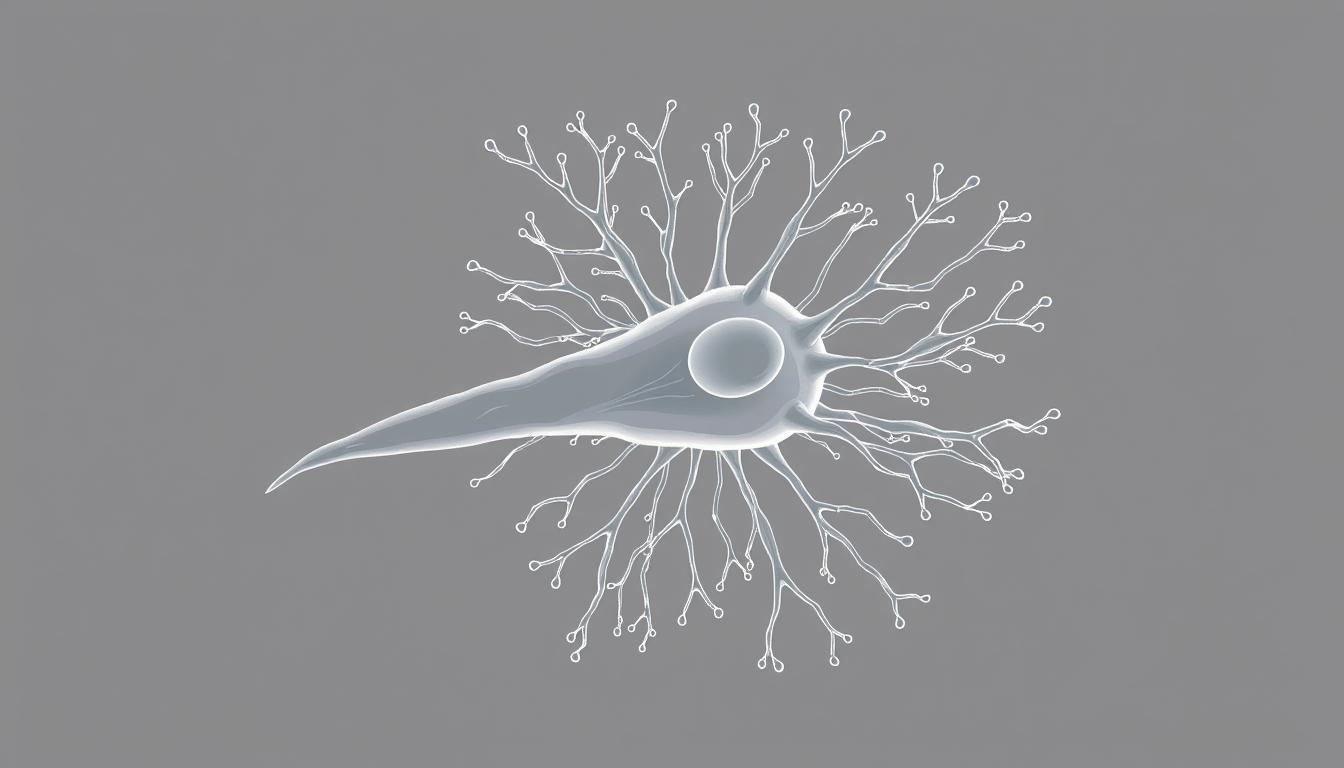
Ever wondered who keeps your body’s tissues in perfect order? It’s the fibroblasts, tiny cellular architects.
Fibroblasts are key cells in making and keeping tissues together. They are vital for our body’s structure. These cells create the essential parts of our connective tissues.
Fibroblasts are found in the stroma and make lots of collagen. They stay quiet in adults but wake up to fix tissues. They’re very good at making proteins and changing the tissue’s structure.
Fibroblasts talk to other cells all the time. They send and receive signals. This helps keep tissues healthy and fixes them when needed.
Key Takeaways
- Fibroblasts are essential mesenchymal cells responsible for tissue formation
- They produce critical extracellular matrix components like collagen
- Fibroblasts can remain dormant and activate when tissue needs repair
- These cells play a vital role in wound healing and tissue regeneration
- Fibroblasts maintain constant communication with surrounding cellular environments
Introduction to Fibroblasts
Fibroblasts are key cells in our bodies. They help keep our tissues strong and fix them when they get damaged. These cells are the backbone of our tissues, making sure they work well.
Definition and Core Role
Fibroblasts are special cells that make and keep the matrix outside our cells. Their main job is:
- Creating important proteins like collagen
- Helping fix tissues
- Guiding how wounds heal
- Keeping tissues strong
Historical Context of Discovery
In 1858, German scientist Rudolf Virchow first saw these spindle-shaped cells of connective tissue. His discovery was a big step in understanding these important cells.
Biological Significance
Fibroblasts are very flexible in our bodies. They make up a lot of the matrix, including collagen and proteoglycans.
“Fibroblasts are not just passive structural elements, but active participants in tissue homeostasis and regeneration.”
They can change into myofibroblasts to help heal wounds. This shows how vital they are for keeping our bodies in balance.
Structure and Characteristics of Fibroblasts
Fibroblast cells are key stromal cells that keep tissues strong and working right. They have special features that help them support many body functions.
Cell Anatomy
Fibroblast cells look different from other cells. They have:
- A branched cytoplasm around an elliptical nucleus
- A speckled nucleus with two or more nucleoli
- An elongated, spindle-shaped body

Biochemical Properties
Fibroblasts are known for their lots of rough endoplasmic reticulum (RER). This shows they make a lot of proteins. They are also great at making important parts of the extracellular matrix.
“Fibroblasts are the architects of tissue structure, constantly rebuilding and maintaining our body’s complex cellular landscape.”
Some important things fibroblast cells do include:
- Making lots of collagen protein
- Producing proteoglycans and elastin
- Releasing key matrix metalloproteinases
- Helping control tissue forces
Fibroblasts have a complex makeup that lets them adjust to different situations. They are vital for fixing tissues, handling inflammation, and keeping cells in balance.
Functions of Fibroblasts in the Body
Fibroblasts are amazing cells that help fix and keep our body tissues healthy. They are key players in fixing wounds and making new tissue. These cells are like the builders of our body, working hard to keep us whole.
Tissue Repair and Healing
When our body gets hurt, fibroblasts jump into action. They fix damaged areas by doing several important things:
- Migrating to wound sites
- Proliferating rapidly
- Synthesizing healing proteins
- Supporting tissue reconstruction
Collagen Production and Extracellular Matrix
Fibroblasts are also in charge of making collagen. This protein is essential for the strength and flexibility of our tissues. They create a matrix that includes:
- Structural proteins
- Glycosaminoglycans
- Reticular fibers
- Elastic fibers
“Fibroblasts are the primary architects of our body’s connective tissues, constantly maintaining and repairing cellular structures.”
Role in Inflammation
Fibroblasts also play a big role in our body’s response to inflammation. They work with immune cells to send signals that help heal and protect tissues.
Thanks to fibroblasts, our body can quickly respond to injuries. They help keep our body’s structure strong and working well.
Fibroblasts in Various Tissues
Fibroblasts are amazing cells that are key in many parts of our body. They adjust and work in special ways in different places. This helps keep tissues healthy and supports important body functions.

Fibroblasts can do different jobs in different places. They are important for keeping things together and helping cells talk to each other. This is true for skin cells and connective tissue cells.
Skin Fibroblasts: Guardians of Dermal Health
Skin fibroblasts help keep our skin strong and flexible. They make:
- Collagen for skin strength
- Elastin for skin flexibility
- Extracellular matrix components
Connective Tissue Fibroblasts: Structural Support Specialists
Connective tissue cells in fibroblasts are key to keeping tissues in shape. They are found in:
- Dense fibrous connective tissues (tendons and ligaments)
- Loose fibrous connective tissues (organ capsules)
- Tissues between parenchymal cells
Cardiac Fibroblasts: Heart Tissue Maintenance
Cardiac fibroblasts have a special role in fixing and keeping the heart healthy. They help keep the heart muscle strong and help with healing after heart damage.
“Fibroblasts are one of the most common and widespread cell types in the human body” – Research Findings
Learning about fibroblasts in different tissues helps us understand how cells work. It also gives us ideas for new treatments.
Fibroblast Activation and Regulation
Fibroblasts are key in the body’s healing and repair. They play a big role in fixing wounds and tissues. Their activation is complex, involving many factors and pathways.
- Mechanical forces
- Profibrotic cytokines
- Transforming growth factor β (TGFβ)
- Inflammatory signals
Factors Influencing Activation
Activated fibroblasts are vital in healing wounds and fighting inflammation. Studies show these cells are most active under certain conditions. They change their metabolism to better heal tissues.
“Fibroblast activation is a dynamic process that adapts to various physiological challenges.” – Cellular Biology Research
Signaling Pathways
The pathways that control fibroblast activation are complex. Important mechanisms include:
- Aerobic glycolysis enhancement
- Cytokine receptor interactions
- Metabolic pathway modifications
Too much fibroblast activation can cause health problems. It’s linked to fibrosis in organs like kidneys, liver, and lungs.
Researchers are working to understand these mechanisms. They aim to find new treatments for fibrotic diseases and improve wound healing.
Fibroblasts and Disease
Fibroblast cells are key to understanding many diseases. They are not just structural parts but also play an active role in disease processes.

Fibroblast Dysregulation in Fibrosis
Fibroblast cells can cause abnormal tissue changes when they don’t work right. In fibrosis, they make too much of the tissue’s framework, causing scarring and organ problems.
- Excessive collagen production
- Uncontrolled tissue remodeling
- Impaired normal tissue architecture
Role in Cancer Progression
Tumor-associated fibroblasts greatly affect cancer growth. They create a supportive environment that helps tumors grow and spread.
| Fibroblast Impact | Cancer Progression Mechanism |
|---|---|
| Inflammatory Signaling | Stimulates tumor cell proliferation |
| Extracellular Matrix Modification | Facilitates cancer cell migration |
| Immune Suppression | Reduces anti-tumor immune response |
Implications in Autoimmune Diseases
Fibroblast cells are deeply involved in autoimmune diseases. Research shows they contribute to chronic inflammation through complex molecular interactions.
“Fibroblasts are not just bystanders but active participants in autoimmune pathogenesis.” – Immunology Research Panel
Rheumatoid arthritis affects up to 1% of the world’s population. Fibroblasts are crucial in its progression. Studies have found specific fibroblast types that fuel inflammation in various autoimmune diseases.
Research and Advancements in Fibroblast Studies
Fibroblast research is making big strides, leading to new medical insights. Scientists are learning a lot about these cells and how they can help in healing.
Innovations in Fibroblast Research
New discoveries have changed how we see fibroblasts. Researchers have found key things about these cells:
- Single-cell genomics showing how different cells can be
- Advanced ways to track cell origins
- How mesenchymal stem cells work together
Studies show fibroblasts could be very useful in medicine. Out of 820 papers on using fibroblasts in trials, 35 were top picks. This means about 4.27% of the studies were chosen for their quality.
Future Applications in Medicine
Fibroblasts could lead to big changes in medicine. They might help in:
- Fixing damaged tissues
- Creating new tissues
- Healing wounds faster
Fibroblasts are changing how we treat diseases, offering new ways to heal and grow tissues.
Research on mesenchymal stem cells shows fibroblasts’ huge potential. FDA-approved fibroblast-based products like LAVIV® and GINTUIT® show how important this research is.
| Research Area | Key Findings | Potential Impact |
|---|---|---|
| Genomic Mapping | 92.5% fibroblast group identification | Precise cellular characterization |
| Clinical Applications | Effective skin condition treatments | Enhanced healing strategies |
| Tissue Engineering | Advanced regenerative techniques | Personalized medical interventions |
The future of fibroblast research looks bright. It could lead to new, better treatments in many areas of medicine.
Fibroblasts in Aesthetic Medicine
The world of aesthetic medicine is always changing. Skin cells and wound healing cells are key in new treatments. Fibroblasts are important for making skin look young and healthy again.
Today’s beauty treatments use fibroblasts to fix many skin problems. These cells help keep skin healthy and help it heal.
Applications in Anti-Aging Treatments
Fibroblasts are vital in fighting aging. As we get older, we have fewer of these cells. This makes it harder for our skin to heal and look young.
- Stimulate collagen production
- Enhance skin elasticity
- Improve overall skin texture
“Fibroblasts are the architects of skin renewal, rebuilding and maintaining our body’s largest organ.”
Role in Wound Healing and Scarring
Fibroblasts are also key in healing wounds. They start the healing process and help fix damaged tissue.
- Accelerate wound closure
- Minimize scar formation
- Promote tissue regeneration
Advanced treatments like PRP therapy use fibroblasts to boost growth. These new methods aim to improve skin health and look through cell treatments.
The future of aesthetic medicine lies in understanding and leveraging the intricate mechanisms of skin cells and wound healing cells.
Conclusion on Fibroblasts
Fibroblasts are key cells in our bodies, playing a big role in keeping tissues healthy and repairing them when needed. They are like master builders, creating the framework of our organs and helping them heal. This is crucial for our overall health.
But fibroblasts are more than just builders. They can change and adapt to different situations in our bodies. They make collagen, which is important for healing wounds. This shows how vital they are for keeping us healthy.
Summary of Key Points
Fibroblasts are the most common cells in connective tissues. They have unique traits like high genetic diversity and special functions. They start forming in different parts of the body during development. This helps them work well in many tissues and fix problems in various parts of the body.
Future Directions for Research
Scientists are studying fibroblasts to find new ways to treat diseases. They want to understand how these cells work better. This could lead to new treatments for many health issues. It could also improve how we heal wounds and fix damaged tissues.
FAQ
What exactly is a fibroblast?
A fibroblast is a key cell in connective tissue. It helps form, keep, and fix tissues. These cells make collagen and are vital in healing wounds.
What are the primary functions of fibroblasts?
Fibroblasts do many important things. They make collagen and the matrix outside cells. They also help heal wounds, control inflammation, and keep tissues strong.
How do fibroblasts contribute to wound healing?
Fibroblasts move to wounds, grow, and make collagen. They help close the wound and support new tissue growth. This is how they aid in healing.
Where are fibroblasts found in the human body?
You can find fibroblasts in almost all connective tissues. This includes the skin, heart, lungs, and tendons. They are most common where tissues need support.
Can fibroblasts be involved in diseases?
Yes, fibroblasts can cause problems in diseases. They can lead to too much scarring, change the tumor environment, and cause chronic inflammation.
How are fibroblasts different from other cell types?
Fibroblasts are special cells that make matrix and come from mesenchyme. They are shaped like spindles and focus on repairing tissues.
What recent advancements have been made in fibroblast research?
New research uses single-cell genomics to study fibroblasts. It looks at their role in regenerative medicine and tissue engineering. It also explores their interactions with stem cells.
How do fibroblasts relate to aging and aesthetic medicine?
In aesthetic medicine, fibroblasts are key to understanding skin aging and collagen. Treatments aim to boost fibroblast activity. This improves skin texture and reduces wrinkles.





Leave a Comment
Your email address will not be published. Required fields are marked *