



Ever wondered how scientists move tiny amounts of liquid with such precision? The serological pipette is a key tool that changes how liquids are handled in labs.
A serological pipette is a precise tool for measuring and moving liquids. It’s used for volumes from 1 mL to 50 mL. Unlike simple droppers, it’s a high-tech device for scientific work.
Scientists use these tools in many fields, like microbiology and biochemistry. The pipette’s design helps keep liquids moving safely and accurately. This reduces the chance of contamination and keeps experiments reliable.
Key Takeaways
- Serological pipettes enable precise liquid measurements in scientific research
- Volume ranges typically span from 1 mL to 50 mL
- Critical tool for maintaining sample integrity
- Used across multiple scientific disciplines
- Designed to reduce cross-contamination risks
Introduction to Serological Pipettes
Scientific labs use precise tools like serological pipettes for their work. These tools are key for researchers and technicians. They help measure liquids accurately in many fields.
Serological pipettes do more than just move liquids. They measure and pour out specific amounts with great precision.
Definition and Specialized Purpose
A serological pipette is made for lab work. It’s used to move and measure liquids. It has special features:
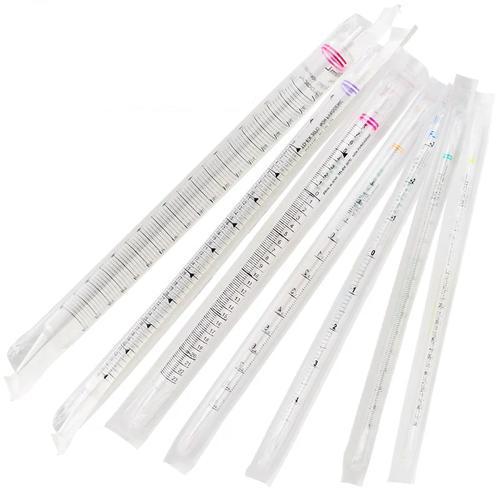
- Precise volume graduations
- Available in disposable plastic or reusable glass variants
- Designed for single or multiple liquid transfers
Importance in Scientific Research
Researchers prefer serological pipettes over pasteur pipettes for their accuracy and flexibility. They offer:
- Consistent volume measurements
- Reduced risk of cross-contamination
- Wide range of volume capacities
“Precision is the essence of scientific investigation, and serological pipettes are fundamental to achieving that precision.” – Laboratory Research Quarterly
| Pipette Type | Material | Primary Use |
|---|---|---|
| Serological Pipette | Plastic/Glass | Precise Volume Transfer |
| Pasteur Pipette | Glass | Qualitative Transfers |
Fields like microbiology and biochemistry rely on these tools. They keep experiments consistent and reliable.
Components of a Serological Pipette
Serological pipettes are key tools in labs for moving liquids accurately. Knowing what they’re made of helps scientists pick the best one for their work.
Material Composition
These lab tools come in two main types: glass and plastic. Each has its own benefits for science:
- Glass Pipettes:
- Resists chemicals well
- Can be sterilized many times
- Best for certain chemical tests
- Plastic Pipettes:
- Light and easy to throw away
- Less chance of contamination
- Good for when you need a lot
Volume Graduation Marks
Clear volume marks are key for getting the right amount of liquid. These marks help scientists measure liquids accurately.
| Pipette Characteristic | Specification |
|---|---|
| Volume Range | 1 mL to 50 mL |
| Graduation Precision | 0.01 mL to 0.1 mL |
| Measurement Accuracy | Up to 4 significant digits |
The marks on pipettes help scientists get the exact amount they need. Serological pipette types vary in their specific graduation intervals, meeting different research needs.
Precision in liquid handling begins with understanding your pipette’s fundamental components.
Types of Serological Pipettes
Laboratory experts use different serological pipettes for precise liquid handling. Knowing the differences helps them pick the right tool for their work.
Comparing Glass and Plastic Pipette Variants
Serological pipettes are made of glass or plastic. Each has its own benefits for accuracy and lab work.
- Glass Pipettes:
- Reusable after thorough sterilization
- Autoclave-compatible
- Ideal for eco-conscious laboratories
- Plastic Pipettes:
- Disposable and pre-sterilized
- Lightweight and cost-effective
- Reduced contamination risks
Volume Capacity Variations
Serological pipettes handle liquids from 1 mL to 50 mL. Their size affects their use in science.
| Pipette Type | Volume Range | Primary Applications |
|---|---|---|
| Open-End Pipettes | 1 mL, 2 mL, 5 mL, 10 mL | General laboratory procedures |
| Bacteriological Pipettes | 1.1 mL, 2.2 mL | Dairy product examination |
| Aspirating Pipettes | Variable | Precise liquid handling |
Choosing the right serological pipette is key for accurate research. It ensures the quality of experiments.
How to Use a Serological Pipette
Using a serological pipette well takes practice and precision. Scientists use these tools for precise liquid transfers in many fields. Knowing the right way to use them is key for accurate results.
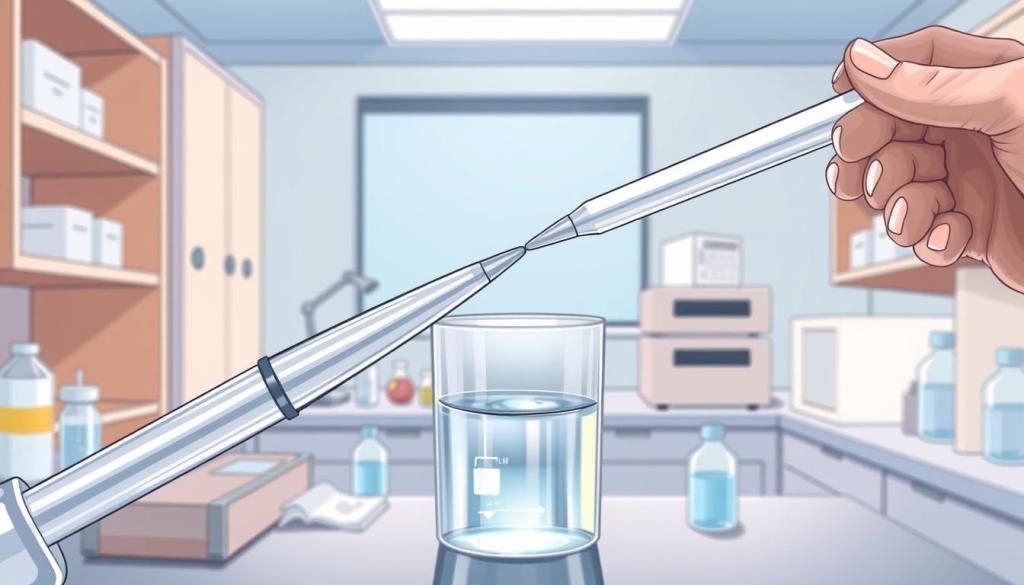
- Select an appropriate serological pipette matching your required volume
- Attach a compatible pipette controller
- Inspect the pipette for any damage or contamination
- Calibrate the pipette controller settings
Liquid Transfer Technique
Keep the pipette straight when transferring liquids. Gently draw liquid into the pipette without air bubbles. Look at the liquid’s curve and match it with the graduation mark.
Tips for Measurement Accuracy
- Always use a pipette controller for precise dispensing
- Practice uniform pipetting speed
- Minimize touching the pipette tip
- Perform multiple repetitions to validate results
“Precision in pipetting is the foundation of reliable scientific research.” – Laboratory Best Practices Guide
Different serological pipettes can hold from 0.1 mL to 50 mL. This makes them versatile for many experiments. Most pipet-aids have adjustable settings like forced air and blow-out, improving performance and control.
Cleaning and Maintenance
Keeping serological pipettes clean and well-maintained is key for accurate results in labs. Regular cleaning and proper storage help avoid contamination. This keeps these important tools working well for a long time.
Recommended Cleaning Procedures
For accurate pipette calibration, start with a good clean. The right cleaning method depends on the solution used:
- Aqueous solutions: Rinse with distilled water and air dry
- Acidic or alkaline substances: Frequent water rinsing of tip cone
- Protein contamination: Immerse in detergent solution
- DNA removal: Use sodium hypochlorite treatment
Comprehensive Maintenance Strategies
Lab experts should follow strict maintenance plans to keep pipettes in top shape. Important steps include:
- Perform calibration checks every six months
- Conduct visual inspections regularly
- Replace O-rings and seals every two years
- Use certified pipette tips for optimal accuracy
Regular maintenance can make a pipette last up to 20% longer and cut down on mechanical issues.
Storage Guidelines
Storing pipettes right is crucial for their upkeep. Experts suggest:
- Store pipettes vertically to minimize dust accumulation
- Keep in clean, dry environments
- Protect from extreme temperatures
- Avoid direct sunlight exposure
By sticking to these detailed maintenance steps, labs can keep their serological pipettes reliable and accurate. This supports precise scientific work and analysis.
Safety Considerations
Laboratory safety is key when using serological pipettes. Researchers must follow strict safety rules. This keeps them safe and the lab environment secure.
Personal Protective Equipment (PPE) Requirements
Wearing the right PPE is essential with serological pipettes. Researchers need:
- Laboratory-grade protective goggles
- Disposable nitrile gloves
- Long-sleeved lab coat
- Closed-toe shoes
Handling Hazardous Samples Safely
Working with dangerous biological samples requires great care. Pipettes are made with safety in mind to reduce contamination risks.
“Safety in the laboratory is not an option, it’s a necessity.” – Laboratory Safety Expert
Important safety steps for handling hazardous samples include:
- Always work in a designated biosafety cabinet
- Use appropriate containment techniques
- Minimize aerosol generation
- Practice proper disposal methods
Disposal and Waste Management
Proper disposal of serological pipettes is vital for lab safety. Different waste types need different handling:
- Biologically contaminated pipettes: Must be placed in designated biohazard containers
- Non-contaminated pipettes: Collected in separate waste receptacles
- Autoclave-treated pipettes: Transferred to specific waste management containers
Manufacturers of serological pipettes are now making safer designs. These help researchers stay safe during lab work.
Applications in Scientific Research
Serological pipettes are key in scientific research. They are precise and versatile. This makes them essential in labs, helping with big discoveries and complex tests.
Scientists use serological pipettes in many important areas. Their accuracy is unmatched. This lets researchers do precise liquid transfers with little room for error.
Microbiological Research Applications
In microbiology, serological pipettes are vital for several tasks:
- Preparing bacterial cultures with precise volume measurements
- Performing serial dilutions of microbial samples
- Inoculating growth media with exact liquid quantities
- Transferring cell cultures between containers
Biochemical Research Techniques
Biochemists use serological pipettes for many detailed procedures:
- Preparing complex reaction mixtures
- Conducting enzyme assays with high precision
- Measuring small volumes of proteins
- Handling nucleic acid samples
“Precision is the cornerstone of scientific research, and serological pipettes are fundamental to maintaining that precision.” – Laboratory Research Monthly
The design of serological pipettes helps avoid sample loss. They are made for accuracy. Their sizes range from 1 mL to 50 mL, fitting various needs in science.
Alternative Liquid Handling Tools
Laboratory professionals use many tools for precise measurements. It’s important to know the differences between these tools. This helps researchers pick the right one for their experiments.

Serological pipettes are special because of their unique features and wide use. When looking at different serological pipettes, researchers find many options for moving liquids in labs.
Comparing Pipetting Devices
There are many tools for handling liquids:
- Pasteur pipettes: Simple droppers without exact volume marks
- Micropipettes: Tools for very small amounts
- Automated systems: Fast mechanical dispensers
- Serological pipettes: Tools with clear volume marks
Advantages of Serological Pipettes
Serological pipettes have big advantages over other tools:
- Versatility in volume range: They can handle from 1 ml to 50 ml
- More accurate with clear graduations
- Designed to be sterile and single-use to avoid contamination
- Work well with pipet-aid controllers for easier use
Precision in liquid handling is not just about the tool, but understanding its optimal application.
Choosing between a serological pipette and a pasteur pipette depends on the experiment. Serological pipettes are best for consistent, measurable liquid transfers in many fields.
Common Mistakes to Avoid
Working with serological pipettes requires precision. Researchers must know the mistakes that can affect accuracy and calibration.
Misreading Graduation Marks
Getting accurate measurements starts with reading graduation marks right. Researchers often make big mistakes by:
- Misinterpreting volume indicators
- Not aligning eye level with the meniscus
- Overlooking subtle graduation mark differences
“Precision in pipetting starts with understanding every subtle mark on your instrument.”
Inconsistent Technique Challenges
Calibration of serological pipettes relies on consistent technique. Common mistakes include:
- Inconsistent plunger depression speed
- Incorrect angle during liquid transfer
- Failing to eliminate air bubbles
Temperature sensitivity and improper tip handling can greatly affect accuracy. Every handling variation can lead to measurement errors.
Critical Contamination Risks
Keeping things sterile is crucial in serological pipetting. Researchers should avoid:
- Touching pipette tips with bare hands
- Laying sterile pipettes on unclean surfaces
- Reusing disposable pipette tips
Knowing these common mistakes helps lab professionals improve their accuracy and reliability.
Conclusion
Understanding what a serological pipette is shows its key role in science. These tools are vital for handling liquids in many fields, like microbiology and biochemistry. They can measure from 1 mL to 50 mL, making them very useful for scientists.
Serological pipettes do more than just measure liquids. They are made to deliver precise amounts thanks to their design. This helps scientists keep their experiments consistent, which is crucial for reliable results.
The value of serological pipettes comes from their ability to handle liquids accurately. Scientists use them with the right techniques and tools to get precise results. It’s also important for them to keep learning how to use these tools better.
Science moves forward with the help of tools like serological pipettes. They are a key part of today’s labs. As research technology grows, so will the accuracy and efficiency of these tools, helping science even more.
FAQ
What is a serological pipette?
A serological pipette is a tool for precise liquid measurement and transfer. It has graduated markings for accurate handling. You can find them in glass or plastic, with different sizes for scientific use.
How does a serological pipette differ from a Pasteur pipette?
A serological pipette is more precise than a Pasteur pipette. It has clear volume markings for accurate measurements. This makes it perfect for scientific experiments.
What are the main types of serological pipettes?
There are two main types: glass and plastic. Glass ones are reusable and better for certain tasks. Plastic ones are disposable, making them safer and easier to use.
How do I choose the right serological pipette?
Choosing the right one depends on several factors. Consider the volume you need, the material, and the sensitivity of your experiment. Think about contamination risks and your lab’s protocols too.
What are the key applications of serological pipettes?
Serological pipettes are vital in microbiology, biochemistry, and clinical research. They help prepare cultures, do enzyme assays, and measure protein. They’re great for transferring liquids accurately.
How should serological pipettes be maintained?
Keep them clean and handle them with care. Store them in a dry place and calibrate them regularly. Glass ones need more attention than plastic ones.
What safety precautions should be taken when using serological pipettes?
Always wear protective gear like lab coats and gloves. Use the right technique to avoid spills. Handle dangerous substances carefully and dispose of used pipettes properly.
What are common mistakes to avoid when using serological pipettes?
Don’t misread the marks or have uneven technique. Avoid air bubbles and contamination. Properly dispose of used pipettes. Practice to improve.
How accurate are serological pipettes?
Serological pipettes are very accurate, usually within ±1% of the volume. Quality, calibration, and technique matter for their accuracy.
Can serological pipettes be used for different types of liquids?
Yes, they work with many liquids like solutions and cell cultures. Just make sure the material is compatible to avoid contamination.




Leave a Comment
Your email address will not be published. Required fields are marked *