



Have you ever thought about how scientists grow living cells outside the body? Cell cultivation is a new way to study and work with cells in special places. It’s changing how we do research and understand medicine.
Cell cultivation means taking cells from an organism and growing them in a fake environment. This careful process lets scientists watch how cells act, try new things, and find new treatments.
Since 1907, cell cultivation has changed science a lot. Most cells need a solid place to grow and split. So, making the right fake conditions is key for growing cells.
Now, scientists can take cells from many places, like from babies. These cells can live for weeks or months. This gives scientists a big chance to learn about life’s complex processes.
Key Takeaways
- Cell cultivation lets scientists grow and study cells outside living organisms
- Special techniques help control how cells grow
- Cell culture has grown a lot since the early 1900s
- Different cells need special conditions to grow well
- Cell cultivation is very important for medical research and making new medicines
Overview of Cell Cultivation
Cell cultivation is a key method in today’s biology labs. It lets scientists study cells in detail. This process grows cells in a controlled setting that feels like their natural home.
To grow cells well, researchers create the perfect environment. They use special methods to keep cells healthy and working right during tests.
Definition of Cell Cultivation
Cell cultivation covers a few main points:
- Growing isolated cells in controlled conditions
- Maintaining specific environmental parameters
- Ensuring consistent cellular behavior
Importance in Biological Research
Cell cultivation is vital in many fields:
| Research Area | Specific Applications |
|---|---|
| Drug Development | Screening potential pharmaceutical compounds |
| Disease Modeling | Studying cellular mechanisms of various conditions |
| Biotechnology | Producing therapeutic proteins and vaccines |
“Cell cultivation provides researchers with a window into the intricate world of cellular function.”
For mammalian cells to thrive, they need:
- Temperature range of 36-37°C
- pH levels around 7.4
- CO2 concentration between 4-10%
By mastering cell cultivation, scientists gain deep insights. This can change how we do medical research and treatments.
Historical Development of Cell Cultivation
The journey of cell culture techniques spans centuries of scientific discovery. From early microscopic observations to groundbreaking research, cell cultivation has transformed biological understanding and medical research.
Early milestones in cell culture techniques began with remarkable scientific breakthroughs. In 1665, Robert Hooke first coined the term “cell” while examining cork under a microscope, laying the groundwork for future cell research.
Pioneering Moments in Cell Culture
Several key developments marked significant progress in cell culture techniques:
- 1907: Ross G. Harrison developed the first method for cultivating animal tissues outside the body
- 1880s: Robert Koch utilized gelatin to solidify culture media, enabling precise microorganism cultivation
- 1912: Dr. Alexis Carrel invented the Carrel Flask, a precursor to modern cell culture equipment
Breakthrough Discoveries and Innovations
The mid-20th century witnessed transformative advances in cell culture techniques. The discovery of the HeLa cell line in 1951 represented a pivotal moment in scientific research, providing researchers with an immortal human cell line.
“Cell culture techniques have revolutionized our understanding of biological systems and medical research.” – Scientific Research Journal
Evolution of Cell Cultivation Technologies
| Decade | Key Developments |
|---|---|
| 1940s | Introduction of antibiotics in cell culture media |
| 1980s | Emergence of sophisticated growth factors and complex culture media |
| Late 20th Century | Advanced techniques like transfection and gene editing |
The continuous evolution of cell culture techniques has been instrumental in advancing medical research, drug discovery, and understanding complex biological processes.
Types of Cell Cultivation Methods
Cell cultivation is key in biological research. It lets scientists grow and study mammalian cell lines in controlled settings. They use various methods to understand how cells work and to develop new scientific tools.

There are different ways to grow and keep cells. Each method has its own features and uses in research and microbial fermentation.
Adherent Cell Culture
Adherent cell cultures stick to surfaces, like in real life. They form a single layer on culture vessels. They need special surfaces to attach to.
- Grow on treated plastic surfaces
- Require enzymatic detachment for passaging
- Common in tissue engineering and pharmaceutical research
Suspension Cell Culture
Suspension cell cultures have cells floating in media. This lets cells move freely. It’s great for studying blood and immune cells.
- Cells remain unattached to surfaces
- Easier to scale for large-volume production
- Ideal for creating vaccines and biological products
3D Cell Culture
Three-dimensional cell cultures are advanced. They mimic real tissue environments. This method allows for complex cell interactions and research.
- Uses specialized scaffolding materials
- Provides more physiologically relevant cellular models
- Enhances understanding of cellular behavior
| Culture Method | Key Characteristics | Primary Applications |
|---|---|---|
| Adherent | Surface-attached growth | Tissue engineering |
| Suspension | Free-floating cells | Vaccine production |
| 3D Culture | Complex spatial interactions | Advanced research models |
“The choice of cell cultivation method significantly impacts research outcomes and technological advancements.” – Scientific Research Consortium
Applications of Cell Cultivation
Cell cultivation is a game-changer in science, opening doors to new discoveries. It helps us understand life in ways we never thought possible. This includes medical and technological advancements.
Medical Research and Drug Development
In medical research, cell cultivation is a key tool. It helps scientists test and develop new drugs. They can study diseases and test treatments in precise models.
- Developing targeted therapies for complex diseases
- Screening pharmaceutical compounds for safety and efficacy
- Understanding cellular response to different interventions
Vaccine Production
Stem cell techniques have changed vaccine making. Now, scientists can make lots of vaccine quickly and safely. This method also cuts costs.
- Rapid vaccine production
- Enhanced quality control
- Reduced production costs
Tissue Engineering
Plant tissue culture and stem cells are changing medicine. Scientists can now make artificial tissues and organs. This opens up new ways to help people.
“Cell cultivation represents the future of personalized medical treatments and scientific innovation.” – Research Biotechnology Institute
Thanks to these techniques, scientists are finding new ways to fight diseases. This is making healthcare better for everyone.
Equipment Needed for Cell Cultivation
Cell cultivation needs special equipment for cells to grow well. Researchers use precise tools for cell growth, keeping things clean, and for detailed analysis.
Choosing the right equipment is key for cell cultivation success. The design of bioreactors is crucial for creating the right environment for cell growth and expansion.
Critical Incubation Equipment
Incubators are essential for cell cultivation. They keep important environmental conditions stable:
- Temperature range: 35.5°C to 37.5°C
- CO2 concentration: 5%
- Humidity levels: Approximately 95%
Advanced Bioreactor Systems
Bioreactor design is vital for cell cultivation in various fields. These systems offer:
- Controlled nutrient delivery
- Precise environmental regulation
- Monitoring of cellular metabolic processes
Analytical Instruments
Modern cell cultivation needs advanced analyzers to track cell characteristics:
| Analyzer Type | Primary Function |
|---|---|
| Cell Counter | Determine cell population and viability |
| Metabolic Analyzer | Assess cellular metabolic activity |
| Flow Cytometer | Analyze individual cell characteristics |
“Precision in equipment selection determines the success of cell cultivation research.” – Cell Biology Research Institute
By using advanced bioreactor design and analytical tools, researchers can create strong cell cultivation environments. These environments support important scientific breakthroughs.
Culture Media and Supplements
Cell cultivation needs a precise nutritional environment for growth and function. The right culture media is key for successful bioprocess optimization. It provides cells with essential nutrients for optimal performance.
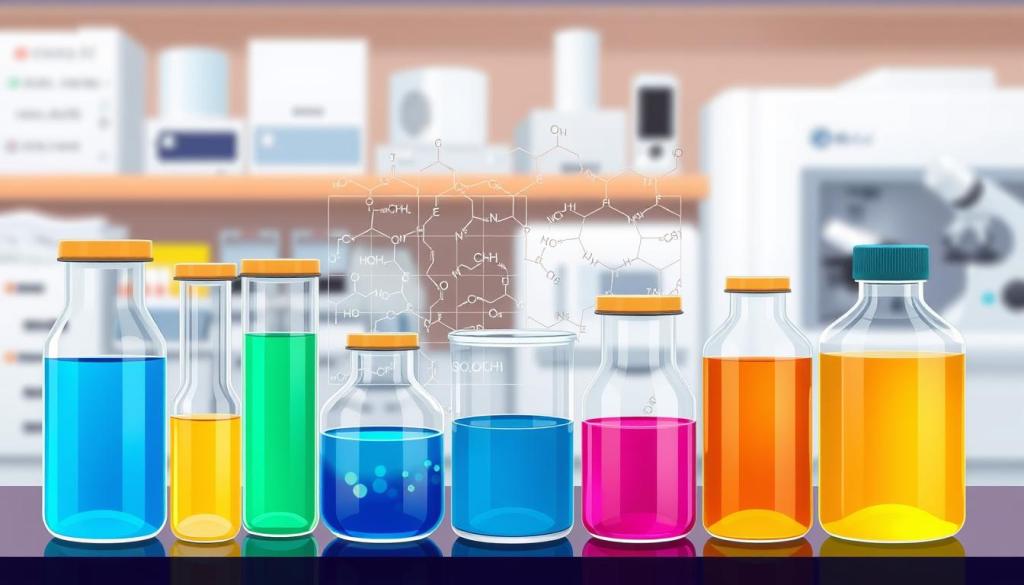
The complexity of cell culture media shows the detailed nutritional needs of different cells. Researchers must design media carefully to ensure cell growth and successful experiments.
Essential Components of Culture Media
Culture media includes vital elements for cell survival and growth:
- Carbohydrates for energy
- Amino acids for protein making
- Vitamins for cell functions
- Inorganic salts for balance
- pH buffers for the right environment
Specialized Supplements for Enhanced Performance
Bioprocess optimization often needs specific supplements for better cell growth. These include:
- Growth factors for cell growth
- Hormones for cell regulation
- Serum for extra nutrition
- Trace elements for better metabolism
Custom Media Formulation Strategies
Researchers are making specialized media for specific cell types and experiments. Serum-free and chemically defined media improve consistency and reduce variability in cell culture.
Precision in media composition can dramatically improve cell culture reliability and experimental reproducibility.
Modern bioprocess optimization focuses on understanding cell needs, choosing the right supplements, and creating customized media. This supports optimal cell growth and function.
Sterilization and Contamination Control
Cell culture techniques need a spotless environment. The big challenge is keeping a space free from germs. This lets delicate cell lines grow well without trouble.
Sterility is key to growing cells successfully. Scientists must follow strict rules to avoid contamination. This keeps their work reliable and true.
Critical Importance of Sterile Environments
Keeping things sterile involves several steps:
- Using biosafety cabinets with 70% air recirculation rates
- Following strict aseptic techniques
- Controlling the environment
- Regularly sterilizing equipment
Identifying Contamination Sources
Cell culture needs careful watch for contamination. Common threats include:
- Bacteria getting in
- Fungi growing
- Mycoplasma getting in
- Cell lines mixing
“Asepsis is not just a technique, it’s a commitment to scientific precision.”
To lower risks, scientists use detailed plans like:
- Regular mycoplasma testing
- Keeping the environment controlled
- Managing waste right
- Limiting who enters the lab
With these careful steps, scientists make sure their research is solid and can be repeated.
Monitoring and Maintaining Cell Cultures
Cell cultivation needs careful watching and smart upkeep for the best results. Scientists must track many factors to keep cell cultures healthy and productive.
Managing cell cultures well means knowing how cells grow and stay healthy. Researchers use advanced methods to check and care for cells from start to finish.
Key Parameters to Monitor
- Cell density and how fast they grow
- How cells look and if they’re alive
- How active they are metabolically
- pH levels and how much they use nutrients
- Signs of contamination
Essential Maintenance Techniques
Good bioprocess optimization needs exact upkeep methods. Researchers use several key techniques to help cell cultures succeed:
- Regular media replacement to get rid of harmful byproducts
- Controlled subculturing to keep cell growth right
- Microscopic checks for cell health
- Cryopreservation for long-term cell storage
“Continuous monitoring is the cornerstone of successful cell culture research.” – Cell Biology Expert
Today’s labs use cutting-edge tech like automated imaging and real-time monitoring. These tools give deep insights into cell behavior. This lets researchers make accurate changes and keep cultures in top shape.
Monitoring Best Practices
Keeping cell cultures in check needs constant attention and skill. Good practices include:
- Watching cell growth curves
- Regular pH checks
- Using sterile methods during handling
- Keeping environmental controls steady
Challenges in Cell Cultivation
Cell cultivation is a complex field with many challenges. Researchers must handle mammalian cell lines with care. This is to keep them stable and useful for research.

The field of cell culture faces big obstacles. These can affect the results of experiments. It’s key to know these challenges for successful research.
Cell Line Stability Concerns
Keeping mammalian cell lines stable is a big challenge:
- Genetic drift can change cell traits over time
- Selective pressures affect cell behavior
- Cellular senescence limits how much cells can grow
Growth Rate Variability
Researchers often see unpredictable growth in cell cultures. Factors that can cause growth to vary include:
- Nutrient availability
- Environmental conditions
- Passage number limitations
Experts say to limit cell line passages to 10 times or three months for reliable results.
Contamination is a big risk for mammalian cell lines. Almost 500 cell lines face contamination risks. This can cost millions of dollars in research.
Mitigation Strategies
To tackle these challenges, researchers can:
- Regularly check cell line authenticity
- Follow strict sterility protocols
- Use special culture systems
- Keep detailed records
Understanding and managing these challenges is vital. It helps keep mammalian cell lines stable. This ensures reliable scientific research.
Future Trends in Cell Cultivation
The world of cell cultivation is changing fast. New technologies are making big waves in biological research and medicine. Scientists are exploring new ways to work with cells, which could change how we study and use them.
New tools are changing how we grow cells and work with stem cells. These tools are opening up new areas for research.
Technological Advances in Cell Culture
- Microfluidic devices enable precise cell handling
- Organ-on-a-chip systems mimic real biological settings
- Advanced bioprinting creates three-dimensional cell structures
Artificial Intelligence in Cell Cultivation
Artificial intelligence is making a big impact on stem cell work. AI uses machine learning to:
- Make culture conditions more precise
- Predict how cells will behave and grow
- Automate cell culture tasks
The future of cell cultivation is about combining advanced tech with deep biological knowledge.
Innovative Bioreactor Design
New bioreactor designs are creating better environments for cell growth. These systems offer:
- Improved perfusion systems
- Single-use bioreactor technologies
- Better control over cell environments
| Technology | Key Benefit | Potential Impact |
|---|---|---|
| 3D Bioprinting | Precise cellular positioning | Regenerative medicine |
| AI-Driven Culture | Optimized growth conditions | Drug discovery |
| Advanced Bioreactors | Enhanced cellular environment | Personalized medicine |
These new technologies are set to change stem cell work. They offer deep insights into cell behavior and new ways to help people.
Ethical Considerations in Cell Cultivation
The field of stem cell propagation pushes the limits of science while facing tough ethical issues. Researchers must find a balance between medical breakthroughs and strong moral standards. These standards protect human dignity and the integrity of science.
Modern cell cultivation brings up big ethical questions. Scientists around the world are trying to find a way to keep research moving forward. They do this while sticking to important moral values.
Ethical Guidelines and Regulations
Ethical rules for stem cell research have been carefully thought out. They come from long discussions and agreements. Key things to consider include:
- Getting clear consent from those who donate cells
- Keeping donors’ privacy safe
- Being open about how research is done
- Stopping misuse of cell technology
Public Perception of Cell Cultivation
People’s views on cell cultivation are complex and varied. Between 1967 and 2008, 608 papers looked into ethics in cellular medicine. This shows scientists are deeply involved in these discussions.
“Ethical reflections surrounding cellular medicine must remain critical and not conform solely to shifting societal norms.”
| Research Type | Public Acceptance | Ethical Considerations |
|---|---|---|
| Adult Stem Cell Research | High | Low Controversy |
| Embryonic Stem Cell Research | Moderate | Significant Ethical Debate |
Studies show that adult stem cell therapies get more public support. This is because they are seen as less complex ethically. They also have the potential to help more people.
Conclusion: The Significance of Cell Cultivation
Cell cultivation has changed the game in science and medicine. It lets scientists study cells, find new treatments, and dive into complex life systems. This field has grown a lot since the early 1900s, always pushing what we know.
Plant and mammalian cell cultures are making big waves in many areas. Studies show that 50% of biotech uses mammalian cells, and 90% of new plants come from tissue culture. This shows how cell cultivation is key in solving health problems worldwide.
The future of cell cultivation is bright, with new tech coming in. Scientists are getting better at their work, cutting down errors by 80% and making cells more stable. With new tools and AI, we might see huge leaps in medicine and biotech.
Cell cultivation will keep being a big deal in science. It gives us deep insights into cells and opens up new areas of study. The constant improvement of these methods is bringing us closer to understanding and changing life itself.
FAQ
What exactly is cell cultivation?
Cell cultivation is a way to grow living cells outside their natural setting. It’s done in controlled labs. Here, cells can survive, grow, and work well in special media. This helps scientists study cells, find new treatments, and do advanced research.
What are the primary types of cell cultivation methods?
There are three main ways to grow cells: adherent, suspension, and 3D cell culture. Each method is used for different research goals and cell types. They help scientists study cells in various ways.
Why is cell cultivation important in scientific research?
Cell cultivation is key in many fields like medicine and drug development. It lets scientists study diseases, test treatments, and create artificial tissues. This way, they can do research in a controlled and ethical way.
What equipment is essential for cell cultivation?
Important tools include incubators, bioreactors, and biosafety cabinets. Also, microscopes, cell counters, and analyzers are needed. These help keep cells healthy and monitor their growth.
How do researchers prevent contamination in cell cultures?
To avoid contamination, researchers use strict aseptic techniques. They keep environments sterile, use sterilization methods, and add antibiotics. They also clean equipment and follow strict protocols. Quick action is needed if contamination is spotted.
What challenges exist in cell cultivation?
Challenges include keeping cell lines stable and managing growth. It’s also hard to recreate tissue environments and scale up cultures. Researchers use new technologies and refine their methods to overcome these issues.
What are emerging trends in cell cultivation?
New trends include microfluidic devices and organ-on-a-chip systems. There’s also advanced bioprinting and using AI to improve culture conditions. These aim to make research more realistic and effective.
Are there ethical considerations in cell cultivation?
Yes, ethics are important. They cover using human and animal cells, getting consent, and following rules. Ethics committees help ensure research is done responsibly and openly.
Leo Bios
Hello, I’m Leo Bios. As an assistant lecturer, I teach cellular and
molecular biology to undergraduates at a regional US Midwest university. I started as a research tech in
a biotech startup over a decade ago, working on molecular diagnostic tools. This practical experience
fuels my teaching and writing, keeping me engaged in biology’s evolution.






Leave a Comment
Your email address will not be published. Required fields are marked *