


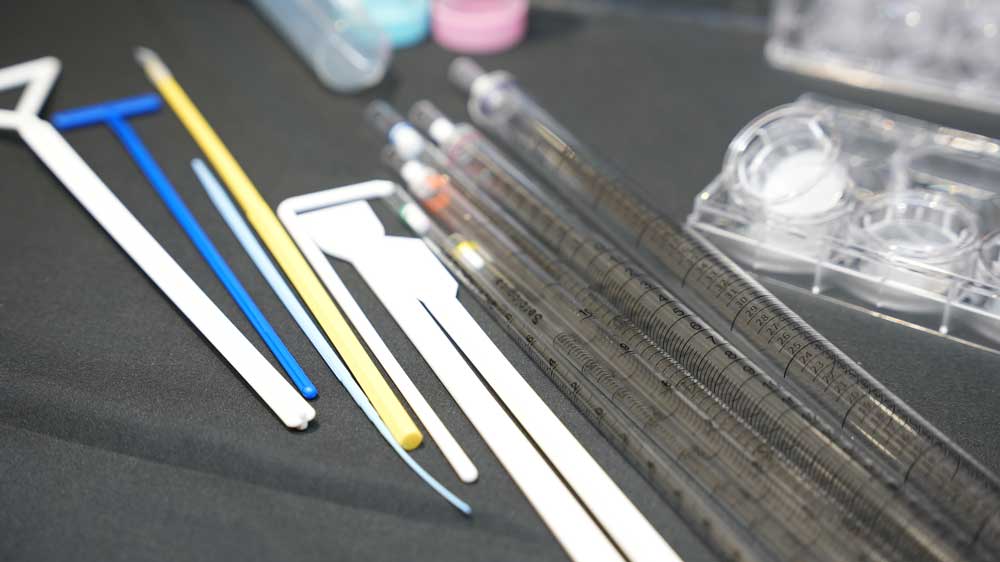
Serological and volumetric pipettes are two different ways to handle liquids in labs. They are made for specific needs in research, each with its own accuracy and volume transfer needs.
Serological pipettes are flexible tools for general liquid handling. They are used in cell culture, microbiology, and chemistry. They have multiple calibration marks for flexible volume measurements.
Volumetric pipettes, on the other hand, are precise for exact volume measurements. They are great for analytical chemistry, titrations, and making standard solutions with high accuracy.
Key Takeaways
- Serological pipettes offer flexible liquid handling for less critical applications
- Volumetric pipettes provide extreme precision for scientific measurements
- Different calibration marks distinguish these pipetting techniques
- Each pipette type serves specific research and laboratory needs
- Understanding their differences improves laboratory efficiency
Understanding Pipettes and Their Applications
Laboratory equipment is key in scientific research. Pipettes are vital for handling liquids with great precision. They help researchers move tiny amounts of liquid accurately, aiding in many scientific fields.
Pipettes are special tools for measuring and moving small amounts of liquid. They come in many types, each for different scientific needs.
Definition of Pipettes
A pipette is a precise tool for measuring and moving liquids. It can handle volumes from 0.1 microliters (μL) to several milliliters (mL). They are crucial for calibration and research.
- Smallest measurable volume: 0.1 μL
- Typical measurement range: 1 to 1000 μL
- Potential accuracy: Up to 4 significant digits
Importance in Laboratory Settings
Pipettes are vital in many scientific areas. They ensure experiments are consistent and accurate. Their precision is essential in fields like molecular biology, chemistry, and medical research.
- Essential for exact liquid transfer
- Supports experimental consistency
- Reduces human error in measurements
- Enables complex scientific procedures
Scientists use different pipettes for various research needs. Each type has its own benefits for handling liquids in labs.
Types of Pipettes
Scientific glassware is key in precise liquid handling in labs. Pipettes are vital tools for scientists. They come in different designs to fit various research needs.
Lab workers use two main types of pipettes: serological and volumetric. Each has its own features for precise liquid measurement and transfer.
Serological Pipette Characteristics
Serological pipettes have unique features for handling liquids:
- Volume range from 1 mL to 50 mL
- Multiple graduated markings along the length
- Available in glass and plastic materials
- Designed for flexible volume measurements
These tools are very versatile. Plastic serological pipettes are easy to dispose of. Glass ones can be sterilized many times.
Volumetric Pipette Overview
Volumetric pipettes are precise tools with special designs:
- Single, precise calibration mark
- Extremely accurate volume transfer
- Fixed volume measurements
- Ideal for critical dilution processes
Scientists choose these pipettes for experiments needing high accuracy.
Design Features of Serological Pipettes
Serological pipettes are key tools in labs, known for their precise pipette accuracy and advanced techniques. They offer flexible volume measurement, crucial for many scientific tasks.
The design of serological pipettes includes several important features:
- Multiple calibration marks along the pipette length
- Volume ranges from 1 mL to 50 mL
- Graduated markings spaced at 0.1 mL intervals
- Typically manufactured from polystyrene or polypropylene
Graduations and Volume Measurement
Serological pipettes have precise graduation marks for accurate volume measurement. These graduations allow for incremental measurements, giving scientists flexibility in their work. The pipettes follow the “to deliver” (TD) standard, ensuring the marked volume is exactly dispensed.
Variability in Volume
The design of serological pipettes allows for volume variability, making them versatile in labs. Researchers can achieve pipette accuracy within ±1% of total volume, which is vital for consistent liquid handling. Proper pipetting techniques are key to maintaining this accuracy and reducing variations during liquid transfers.
Labs often choose serological pipettes for their adaptability in cell culture, microbiology, and biochemistry. Precise liquid handling is crucial for experiment reproducibility and data quality.
Design Features of Volumetric Pipettes
Volumetric pipettes are the top choice for precise liquid measurement in labs. They are made to offer high accuracy in volumetric analysis. This makes them key tools in scientific studies and chemical tests.
Volumetric pipettes stand out in lab tools. They have a unique design. Unlike other pipettes, they have:
- A single graduation mark at the top
- Exceptional precision for exact volumes
- Calibration for extreme accuracy up to 4 significant figures
Fixed Volume Measurement
Volumetric pipettes are made to measure specific volumes with great consistency. You can choose from sizes like 1 ml, 10 ml, 25 ml, and 50 ml. Each pipette is calibrated to deliver its designated volume with minimal variation.
Precision and Calibration
The calibration of volumetric pipettes is very strict. They are usually calibrated at specific temperatures (68°F or 77°F) for consistent performance. Class A volumetric pipettes have a tolerance of +/- 0.2% or better, especially for volumes over 5 mL.
- Available in volumes from 0.5 mL to 200 mL
- Designed for high-accuracy chemical analysis
- Recognized as the most precise pipetting instrument
Scientists and researchers use volumetric pipettes when they need absolute precision in liquid measurement. This is especially true in fields that require very detailed volumetric analysis.
Usage Scenarios for Serological Pipettes
Serological pipettes are key tools in labs for research and medical tests. They help scientists and doctors measure liquids with great precision.
Labs use serological pipettes for many important tasks. Their ability to adapt to different needs makes them essential in various fields.
Applications in Biological Research
In biological research, serological pipettes are vital for several important steps:
- They are crucial for cell culture, where precise liquid transfers are needed.
- They are used in microbiological assays, handling volumes from 5 mL to 25 mL.
- They help prepare solutions in molecular biology experiments.
- They are used in delicate tissue culture work.
For serological analysis, accuracy is key. These pipettes offer an accuracy rate of ±1% to ±2%. This is vital for keeping experiments reliable.
Importance in Clinical Laboratories
Clinical labs rely on serological pipettes for vital diagnostic work. Their main benefits include:
- They prevent cross-contamination with their single-use design.
- They help process samples accurately.
- They support diagnostic tests by ensuring consistent volume measurements.
- They enable aseptic techniques, lowering contamination rates.
Researchers find that disposable serological pipettes are used in over 90% of labs. This shows their trustworthiness and efficiency in scientific work.
Usage Scenarios for Volumetric Pipettes
Volumetric pipettes are key in labs that need exact measurements. They help scientists get precise amounts of liquids.
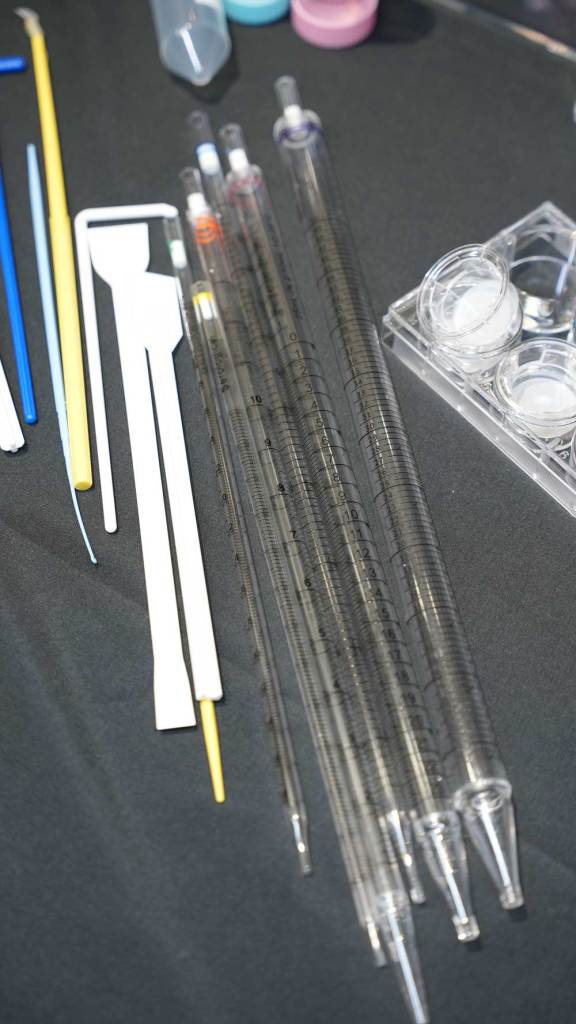
Scientists use volumetric pipettes for detailed work in many fields. Their accuracy is crucial in complex labs.
Utilization in Chemistry Labs
Chemistry labs use volumetric pipettes for important tasks:
- Preparing standard chemical solutions
- Conducting precise titration experiments
- Performing quantitative chemical analysis
- Creating reproducible research conditions
These pipettes can deliver a fixed volume of liquid with an accuracy of up to 4 significant figures. This ensures reliable measurements.
Standardization in Industrial Processes
Industrial labs rely on volumetric pipettes for quality control. They help maintain standards in various sectors.
| Pipette Size | Industrial Application | Precision Level |
|---|---|---|
| 1 ml | Pharmaceutical Research | High |
| 10 ml | Chemical Manufacturing | Very High |
| 25 ml | Environmental Testing | Extreme |
| 50 ml | Biotechnology Development | Extreme |
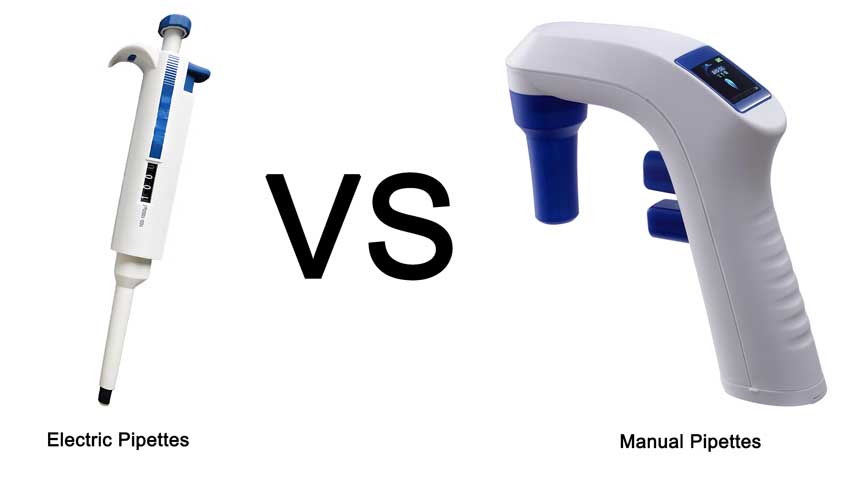
Variable volume pipettes with digital click-stop systems offer more flexibility. They are useful for different experiments.
Accuracy and Precision Comparisons
Pipette accuracy and precision are key in lab work. Scientists need precise liquid handling for reliable results. Each pipette type has its own accuracy level, so it’s important to know the differences.
Volumetric pipettes are the most accurate in analytical chemistry. They can measure a fixed volume with high precision, up to 4 significant figures. Their design helps reduce measurement errors.
Measuring Accuracy in Serological Pipettes
Serological pipettes offer flexibility in liquid handling. They have some accuracy features:
- Classified into different types (Type 1, Type 2, Type 3)
- Feature color-coded stripes for easy identification
- Bi-directional graduations allow for versatile measurements
- Varying accuracy levels based on Class A, Class AS, and Class B standards
Measuring Accuracy in Volumetric Pipettes
Volumetric pipettes are great for precise measurements. They have some key advantages:
- Calibrated to deliver exact fixed volumes (1 ml, 10 ml, 25 ml, 50 ml)
- Minimize fluid remaining on pipette sides
- Reduce human error in liquid transfer
- Provide consistent and reliable volume delivery
Researchers must choose pipettes based on their lab needs. Pipette precision is crucial for sensitive experiments that need very accurate measurements.
Cleaning and Maintenance Practices
Keeping pipettes clean and well-maintained is key for their accuracy and life span. These precise tools need careful handling and regular care. This helps keep them working well and prevents contamination.
Essential Cleaning Protocols for Serological Pipettes
Serological pipettes need thorough cleaning to stay accurate. Lab workers should follow these important steps:
- Clean pipettes daily with 60% isopropyl alcohol
- Rinse with double-distilled water to remove acid/base residues
- Use enzyme decontaminants for molecular biology work
- Avoid exposure to harsh or volatile liquids
Comprehensive Maintenance for Volumetric Pipettes
Volumetric pipettes need special care to keep their precision. Important maintenance steps include:
- Keep pipettes upright to avoid moisture buildup
- Do regular calibration checks
- Take apart for deep cleaning when needed
- Use ultrasonic baths for thorough cleaning
Using advanced decontamination methods can also boost lab equipment reliability:
| Decontamination Method | Procedure | Purpose |
|---|---|---|
| Autoclave Sterilization | 121°C for 20 minutes | Eliminate biological contaminants |
| UV Radiation | 300 nm light for 15-60 minutes | Reduce DNA/RNA contamination |
| Chemical Decontamination | 10% bleach solution | Remove specific molecular residues |
By sticking to strict cleaning and maintenance routines, labs can maintain top pipette performance and sample quality.
Cost Considerations and Accessibility
Choosing the right lab equipment means looking at cost and how easy it is to get. Scientific glassware, like pipettes, is a big deal for research and medical labs. The cost of serological and volumetric pipettes can really affect a lab’s budget and how well it runs.
Several things affect how much pipettes cost and how easy they are to find:
- How complex they are to make
- How precise they need to be
- The materials used
- How many are made
Serological Pipette Affordability
Serological pipettes are often cheaper for labs. They’re used a lot in research, which means more are made. This makes them cheaper for labs to buy in bulk.
Volumetric Pipette Availability
Volumetric pipettes are more specialized. They cost more because they need to be very accurate. Labs have to decide if the extra cost is worth it for their research.
The global pipettes market is growing fast. It’s expected to grow at a compound annual growth rate (CAGR) of XX% from 2025 to 2033. This means more people will need pipettes, which could make them cheaper and easier to get.
Selecting the Right Pipette for Your Needs
Choosing the right pipette is key for good liquid handling in labs. Different techniques need careful thought to get accurate results.
When picking a pipette, consider several important factors. These help match your lab needs:
- Volume range needed for experiments
- Required precision of liquid handling
- Frequency of use
- Types of liquids being transferred
- Laboratory research discipline
Critical Selection Factors
Understanding the differences between serological and volumetric pipettes is crucial. Accuracy and application specificity are key to choosing the right tool for your work.
- Volumetric pipettes are great for precise measurements
- Serological pipettes offer more flexibility
- Fixed-volume pipettes give consistent results
Recommendations for Laboratory Use
It’s wise to have a variety of pipettes for different needs. Having both serological and volumetric pipettes is best for all experiments.
Choosing the right pipette means knowing your research needs. Then, pick the best tools for your work.
Conclusion: Choosing Between Serological and Volumetric Pipettes
It’s important to know the difference between serological and volumetric pipettes for accurate lab work. Scientists need to think about their research needs when picking a pipette. The right one can greatly affect the results of their experiments.
Serological pipettes are great for a wide range of volumes, from 0.1 ml to 25 ml. They’re perfect for biological studies and clinical labs. On the other hand, volumetric pipettes are super precise, accurate up to 4 significant figures. This makes them essential for detailed chemical analysis and industrial standards.
When choosing pipettes, lab workers should look at several things. They need to consider the volume needed, how precise it must be, and the specific lab work they’re doing. Serological pipettes are flexible, while volumetric ones are best for very precise measurements. The goal is to pick the right tool for the job.
As science technology gets better, so will pipettes. Knowing the differences between serological and volumetric pipettes helps scientists make better choices. This improves the quality and trustworthiness of their research.
References and further readings:
1.Kant, R. (2022). Laboratory pipetting techniques for accurate results: Precision in practice (p. 52). Wisdom Press.
http://www.wisdompress.co.in/wp-content/uploads/2022/10/Laboratory-Techniques.pdf#page=52
2.Guan, X. L., Chang, D. P. S., Mok, Z. X., & Lee, B. (2023). Assessing variations in manual pipetting: An under-investigated requirement of good laboratory practice. Advances in the Clinical Laboratory, 4, Article 100057. Elsevier.
https://www.sciencedirect.com/science/article/pii/S2667145X23000317
3.Sanders, E. R. (2012). Aseptic laboratory techniques: Volume transfers with serological pipettes and micropipettors. Journal of Visualized Experiments, 63, e2754.
https://pmc.ncbi.nlm.nih.gov/articles/PMC3941987/pdf/jove-63-2754.pdf
4.Neilson, A. P. (2024). Laboratory standard operating procedures. In Nielsen’s food analysis laboratory manual (pp. 1–20). Springer.
https://link.springer.com/chapter/10.1007/978-3-031-44970-3_1
5.Rodríguez, H. G., Maiti, R., & Kumari, C. A. (2020). Revision of terminology and laboratory techniques. In Propagation of Trees and Shrubs (Chapter 9). Taylor & Francis.
https://www.taylorfrancis.com/chapters/edit/10.1201/9780429322266-9
6.Devi, R., Chauhan, A., Kharb, S., & Pundir, C. S. (2023). Clinical biochemistry: A laboratory guide. Taylor & Francis.
https://www.taylorfrancis.com/books/mono/10.1201/9781003455660/clinical-biochemistry-rooma-devi-aman-chauhan-simmi-kharb-chandra-shekhar-pundir
FAQ
What is the primary difference between serological and volumetric pipettes?
Serological pipettes have graduated markings for variable volume measurements. Volumetric pipettes are for precise measurements of a single volume. Serological pipettes are more flexible, while volumetric pipettes are very accurate for scientific work.
How do I choose between a serological and volumetric pipette?
Use a serological pipette for variable volume tasks and general lab work. Choose a volumetric pipette for tasks needing exact precision, like in analytical chemistry.
What does “To Deliver” (TD) and “To Contain” (TC) mean?
“To Deliver” (TD) on serological pipettes shows the volume dispensed. “To Contain” (TC) on volumetric pipettes is the total volume it can hold. This is important for understanding how each pipette works.
How often should I calibrate my pipettes?
Pipettes should be calibrated annually or every 6-12 months. This depends on how often you use them and the type of work. Calibrating regularly keeps your measurements accurate.
Can I use the same pipette for different types of liquids?
While it’s possible, it’s best to use separate pipettes for different liquids. This prevents contamination. For specific tasks like cell culture, using dedicated pipettes is best.
What factors affect pipette accuracy?
Accuracy is affected by user technique, temperature, pipette condition, liquid viscosity, and calibration. Good training and consistent handling are key for precise measurements.
Are digital or mechanical pipettes better?
Digital pipettes are more precise and reduce user error, great for repetitive tasks. Mechanical pipettes are cheaper and good for general lab use. Your choice depends on your needs and budget.
How do I properly clean and maintain pipettes?
Clean pipettes with 70% ethanol or specialized cleaners. Avoid harsh chemicals. Regularly check them, store upright, and follow the manufacturer’s maintenance tips for best performance.
Leo Bios
Hello, I’m Leo Bios. As an assistant lecturer, I teach cellular and
molecular biology to undergraduates at a regional US Midwest university. I started as a research tech in
a biotech startup over a decade ago, working on molecular diagnostic tools. This practical experience
fuels my teaching and writing, keeping me engaged in biology’s evolution.




Leave a Comment
Your email address will not be published. Required fields are marked *