


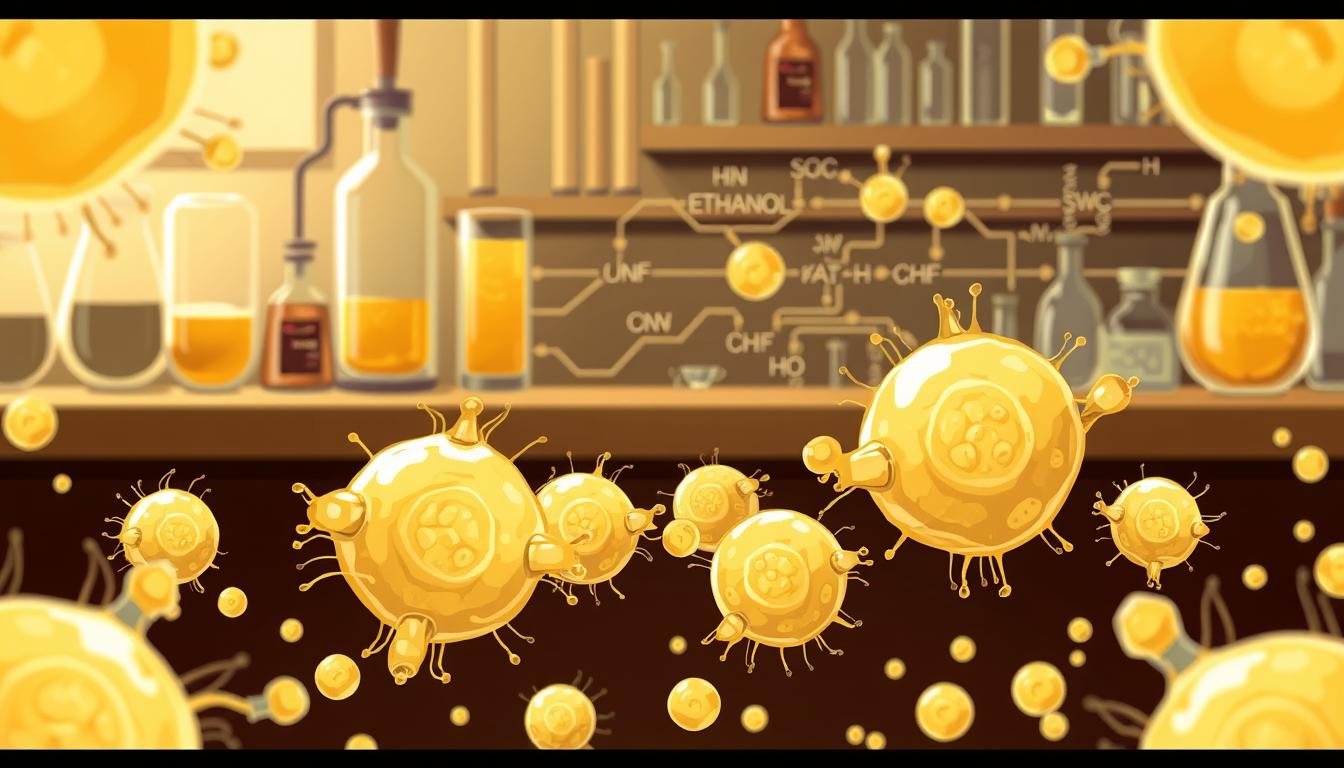
Ever thought about how a tiny microorganism can turn simple sugars into complex drinks and foods? The fermentation of yeast is a remarkable process that has shaped human history for thousands of years.
Yeast metabolism is a cool biological process. It turns sugars into alcohol and carbon dioxide. This process has been around for about 7,000 years, with wine production showing its ancient roots in human culture.
The fermentation of yeast is a complex process. It involves Saccharomyces cerevisiae, the most common yeast, breaking down sugars without oxygen. This process not only makes alcohol but also adds to the flavors and textures of many foods and drinks.
Yeast fermentation is key in making everything from bread to beer, wine to kimchi. It helps create diverse culinary experiences around the world.
Key Takeaways
- Yeast fermentation is a metabolic process converting sugars into alcohol and carbon dioxide
- The process has been used by humans for over 7,000 years
- Saccharomyces cerevisiae is the most widely used yeast in fermentation
- Fermentation occurs in oxygen-free environments
- The process is fundamental to producing various foods and beverages
Understanding Yeast and Its Role in Fermentation
Microorganisms are key in making food, and Saccharomyces cerevisiae is a top player in fermentation. Yeasts are tiny, single-celled beings that have changed how we enjoy food in many ways.
What is Yeast?
Yeast is a tiny, single-celled organism found in many places. These tiny wonders are behind the flavors and textures in many foods and drinks. Saccharomyces cerevisiae, the most studied yeast, is known for its great fermentation skills.
Types of Yeast Used in Fermentation
There are different yeast types for different fermentation jobs:
- Saccharomyces cerevisiae: Best for ales and baking
- Saccharomyces pastorianus: Great for lagers
- Saccharomyces cerevisiae var. chevalieri: Good for non-alcoholic beer
| Yeast Type | Primary Application | Unique Characteristics |
|---|---|---|
| Saccharomyces cerevisiae | Ales, Baking | Complex, aromatic products |
| Saccharomyces pastorianus | Lager Brewing | Light, crisp beers |
| Saccharomyces chevalieri | Non-Alcoholic Beverages | Limited sugar consumption |
The Importance of Yeast in Food Production
Yeast makes raw ingredients into tasty products. They help make about 80% of the smells in wine. They also add special flavors to bread, drinks, and fermented foods.
Yeast: Nature’s tiny culinary alchemists, turning simple ingredients into extraordinary experiences.
Yeast does more than just make ethanol and carbon dioxide. It also creates complex flavors like rose, banana, and passion fruit. Saccharomyces cerevisiae is changing how we make food all over the world.
The Science Behind Yeast Fermentation
Yeast fermentation is a complex biochemical process. It turns simple sugars into complex products through anaerobic respiration. This process is vital for many living things because it lets them make energy without oxygen.
The Fermentation Process Explained
Yeast cells break down glucose in a series of chemical reactions during fermentation. The Embden-Meyerhof-Parnas (EMP) pathway is key for this. It helps turn glucose into ethanol and other products.
- Glycolysis breaks glucose into pyruvate molecules
- Pyruvate is converted to acetaldehyde
- Acetaldehyde transforms into ethanol
- Carbon dioxide is released as a byproduct
Anaerobic vs. Aerobic Fermentation
The main difference between anaerobic and aerobic fermentation is oxygen use. In anaerobic conditions, yeast makes energy by forming ethanol. This process makes fewer ATP molecules than using oxygen.
“Fermentation is nature’s ingenious method of energy production without oxygen” – Microbiology Insights
| Fermentation Type | Oxygen Requirement | Energy Efficiency |
|---|---|---|
| Anaerobic Fermentation | No oxygen needed | Low (2 ATP per glucose) |
| Aerobic Respiration | Oxygen required | High (36-38 ATP per glucose) |
Yeast can survive without oxygen by using anaerobic respiration. This lets them make ethanol. It shows how flexible microorganisms can be in tough conditions.
Key Products of Yeast Fermentation
Yeast fermentation is a cool biological process that makes many valuable products. It changes sugars into different compounds. This is important for food and drink making.
Alcohol Production
Alcohol making through ethanol is a big deal from yeast fermentation. Yeast turns sugars into alcohol. This makes different drinks with special tastes.
- Brewing beer needs the right fermentation temperatures
- Wine making depends on the yeast used
- Spirits go through many fermentation steps
Carbon Dioxide Generation
Yeast also makes carbon dioxide when making alcohol. This gas is key for baking and fizzy drinks.
| Fermentation Type | CO2 Production | Temperature Range |
|---|---|---|
| Ale Fermentation | High | 62-75°F |
| Lager Fermentation | Moderate | 46-58°F |
| Wheat Beer | High | 62-85°F |
Additional Fermentation Byproducts
Yeast fermentation also makes lots of flavor compounds and acids. These add to the taste of fermented foods and drinks.
“Fermentation is not just a process, it’s an art of transforming simple ingredients into extraordinary experiences.” – Artisan Brewer
Knowing how alcohol and ethanol are made helps improve fermentation. This is good for many industries.
The Role of Fermentation in Baking
Bread making is an ancient art that relies on yeast metabolism. It transforms simple ingredients into delicious bread through a complex biochemical dance. This process has fascinated bakers for thousands of years.
Fermentation in bread production started in ancient Egypt around 4000 BCE. It involves tiny organisms working hard to create the texture and flavor we love in our favorite breads.
How Yeast Affects Dough Rise
Yeast metabolism is key in dough development during bread making. The fermentation process creates carbon dioxide. This gas makes tiny bubbles that cause the dough to expand.
Several factors influence this process:
- Temperature (optimal range: 75°F to 85°F)
- Humidity (recommended: 70% to 80%)
- Sugar levels (ideal: 2.0% to 10.0%)
- Salt content (maximum: 2.5%)
Diverse Bread Fermentation Techniques
Different bread types have unique fermentation characteristics. Artisan breads often ferment for up to 8 hours. This creates deeper flavors and more complex textures.
“Fermentation is the soul of bread, transforming simple ingredients into a living, breathing culinary experience.” – Artisan Baker
There’s a growing interest in sourdough starters and wild yeast cultures. These methods require longer fermentation times. But they reward bakers with extraordinary flavors and unique bread characteristics.
From quick breads to elaborate artisan loaves, yeast fermentation continues to evolve. It bridges traditional techniques with modern culinary innovations.
Fermentation in Brewing: From Yeast to Beer
Beer brewing is an ancient art that turns simple ingredients into a complex drink. This magic happens thanks to Saccharomyces cerevisiae, a tiny yeast. It changes sugary wort into the alcoholic drink we all love.
The brewing process has many stages where yeast is the star. Different yeast strains give each beer its own unique taste.
Yeast Strains in Brewing
Brewers pick specific yeast types for different beer styles:
- Ale Yeast: Top-fermenting strain for robust beers like stouts and porters
- Lager Yeast: Bottom-fermenting variety producing crisp pilsners
- Wild Yeast: Introduces unique sour and complex flavor profiles
The Brewing Process Explained
Beer brewing starts with making a sugary liquid called wort from grains. Then, Saccharomyces cerevisiae is added, starting a remarkable change:
- Yeast eats sugars, making alcohol and carbon dioxide
- Fermentation temperatures are carefully controlled
- Conditioning allows flavor development
“Brewing is a delicate dance between science and artistry, with yeast as the primary choreographer.” – Brewing Expert
The fermentation process takes days to weeks. During this time, yeast cells grow and change the liquid. The pH changes, nutrients are used, and complex flavors come out.
Fermentation in Winemaking
Wine fermentation is a cool process that turns grape juice into a complex drink. It’s a dance of flavors and alcohol, thanks to yeasts and grape sugars. This transformation is a key part of winemaking.
How Yeast Transforms Grape Juice
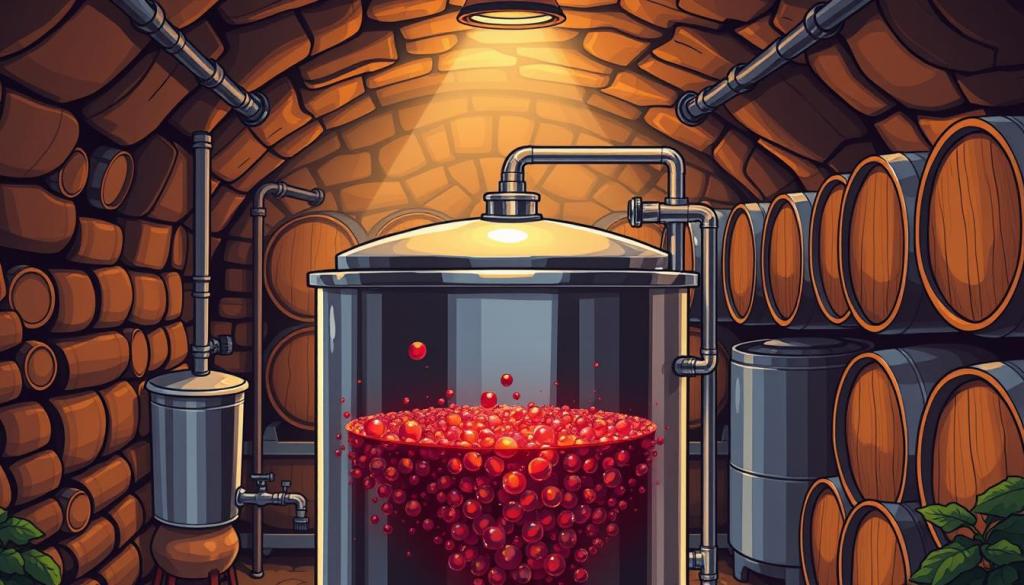
Wild yeasts from grape skins start the magic of turning juice into wine. These tiny creatures eat grape sugars and make alcohol. Saccharomyces cerevisiae, the main yeast, is key in making sugar into ethanol.
- Wild yeasts start fermentation right after grapes are crushed
- Alcohol keeps being made until it’s about 15% by volume
- Different yeasts add unique flavors
The Role of Temperature in Fermentation
Keeping the right temperature is very important in wine making. White wines ferment at 18-20°C (64-68°F). Red wines ferment at 20-30°C (68-86°F). These temperatures affect the wine’s taste and how the yeast works.
“Temperature is the silent conductor of wine’s symphony of flavors.” – Winemaking Wisdom
Winemakers watch and adjust the temperature closely. Too high, and yeast can die. Too low, and fermentation slows down, which can hurt the wine’s quality.
Health Benefits of Yeast Fermented Foods
Yeast fermented foods are packed with health benefits. They go beyond just being nutritious. The fermentation process turns regular foods into health boosters.
Nutritional Aspects of Fermented Foods
Fermented foods are a nutritional powerhouse. They offer:
- Enhanced nutrient bioavailability
- Increased vitamin and mineral content
- Reduced anti-nutrient compounds
Items like kimchi, kefir, and yogurt are full of vitamins and minerals. The fermentation process makes these nutrients easier for our bodies to use.
Probiotics and Digestive Health
“Fermented foods are nature’s powerful digestive allies”
Fermented foods are great for your gut. A study of 274 adults with irritable bowel syndrome showed benefits. They found that eating fermented milk daily helped with digestive issues.
- Alleviates bloating and gas
- Supports immune function
- Reduces risk of gastrointestinal infections
Some probiotics, like Lactobacillus rhamnosus, can help with gut health. They might even help with weight management.
Troubleshooting Fermentation Issues
Yeast metabolism faces many challenges during microbial fermentation. It’s key to understand and solve these problems for successful fermentation. This is true in all kinds of production settings.
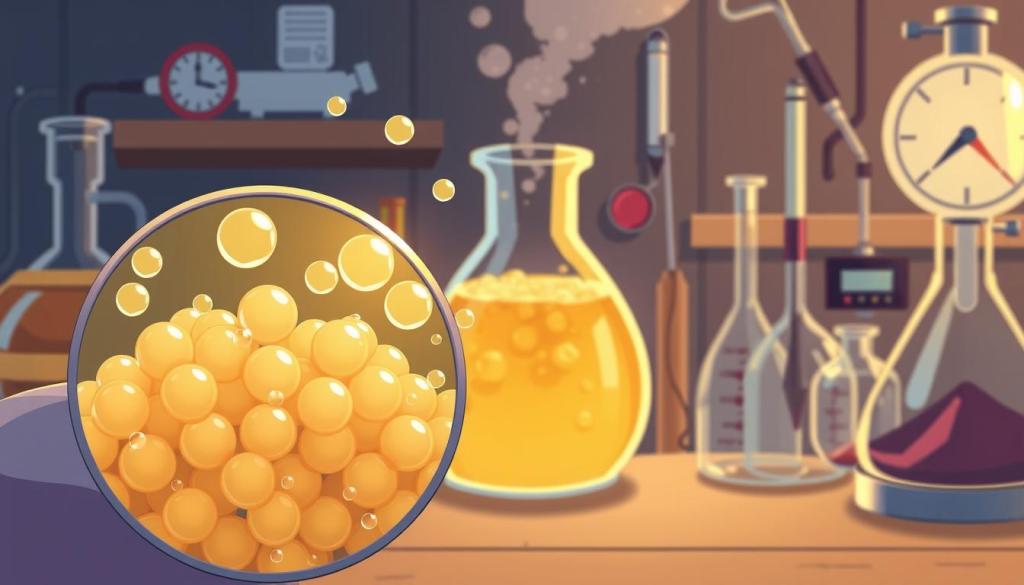
Fermentation problems come from many factors. These factors upset the balance of yeast metabolism. To fix these issues, we need to analyze them carefully and take the right steps.
Common Fermentation Challenges
- Stuck fermentation
- Nutrient deficiencies
- Temperature inconsistencies
- Contamination risks
Key Factors Affecting Fermentation
| Problem | Potential Cause | Solution |
|---|---|---|
| High Sugar Content | Excessive must sugar | Adjust yeast strain or nutrient levels |
| Poor Yeast Health | Insufficient starter culture | Use fresh, high-quality yeast |
| Temperature Stress | Extreme temperature variations | Maintain consistent fermentation temperature |
Strategic Solutions for Fermentation Issues
Effective microbial fermentation needs careful planning. Here are some strategies:
- Regularly check fermentation conditions
- Use specialized yeast hulls for stuck fermentation
- Keep the temperature steady
- Make sure nutrients are balanced
*”Successful fermentation is about creating the right environment for yeast to thrive.”*
Experts say it’s important to watch sugar levels, yeast health, and the environment. This helps avoid problems in fermentation.
Future Trends in Yeast Fermentation
The world of microbial fermentation is changing fast. Yeast metabolism is at the heart of this change, leading to new sustainable technologies. Scientists are working hard to use yeast’s special abilities to solve big problems in food, energy, and the environment.
Genetic engineering is making yeast better for many uses. Yeast can even work well in very hot temperatures. This makes it perfect for new biotech processes. It’s not just for food and drinks anymore; yeast is also being used for biofuels and cleaning up waste.
Innovations in Fermentation Technology
New fermentation methods are making yeast even more powerful. Scientists are creating yeast that can make more proteins and use resources better. Since 1966, MIT has been leading the way in single cell protein research, inspiring new discoveries.
The Role of Yeast in Sustainable Practices
Yeast is a great answer to the world’s protein needs. It’s efficient and can grow quickly, helping meet UN goals. Yeast is key in making new foods and clean energy, leading the way in sustainability.
FAQ
What is yeast fermentation?
Yeast fermentation is a process where yeast turns sugars into alcohol and carbon dioxide. This is how we make foods and drinks like bread, beer, and wine.
What is Saccharomyces cerevisiae?
Saccharomyces cerevisiae is the most common yeast used in making food. It’s especially important in baking and brewing. This yeast is a single-celled organism that helps in many fermentation processes.
How does yeast produce alcohol?
Yeast makes alcohol by breaking down sugars without oxygen. It turns these sugars into ethanol and carbon dioxide. This is how beer and wine get their alcohol.
What role does yeast play in bread making?
Yeast makes bread rise by producing carbon dioxide. As it ferments sugars, it creates gas bubbles. These bubbles make the dough light and airy.
What are the health benefits of fermented foods?
Fermented foods are good for you because they make nutrients easier to digest. They also have probiotics that help your gut health. This can lead to a balanced gut microbiome.
What can go wrong during fermentation?
Problems like stuck fermentation, off-flavors, and contamination can happen. These issues often come from wrong temperatures, pH levels, or not enough nutrients for yeast.
How does wine fermentation work?
Wine fermentation happens when yeasts turn grape juice sugars into alcohol. The temperature and yeast strain used affect the wine’s taste and alcohol level.
What is the difference between anaerobic and aerobic fermentation?
Anaerobic fermentation happens without oxygen, making alcohol and carbon dioxide. Aerobic fermentation needs oxygen and makes different products, with less alcohol.
What future innovations exist in yeast fermentation?
New things include genetically engineering yeast and using precision fermentation. We’re also looking at using yeast in sustainable ways like making biofuels and managing waste.
How do different beer styles relate to yeast fermentation?
Beer styles vary based on yeast, fermentation temperature, and time. These factors affect the beer’s taste, alcohol, and overall quality.






Leave a Comment
Your email address will not be published. Required fields are marked *