


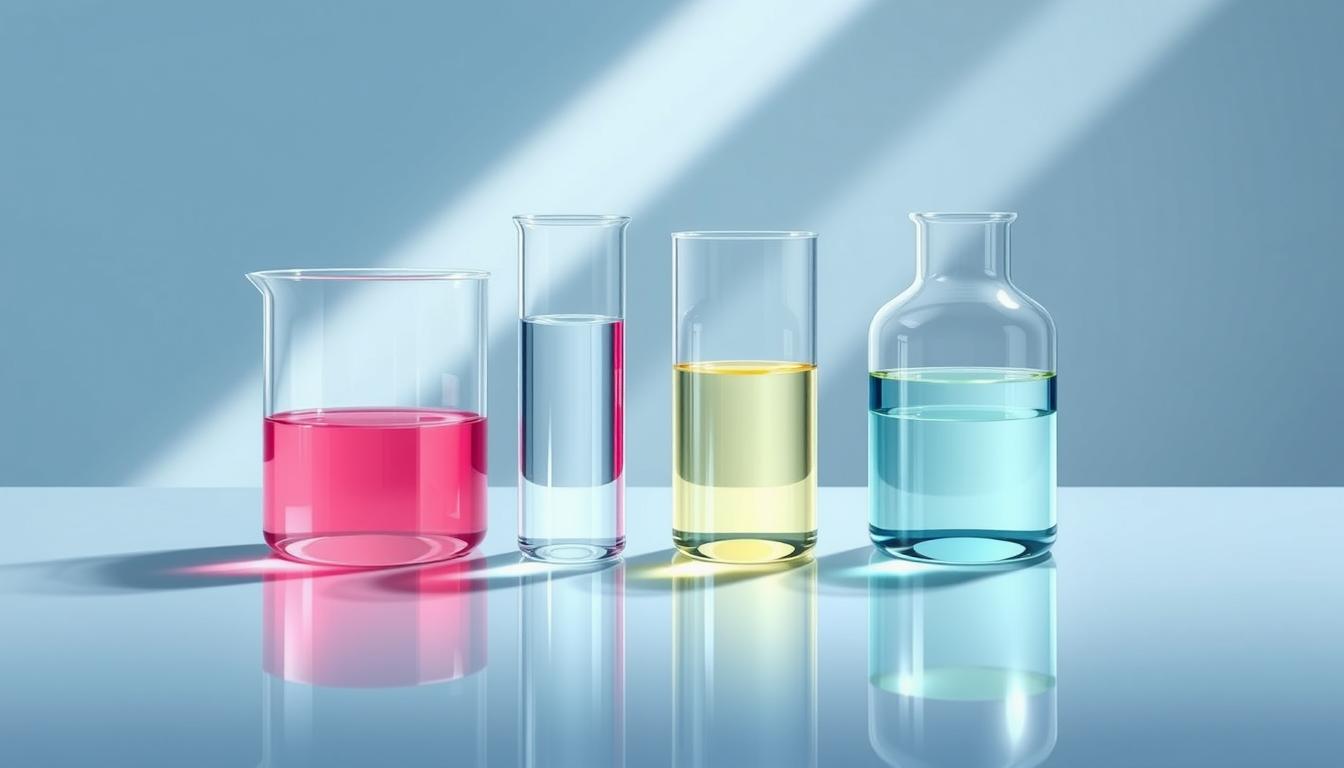
Ever wondered why some liquids flow like water and others move like molasses? Learning about the least viscous liquid opens up interesting facts about how fluids work. This knowledge affects everything from big industrial projects to our daily lives.
Low viscosity fluids are key in science, showing how easily things can flow. Water is the perfect example of a low viscosity liquid. It moves well and helps with heat transfer in many systems.
But water isn’t the only low viscosity liquid. Ethanol, some oils, and special chemicals also flow well. They are important in making medicines and cooling systems in factories.
Knowing about viscosity helps scientists and engineers pick the right liquids for their jobs. This ensures things work well and efficiently in many fields.
Key Takeaways
- Water is the main example of a low viscosity liquid
- Low viscosity fluids move easily with little resistance
- Temperature greatly affects how thick or thin a liquid is
- Different fields need specific liquids for their work
- Measuring viscosity helps predict how fluids will act
Understanding Viscosity and Its Importance
Viscosity is a key property that shows how liquids act under different situations. It measures how “thick” or “thin” a liquid is. Scientists and engineers use special methods to study fluid dynamics in many fields.
Viscosity is more than just thickness. It tells us how liquids move and interact with surfaces. Some liquids flow fast, while others move slowly and need more force to move.
Definition of Viscosity
Viscosity is the fluid’s inner resistance to flow. It has a few main points:
- Measuring fluid’s ability to resist deformation
- Determining how easily a liquid moves
- Showing the liquid’s molecular structure
How Viscosity is Measured
There are many ways to measure a liquid’s flow properties. Scientists use special tools called viscometers to check fluid resistance. The main units for measuring viscosity are:
| Viscosity Unit | Measurement | Common Use |
|---|---|---|
| Centipoise (cP) | Dynamic Viscosity | Water Comparison |
| Centistokes (cSt) | Kinematic Viscosity | Oil Analysis |
| Pascal-seconds (Pa·s) | Scientific Measurement | Research Applications |
Applications of Viscosity in Industries
Viscosity is very important in many fields. Industries like cars, medicine, and food use it to check product quality and how well they work.
“Viscosity is not just a number, but a critical parameter that determines a fluid’s behavior and performance.” – Fluid Dynamics Expert
Viscosity is key for things like engine oils and medical products. It helps us know how materials work under different conditions. Scientists are always finding new ways to measure and change fluid properties for better technology.
Characteristics of Viscous Liquids
Exploring the world of low viscosity liquids shows us how fluids behave. Viscosity is how much a liquid resists flowing. It brings both challenges and chances in science and industry.

- Molecular structure and composition
- External environmental conditions
- Temperature variations
- Molecular interactions
Primary Factors Affecting Viscosity
Viscosity comes from how molecules interact. The size, shape, and forces between molecules affect how they flow. Larger molecules cause more friction, making liquids thicker.
“Viscosity is not just a number, but a window into the intricate dance of molecular movements.” – Fluid Dynamics Research Institute
Temperature’s Dramatic Impact
Temperature greatly changes a liquid’s viscosity. When it gets warmer, molecules move faster. This makes liquids thinner.
| Liquid | Room Temperature Viscosity | At 100°C Viscosity |
|---|---|---|
| Water | 0.001 Pa.s | 0.000282 Pa.s |
| Oil | 0.1 Pa.s | 0.05 Pa.s |
| Honey | 3 Pa.s | 1.5 Pa.s |
For engineers and scientists, knowing about viscosity is key. It helps in designing better systems in many fields, like cars and food.
The Science Behind Liquid Flow
Fluid dynamics is a fascinating field that studies how liquids move. It shows us the complex ways molecules interact. By studying liquid flow, scientists learn about many scientific topics.
The viscosity of water is key when looking at fluid behavior. Each liquid flows differently because of its molecular structure and the forces between molecules.
Exploring Flow Patterns
Fluid motion falls into two main types:
- Laminar Flow: Smooth, predictable movement with parallel molecular layers
- Turbulent Flow: Irregular, chaotic movement with significant molecular disruption
Molecular Dynamics in Fluid Movement
The viscosity of gases and liquids depends on how molecules interact. Smaller molecules, like water, flow more easily than larger ones.
| Fluid Type | Viscosity Characteristics | Flow Behavior |
|---|---|---|
| Water | Low viscosity (1.0 mPa·s at 20°C) | Rapid, smooth flow |
| Honey | High viscosity | Slow, sticky movement |
| Gases | Very low viscosity | Rapid, unpredictable dispersal |
Temperature’s Impact on Fluid Dynamics
Temperature greatly affects how fluids behave. As temperature goes up, most liquids get less viscous, making them flow better. But gases get more viscous as temperature rises.
“The dance of molecules reveals the hidden poetry of fluid motion.” – Scientific Fluid Dynamics Research
Knowing about fluid dynamics helps scientists and engineers make better systems. This is true in many fields, from making things to studying the environment.
Identifying the Least Viscous Liquid
Understanding the viscosity of liquids helps us see how they flow. Some fluids move more easily than others. This creates interesting differences in how they behave. Researchers and engineers study these properties to create new technologies and solutions.

Water is key when we talk about viscosity. Its low viscosity makes it a great standard for comparing fluids.
Comparing Liquid Viscosities
Scientists use precise measurements to evaluate liquids. Different substances show amazing differences in how they flow:
- Water: Extremely low viscosity (0.001 Pa.s)
- Vegetable oil: Moderate viscosity (0.1 Pa.s)
- Honey: High viscosity (3 Pa.s)
Viscosity Tables and Comparative Analysis
| Liquid | Viscosity (Pa.s) | Flow Characteristics |
|---|---|---|
| Water | 0.001 | Extremely fluid |
| Olive Oil | 0.084 | Smooth flow |
| Honey | 3.0 | Slow, thick movement |
Viscosity tables give us important insights into liquid behavior. They help engineers and researchers choose the right fluids for their projects.
“The flow of a liquid tells a story of its molecular interactions and energy transfer.” – Scientific Fluid Dynamics Research
Temperature greatly affects viscosity. As temperature goes up, most liquids become less viscous. This makes them move more easily and have less internal friction.
Viscosity of Common Liquids
Understanding the viscosity of different liquids helps us see how they move and work together. Low viscosity fluids are key in science and industry. It’s important to know their special traits.
Water is a key example when we talk about the least viscous liquid. Its low viscosity means it moves quickly and smoothly compared to others.
Characteristics of Water
Water has great flow properties with a viscosity of about 1 centipoise (cP) at room temperature. This makes it one of the least viscous liquids. It moves easily through different systems.
Examining Oils and Their Viscosity
Different oils have different viscosities, affecting their use in many areas. Here’s a look at oil viscosities:
| Oil Type | Viscosity (cP) | Temperature |
|---|---|---|
| Olive Oil | 40 | 25°C |
| Corn Oil | 28 | 57°C |
| Castor Oil | 580 | 27°C |
These differences show how temperature and molecular structure affect viscosity. Low viscosity fluids like water and some oils are very useful in science and industry.
- Water is the standard for low viscosity liquids
- Oil viscosity changes with temperature
- Molecular structure impacts flow properties
“Viscosity is not just a number, but a window into understanding fluid behavior.” – Scientific Fluid Dynamics Research
Scientists keep studying fluid dynamics. They want to know how low viscosity liquids move and interact in different places.
Low Viscosity Liquids in Nature
Nature shows us amazing examples of low viscosity liquids. These liquids are key in biological systems. They help with important processes in different ecosystems, showing how viscosity and natural functions are linked.
Viscosity is vital for how nature works. Low viscosity liquids help with life and keeping the environment balanced.
Natural Sources of Low Viscosity Liquids
- Water: The quintessential low viscosity liquid
- Plant sap: Enables nutrient transportation
- Blood: Facilitates rapid cellular transport
- Lymphatic fluid: Supports immune system functions
Ecosystem Importance of Low Viscosity Fluids
Low viscosity liquids are key for ecosystem balance. They help:
- Efficient nutrient circulation
- Rapid thermal regulation
- Quick cellular communication
- Seamless biological processes
The flow of life depends on the subtle dynamics of low viscosity liquids.
Scientists keep studying viscosity to learn about these liquids in complex systems. Their work shows how fluid properties and biological functions are connected.
The balance of low viscosity liquids shows nature’s clever design. Simple fluid traits support complex ecosystems.
Industrial Applications of Low Viscosity Liquids
Industrial processes use low viscosity liquids for important tasks. These fluids help improve how machines work and how efficiently they operate in many fields.
Lubrication and Cooling Systems
Low viscosity oils are key for keeping machinery running smoothly. They help by:
- Reducing friction between moving parts
- Keeping temperatures down
- Stopping mechanical wear
- Helping machines last longer
Chemical Processing Applications
In chemical engineering, low viscosity liquids are crucial. They move quickly and transfer heat well, making important processes work better.
“The right fluid viscosity can dramatically improve industrial efficiency and performance.” – Engineering Research Institute
| Liquid Type | Dynamic Viscosity (mPa·s) | Industrial Application |
|---|---|---|
| Olive Oil | 56.2 | Mechanical Lubrication |
| Canola Oil | 46.2 | Cooling Systems |
| Hydrogen | 8.90 | Chemical Processing |
Viscosity tables help engineers pick the right liquids for their needs. This ensures the best performance in different uses.
Performance Optimization
Knowing about oil viscosity leads to better engineering. Low viscosity liquids flow better, which is great for hydraulic systems, precise making, and new tech.
Measuring and Testing Viscosity
Understanding viscosity measurement needs special techniques and precise tools. Scientists and engineers use different methods to see how fluids flow and act under various conditions.

Viscosity measurement involves many approaches to study fluid behavior in various industries. Experts use advanced tools to get accurate viscosity units and performance details.
Common Viscosity Measurement Methods
- Rotational Viscometry: Measures fluid resistance by rotating spindles
- Capillary Viscometry: Determines flow time through narrow tubes
- Falling Ball Method: Tracks fluid resistance against object movement
Precision Viscosity Testing Equipment
Modern viscosity testing needs advanced instruments for specific fluids. Researchers pick the right equipment based on the fluid’s characteristics and measurement needs.
| Viscometer Type | Primary Application | Accuracy Range |
|---|---|---|
| Rotational Viscometer | Industrial Liquids | ±0.5% precision |
| Capillary Viscometer | Petroleum Products | ±1% accuracy |
| Falling Ball Viscometer | Pharmaceutical Liquids | ±2% measurement |
Temperature is key in viscosity measurement. For every 5°C increase, viscosity drops by about 5 centiPoise (cPs). Water is a standard at 1 cPs, while honey can be from 2,000 to 10,000 cPs.
“Precise viscosity measurement is the cornerstone of understanding fluid dynamics across scientific and industrial applications.”
Experts try to keep strict measurement conditions, aiming for temperatures within ±1.5°C for best accuracy. The choice of viscosity units depends on the industry and research needs, ensuring consistent and reliable fluid analysis.
Conclusion: The Importance of Understanding Viscosity
Understanding viscosity is key in science and industry. It shows how different substances behave in various ways. Water, with its very low viscosity, is a key example in studying how fluids move.
Exploring the least viscous liquid is a big question in science. It helps us understand how fluids work in many fields. Knowing viscosity helps engineers and scientists make better designs and predict how fluids will act.
Summary of Key Points
Viscosity is very important in many areas of study. It helps us understand how substances flow and interact. The connection between temperature, pressure, and fluid behavior is still being studied.
Future Considerations in Fluid Research
New technologies will help us study viscosity better. Advanced computer simulations will improve our knowledge of fluid interactions. Scientists hope to find new materials that will change how we work with viscous substances.
FAQ
What exactly is viscosity?
Viscosity is a measure of how easily a fluid flows. It shows how “thick” or “thin” a liquid is. This measure is about the internal friction of a fluid, showing how it moves under different conditions.
What is the least viscous liquid known?
Liquid helium is the least viscous liquid at very low temperatures. It has almost zero viscosity. Water is often used as a reference for low viscosity among common liquids.
How is viscosity measured?
Viscosity is measured with special instruments called viscometers. These tools can find dynamic viscosity (flow resistance) or kinematic viscosity (flow rate under gravity). Common methods include rotational and capillary viscometry.
How does temperature affect viscosity?
Temperature greatly affects viscosity. Most liquids become less viscous (thinner) as temperature rises. At lower temperatures, they become more viscous (thicker). This effect varies by the liquid’s molecular structure.
What are some practical applications of understanding viscosity?
Viscosity is key in many fields. It’s important in the automotive industry for lubricants, in food processing for product consistency, in pharmaceuticals for drug formulation, and in manufacturing for fluid handling and machine lubrication.
How do gases compare to liquids in terms of viscosity?
Gases have much lower viscosity than liquids. They flow more easily because of their molecular structure and lower intermolecular forces.
What makes water a standard reference for viscosity?
Water is a standard because it has a well-known and relatively low viscosity at standard temperatures. Its molecular structure and moderate intermolecular forces make it a good baseline for comparing other fluids.
Can viscosity change under different pressures?
Yes, pressure can change viscosity, but the effect varies by fluid. Some liquids become more viscous under increased pressure, while others show little change.
Why is low viscosity important in natural systems?
Low viscosity is key in natural systems for fluid movement. It’s important for nutrient transport in plants, blood circulation in animals, and various biochemical processes that need efficient fluid flow.
How do scientists continue to research viscosity?
Scientists study viscosity with advanced techniques in fluid dynamics, molecular modeling, and new measurement technologies. They aim to understand how molecular structures, environmental conditions, and chemical compositions affect fluid behavior.





Leave a Comment
Your email address will not be published. Required fields are marked *