


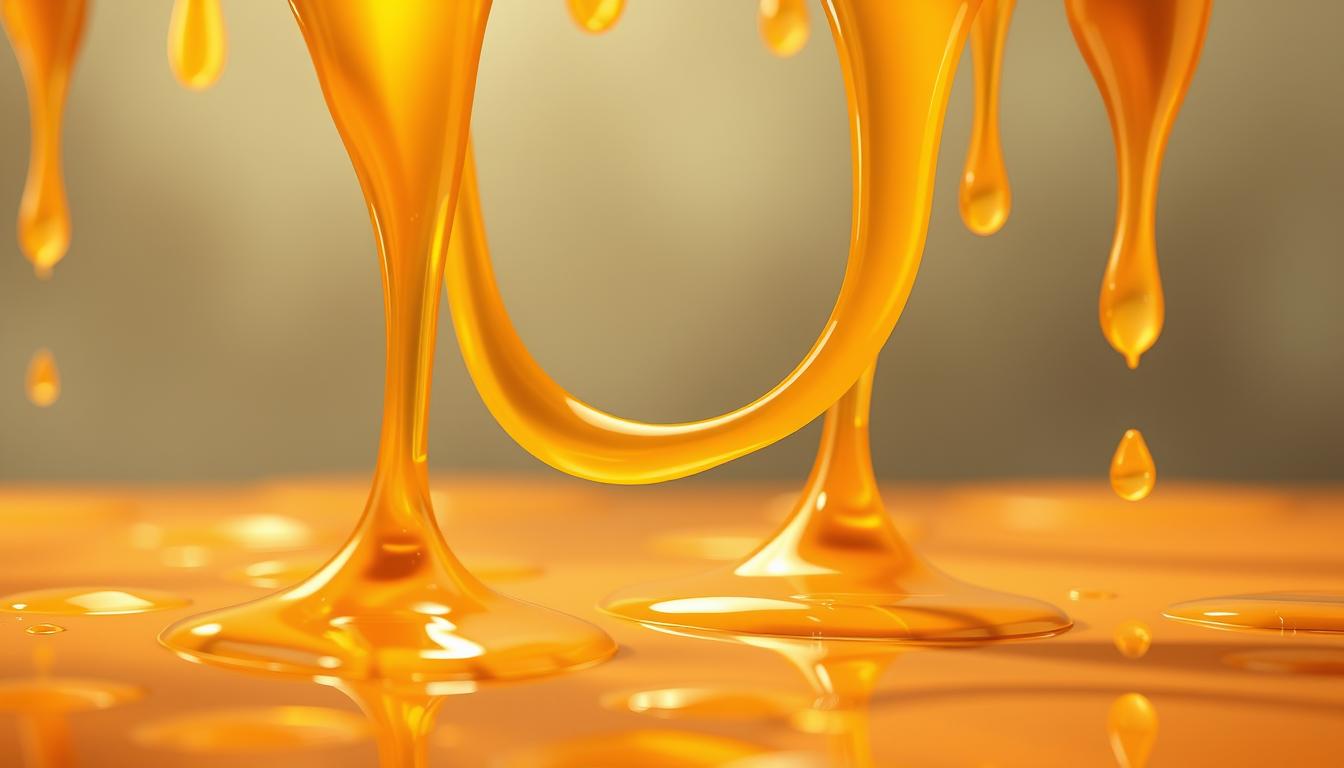
Ever wondered why some liquids move slowly like honey and others flow quickly like water? What’s the most viscous liquid in the world, and why does it act so differently?
Viscosity shows how much a liquid resists flowing. It makes some liquids, like honey, stand out. Scientists study how easily or hard a liquid moves to understand its properties.
To find the most viscous liquid, we look at how molecules interact, how temperature affects it, and its unique behavior. Some liquids are so thick, they change how we see liquids moving. They’re important in science and industry.
The world of viscous liquids is full of surprises. From common honey to special industrial liquids, each has its own story. They tell us about their molecular structure, how they flow, and their physical properties.
Key Takeaways
- Viscosity measures a liquid’s resistance to flow
- Temperature significantly impacts liquid thickness
- Different liquids have dramatically varied viscosity levels
- Molecular structure determines fluid behavior
- Viscosity plays crucial roles in multiple industries
Understanding Viscosity and Its Importance
Viscosity is a key property that shows how liquids act under various conditions. It reveals interesting facts about fluid dynamics, which are vital in many industries.
Viscosity is about a liquid’s flow resistance. It’s like the liquid’s internal friction. The more resistance, the thicker the liquid. Scientists use different methods to measure viscosity, gaining insights into how fluids interact.
Defining Viscosity
Viscosity measures the friction between fluid layers. Think of honey dripping slowly compared to water’s fast flow. This shows viscosity clearly.
- Measures fluid’s resistance to motion
- Indicates a liquid’s “thickness”
- Critical in understanding fluid behavior
Units of Measurement
| Measurement Type | Unit | Description |
|---|---|---|
| Dynamic Viscosity | Pascal-seconds (Pa·s) | Measures internal fluid friction |
| Kinematic Viscosity | Square meters per second (m²/s) | Ratio of dynamic viscosity to fluid density |
Why Viscosity Matters
Knowing viscosity is crucial for engineers and scientists. It helps improve processes in many areas. From making car lubricants to food processing, it ensures better control and performance.
“Viscosity is not just a scientific concept, but a critical parameter that influences everything from engine efficiency to culinary experiences.” – Fluid Dynamics Expert
As scientists delve into viscous liquids, they find new and exciting properties. The search for the thickest liquid known is an ongoing journey. It expands our knowledge of fluid behavior.
The Science Behind Viscosity
Viscosity is a key scientific concept that shows how fluids act under different conditions. It tells us about the internal friction of a fluid and how it resists flow. Knowing the molecular dynamics of high viscosity fluids helps us understand their special traits.
Molecular Structure and Its Impact
The molecular structure is vital in determining a liquid’s viscosity. The forces between molecules affect how well a fluid can flow. For example, molasses shows how complex molecular interactions can make a substance thick and slow.
- Stronger molecular bonds increase viscosity
- Molecular size affects fluid movement
- Intermolecular forces resist fluid flow
Temperature Effects on Viscosity
Temperature greatly changes how fluids behave. When temperature goes up, molecules move faster, reducing friction between them. This is why high viscosity fluids become less thick when heated.
| Fluid | Viscosity at 20°C (mPa s) | Viscosity at 100°C (mPa s) |
|---|---|---|
| Water | 1.0020 | 0.2820 |
| Olive Oil | 84 | 24 |
| Ethylene Glycol | 16.1 | 1.98 |
Comparison of Viscosity in Gases and Liquids
Gases and liquids have very different viscosities. Gases have very low viscosity values, usually between 1-10 microPascal seconds. Liquids, on the other hand, have much higher resistance to flow.
“Viscosity is not just a property, but a window into the molecular world of fluids.” – Scientific Fluid Dynamics Research
Our understanding of viscosity is always growing. It gives us deeper insights into how fluids behave at different temperatures and molecular structures.
Common Viscous Liquids in Daily Life
Viscosity is key in many things we use every day. Knowing how different viscous liquids work helps us see their special traits and uses.

Honey: Nature’s Viscous Treasure
Honey is a standout for its natural thickness. It has a viscosity of 2,000 to 10,000 mPa•s at 20°C. This makes it one of the most interesting thick liquids in nature.
The special way honey’s molecules are arranged is why it’s so thick and flows slowly.
Syrup: Sweet and Thick
Maple syrup and corn syrup show how temperature changes how liquids flow. Their thick properties make them great for cooking and industry.
Oils: From Kitchen to Industry
Different oils have different viscosities, affecting their uses. Cooking oils, motor oils, and industrial lubricants each have special properties that make them work well.
| Liquid | Viscosity (cPs) | Temperature |
|---|---|---|
| Corn Oil | 72 | 20°C |
| Maple Syrup | 144 | 20°C |
| Glycerine | 648 | 20°C |
| Honey | 10,000 | 20°C |
*”Viscosity transforms ordinary liquids into extraordinary substances with unique flow characteristics.”*
- Honey is a classic example of a high-viscosity natural liquid
- Glycerol shows versatile viscosity properties
- Temperature greatly affects how liquids flow
Learning about viscosity opens our eyes to the complex world of liquids. From honey’s sweet drizzle to industrial oils’ smooth flow, it’s all fascinating.
What is the Most Viscous Liquid?
Exploring viscous liquids shows us how complex fluids can be. Pitch stands out as the most viscous liquid, pushing our limits of understanding fluid behavior.
Pitch is a unique substance in the world of viscous materials. Researchers found that pitch flows at an incredibly slow rate. It takes one drop every 8 to 13 years to move. This makes pitch a key example of extreme fluid resistance.
Defining Extreme Viscosity
Viscosity measures how much a fluid resists flow. Some liquids are very viscous, like:
- Pitch: Approximately 2.3 × 10^11 mPa·s at 10-30°C
- Peanut butter: Between 10^4 and 10^6 mPa·s
- Honey: 2,000 to 10,000 mPa·s at 20°C
- Ketchup: 5,000 to 20,000 mPa·s at 25°C
Natural vs. Synthetic Viscous Liquids
Viscous liquids come from nature and are made in labs. Natural substances like honey are very viscous. But synthetic materials can be even more resistant to flow.
“Viscosity is not just a property, but a window into understanding molecular interactions.” – Scientific Research Perspective
| Liquid Type | Viscosity (mPa·s) | Temperature |
|---|---|---|
| Pitch | 2.3 × 10^11 | 10-30°C |
| Honey | 2,000 – 10,000 | 20°C |
| Glycerol | 1,412 | Standard |
Studying pitch viscosity helps us understand materials that defy fluid dynamics. It shows how molecular structures can create incredible resistance to flow.
The Role of Temperature in Viscosity
Temperature is key in how high viscosity fluids behave. Knowing how temperature affects liquid consistency is vital for many fields.
As temperature changes, so do the interactions between molecules in liquids. Heat increases molecular energy, changing how they move and interact.
How Temperature Transforms Liquid Consistency
When temperature goes up, most liquids become less thick:
- Liquids usually get less viscous
- Molecular bonds get weaker
- Fluids move more freely
Applications Across Temperature Ranges
Many industries use temperature’s effect on viscosity. For instance:
- Food processing needs exact temperature control
- Pharmaceuticals rely on managing viscosity
- Chemical engineering uses temperature-dependent fluid properties
“Temperature is the invisible hand that reshapes liquid behavior.” – Scientific Research Journal
Industrial Process Considerations
Manufacturers must watch temperature closely to keep fluids at their best. Precise temperature control ensures consistent product quality and performance.
Applications of Viscous Liquids
High viscosity fluids are key in many industries. Their special properties make them useful in many ways. This affects our daily lives and the latest technologies.

Food Product Innovations
Viscosity changes how we enjoy food. It helps chefs and food makers get the right texture. For example, honey’s thick texture is different from water, offering special tastes.
- Sauce development
- Beverage consistency
- Bakery product formulations
Pharmaceutical Formulations
High viscosity fluids are vital in making medicines. Liquid medicines, ointments, and syrups need the right viscosity. This ensures they work well and are comfortable for patients.
“Viscosity is not just a physical property, but a critical parameter in drug delivery systems.”
Industrial Applications
Many industries use viscosity in their work. Lubricants, hydraulic fluids, and cooling systems need to understand fluid behavior. This is crucial for their performance.
- Machinery lubrication
- Hydraulic system performance
- Heat transfer mechanisms
Viscosity is important in food, medicine, and industry. Measuring viscosity helps create new products and improve quality in these fields.
How to Measure Viscosity
Measuring viscosity is key in understanding how fluids behave. It’s important in science and industry. The method used depends on the liquid’s type and properties.
Many techniques exist for measuring viscosity. Each is best for different liquids and research needs.
Primary Measurement Methods
- Falling Ball Method: Tracks the speed of a metal ball falling through a liquid
- Capillary Viscometers: Measure liquid flow through narrow tubes
- Rotational Viscometers: Calculate viscosity by measuring torque
- Vibrational Viscometers: Assess viscosity through oscillating resonators
Instruments for Viscosity Testing
Special tools are vital for precise viscosity measurements. The right tool depends on the liquid’s properties and the needed accuracy.
| Instrument Type | Best Used For |
|---|---|
| Falling Ball Viscometer | Low to medium viscosity liquids |
| Rotational Viscometer | Complex fluid systems |
| Capillary Viscometer | Newtonian fluids |
Importance of Precise Measurement
When measuring viscosity, especially for very thick liquids, precision is crucial. Different methods offer different levels of accuracy. This depends on the liquid’s molecular structure.
“Accurate viscosity measurement is not just a scientific necessity, but a critical factor in understanding fluid dynamics.” – Fluid Dynamics Research Institute
Factors like temperature, molecular composition, and shear rate affect viscosity measurement. Researchers must control these to get reliable results for different substances.
The Impact of Viscosity on Flow
Viscosity plays a big role in how fluids move. This is key in engineering and industry. High viscosity fluids have special flow patterns that affect how well systems work.
Laminar vs. Turbulent Flow Dynamics
There are two main types of flow: laminar and turbulent. Laminar flow is smooth and predictable. Turbulent flow is chaotic and hard to predict.
- Laminar flow: Smooth, predictable movement
- Turbulent flow: Irregular, unpredictable motion
- Viscosity directly influences these flow characteristics
Factors Influencing Flow Properties
Many things can change how fluids flow, especially with high viscosity fluids like molasses:
- Temperature changes
- Fluid concentration
- Molecular structure
- Pressure differences
Practical Implications in Engineering
Engineers must think about viscosity when designing systems for moving fluids. High viscosity fluids need special tools and careful planning for the best results.
| Fluid Type | Viscosity Range | Flow Characteristics |
|---|---|---|
| Water | Low | Rapid, smooth flow |
| Honey | High | Slow, resistant flow |
| Motor Oil | Medium | Controlled, consistent flow |
“Viscosity is not just a property, but a critical parameter that defines fluid behavior across multiple scientific and industrial domains.”
Knowing about these flow dynamics helps engineers make better systems. They can improve performance and predict how fluids will act under different conditions.
Viscosity in Nature
Nature shows us amazing examples of viscosity. It’s a key part of many ecological and geological processes. From slow-moving glaciers to sticky substances in living things, viscosity shows how fluids move.

Naturally Viscous Substances in the Environment
Looking at the most viscous liquid in nature, we find some amazing ones. Honey is especially interesting, with a viscosity of 2,000 to 10,000 mPa•s at 20°C. It shows how complex viscous liquids can be.
- Tree sap: A sticky, slow-moving liquid
- Volcanic lava: Extremely thick and resistant to flow
- Pitch: One of the most viscous substances known
- Blood: Varying viscosity based on temperature and composition
Viscosity’s Role in Ecosystem Dynamics
Viscosity is key for many biological functions. Plant sap moves through vessels, and blood flows through animal bodies. It affects how nutrients are transported and energy is used.
Geological Processes and Viscosity
Viscosity greatly affects geological events. Glaciers move slowly because of their high viscosity. Molten rock beneath the Earth moves with different resistances.
| Natural Substance | Viscosity Range (mPa•s) | Temperature |
|---|---|---|
| Honey | 2,000 – 10,000 | 20°C |
| Tree Sap | 500 – 5,000 | Ambient |
| Volcanic Lava | 100 – 10,000 | Varies |
“In nature, viscosity is not just a property, but a fundamental mechanism of movement and transformation.” – Scientific Observation
Learning about viscosity in nature helps us understand complex environmental interactions. It shows how fluid properties shape our world at all scales.
Innovations in Viscous Liquid Research
The study of viscous liquids is always growing. It’s changing how we understand and use these fluids. New discoveries are set to change many industries.
New ways to measure viscosity are exciting scientists. They’re finding new methods to study fluid behavior with great accuracy.
Emerging Research Frontiers
- Nanotechnology applications for manipulating high viscosity fluids
- Smart material development with adaptive viscosity properties
- Advanced sensing technologies for precise viscosity measurement
Breakthrough Applications
New research is showing the power of viscous liquids in key areas:
- Medical Innovations: New drug delivery systems use viscous liquids
- Materials Science: Next-generation lubricants and coatings are being developed
- Environmental Technologies: New ways to manage fluids are being found
“The future of viscosity research lies in understanding and controlling fluid behavior at molecular levels.” – Dr. Elena Rodriguez, Fluid Dynamics Research Center
Future Research Directions
Future studies will focus on creating smart fluids. These fluids can change their properties as needed. Scientists are looking at tiny changes to make big impacts.
New pump technologies and ways to measure viscosity are leading to big advances. These advances will help us control and understand fluids better. This could open up new possibilities in fields like medicine and manufacturing.
Challenges and Considerations
Managing high viscosity fluids is tough in both industrial and research settings. It takes special knowledge to handle glycerol viscosity and other thick liquids well.
Experts face many technical hurdles when working with these fluids. They need precise solutions and careful planning to overcome these challenges.
Common Problems in Viscosity Management
- Pump performance drops as fluid gets thicker
- Equipment might fail when moving liquids
- Flow rates slow down in complex systems
- More energy is needed to move the fluid
Environmental Considerations
Handling viscous substances also affects the environment. It’s important to dispose of and recycle these fluids responsibly. This helps avoid harming the ecosystem.
| Viscosity Category | Environmental Challenge | Mitigation Strategy |
|---|---|---|
| Low Viscosity Liquids | Quick dispersal | Standard filtration |
| High Viscosity Fluids | Slow degradation | Specialized treatment processes |
Safety Regulations and Standards
Following safety rules is crucial when dealing with glycerol viscosity and other thick fluids. Companies must stick to strict safety guidelines. This helps prevent accidents and keeps operations running smoothly.
“Proper management of viscous liquids is not just about technical efficiency, but also about protecting human and environmental health.”
Industrial standards often require detailed records, special equipment, and thorough training. This is for those who handle high viscosity substances.
Conclusion: The Significance of Understanding Viscosity
Viscosity is a complex and fascinating scientific area that affects many industries and technologies. It’s a topic that keeps researchers and engineers curious. They want to know what the most viscous liquid is.
Viscosity is more than just measuring fluids. It helps us understand how materials behave and perform. This knowledge is key in many fields.
Viscosity is vital for advancing technology and doing scientific research. It’s important in making medicines and in engineering. The thickest liquid known is not just a physical trait. It gives us insights into how products work and how they are made.
Rheological measurements are crucial. They tell us about product behavior, how they are processed, and their molecular makeup. This knowledge drives innovation in many areas.
Key Takeaways in Viscosity Research
Manufacturers and scientists now see viscosity as a key factor in quality control and product development. Being able to measure and change fluid resistance opens up new possibilities. This is true in fields like material science and biological research.
Viscosity studies are advancing our knowledge of fluids and molecules. This research is pushing the limits of what we know about fluid dynamics and molecular interactions.
Future Implications
As technology gets better, the need for viscosity research grows. New uses in nanotechnology, biotechnology, and advanced materials science show its ongoing importance. Researchers are working on better ways to analyze and predict viscosity.
This could change how we use fluid-based technologies in the future. It’s an exciting time for viscosity research and its applications.
FAQ
What exactly is viscosity?
Viscosity is a measure of how hard it is for a fluid to flow. It shows how thick or sticky a liquid is. The higher the viscosity, the slower it flows and the more it resists movement.
What is the most viscous liquid known to science?
Pitch is the most viscous liquid known. In the University of Queensland’s pitch drop experiment, it takes years for a drop to fall. Its viscosity is about 230 billion times more than water.
How is viscosity measured?
Viscosity is measured in several ways. These include:
– Falling ball method: This measures the ball’s speed through the liquid.
– Capillary viscometers: They observe fluid flow through a narrow tube.
– Rotational viscometers: These measure resistance when an object rotates in the liquid.
Each method gives precise measurements for different fluids.
How does temperature affect viscosity?
Temperature greatly affects viscosity. Generally, as temperature goes up, viscosity goes down. For example, honey gets thinner and flows easier when heated. This is important in food processing and petroleum engineering.
What are some common highly viscous liquids?
Some common highly viscous liquids are:
– Honey: It ranges from 2,000 to 10,000 centipoise.
– Molasses: It’s around 5,000 to 10,000 centipoise.
– Glycerol: It’s about 1,500 centipoise at room temperature.
– Corn syrup: It’s 5,000 to 6,000 centipoise.
Why is understanding viscosity important?
Viscosity is key in many fields. It’s important in:
– Food science (texture and consistency)
– Pharmaceutical manufacturing
– Automotive and industrial lubricants
– Geological studies
– Chemical engineering
Knowing viscosity helps improve processes and design better products.
Can viscosity change with concentration?
Yes, concentration can change viscosity. As dissolved substances increase, viscosity usually goes up. For example, sugar concentration affects syrup viscosity.
What is the difference between Newtonian and non-Newtonian fluids?
Newtonian fluids have constant viscosity, like water or oil. Non-Newtonian fluids change viscosity with force. Examples include:
– Ketchup
– Cornstarch mixed with water
– Quicksand
These fluids can become thicker or thinner with applied force.






Leave a Comment
Your email address will not be published. Required fields are marked *