


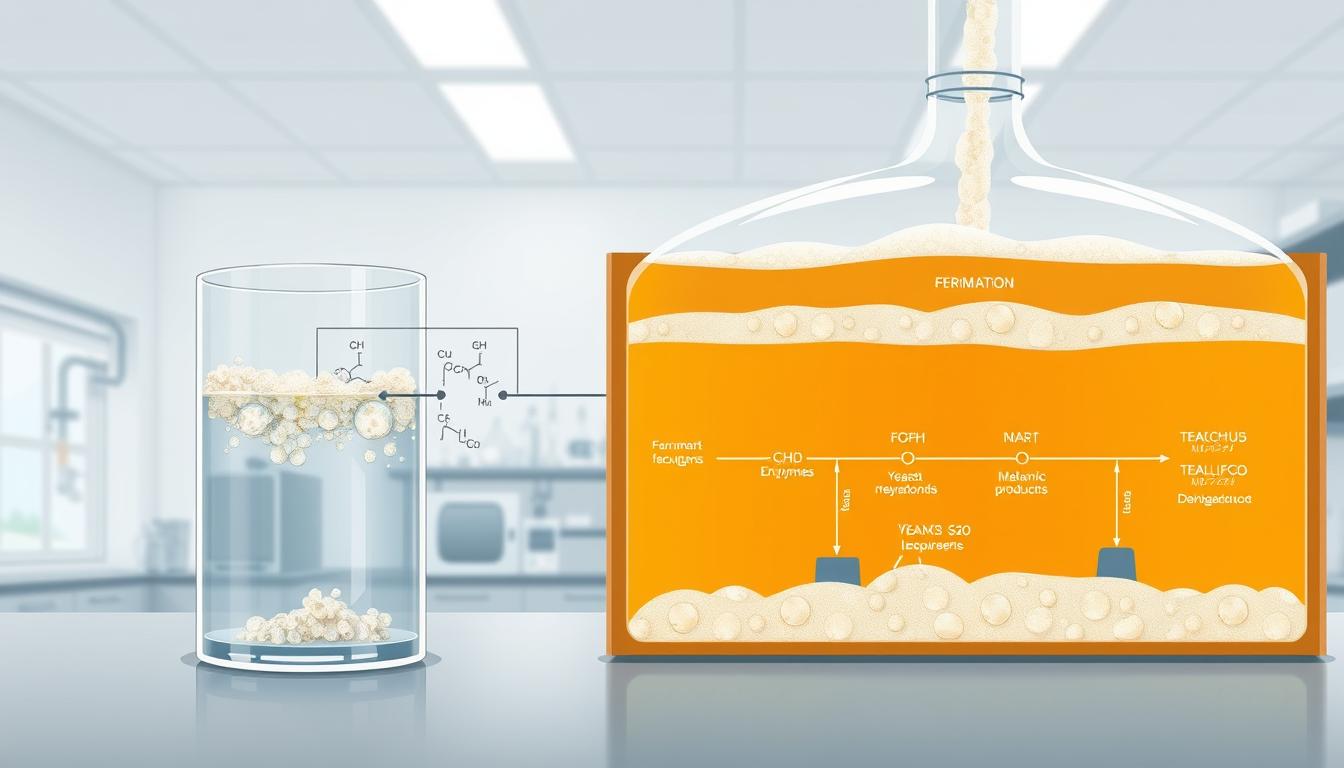
Ever thought about how sugar turns into complex flavors and useful stuff without oxygen? Fermentation, an ancient wonder, is the secret behind this magic.
Fermentation is a cool way for tiny organisms to change sugars into useful things. It’s been around for 10,000 years, helping make food, drinks, and even industrial products.
Scientists like Louis Pasteur changed how we see fermentation in the 1800s. They found out how tiny bugs can turn glucose into things like alcohol and lactic acid. This turns simple stuff into tasty, complex foods.
Learning about fermentation shows us a quiet but amazing change in many foods we eat every day.
Key Takeaways
- Fermentation is an ancient biological process spanning over 10,000 years
- Anaerobic respiration enables microorganisms to convert sugars without oxygen
- Louis Pasteur defined fermentation beyond simple alcohol production
- Fermentation creates diverse products in food, beverage, and industrial sectors
- Microorganisms play a crucial role in metabolic transformations
Understanding Fermentation: A Biological Overview
Fermentation is a fascinating process that is key to life in many ecosystems. It’s how organisms make energy without oxygen. This is crucial for survival in many microorganisms.
The science of fermentation shows us a world of tiny changes that help life thrive. About 25% of bacteria and archaea use fermentation to make energy. This shows how important it is in nature.
Definition of Fermentation
Fermentation is a way for organisms to make energy without oxygen. They turn carbohydrates into alcohol, organic acids, or gases. In yeast fermentation, sugar is turned into energy, creating special products.
Types of Fermentation
- Lactic Acid Fermentation: Produces lactic acid, common in muscle cells and dairy products
- Alcoholic Fermentation: Generates ethanol and carbon dioxide, essential in beverage production
- Acetic Acid Fermentation: Creates vinegar through bacterial conversion
Importance in Nature
Fermentation has many important roles in nature:
- It helps make energy in places without enough oxygen.
- It helps cycle nutrients in ecosystems.
- It’s a survival tool for microorganisms.
“Fermentation is nature’s ingenious solution for surviving and thriving in challenging environments.” – Microbiology Research Institute
| Fermentation Type | Energy Yield | Primary Organisms |
|---|---|---|
| Lactic Acid | 2 ATP per glucose | Bacteria, Muscle Cells |
| Alcoholic | 2 ATP per glucose | Yeast |
| Acetic Acid | 2 ATP per glucose | Acetobacter Bacteria |
Learning about fermentation helps us understand how life adapts and survives in different places. It shows us the amazing biochemical processes that keep life going.
The Science Behind Fermentation
Fermentation is a cool biological process that changes raw ingredients into something new. Scientists have found out how tiny organisms turn simple sugars into things like alcohol and pickling solutions.
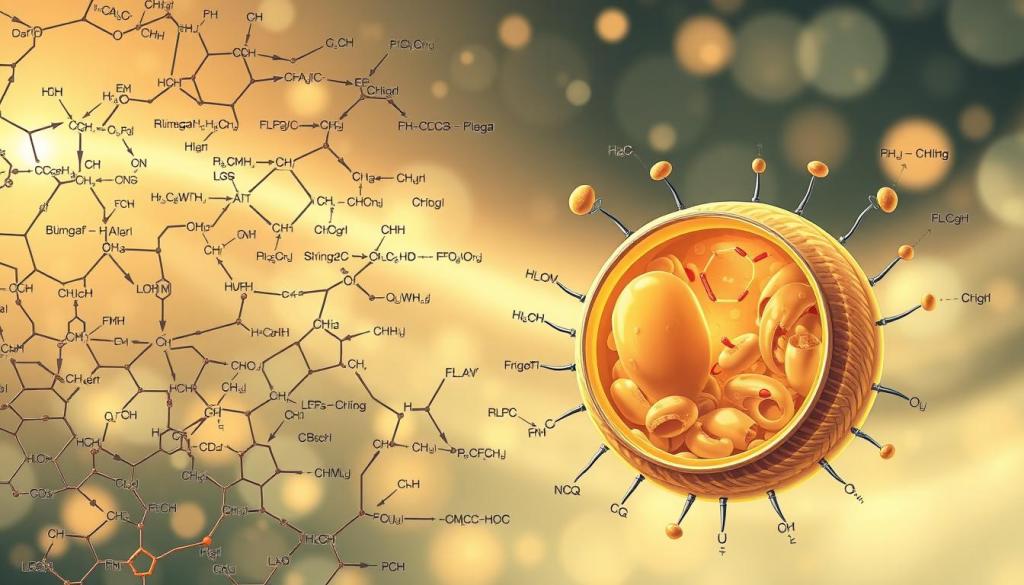
Metabolic Pathways of Fermentation
When fermentation happens, glucose goes through big changes. This process includes:
- Glycolysis breaking down glucose into pyruvate
- Electron transfer between molecular components
- Production of specific end products like lactate
Microorganisms: The Fermentation Architects
Microorganisms are key in fermentation. Lactic acid bacteria and yeast are the ones that make alcohol and pickle foods.
“Microorganisms are nature’s microscopic alchemists, transforming simple ingredients into complex, flavorful products.” – Research Microbiologist
Critical Factors Influencing Fermentation
Many things affect how well fermentation works:
- Temperature stability
- pH level management
- Nutrient availability
- Oxygen concentration
By controlling these factors, scientists can make fermentation better. This is especially true for making food last longer and creating drinks.
Applications of Fermentation in Food Production
Fermentation turns simple ingredients into amazing foods. This old method adds new life to dishes, making them taste and feel special.
Fermented foods take us on a journey around the world. They are not just tasty; they also help keep us healthy. Studies show they might even lower the risk of certain diseases.
Exploring Fermented Food Varieties
Fermented foods are a treasure from all over. Each culture has its own way of making these foods. This creates unique tastes:
- Sourdough bread with its tangy flavor
- Yogurt full of good bacteria
- Kimchi with its bold flavors
- Kombucha, a fermented tea
The Art of Sourdough Bread Making
Sourdough bread shows the power of fermentation. Wild yeast and bacteria mix flour and water into a tasty loaf. This process makes the bread not only taste better but also easier to digest.
Dairy Fermentation Techniques
Dairy fermentation makes healthy products with special bacteria:
| Dairy Product | Fermentation Culture | Unique Characteristics |
|---|---|---|
| Yogurt | Lactobacillus bulgaricus | Creamy texture, probiotic benefits |
| Cheese | Various bacterial strains | Diverse flavors, extended shelf life |
| Kefir | Mixed microbial cultures | Tangy drink, high nutritional value |
“Fermentation is not just a cooking technique, but a celebration of microbial magic that transforms simple ingredients into extraordinary foods.” – Culinary Microbiologist
Today, fermentation is getting even better. Scientists are finding new ways to make these foods healthier, tastier, and last longer.
Industrial Applications of Fermentation
Fermentation has grown beyond making food. It’s now key in many industries. It turns raw materials into valuable products using microbes.

Industrial fermentation uses microbes to make many products. It’s a smart way to make things. It helps the economy and the environment a lot.
Biofuel Production Innovations
Alcohol production through fermentation is key for green energy. Scientists have found ways to turn biomass into ethanol. This is a good alternative to fossil fuels.
- Turning farm waste into energy
- Creating better ways to ferment
- Lowering carbon emissions with biofuels
Pharmaceutical and Biotechnology Applications
Fermentation is vital in making medicines, especially antibiotics and enzymes. Microbes are chosen and grown to make complex medicines. This is done with careful fermentation.
“Fermentation transforms simple substrates into life-saving medical treatments” – Biotechnology Research Institute
Environmental Remediation and Waste Management
Fermentation helps solve environmental problems. Microbes can break down tough waste. This supports green waste management and helps nature.
- Cleaning polluted soil
- Improving wastewater
- Turning organic waste into something useful
Industrial fermentation is changing many fields. It offers green and new ways to tackle big global issues.
Fermentation in Beverage Production
Fermentation turns simple ingredients into complex, flavorful drinks. It’s used in beer brewing and wine making. This ancient method shapes our drinking experiences worldwide.
The art of fermentation uses controlled microbial activities. It changes sugars into alcohol, giving drinks unique flavors.
The Brewing Process in Beer
Beer brewing is all about precise fermentation. It turns basic grains into a favorite drink. The process includes several key steps:
- Malting grains to release fermentable sugars
- Selecting specific yeast strains for flavor development
- Controlling fermentation temperature
- Managing oxygen exposure
Fermentation in Wine Making
Wine making is another fascinating use of fermentation. Winemakers pick grape varieties and yeast strains for unique flavors. The fermentation process turns grape sugars into alcohol, usually between 12-15%.
“Fermentation is the soul of wine, transforming simple grape juice into a complex, nuanced beverage.” – Wine Expert
Spirits: Distillation vs. Fermentation
Distillation increases alcohol in drinks, unlike fermentation. Spirits like whiskey and vodka get more alcohol after fermentation.
Distillation and fermentation differ in:
- Alcohol concentration
- Processing techniques
- Final product characteristics
Understanding these processes shows the science behind our favorite drinks. It highlights the art and science in beer brewing and wine making.
Traditional Fermentation Techniques
Fermentation is an ancient art that has been around for over 13,000 years. People all over the world have used it to make tasty and healthy foods like pickles and sourdough bread.
These techniques started as ways to keep food fresh and add flavor. Each area developed its own methods based on what was available and the climate.
Historical Preservation Methods
Long ago, people found ways to keep food safe and fresh for longer. They used:
- Salt-based pickling
- Controlled temperature fermentation
- Natural starter cultures
- Ambient environmental fermentation
Regional Fermentation Variations
Every culture has its own way of fermenting food, shaped by local ingredients and traditions. For example, making sourdough bread was different in each European country.
| Region | Fermentation Specialty | Unique Characteristics |
|---|---|---|
| Middle East | Yogurt Production | Extended fermentation periods |
| Eastern Europe | Pickling Vegetables | Complex spice blends |
| Asia | Fermented Soy Products | Precise microbial control |
Cultural Significance
Fermentation is more than just making food. It connects communities, keeps traditions alive, and sparks new ideas in cooking. It’s a way to honor our heritage and the wisdom of our ancestors.
“Fermentation is the oldest form of food biotechnology, connecting generations through taste and technique.”
Health Benefits of Fermented Products
Fermented foods are a great way to boost your health. They are full of nutrients and help your body digest food better. This supports your body’s complex systems.
Probiotics and Gut Health
Probiotics are key for a healthy gut. Studies show fermented foods help keep your gut balanced. A study with 274 adults found that fermented milk eased bloating and improved stool frequency.
- Supports digestive wellness
- Reduces IBS symptoms
- Enhances nutrient absorption
Nutritional Enhancements
Fermentation makes food more nutritious. It increases the availability of essential nutrients. Fermented foods are packed with vitamins and minerals like:
| Nutrient | Benefit |
|---|---|
| Vitamin C | Boosts immune function |
| Iron | Supports oxygen transport |
| Zinc | Enhances immune response |
Fermentation and Food Preservation
Fermented foods also preserve food naturally. The process breaks down complex molecules. This makes nutrients easier to absorb and extends shelf life. Common fermented foods include kimchi, sauerkraut, kefir, and yogurt.
Fermentation: A 10,000-year-old technique transforming food and supporting human health.
People with lactose intolerance can enjoy fermented dairy. The fermentation process breaks down milk sugars. This makes these foods easier to digest and more nutritious.
Monitoring and Controlling Fermentation
Fermentation needs careful watching to get the best results. Yeast fermentation works best when the environment is just right. New tech helps control these conditions.
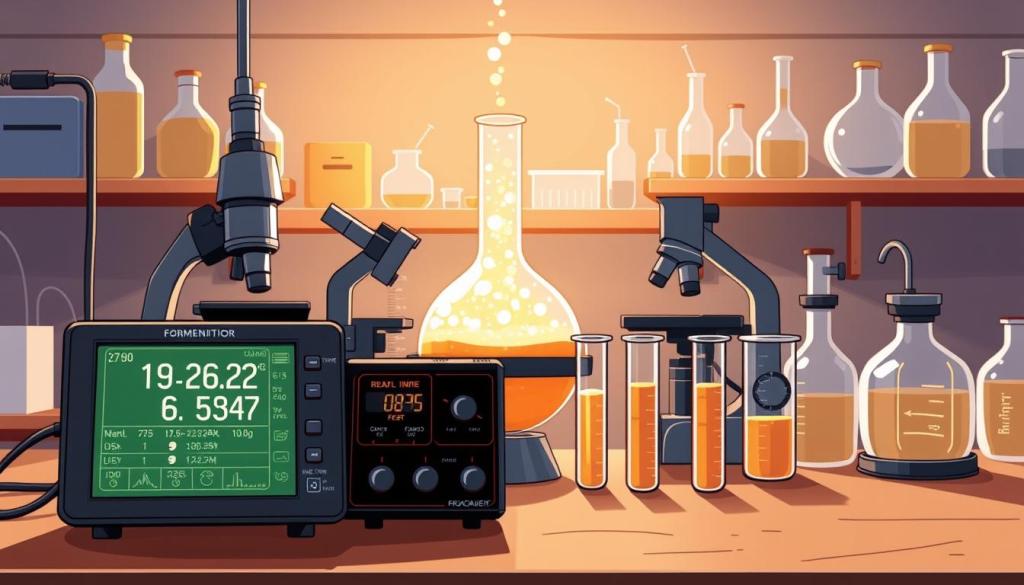
Keeping fermentation in check means tracking many important factors. Scientists and experts must watch these closely during the process.
Key Parameters to Measure
There are key things to measure during fermentation:
- Temperature stability
- pH levels
- Oxygen concentration
- Substrate availability
- Cell density
Advanced Monitoring Techniques
Today, we use advanced tech to keep fermentation perfect. Mass spectrometry is a big help. It lets us make quick changes as needed.
| Monitoring Technology | Key Capabilities |
|---|---|
| MAX300-BIO™ Bioreactor Analyzer | Analyzes one component in 400 milliseconds |
| MGA 1200 CS™ Spectrometer | Can monitor up to 99 systems simultaneously |
| Viable Cell Sensors | Measure capacitance to track living cell numbers |
Troubleshooting Common Challenges
Experts say to be ready for problems:
- Regularly calibrate monitoring equipment
- Establish precise control parameters
- Implement automated feedback mechanisms
- Conduct frequent sample analyses
“Precision in fermentation monitoring is the key to consistent, high-quality product outcomes.”
Using advanced sensors and analysis, we can make yeast fermentation better. This improves how much we can make.
Future Trends in Fermentation Research
Fermentation research is changing fast, thanks to new tech and global needs. Scientists are using new methods to improve how microbes work. This is helping many industries.
Genetic engineering is leading to big changes in biotech. It lets scientists make fermentation better and more green. This is a big step forward.
High-throughput sequencing is a big help in finding the right microbes. It lets scientists pick the best microbes for their needs. CRISPR has also shown great promise, making microbes better at making fats by over 60%.
These advances are key to solving big food problems and growing biotech. They open up new ways to make things better.
Advances in Fermentation Technology
New tech is changing how we do fermentation. Single-use bioreactors and PAT are making things better. They let us watch fermentation in real time.
This means we can control fermentation better. It makes products better too. Metabolic modeling helps predict how microbes will grow and what they’ll make.
Sustainable Practices in Fermentation
Sustainability is a big focus in fermentation now. Scientists are looking at new materials like switchgrass and algae for ethanol. They’re also working on making fermentation more efficient.
The goal is to make less waste and find new ways to feed the world. This is important for food and biotech.
The Potential of Genetic Engineering in Fermentation
Genetic engineering is bringing new ideas to fermentation. It lets scientists change microbes in new ways. This could make things better and open up new industries.
It’s a chance to make food and medicine better. It could change many areas of our lives.
FAQ
What exactly is fermentation?
Fermentation is a process where tiny living things break down organic stuff without air. They make energy and different products. It’s used in making food, drinks, and in industry, where they change sugars and other stuff into new things.
How does fermentation differ from regular metabolism?
Fermentation happens without air, unlike regular breathing. It’s a way for tiny living things to make energy from glucose. They turn it into alcohol, lactic acid, or other things when there’s no oxygen.
What are the most common types of fermentation?
There are a few main kinds. Alcoholic fermentation makes ethanol, used in drinks like wine and beer. Lactic acid fermentation makes yogurt and pickles. Acetic acid fermentation makes vinegar. Each uses different tiny living things to make different products.
Why is fermentation important in food production?
Fermentation makes food taste better, feel different, and be healthier. It’s also a way to keep food fresh longer. It turns simple ingredients into tasty things like sourdough, cheese, and kimchi.
What health benefits do fermented foods provide?
Fermented foods have good bacteria that help your gut. They improve digestion, boost your immune system, and help you absorb nutrients better. They can also reduce inflammation and help your mental health.
How do temperature and pH affect fermentation?
Temperature and pH are very important for fermentation. Different tiny living things like different temperatures and pH levels. This affects how fast they work and what they make.
Can fermentation be used for industrial purposes beyond food?
Yes. Fermentation is key in making biofuels, medicines, cleaning up waste, and more. It’s used to make ethanol, antibiotics, and other important things through controlled microbial processes.
What role does yeast play in fermentation?
Yeast is very important in fermentation, especially in making bread and alcohol. It turns sugars into carbon dioxide and alcohol. This makes bread rise and creates drinks like beer and wine.
Are there emerging technologies in fermentation research?
Yes. Scientists are working on genetic engineering, new bioreactor designs, and green fermentation methods. They’re trying to make microorganisms better, create new products, and make fermentation more eco-friendly.
How has fermentation been historically significant?
Fermentation has been important for thousands of years. It helped people preserve food and create special dishes. It has shaped many cuisines around the world and continues to influence food today.





Leave a Comment
Your email address will not be published. Required fields are marked *