


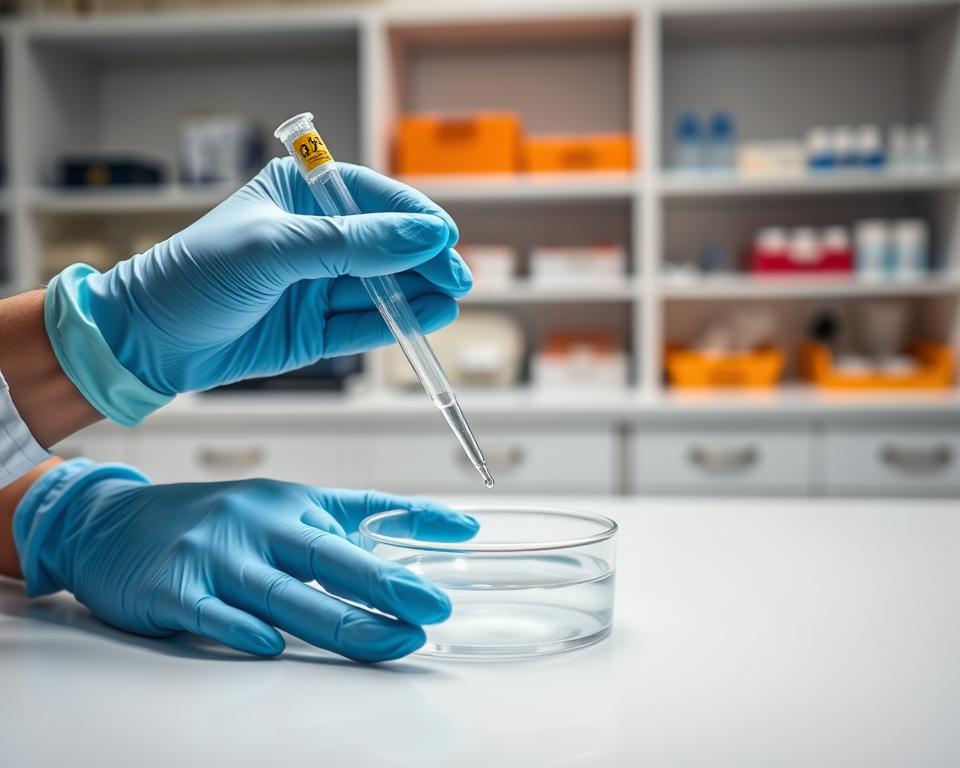
The title highlights the vital role of safety standards for cell culture dishes in life science research. It’s crucial to follow these standards to avoid contamination and ensure reliable research results. Not following these standards can harm both research integrity and public health.
To reduce risks in cell culture work, it’s important to follow safety guidelines. This includes knowing the rules, choosing the right materials, and using proper sterilization. Using safe lab equipment is also key for successful experiments in many fields. The essential safety practices for cell cultures guide further emphasizes the need for compliance to protect people and advance science.
Key Takeaways
- Safety standards are essential for maintaining the integrity of cell culture work.
- Contamination risks necessitate strict adherence to established protocols.
- Regulatory compliance ensures research is both safe and reproducible.
- Material selection and sterilization techniques are key factors in safety.
- Laboratory equipment must meet rigorous safety guidelines to be effective.
Understanding Cell Culture Dishes
Cell culture dishes are key tools in labs. They help grow cells in a controlled way. These dishes keep the area clean and safe for experiments.
Definition and Purpose
These dishes, like tissue culture dishes and cell culture plates, give cells a place to grow. They make sure cells have the best conditions to grow and be studied. This helps get accurate results in research.
Types of Cell Culture Dishes
There are many types of cell culture dishes for different needs:
- Petri dishes are great for growing cells in general.
- Multi-well plates let scientists test many samples at once.
- Flasks are for growing lots of cells and are very flexible.
Importance in Life Science Research
Cell culture dishes are very important in life science research. They are used in many areas like microbiology and drug making. They help make research more reliable, leading to new discoveries and ideas.
Safety Standards for Cell Culture Dishes
Keeping cell culture dishes safe and reliable is key for good life science research. Following safety rules and standards helps create a safe lab environment. Important factors include following rules, choosing the right materials, and how dishes are sterilized.
Regulatory Compliance
Cell culture dishes must meet FDA and ISO rules. These standards are the base for quality in cell culture research. It’s crucial for makers to follow these rules closely to ensure the dishes are safe and reliable for research.
Materials Used in Manufacturing
Using top-notch, safe materials is vital for making sterile cell culture dishes. Materials like polystyrene and polycarbonate are clear and work well with many biological solutions. They don’t release harmful stuff, keeping experiments safe. Choosing the right materials helps follow safety rules.
Sterilization Methods and Considerations
Good sterilization methods keep cell culture dishes clean. Methods like autoclaving and gamma irradiation kill off harmful stuff like bacteria. Regular checks are needed to keep the dishes sterile. This ensures research results are trustworthy.
| Material | Common Uses | Key Features |
|---|---|---|
| Polystyrene | General cell culture | Clarity, non-toxic, good compatibility |
| Polycarbonate | Long-term storage of cells | Durable, resistant to impact, good clarity |
Key Applications of Cell Culture Dishes
Cell culture dishes are key in many life science areas. They help in important research across fields like microbiology, oncology, and drug making. This knowledge helps scientists to create new and better health solutions.
Microbiology and Virology
In microbiology, these dishes help grow microorganisms for study and testing. They provide the right conditions for this work. This way, scientists can better understand how to fight infections.
Oncology Research
Oncology research uses cell culture dishes to study cancer cells. This helps find new treatments. Many studies show how important this work is for new treatments.
Drug Development and Screening
Cell culture dishes are vital for testing drugs. They check if a drug is safe and works before it’s tested on people. This step is crucial for making sure drugs are safe before they’re used in hospitals. As cell culture tech grows, it keeps playing a big role in making new medicines.
Choosing the Right Cell Culture Dish
Choosing the right cell culture dishes is key for researchers. It affects their results and how they manage resources. Several factors, like cell type, lab needs, and budget, play a role. Knowing how these factors work together helps researchers do better work.
Factors to Consider
Researchers need to think about many things when picking cell culture dishes. The material of the dish is important. It affects how well the dish works and if it’s right for certain uses. For example, some dishes need special coatings for certain cells to stick well.
Compatibility with Cell Types
It’s important to match the cell type with the right dish. Different cells need different things to grow well. For example, cells that stick to surfaces do better in certain dishes, while others prefer dishes without coatings.
Cost-Effectiveness
Cost is a big part of choosing cell culture dishes. Finding a balance between quality and price is key. Researchers look for dishes that fit their budget, thinking about both the upfront cost and ongoing expenses.
| Factor | Description | Importance |
|---|---|---|
| Material Compatibility | Which cell types can adhere or grow adequately on specific materials? | Influences cell growth and morphology. |
| Surface Treatment | Are coatings necessary for optimal cell attachment? | Enhances cell performance and yield. |
| Economic Viability | What are the costs associated with various dishes? | Ensures that projects remain within budget constraints. |
Industry Standards and Guidelines
Knowing the industry standards is key for top-notch cell culture quality in science. ISO certification shows a maker follows strict making rules. It means the products likely meet global standards.
ISO Certifications and Their Importance
ISO certification is crucial for cell culture dish material quality. Makers with ISO show they focus on quality control. This is vital for experiments that work well and can be repeated.
This certification covers many production steps. It makes sure each step meets the needed standards.
Good Manufacturing Practices (GMP)
GMP rules are vital for cell culture products. They outline how makers should work and document their steps. Following GMP boosts product trust and lab result confidence.
American National Standards Institute (ANSI) Guidelines
ANSI rules guide making and using lab gear, like cell culture dishes. They help make products safe and efficient. Using ANSI standards makes cell culture work better and more reliable.
| Standard | Description | Importance |
|---|---|---|
| ISO Certification | Ensures products meet international quality standards. | Enhances credibility and maintains cell culture quality. |
| GMP | Regulates processes and documentation for manufacturing. | Ensures consistency and reliability in product manufacturing. |
| ANSI Regulations | Provides guidelines for compliance with best practices. | Promotes safety and effectiveness in laboratory environments. |

Evaluation of Cell Culture Dish Manufacturers
Choosing the right cell culture dish manufacturers is key for top-notch lab work. In a competitive field, it’s important to pick brands known for quality and trust. A thorough market comparison helps in making the best choices for lab needs.
Recognized Brands in the Market
Some cell culture dish makers stand out for their innovation and reliability. Names like Thermo Fisher Scientific and Corning are known for their quality. They are often the first choice for researchers because of their dependability.
Assessing Quality Control Processes
Quality control is vital in making cell culture dishes. Researchers should look into the testing methods used by manufacturers. This ensures the products meet safety standards. Brands with strict quality checks offer more confidence in their products’ safety and function.
Customer Reviews and Feedback
What others say about cell culture dishes is very telling. By reading reviews and ratings, researchers can learn from others’ experiences. This helps in picking reliable manufacturers known for quality and service.
Trends in Cell Culture Dish Technology
The world of cell culture technology is changing fast. New advancements are making research better. These improvements come from new materials and technology, helping labs get better results.
Innovations in Materials
New materials in cell culture dishes are making them last longer and work better. These changes help cells grow well and experiments succeed. Dishes now handle different conditions without messing with cell growth.
Multi-Tissue Culture Dishes
Multi-tissue culture dishes are a big step forward. They let scientists grow different cell types together. This lets them study how cells work together, leading to new discoveries.
Integration with Automation Systems
Lab automation is becoming key in cell culture. It makes labs work smoother, cutting down on mistakes. Automation helps labs get consistent results, making research more reliable.
Environmental Considerations for Cell Culture Dishes
The life sciences industry is now focusing more on being green. It’s important to use sustainable cell culture practices to lessen our impact on the planet. This means using biodegradable materials, recycling, and cutting down on plastic waste.
Biodegradable Options
Biodegradable cell culture dishes are becoming more popular in labs. These dishes break down naturally, which is good for the environment. Using them helps labs be more eco-friendly and responsible in their choices.
Recycling Initiatives in the Industry
The industry is starting to recycle labware more. Many makers have programs to recycle used products. This helps labs dispose of waste properly and shows the value of recycling in research.
Reducing Plastic Waste in Laboratories
Labs can help reduce plastic waste by being eco-friendly. Choosing the right materials and using things that can be reused or recycled is key. This not only helps the environment but also improves research.
Case Studies: Successes in Cell Culture Research
Cell culture research has led to many breakthroughs in science. These successes show how crucial the right cell culture dishes are. They help in finding new treatments for cancer and improve research accuracy.
Notable Research Projects Using Cell Culture Dishes
One major study found new drugs that kill cancer cells. Scientists used cell culture models to test these drugs on different tumors. This research is key to understanding and treating cancer better.
Lessons Learned from These Studies
These studies teach us important lessons for future research. They highlight the need for safety and quality in every study. Using the right materials and keeping conditions consistent are also crucial. These tips are outlined in research implications for future work.
Implications for Future Research
Future research will likely see better treatments and more personalized medicine. As cell culture dishes get better, they will help in more scientific breakthroughs. This will lead to more effective treatments and better patient care.
Conclusion: Ensuring Safety in Cell Culture Practices
Keeping cell culture safe is key for life science success. This article covered important safety points. These include following safety rules, picking the right dishes, and checking quality closely.
These steps help make research findings trustworthy and reliable. As cell culture methods change, researchers need to keep up. Knowing about new materials and tech helps keep research safe and sound.
Leo Bios
Hello, I’m Leo Bios. As an assistant lecturer, I teach cellular and molecular biology to undergraduates at a regional US Midwest university. I started as a research tech in a biotech startup over a decade ago, working on molecular diagnostic tools. This practical experience fuels my teaching and writing, keeping me engaged in biology’s evolution.
For cell culture purity, using detailed checks is vital. Knowing the right steps and following guidelines helps a lot. To learn more, check out resources on DNA sequencing and genetic.
FAQ
What safety standards must cell culture dishes adhere to in life science research?
Cell culture dishes must meet strict standards set by the FDA and ISO. They are made from safe, non-toxic materials. Sterilization methods like autoclaving and gamma irradiation are used to keep them clean.
What are the different types of cell culture dishes, and how are they used?
There are mainly three types of cell culture dishes. Petri dishes are for general growth. Multi-well plates are best for many samples at once. Flasks hold more cells for bigger experiments.
Why is proper sterilization important for cell culture dishes?
Good sterilization keeps dishes free from harmful germs. This is crucial for accurate results. Autoclaving and gamma irradiation are top methods for this.
How do I choose the right cell culture dish for my research?
Choose based on your cell type and experiment needs. Think about cost too. Some dishes need special coatings for certain cells.
What are the implications of ISO certifications for cell culture labware?
ISO certifications mean high-quality labware. They show the maker meets strict standards. This ensures reliable results.
Which manufacturers are recognized for producing high-quality cell culture dishes?
Brands like Thermo Fisher Scientific and Corning are top choices. They’re known for quality and innovation. Always check a maker’s quality control before buying.
What technological trends are shaping the future of cell culture dishes?
New trends include stronger materials and dishes for growing different cells together. Automation is also becoming more common. These changes improve efficiency and accuracy.
What are the environmental considerations regarding the use of cell culture dishes?
The field is moving towards eco-friendly options. This includes biodegradable dishes and recycling. It’s about balancing science with nature.
Can you provide examples of successful applications of cell culture dishes in research?
Cell culture dishes have helped in cancer research. They’ve led to better treatments and personalized medicine. These successes show the value of quality and safety in research.
How do I adequately maintain safety in my cell culture practices?
To keep your lab safe, follow all safety rules. Choose the right dishes and control quality closely. This ensures your results are reliable and accurate.





Leave a Comment
Your email address will not be published. Required fields are marked *