


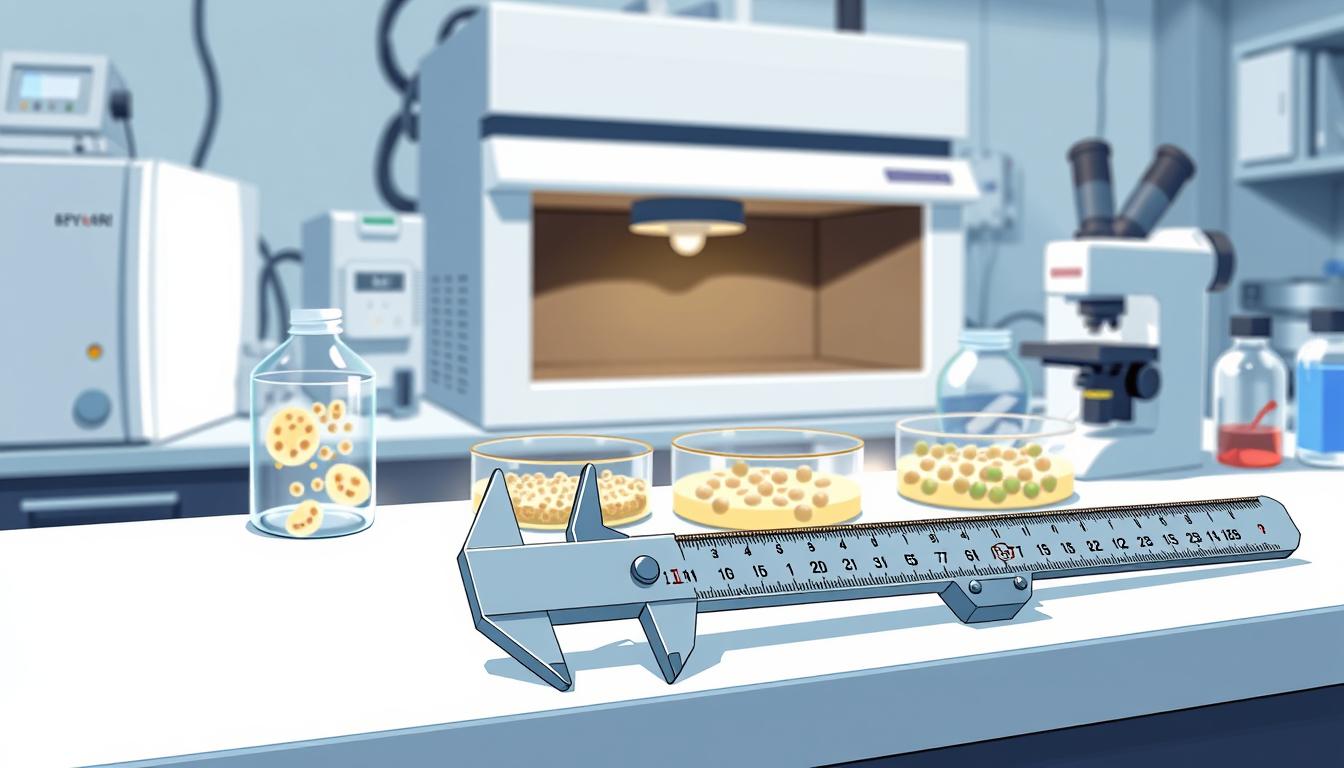
Ever thought about how scientists count things we can’t see? The way they measure bacteria is really cool. It shows us how small things can be and how precise science can be.
Counting bacteria is key in many fields, like health and environmental studies. Scientists use special ways to figure out how many bacteria there are. This helps us understand their role in our world.
Experts use certain units to measure bacteria. These methods help them track how many bacteria there are. They also learn about how bacteria grow and affect different areas.
Measuring tiny organisms is hard because they’re so small and grow fast. For example, Escherichia coli can grow a lot in just 20 minutes. So, it’s very important to measure them accurately.
Key Takeaways
- Bacteria can be measured using multiple scientific techniques
- Colony Forming Units (CFU) provide a standard measurement approach
- Microscopic counting methods offer precise bacterial population assessments
- Different measurement units serve specific research purposes
- Accurate bacterial measurement is crucial for healthcare and scientific research
Understanding Bacteria Measurement
Bacteria are tiny life forms that are vital to our world. They are so small, about 1 micrometer in size. This means we can’t see them with our eyes.
Scientists use microbial enumeration to learn about bacteria. By studying bacterial counts, they gain insights into complex biological systems. This knowledge is important across many fields.
Definition of Bacteria
Bacteria are single-celled organisms found everywhere. These microscopic entities live in soil, water, air, and inside us. They come in many types, including:
- Beneficial bacteria that help our health
- Pathogenic bacteria that cause diseases
- Environmental bacteria that keep ecosystems balanced
Importance of Measuring Bacteria
“Measuring bacteria is not just scientific curiosity – it’s fundamental to understanding life’s intricate processes.”
Bacterial counts are key in many areas, such as:
- Medical diagnostics
- Food safety monitoring
- Environmental research
- Quality control procedures
By accurately counting bacteria, scientists can track their numbers. They can also find health risks and create solutions. This is crucial in many scientific fields.
Common Units of Measurement for Bacteria
Measuring bacteria is a precise science. Researchers use different units to count and study bacteria. Each unit gives special insights into how many bacteria there are.
Scientists use many ways to count live bacteria. The main units are colony forming units (CFU), cells per milliliter, and molar concentration.
Colony Forming Units (CFU)
CFU shows how many bacteria can grow and form colonies. One CFU means one living cell or a group that can grow into a colony on a special medium.
- Measures viable cell count
- Indicates reproductive potential
- Used in microbiological research
Cells per Milliliter (cells/mL)
This method counts bacteria in one milliliter of liquid. It helps researchers quickly and accurately know how many bacteria there are.
| Measurement Type | Typical Range | Application |
|---|---|---|
| CFU/mL | 10^6 – 10^9 | Laboratory Research |
| Cells/mL | 10^7 – 10^10 | Clinical Diagnostics |
Molar Concentration
Molar concentration shows bacteria in chemical terms. It helps researchers understand how dense bacteria are at a molecular level. This method sheds light on how bacteria grow and interact.
“Precise measurement is the cornerstone of understanding bacterial behavior.”
Each method has its own benefits. They let scientists track bacteria with great accuracy in many fields of study and medicine.
The Role of Colony Forming Units (CFU)
Microbial research needs precise ways to measure bacterial populations. Colony forming units (CFU) are key for counting live microbial cells in studies.
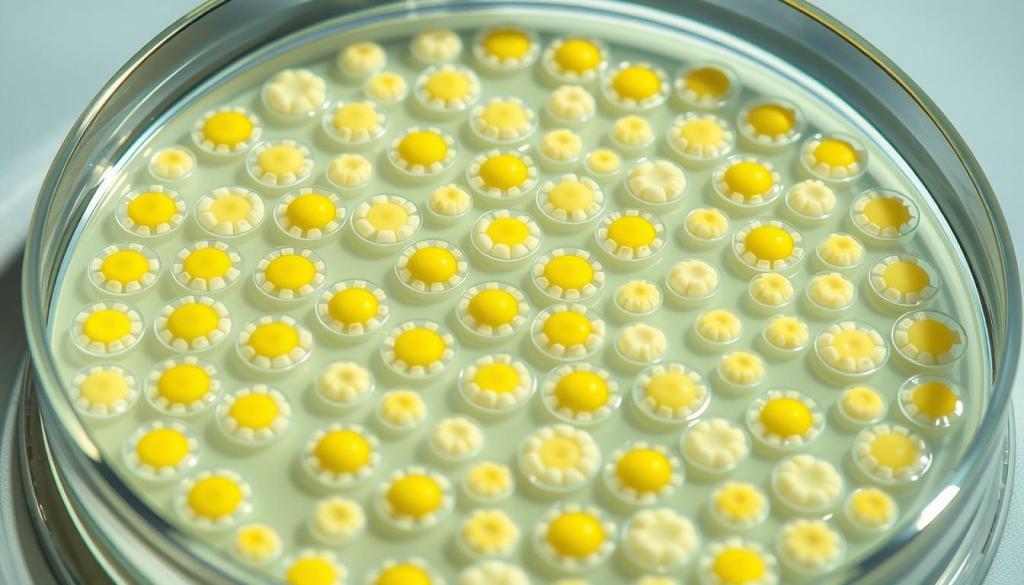
Scientists use CFU to guess how many living microorganisms can grow in a sample. This helps them study bacterial growth and amounts in different areas.
Calculating Colony Forming Units
CFU calculation has several important steps in studying bacteria:
- Prepare serial dilutions of the original sample
- Use plating methods to spread bacterial cells
- Incubate plates under controlled conditions
- Count visible colonies after 24-48 hours
Practical Applications of CFU
Plating methods help researchers count bacteria in many places:
- Water quality checks
- Food safety tests
- Clinical microbiology studies
- Environmental monitoring
| Method | Typical CFU Range | Incubation Time |
|---|---|---|
| Pour Plate | 30-300 CFU | 24-48 hours |
| Spread Plate | 30-300 CFU | 24-48 hours |
| Drop Plate | 10-100 CFU | 24-48 hours |
Note: Accurate CFU counting needs careful technique and controlled conditions.
Precision in bacterial counting is key for understanding microbial dynamics in research.
Measuring Bacterial Concentration
Scientists use many ways to measure how many bacteria are present. They need to be very accurate. This helps them understand how many microbes are in a sample.
Measuring how many bacteria are in a sample is key. Scientists use different methods to do this well.
Serial Dilution Method
The serial dilution method is a basic way to measure bacteria. It helps scientists count bacteria by making the sample less concentrated.
- Starts with a concentrated bacterial sample
- Progressively dilutes the sample in sequential steps
- Enables precise quantification of bacterial populations
Spread Plate Technique
The spread plate technique is important for checking how many microbes are in a sample. It spreads a small amount of diluted bacteria on a solid medium.
| Technique | Advantages | Limitations |
|---|---|---|
| Spread Plate | High precision | Labor-intensive |
| Direct Count | Rapid results | Cannot distinguish live/dead cells |
Direct Microscopic Count
Direct microscopic count lets scientists see bacteria right away. They use special microscopes to quickly count how many cells are there.
“Accurate bacterial measurement is the cornerstone of microbiological research and diagnostic processes.”
The standard way to measure bacteria is Colony Forming Units (CFU/mL). The best results are when there are 30-300 colonies per plate. It’s important for scientists to make sure their methods are correct and give the same results every time.
Uses of Microscopy in Bacterial Measurement
Microscopy is key in counting bacteria, letting scientists see and study them closely. Since the 1600s, when Antonie van Leeuwenhoek first saw microbes, it has changed how we know bacteria.
There are many ways to use microscopy, each giving different views of bacteria. Scientists use these methods to count bacteria accurately and learn about their tiny structures.
Microscope Types for Bacterial Observation
- Light Microscopes: Magnify images from 10x to 1000x
- Electron Microscopes: Provide extremely high-resolution imaging
- Phase-Contrast Microscopes: Enhance contrast for transparent specimens
- Darkfield Microscopes: Create high-contrast images of live specimens
Advantages of Microscopic Methods
Microscopic methods have big benefits for counting bacteria:
- Direct visual confirmation of bacterial morphology
- Ability to observe bacterial arrangement and structure
- Rapid identification of microbial characteristics
| Microscope Type | Magnification Range | Primary Use |
|---|---|---|
| Brightfield Microscope | 400x | Bacterial structure visualization |
| Electron Microscope | 10,000x – 500,000x | Ultra-high resolution imaging |
| Darkfield Microscope | 400x | Live specimen observation |
Microscopic techniques keep getting better, giving scientists better tools for studying bacteria. Microbial enumeration has gotten more accurate, helping us understand bacteria better in different places.
Modern microscopy changes how we see the tiny world, showing us complex bacterial landscapes we can’t see with our eyes.
Importance of Accurate Measurement
Understanding bacterial dynamics is key in many fields. Precise counts help us know more about health, safety, and new technologies.
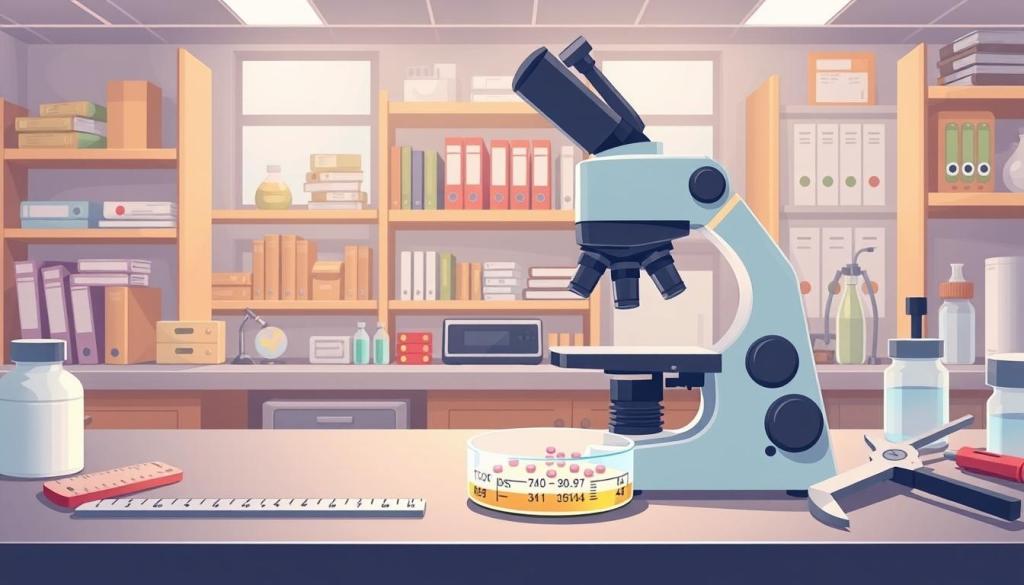
Getting accurate numbers of bacteria is vital. Scientists and health experts use advanced methods to measure microbes with great detail.
Health Implications of Bacterial Measurement
Bacterial counts are crucial for medical work:
- Diagnosing infectious diseases
- Determining antibiotic effectiveness
- Developing targeted treatment strategies
- Monitoring patient recovery
“Precision in bacterial measurement can mean the difference between effective treatment and potential health risks.”
Environmental Monitoring Significance
Microbial load assessment is also important in environmental science. It helps check water quality, soil health, and pollution.
- Water supply safety verification
- Agricultural soil ecosystem analysis
- Industrial pollution tracking
- Ecosystem health evaluation
Scientific standards need careful methods. The standard plate count method requires between 30 and 300 colonies for accurate results. Dilution techniques from 10^-4 to 10^-10 help get exact bacterial population estimates.
Knowing how to measure bacterial growth is vital for research. It supports work in biotechnology, drug discovery, and new scientific areas. These methods help tackle big issues like climate change and fight antibiotic resistance.
Tools and Equipment for Measuring Bacteria
Scientific labs use special tools to count bacteria accurately. These tools help researchers track and study bacterial growth. They do this with great precision and reliability.
Many instruments are used to measure bacteria well. Each tool is important for learning about bacteria and how they grow.
Spectrophotometers: Measuring Bacterial Density
Spectrophotometers are key for finding out how many bacteria there are. They work by detecting light that bacteria scatter. This gives a way to measure how much bacteria are growing.
- Measure bacterial density at 600 nm wavelength
- Provide rapid, non-destructive growth assessment
- Enable quantitative bacterial population analysis
Autoclaves: Ensuring Sterile Conditions
Autoclaves are vital for keeping labs clean and free of bacteria. They use steam under high pressure to kill off germs and sterilize things.
| Autoclave Feature | Sterilization Capability |
|---|---|
| Temperature Range | 121-134°C |
| Pressure | 15-20 PSI |
| Sterilization Time | 15-30 minutes |
Incubators: Creating Optimal Growth Environments
Incubators help bacteria grow in the right conditions. They control temperature, humidity, and air to help bacteria grow well.
“Accurate environmental control is paramount in microbial research and bacterial enumeration.” – Microbiology Research Institute
New lab techniques are always coming up. They help us count bacteria more accurately and understand them better than ever before.
Understanding Growth Media in Bacteria Measurement
Bacterial growth media are key in studying bacteria. They provide the nutrients and conditions needed for bacteria to grow. This helps us understand how bacteria behave and what they are like.
Scientists use various growth media for precise studies. The right media choice is crucial for accurate results in microbiology.
Classification of Growth Media
- General-purpose media: Supports growth of multiple bacterial species
- Selective media: Encourages growth of specific bacterial groups
- Differential media: Helps distinguish between different bacterial types
Critical Media Selection Factors
Choosing the right growth media involves several important factors:
- Bacterial species characteristics
- Research objectives
- Specific metabolic requirements
“The medium is the message in microbial research” – Adapted from Marshall McLuhan
Specialized Media Examples
There are different media for various needs in studying bacteria:
- Phenylethyl Alcohol Agar (PEA): Selects Gram-positive bacteria
- Eosin Methylene Blue (EMB) Agar: Differentiates bacterial fermentation capabilities
- Mannitol Salt Agar (MSA): Targets staphylococcal identification
Choosing the right media is essential for accurate bacterial studies. Microbiologists must consider the nutritional and environmental needs of the bacteria they study.
Factors Affecting Bacterial Growth
Bacterial growth is a complex process influenced by many environmental conditions. Scientists must carefully control these factors to ensure accurate microbial enumeration and precise bacterial counts. Understanding the intricate elements that impact bacterial survival helps researchers predict and manage microbial populations.
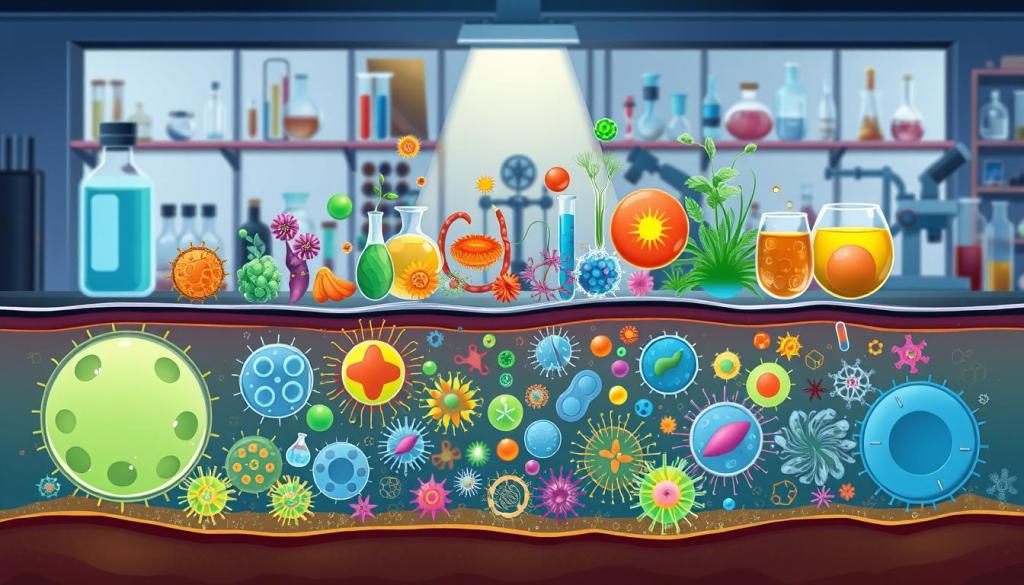
Temperature Dynamics in Bacterial Development
Bacteria show remarkable adaptability to temperature ranges. They are classified into distinct groups:
- Psychrophiles: Thrive between -5°C and 15°C
- Mesophiles: Optimal growth between 25°C and 45°C
- Thermophiles: Flourish between 45°C and 70°C
- Hyperthermophiles: Grow between 70°C and 110°C
pH and Nutrient Impact on Bacterial Growth
The pH of the bacterial environment significantly influences growth patterns. Different species have unique pH preferences:
- Neutrophiles: Optimal range of 5 to 8
- Acidophiles: Prefer pH below 5.5
- Alkaliphiles: Thrive at pH above 8.5
Oxygen and Nutritional Requirements
Bacterial oxygen requirements vary widely, leading to diverse growth strategies:
- Obligate aerobes: Require oxygen
- Microaerophiles: Need 2-10% oxygen
- Facultative anaerobes: Grow with or without oxygen
- Obligate anaerobes: Grow only without oxygen
“Understanding bacterial growth conditions is crucial for accurate microbial research and practical applications.”
Precise control of these factors enables researchers to optimize bacterial growth. This allows for accurate microbial enumeration and comprehensive bacterial counts across various scientific disciplines.
Case Studies in Bacterial Measurement
Bacterial measurement is key to keeping us safe and healthy. Scientists use advanced methods like microbial load assessment and viable cell count. These help us understand bacteria and their effects.
Real-world examples show how important bacterial measurement is. It affects many areas:
Public Health Investigations
Public health experts use precise methods to:
- Track disease outbreaks
- Check water quality
- See how well sanitation works
“Understanding bacterial populations is crucial for preventing potential health risks and developing targeted interventions.” – Public Health Expert
Food Safety Inspections
Food safety teams use strict protocols to:
- Check for contamination risks
- Make sure products meet safety rules
- Keep consumers safe
They use viable cell count to find bacteria that could harm food. For example, Escherichia coli grows fast, showing the need for quick and accurate tests.
These examples show how bacterial measurement helps us stay healthy and safe. It also gives us important insights into bacteria.
Future Trends in Bacterial Measurement
The world of counting microorganisms is changing fast. New technologies and genetic studies are leading the way. These advancements are set to change how we understand bacteria.
New ways of measuring bacteria are coming. These new methods use the latest technology. They promise to make counting bacteria more accurate and quicker.
Technological Advances in Bacterial Detection
Several key technological developments are changing how we measure bacteria:
- Advanced spectrophotometric systems with higher sensitivity
- Automated counting platforms
- Machine learning-enhanced data interpretation
- Real-time monitoring capabilities
Genetic Techniques Revolutionizing Measurement
Genetic methods are giving us new insights into bacteria. Tools like quantitative PCR and next-generation sequencing help us count bacteria more precisely.
“The future of bacterial measurement lies in integrating genetic techniques with advanced technological platforms.” – Microbiology Research Institute
| Technology | Precision Level | Key Advantage |
|---|---|---|
| Quantitative PCR | High | Rapid genetic analysis |
| Next-Generation Sequencing | Very High | Comprehensive genomic insights |
| Automated Counting Systems | Moderate to High | Increased efficiency |
As antimicrobial resistance grows, new technologies offer hope. They help us measure and manage bacteria better.
Conclusion: Importance of Measurement in Microbiology
Knowing how to measure bacteria is key in science and microbiology. Techniques for counting microbes help scientists understand their numbers in different places. This is important for health checks and keeping an eye on the environment.
There are many ways to measure bacteria, like Colony Forming Units (CFU) and optical density. Each method gives unique information about bacteria. Optical density at 600 nm (OD600) is especially good for quick and accurate counts.
Summary of Key Points
Scientists use many ways to count microbes. They use everything from simple counting to advanced tools. This helps them understand bacteria better. New tools will help us learn even more about microbes.
Final Thoughts on Bacterial Measurement
Measuring bacteria well is more important than ever. Scientists need to keep up with new tools to understand bacteria better. This will help us learn more about health, the environment, and technology.
FAQ
What is the primary unit used to measure bacteria?
The Colony Forming Units (CFU) is the main way to measure bacteria. It shows how many live bacterial cells can grow and form colonies on a special medium. CFU is a key method for counting bacteria in science and medicine.
How are bacteria counted in a laboratory setting?
Scientists use different methods to count bacteria. These include:
– Serial dilution method
– Spread plate technique
– Direct microscopic count
– Spectrophotometric measurement
Each method has its own benefits and is chosen based on the research goals and the type of bacteria being studied.
Why is accurate bacterial measurement important?
Accurate counting of bacteria is vital in many areas. It helps in:
– Healthcare: Diagnosing infections and checking treatment success
– Food Safety: Keeping products safe and preventing contamination
– Environmental Monitoring: Checking water and soil quality
– Research: Studying microbial populations and their traits
What challenges exist in measuring bacteria?
Counting bacteria comes with several challenges. These include:
– Telling live from dead cells
– Handling different growth rates
– Choosing the right growth medium
– Controlling factors like temperature and pH
– Getting consistent results with different counting methods
Can microscopes be used to measure bacterial populations?
Microscopes can show bacteria but aren’t perfect for counting. Light, phase-contrast, and electron microscopes help see bacterial shapes. Yet, they can’t always tell if cells are alive or dead. This makes them less reliable for counting bacteria.
What are alternative units for measuring bacterial concentration?
Besides CFU, other ways to measure bacteria include:
– Cells per milliliter (cells/mL)
– Molar concentration
– Optical density measurements
– Genetic methods like quantitative PCR
How do growth media affect bacterial measurement?
Growth media greatly affect bacterial counting. They provide needed nutrients, influence colony formation, and allow specific bacteria to grow. The right media is crucial for accurate counts. Researchers must pick media carefully based on their goals and the bacteria they study.
What technological advancements are improving bacterial measurement?
New technologies are making bacterial counting better. These include:
– Advanced spectrophotometers
– Automated colony counters
– Flow cytometry
– Genetic sequencing
– Next-generation molecular identification
These tools are making counting bacteria faster, more accurate, and precise in many fields.






Leave a Comment
Your email address will not be published. Required fields are marked *