


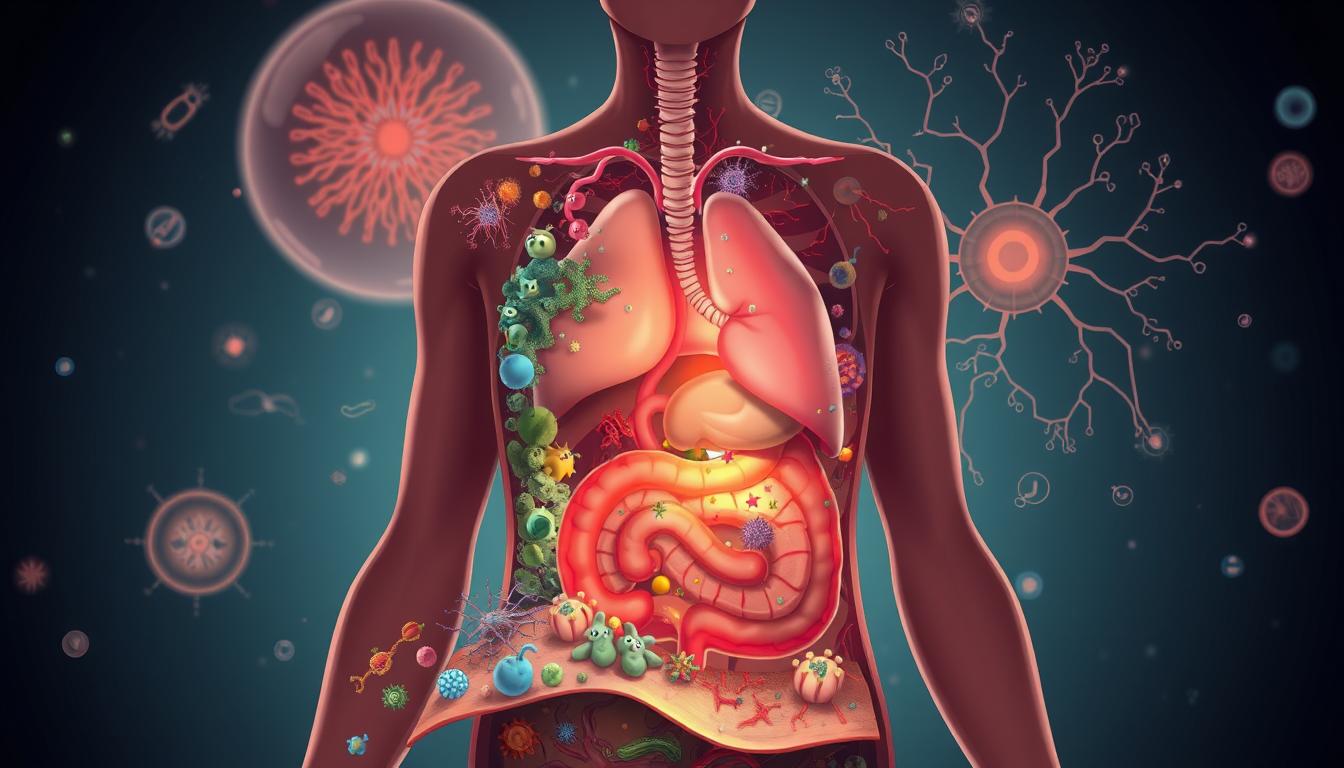
Ever thought about which part of your body has the most tiny creatures? Our bodies are full of billions of bacteria. Each one is important for our health.
Scientists found that different parts of our body have different amounts of bacteria. From our mouths to our belly buttons, we have thousands of types of bacteria. Some are still unknown to science.
Learning which part of our body has the most bacteria is really interesting. A 2009 study by the National Human Genome Research Institute found we have about 1,000 types of bacteria on us. Some areas have more than others.
We will explore the world of tiny organisms living in and on us. This will change how we see bacteria and their role in our health.
Key Takeaways
- The human body hosts thousands of bacterial species
- Different body parts have unique bacterial populations
- Bacterial diversity varies significantly between individuals
- Some body parts are more conducive to bacterial growth
- Not all bacteria are harmful to human health
Understanding the Human Microbiome
The human microbiome is a complex world of tiny life forms living inside us. It’s filled with trillions of microorganisms. These tiny beings are key to our health, making our bodies a dynamic ecosystem.
What Defines the Human Microbiome?
The human microbiome is made up of many different types of microbes. These include bacteria, fungi, and viruses. They live in and on us, playing a big role in our health.
Research has shown some amazing things about our microbes:
- Microorganisms outnumber human cells by a ratio of approximately 1.3:1
- More than 10,000 microbial species occupy the human ecosystem
- The microbiome contributes an estimated 8 million unique protein-coding genes
Importance of Microorganisms in the Body
Microorganisms do more than just exist in our bodies. They actively help us by:
- Digesting food and absorbing nutrients
- Helping our immune system
- Keeping harmful pathogens at bay
- Keeping our metabolism in check
The Human Microbiome Project has been key in studying these microbes. It has spent $153 million to learn about their role in our health.
| Microbiome Statistic | Value |
|---|---|
| Total Microbial Species | 10,000+ |
| Microbial Protein-Coding Genes | 8 million |
| Body Mass Percentage | 1-3% |
Exploring the human microbiome is a major area of research. It holds the key to understanding health and preventing diseases.
Common Misconceptions About Bacteria
Bacterial communities are much more complex than we think. Studies have changed how we see these tiny organisms. Many are not harmful but are vital for our health.
The human body is home to a vast array of microorganisms. New research has debunked old myths about bacteria:
- The outdated 10:1 bacteria-to-human cell ratio is now proven incorrect
- Current estimates suggest approximately 1.3:1 ratio of microbial to human cells
- An average person contains about 39 trillion bacteria
Are All Bacteria Harmful?
Contrary to what many believe, most bacteria are not dangerous. Many types of bacteria are key to our health. They do things our bodies can’t do on their own.
| Bacterial Role | Health Benefit |
|---|---|
| Digestive Support | Break down complex nutrients |
| Vitamin Production | Synthesize essential vitamins |
| Immune Regulation | Modulate immune system responses |
The Role of Good Bacteria
Bacteria in our bodies are dynamic and helpful. They fight off bad germs, aid in digestion, and boost our health. Ongoing research is revealing how these tiny helpers work with our bodies.
Understanding bacteria is not about elimination, but about maintaining a balanced ecosystem within our bodies.
The Skin: A Bacterial Haven
The human skin is more than a shield. It’s a complex world filled with different skin bacteria. These bacteria are key to our health and help defend our bodies.
Different parts of our body have their own special bacteria. Some places are better for bacteria to grow than others.
Exploring Surface Bacteria Populations
The skin has many types of bacteria in different areas:
- Sebaceous areas like the face and back
- Moist regions such as armpits and groin
- Dry zones like arms and legs
Factors Influencing Bacterial Density
Several things affect how many bacteria are on our skin:
- Temperature and humidity
- Personal hygiene practices
- Genetic predisposition
- Environmental exposure
“Our skin is not just a barrier, but a living ecosystem of microorganisms working in harmony.” – Microbiology Research Journal
| Skin Region | Dominant Bacterial Groups | Bacterial Density |
|---|---|---|
| Face | Propionibacterium | High |
| Armpits | Staphylococcus | Very High |
| Hands | Corynebacterium | Moderate |
Learning about these bacterial worlds helps us see the tiny world on our skin. Not all bacteria are harmful. Many are good for keeping us safe and healthy.
The Mouth: A Microbial Hotspot
The human mouth is full of different kinds of bacteria. Over 700 species live here, making it a complex place. This ecosystem is key to our health.
Our mouths are more than just for eating and talking. They are home to tiny creatures that work together. This balance is important for our health.
Bacteria in Saliva and Oral Health
Our mouths have many kinds of bacteria. Scientists have found some interesting things:
- Most people have between 100 to 200 types of bacteria.
- There can be up to 100 billion bacteria in our mouths.
- About 280 types of bacteria have been identified.
The Impact of Diet on Oral Bacteria
What we eat affects the bacteria in our mouths. Some foods help good bacteria, while others let bad bacteria grow.
| Food Type | Impact on Oral Microbiome |
|---|---|
| Sugar-rich foods | Increases harmful bacterial growth |
| Probiotic-rich foods | Supports healthy bacterial balance |
| Fiber-dense vegetables | Promotes beneficial bacterial diversity |
Learning about the bacteria in our mouths helps us make better choices. This can improve our dental and overall health.
The Gut: Home to Trillions of Microbes
The human gut is a remarkable ecosystem full of microscopic life. It hosts an amazing 100 trillion microbial cells. This is 10 times more than the number of human cells in our body. This complex gut microbiota is vital for our health and wellness.
Exploring the Gut Microbiome Composition
Gut microbiome research opens a fascinating world of microbial diversity. The human gut has about 5,000 different species of microbes, weighing around 2 kilograms. These microorganisms are not just along for the ride. They actively participate in our body’s functions.
- Contains up to 5,000 microbial species
- Weighs approximately 2 kilograms
- Develops until ages 2-3 years
- Continues to change throughout life
Impact of Gut Health on Overall Wellness
The gut microbiota affects many aspects of human health. An unbalanced microbiome, or dysbiosis, can lead to health issues. Diet, antibiotics, and lifestyle choices greatly affect our gut bacteria.
Eating a diet rich in plant fibers helps keep our gut microbiome diverse. On the other hand, processed foods and toxins can upset this balance. Interestingly, people with type 2 diabetes have a gut microbiome that’s more predictive of their disease than their body mass index.
The gut is often called the “second brain” due to its profound impact on overall health and immune function.
Understanding and keeping our gut microbiome healthy is crucial. It helps prevent health problems and promotes optimal wellness.
The Role of the Nose in Hosting Bacteria
The human nasal cavity is full of life, hosting a wide variety of microbes. It’s not a clean space; it’s a complex world of bacteria. These tiny creatures are key to keeping our airways healthy.

Exploring Nasal Microbiome Complexity
Scientists have uncovered the intricate world of nasal bacteria. They found that each nose has about 31 different bacterial genera. These include important families like Staphylococcaceae, Corynebacteriaceae, and Propionibacteriaceae.
- Staphylococcaceae (2.2% – 55% of community)
- Corynebacteriaceae (1.5% – 62.8% of community)
- Propionibacteriaceae (0.4% – 42.4% of community)
Implications for Respiratory Health
The types of bacteria in our nose affect our breathing health. Some bacteria are good, while others might cause problems. For example:
- Some bacteria can make us more likely to get sick
- Other bacteria, like Moraxella, are linked to colds and flu
- Staphylococcus and Sphingobium might help prevent ear infections
Knowing about these bacteria helps doctors find better ways to keep us healthy. The study of nasal microbes is a growing field of research.
The Armpits: A Unique Environment for Bacteria
The human armpit is a fascinating place for bacteria. It’s warm and moist, perfect for bacteria to grow and work together.
Factors Driving Bacterial Growth
Several things make armpits special for bacteria:
- Warm and dark conditions
- High moisture content
- Presence of specialized sweat glands
- Dense hair follicles
Humans have three types of sweat glands. But apocrine glands are key in armpits. They start working in puberty.
Body Odor and Bacterial Interactions
Sweat itself doesn’t smell much. But when bacteria break it down, it smells. Bacteria like:
- Corynebacterium
- Staphylococcus
- Cutibacterium
Staphylococcus hominis is a big player in making smells. It makes strong smells from sweat.
The armpit is not just a body part, but a complex microbial habitat with thousands of bacterial interactions occurring simultaneously.
Knowing about these bacteria helps us find better ways to stay clean. It keeps our skin’s bacteria in balance.
Feet: An Often Overlooked Locale for Bacteria
The human foot is a complex place for bacteria. It’s often ignored in studies. Yet, it’s full of microbes that affect our health.
Feet have a lot of bacteria. A small area can have over 100,000 bacteria. This makes the foot a unique place for microbes.
Common Fungi and Bacteria Found on Feet
The foot’s ecosystem includes important microorganisms:
- Staphylococcus epidermidis
- Corynebacterium species
- Staphylococcus aureus
About 50% of people have more bacteria on their feet than elsewhere.
| Bacterial Species | Prevalence | Potential Impact |
|---|---|---|
| Staphylococcus epidermidis | 40% | Skin colonization |
| Corynebacterium | 30% | Potential odor production |
| Staphylococcus aureus | 20% | Potential infection risk |
Hygiene Practices for Healthy Feet
Good foot hygiene can cut down bacteria. Proper cleaning techniques and smart choices can stop microbes from growing. This helps avoid infections.
- Wash feet daily with antibacterial soap
- Keep feet dry and ventilated
- Use breathable footwear
- Change socks regularly
Staying consistent with foot care can lower bacteria by 90%. This shows how important it is to take care of our feet.
Comparative Analysis of Bacterial Presence
Research into the microbiome has shown us how different body parts have their own unique bacteria. To find out which part has the most, we need to look closely at each area of the body.

Scientists have used new methods to learn about bacteria in our bodies. They found that some parts have a lot more types of bacteria than others. This makes our microbiome very complex.
Quantifying Bacterial Populations
Studies have shown big differences in bacteria in different parts of the body:
- Nostrils: Total 911 bacterial taxa detected
- Oropharynx: Total 1,066 bacterial taxa detected
- Unique nostril taxa: 259
- Unique oropharyngeal taxa: 414
Detailed Bacterial Distribution Insights
| Body Region | Total Phyla | Average Taxa per Sample | Dominant Phyla |
|---|---|---|---|
| Nostrils | 34 | 342.7 | Firmicutes |
| Oropharynx | 38 | 561.7 | Firmicutes, Proteobacteria |
Research shows that bacteria in our bodies change over time. The oropharynx has more types of bacteria than the nose. This means there are more complex interactions in the oropharynx.
Microbial Community Correlations
Studies have found interesting connections between different bacteria:
- Inverse correlation between Firmicutes and Actinobacteria in nostril communities
- Strong negative correlation between Firmicutes and Proteobacteria in oropharyngeal regions
- Significant variations in bacterial composition based on individual factors
These discoveries show how complex our microbial ecosystems are. They highlight why we need to keep studying the microbiome to understand our health better.
Hygiene Practices to Manage Bacteria Levels
Managing bacterial communities needs smart hygiene practices. These practices keep us healthy without harming good microbes. Keeping clean is key to controlling bad microbes and keeping our body’s natural balance.
Good hygiene starts with washing hands right. This is key to stop bad bacteria from spreading. Studies show washing hands often is very good for our health:
- Reduces diarrheal illnesses by 23-40%
- Decreases respiratory infections by 16-21%
- Protects children from serious diseases
Effective Handwashing Techniques
The Centers for Disease Control and Prevention suggest a detailed handwashing method:
- Wet hands with clean water
- Apply soap thoroughly
- Scrub for at least 20 seconds
- Rinse completely under running water
- Dry hands using clean towels
Importance of Regular Cleaning Routines
Regular cleaning habits are vital. They help control bacteria without harming good microbes. Focus on cleaning before eating, after using the bathroom, and when handling food. This keeps us safe and our body’s balance intact.
Proper hygiene is about smart management, not complete elimination of bacteria.
The Future of Bacterial Research
The world of microbiome research is changing fast. Scientists are making new discoveries that change how we see bacterial ecosystems. They are finding out how different bacteria work together in our bodies.
Studies have found 174 new types of bacteria on our skin. This is a 26% increase in our knowledge. It shows there’s a lot more to learn.
New technologies are helping us understand bacteria better. We can now find about 85% of bacteria in skin samples. This helps scientists create detailed guides to the world of bacteria.
The Skin Microbial Genome Collection (SMGC) has listed 622 bacterial species. This gives scientists tools to study how bacteria affect our health.
Research is leading to new ways to treat diseases. Scientists are learning how bacteria in different parts of our body work together. This could lead to new treatments for many health problems.
As research goes on, we’ll learn even more about bacteria. New technologies and working together will help us discover more. This could change how we understand health at a molecular level.
FAQ
What exactly is the human microbiome?
The human microbiome is a mix of tiny living things like bacteria, fungi, and viruses. They live in and on our bodies. This complex group helps keep us healthy, aids digestion, and boosts our immune system.
Which body part has the most bacteria?
The gut is home to the most bacteria, with about 100 trillion living there. The large intestine alone has over 1,000 types of bacteria. But, other areas like the armpits, feet, and mouth also have lots of microbes.
Are all bacteria harmful to humans?
No, not all bacteria are bad. Many are good for us. They help with digestion, make vitamins, and keep us healthy. It’s all about having the right mix of microbes.
How do bacteria impact oral health?
Oral bacteria affect our teeth and overall health. Some cause cavities and gum disease, but others keep our mouths healthy. Our diet and how we take care of our teeth influence our oral microbiome.
Can bacteria affect mental health?
Yes, research shows a link between gut bacteria and mental health. Certain bacteria can make neurotransmitters and affect mood. Studies have found connections between gut health and depression, anxiety, and stress.
How can I maintain a healthy microbiome?
To keep your microbiome healthy, eat a variety of foods, especially fiber-rich ones. Also, eat probiotic and prebiotic foods, avoid antibiotics, manage stress, exercise, and practice good hygiene. This helps support good bacteria and keeps bad ones in check.
Do personal hygiene products affect bacterial populations?
Yes, hygiene products can change our bacterial balance. Antibacterial soaps can harm our natural balance. It’s better to use gentle products that don’t kill all the good bacteria.
What factors influence individual microbiome composition?
Many things affect our microbiome, like our genes, diet, age, and environment. Each person’s microbiome is unique and can change over time due to these factors.





Leave a Comment
Your email address will not be published. Required fields are marked *