



Ever thought about the tiny heroes behind big scientific wins? 50 ml centrifuge tubes are the quiet stars of labs, helping make big discoveries in many fields.
These tubes are key for scientists to sort, study, and keep safe tiny biological samples. They’re vital in fields like molecular biology, drug research, and medical testing. They help prepare and analyze samples.
Scientists count on these tubes for precise and reliable work. Their strong build and flexibility make them a must-have in labs everywhere. They help with important research.
Key Takeaways
- 50 ml centrifuge tubes are critical scientific research tools
- Essential for sample separation and preservation
- Used across multiple scientific disciplines
- Designed for precision and reliability
- Support advanced biological research techniques
Importance of Centrifuge Tubes in Biological Research
Centrifuge tubes are key lab tools that change biological research. They help scientists handle and analyze samples with great care. These containers are vital for separating and working with complex biological materials.
Centrifuge tubes are used in many scientific fields. They help prepare and analyze samples. Their design makes it easier for scientists to work with delicate biological parts.
Functionality in Sample Preparation
Researchers use centrifuge tubes for important tasks in sample preparation:
- Isolating cellular components
- Separating liquid and solid phases
- Concentrating specific molecular fractions
- Preparing samples for downstream analytical techniques
Role in Protein and Cell Separation
Centrifuge tubes are great for separating proteins and cells. Ultracentrifugation helps separate molecules with small differences in weight and density.
| Separation Technique | Primary Application | Typical Speed Range |
|---|---|---|
| Differential Centrifugation | Cell Component Isolation | 500-15,000 RPM |
| Density Gradient Centrifugation | Protein Fractionation | 10,000-50,000 RPM |
| Isopycnic Centrifugation | Molecular Sorting | 20,000-100,000 RPM |
Key Features to Consider
When picking centrifuge tubes, scientists look at important features:
- Material compatibility
- Temperature resistance
- Chemical inertness
- Sterility requirements
- Volume capacity
Knowing what centrifuge tubes can do helps researchers improve their work. This leads to more accurate scientific results.
Types of 50 ml Centrifuge Tubes Available
Researchers use different centrifuge tube designs for their experiments. In labs, plastic consumables come in many shapes to fit various needs. Knowing about each type helps make research more precise and efficient.
Standard Polypropylene Tubes
Polypropylene tubes are common in labs today. They are tough and can handle extreme temperatures. This makes them great for many lab tasks.
- Ideal for general laboratory applications
- High temperature and chemical tolerance
- Lightweight and cost-effective design
Conical vs. Flat Bottom Tubes
Conical tubes have a special design. Their tapered bottom makes it easy to concentrate samples and remove liquids. Flat bottom tubes are better for keeping samples stable and for precise layering.
| Tube Type | Primary Advantage | Recommended Use |
|---|---|---|
| Conical Tubes | Enhanced Sample Separation | Cell pelleting, liquid extraction |
| Flat Bottom Tubes | Stable Positioning | Precise volume measurements |
Features of Graduated Tubes
Graduated tubes have clear volume markings. This helps researchers measure accurately. These tubes are key for experiments that need exact volume tracking.
“Precision in measurement is the cornerstone of reliable scientific research.” – Laboratory Research Quarterly
Choosing the right tube design helps scientists improve their work. It makes sure their results are reliable and consistent.
Material Composition and Stability
Polypropylene centrifuge tubes are key in modern biology labs. They perform well in many lab settings. This makes them essential for scientists.

Polypropylene’s special features make these tubes great for research. They have:
- Temperature resistance from -80℃ to 120℃
- High-purity material selection
- Maximum centrifugation rating of 16,000 RCF
- Nonpyrogenic properties tested to less than 0.1 EU/mL
Benefits of Polypropylene Composition
Polypropylene tubes are strong and keep their shape in tough conditions. They don’t react much with biological samples. This keeps research accurate.
Resistance to Chemical and Thermal Stress
These tubes do well in hard experiments. They pass U.S. Pharmacopoeia tests for safety. Scientists can use them in many situations without losing sample quality.
Advanced polypropylene formulations represent the pinnacle of laboratory sample management technology.
These tubes come in clear and amber. They’re sold in 25 tubes per bag and 500 tubes per case. This makes lab work easier to manage.
Selecting the Right Centrifuge Tube
Choosing the right microcentrifuge tubes is key in biomedical tools preparation. Researchers need to look at several factors. This ensures the best performance and keeps samples safe during lab work.
When picking tubes, several important things come into play. Knowing what your research needs is the first step. This helps make the right choice.
Critical Factors in Tube Selection
- Sample volume requirements
- Centrifugation speed and force
- Temperature tolerance
- Chemical compatibility
- Sterility needs
Compatibility Considerations
It’s important to match microcentrifuge tubes with specific centrifuges. This ensures safe and effective lab work. Different rotors need different tube features to avoid damage or losing samples.
Key things to consider include:
- Rotor type (fixed-angle or swing-out)
- Maximum relative centrifugal force (RCF)
- Material resistance to specific chemical environments
- Tube wall thickness
Performance Parameters
Researchers should look at important performance metrics when choosing tools. Autoclavability, temperature range, and chemical resistance are key. These factors decide if a tube is right for certain research.
The right tube keeps samples safe, prevents contamination, and supports accurate research. This is true for many areas of biological research.
Best Practices for Using 50 ml Centrifuge Tubes
Laboratory supplies are key in scientific research. 50 ml centrifuge tubes are vital for handling samples precisely. It’s important to follow certain techniques to keep samples safe during centrifugation.
Proper Loading Techniques
Using centrifuge tubes well means paying attention to how you load them. Here are some important tips:
- Balance tubes by using the same amount of sample in each
- Place tubes opposite each other in the rotor
- Use counterweights for an odd number of tubes
- Make sure tubes are capped facing outward
Storage and Organization Tips
Keeping centrifuge tubes in good shape needs smart storage and organization. Here are some tips:
- Keep tubes in a cool, dry spot away from sunlight
- Check tubes for damage before using them
- Label tubes clearly with what they’re for
- Use the right racks to avoid contamination
| Storage Condition | Recommendation |
|---|---|
| Temperature | Cool environment (4-25°C) |
| Humidity | Low humidity, dry area |
| Light Exposure | Minimal direct sunlight |
By following these best practices, researchers can get the most out of their 50 ml centrifuge tubes. This helps keep lab supplies in top condition for important scientific work.
Sterilization and Cleaning Procedures
Keeping plastic consumables sterile is key in science. Cleaning and sterilizing centrifuge tubes is vital. It keeps results accurate and stops contamination.
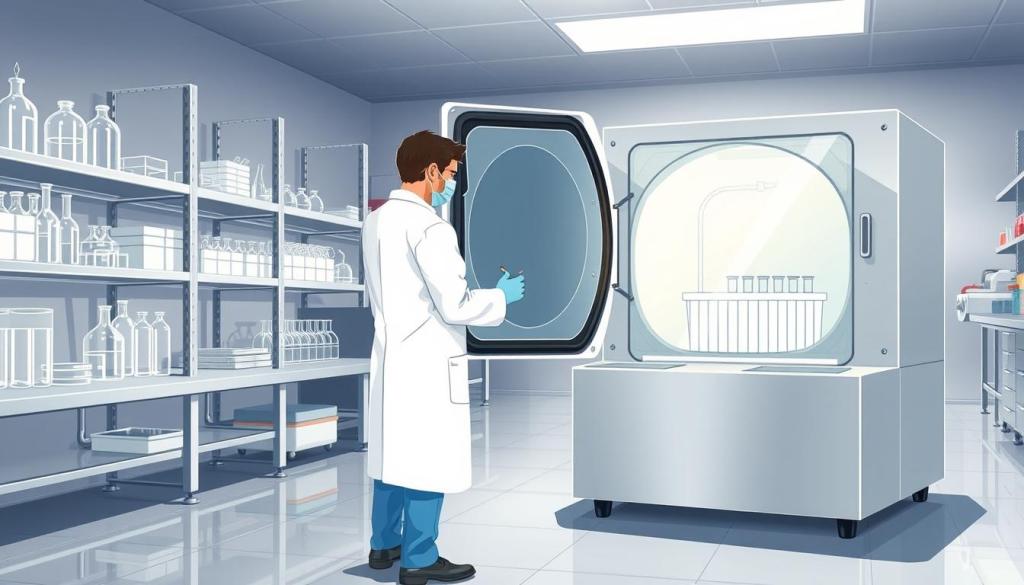
Researchers must stick to strict protocols to keep their gear in top shape. The sterilization process has several important steps. These steps protect the quality of scientific work.
Autoclavable Options for Plastic Consumables
Autoclave sterilization is the top choice for cleaning lab equipment. When picking centrifuge tubes, consider these important points:
- Material that can handle high-temperature steam
- Can withstand high temperatures (121°C to 134°C)
- Can handle pressure during sterilization
“Proper sterilization is not just a procedure, it’s a commitment to scientific accuracy.” – Laboratory Safety Experts
Best Practices for Reusable Tubes
For reusable centrifuge tubes, a detailed cleaning plan is needed:
- Rinse tubes right after use with distilled water
- Use mild detergent or special enzymatic cleaners
- Soak tubes in cleaning solution for no more than 10 minutes
- Rinse well with distilled water to get rid of chemicals
- Let them air-dry completely to avoid contamination
Lab experts suggest a regular upkeep plan for plastic items. Regular checks help spot any issues before they affect research.
Important things for tube sterilization include wearing the right gear, checking tube condition, and keeping cleaning records. This helps track maintenance steps.
Innovations in Centrifuge Tube Technology
Scientific products in biomedical tools keep getting better, changing how we do research in labs. New centrifuge tube tech is a big step up in precision and performance for biology research.
New tech has made lab tools much better. Now, scientists get to use designs that keep samples safe and work faster.
Breakthrough Design Enhancements
- Improved cap sealing mechanisms to prevent sample contamination
- Enhanced optical clarity for better visual sample analysis
- Ergonomic design for simplified handling in sterile environments
Impact on Laboratory Efficiency
Biomedical tools have changed a lot, making it easier to work with samples. The newest centrifuge tube tech brings big benefits:
| Innovation Feature | Performance Benefit |
|---|---|
| Advanced material composition | Increased durability and chemical resistance |
| Precision graduations | Improved sample measurement accuracy |
| Enhanced sterility protocols | Reduced contamination risk |
“Technological innovations in centrifuge tubes are revolutionizing biological research methodologies.”
These updates show how constant tech improvement in scientific products is pushing forward in fields like molecular biology and clinical chemistry.
Common Applications of 50 ml Centrifuge Tubes
50 ml centrifuge tubes are key tools in many scientific fields. They are vital in today’s labs, helping with important research tasks. These tubes support critical processes in biology and more.
Scientists use 50 ml centrifuge tubes for many important tasks. These containers help with precise and efficient scientific processes.
Cellular and Molecular Biology Research
In cellular and molecular biology, 50 ml centrifuge tubes are crucial. They are used for:
- Cell culture preparation and separation
- DNA and RNA extraction protocols
- Protein purification techniques
- Cellular component isolation
“The right centrifuge tube can make all the difference in research accuracy and reproducibility.” – Laboratory Research Expert
Biotechnology and Pharmacology Studies
Biotechnology and pharmacology use 50 ml centrifuge tubes a lot. These tubes help with complex research, including:
- Recombinant protein production
- Genetic engineering techniques
- Drug discovery processes
- Toxicology sample preparation
Teams rely on these tubes for their strength and chemical resistance. Polypropylene 50 ml centrifuge tubes are the top choice for labs. They perform well in many research areas.
Conclusion: The Essential Role of Centrifuge Tubes
Centrifuge tubes are key in science, used in many research areas. They help separate and analyze complex samples. From tiny 0.5 ml tubes for PCR to big 50 ml tubes for tissue work, they’re vital.
New technologies in centrifuge tubes are exciting. They aim for better materials and resistance to chemicals. This helps with complex research in biotech, medicine, and environmental science.
Future Technological Developments
Future research needs better sample containers. The next tubes will be more durable and less prone to contamination. This will help scientists in many fields, from genetics to medicine.
Research and Development Impact
Centrifuge tubes will keep being important in science. They help with precise sample work, key for new discoveries. Improvements in these tools show how simple items can lead to big scientific leaps.
FAQ
What are 50 ml centrifuge tubes primarily used for in biological research?
50 ml centrifuge tubes are key tools in labs. They help prepare samples, separate cells and proteins, and handle biological materials. Scientists use them to process, separate, and store samples efficiently.
Why is polypropylene the preferred material for centrifuge tubes?
Polypropylene is top because it’s very resistant to chemicals, durable, and stable at high temperatures. It can handle extreme conditions and keep samples safe during research.
What are the different types of 50 ml centrifuge tubes available?
There are many types like standard, conical, flat bottom, and graduated tubes. Each has its own benefits for different needs, like measuring volumes or handling samples.
How do I select the right centrifuge tube for my specific research?
Choose a tube based on your sample type, experiment needs, and centrifuge model. It’s important to match the tube to your research for the best results.
What are the best practices for using 50 ml centrifuge tubes?
Use tubes correctly by loading them right and avoiding overfilling. Keep them sterile, label them well, and store them at the right temperature. Make sure they fit your centrifuge.
How should I sterilize and clean centrifuge tubes?
Use autoclavable tubes for sterilization. Follow the temperature and time guidelines. For reusable tubes, clean them well to prevent contamination and keep samples safe.
What recent innovations have improved centrifuge tube technology?
New features include better cap seals, clearer tubes, stronger materials, and designs for easier use in clean labs. These advancements boost lab efficiency and research accuracy.
Can 50 ml centrifuge tubes be used in different areas of biological research?
Yes, these tubes are used in many fields like cellular biology, molecular research, biotechnology, and more. They’re versatile for various research needs.
What temperature range can typical 50 ml centrifuge tubes withstand?
Most tubes can handle -80°C to 121°C. This makes them good for freezing, refrigeration, and autoclaving.
How important is proper tube balance during centrifugation?
Proper tube balance is very important. Unbalanced tubes can damage equipment, cause uneven separation, and affect results. Always balance tubes before centrifugation.





Leave a Comment
Your email address will not be published. Required fields are marked *