


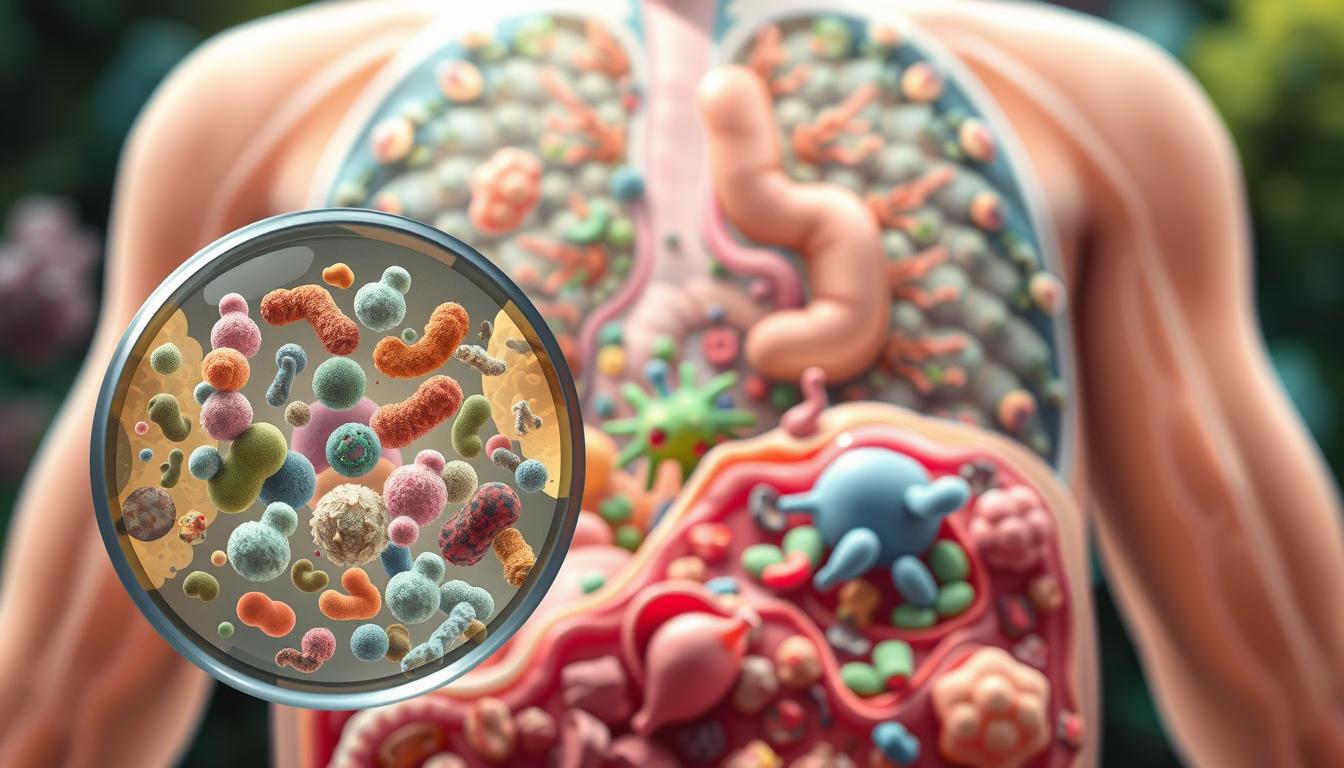
Have you ever thought about the tiny creatures living inside you? The human microbiome is a complex world that changes how we see ourselves.
Recent studies have given us a new view on our body’s bacteria. We used to think bacteria made up only 10% of our cells. But now, scientists believe it’s more like 50%.
An average adult has about 30 trillion human cells and 39 trillion bacteria. This shows how much bacteria is in our bodies.
Looking into the human microbiome, we find over 10,000 types of microbes. This diversity shows how rich our internal world is.
These microbes make up 1 to 3% of our body weight. For a 200-pound person, that’s 2 to 6 pounds of bacteria. This shows how important bacteria are for our health.
Key Takeaways
- Bacteria constitute approximately 1-3% of human body mass
- The human body contains around 39 trillion bacterial cells
- Over 10,000 microbial species exist in the human microbiome
- Bacterial cells are nearly equal in number to human cells
- Microbiome research continues to evolve our understanding of human biology
Understanding Human Microbiome Composition
The human microbiome is a world of tiny life forms living inside us. It’s not just static; it’s dynamic and diverse. This ecosystem is key to our health and how our bodies work.
Scientists have made big discoveries about the tiny world inside us. The Human Microbiome Project found over 10,000 types of microbes. This shows how complex our bacterial communities are.
Defining the Human Microbiome
The human microbiome is all the genetic material of microorganisms in and on us. These tiny beings include:
- Bacteria
- Fungi
- Viruses
- Protozoa
Types of Bacteria in the Body
Different parts of our body have their own types of bacteria. Each area has its own unique group of microbes:
| Body System | Bacterial Percentage |
|---|---|
| Gastrointestinal Tract | 29% |
| Oral Cavity | 26% |
| Skin | 21% |
| Respiratory Tract | 14% |
| Urogenital Tract | 9% |
“The human body is not just a single organism, but a complex ecosystem hosting trillions of microorganisms.” – Microbiome Research Institute
Our bodies are home to a vast array of microbes. Studies say we can have between 160 to 900 different bacterial species. Each person’s microbiome is as unique as their fingerprints.
The Role of Bacteria in Human Health
Bacteria are key to our health, working quietly in our bodies. They make up the gut microbiota, a world of microbes that affects our well-being.
Our bodies and bacteria have a special bond. This bond is vital for staying healthy. Scientists have found that bacteria do more than just live in us. They actively help our bodies work right.
Beneficial Bacteria: The Good Guys
Probiotics and good bacteria offer many health benefits:
- Help our digestive system work well
- Boost our immune system
- Make important nutrients
- Keep harmful germs away
“Bacteria are not our enemies, but our essential partners in maintaining health.” – Microbiome Research Expert
Harmful Bacteria: The Risks
But, some bacteria can harm us:
- Can cause infections
- Start inflammation
- Change how we metabolize
- May lead to long-term health issues
| Bacterial Type | Health Impact | Location in Body |
|---|---|---|
| Beneficial Probiotics | Positive Immune Support | Gut Microbiota |
| Pathogenic Bacteria | Potential Disease Transmission | Multiple Body Systems |
The balance in our gut microbiota shows how complex our relationship with bacteria is. It shows why keeping our microbial world healthy is so important.
Estimating the Bacterial Population
Microbiome research has changed how we see our bodies. Scientists have found out how many bacteria live inside us. This has changed what we thought about our biology.
The human microbiome project has given us new insights. Recent studies show a surprising fact:
- There are about 39 trillion microbial cells in the average human body
- Human cells make up only 30 trillion cells
- We are actually only 43% human at the cellular level
Cutting-Edge Estimation Methodologies
Scientists have come up with new ways to count bacteria. Old methods used microscopes and growing bacteria in labs. Now, they use genetic sequencing and computers.
“Each teaspoon of stool contains more DNA data than a tonne of DVDs can store” – showing how complex microbial research is
Evolving Estimations and Challenges
The number of human to microbial cells has changed a lot. Early studies thought there were 10 times more human cells than bacteria. Now, we think there’s almost an equal number, showing how fast microbiome research is changing.
There are still big challenges in counting bacteria:
- Every person’s microbiome is different
- Technology isn’t perfect for counting
- Bacteria populations can change quickly
Body Systems with High Bacterial Concentrations
The human body is full of tiny life forms. Bacteria live in different parts of our body, with some areas having more than others. Knowing where bacteria live helps us understand gut health and how to use microbiome therapy.
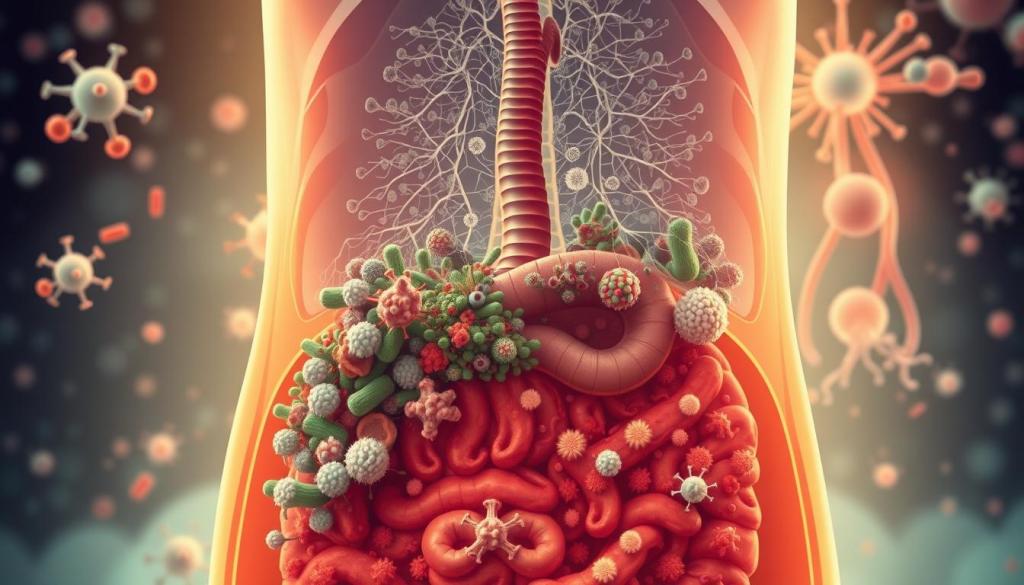
Gut Microbiome: A Thriving Microbial Metropolis
The gut microbiome is the biggest and most varied bacterial community in us. Scientists have found amazing facts about this complex world:
- The colon has up to 10^11 bacteria per gram of content
- Bacterial concentration ranges between 10^11 – 10^12 per milliliter
- Microbiome contains between 2-20 million microbial genes
“The gut is not just a digestive organ, but a complex microbial universe.” – Microbiome Research Institute
Skin Microbiome: An Intricate Protective Layer
The skin microbiome is vital for our health, though often ignored. It has fewer bacteria, with less than 10^7 per square centimeter. Even with fewer bacteria, they play a big role in our immune system and keeping us balanced.
| Body System | Bacterial Concentration | Significance |
|---|---|---|
| Colon | 10^11 – 10^12 per ml | Primary microbiome location |
| Skin | < 10^7 per cm² | Protective barrier |
| Small Intestine | 10^3 – 10^8 | Variable bacterial presence |
Microbiome therapy is exploring these bacterial worlds. It shows how our tiny friends are connected to our health.
Factors Influencing Bacterial Composition
The human microbiome is a dynamic ecosystem that changes throughout our lifetime. Understanding the factors that shape gut microbiota provides insights into our overall health and biological processes.
Many elements significantly impact bacterial populations in the human body. These factors include age and development, as well as dietary habits and nutritional intake.
Age and Bacterial Diversity
Bacterial composition undergoes remarkable transformations across different life stages:
- Infancy: Predominantly colonized by Akkermansia muciniphila and Bacteroides
- Childhood: Developing microbiome with increasing diversity
- Adulthood: Stable gut microbiota with three major microbial phyla
- Elder years: Decreased Bifidobacterium levels and increased inflammatory markers
Nutrition’s Impact on Gut Microbiota
Diet plays a crucial role in shaping probiotics and bacterial populations. Nutritional choices can dramatically alter gut microbiota within days.
| Dietary Component | Microbiome Impact |
|---|---|
| Fiber-rich foods | Increases beneficial bacterial diversity |
| Processed foods | Reduces microbial richness |
| Fermented products | Introduces beneficial probiotics |
“The food you eat can be either the safest and most powerful form of medicine or the slowest form of poison.” – Ann Wigmore
Research indicates that approximately 38 trillion bacterial cells inhabit the human body. This shows the intricate relationship between our lifestyle and microbial communities.
Bacteria: A Source of Illness
Bacterial infections are a big problem for human health. They create complex interactions between our body’s microbiome and harmful microorganisms. While some bacteria are good for us, others can cause serious diseases.
Bacterial infections can affect different parts of our body. They can be mild or very serious. To fight these infections, we need to understand our microbiome better.
Bacterial Infections and Their Impact
Bacterial infections can be mild or very dangerous. They can affect many parts of our body. Knowing how these infections work is key to preventing and treating them.
- Rapid transmission through direct contact
- Potential for systemic spread
- Variable symptoms depending on bacterial strain
- Capacity to develop complex resistance mechanisms
Antimicrobial Resistance Challenges
Antibiotic resistance is a big worry worldwide. Using antibiotics too much has made bacteria stronger. This makes it harder to fight infections.
“The inappropriate use of antibiotics transforms bacterial populations into more dangerous entities.” – Centers for Disease Control
| Antibiotic Resistance Factor | Impact |
|---|---|
| Repeated Antibiotic Exposure | Increases bacterial mutation potential |
| Incomplete Treatment Cycles | Promotes resistant bacterial strain development |
| Inappropriate Prescription | Accelerates resistance mechanism evolution |
We are always looking for new ways to fight bacterial infections. This includes finding better ways to prevent and treat them.
The Relationship Between Humans and Bacteria
The human microbiome is a fascinating world of tiny life that lives in harmony with us. Scientists have found that bacteria do more than just live in our bodies. They actively help us in many ways.
Our bodies are home to a huge number of microbes. This number is much bigger than the number of human cells. Here are some interesting facts:
- Average human male contains about 40 trillion bacteria
- Bacterial genes outnumber human genes by approximately 150-to-1
- Microbial populations interact dynamically with human biological systems
Symbiosis: A Mutual Benefit
The bond between humans and bacteria is more than just living together. Microbiome therapy shows how these tiny creatures help us survive. They do things our cells can’t do.
“Bacteria are not our enemies, but essential partners in human health and survival.”
Implications for Modern Medicine
Learning about the human microbiome is changing how we treat diseases. Scientists have found that bacteria are key in:
- Metabolic processes
- Immune system regulation
- Disease prevention and treatment
| Bacterial Contribution | Medical Significance |
|---|---|
| Genetic Diversity | Enhanced metabolic capabilities |
| Immune Interaction | Improved disease resistance |
| Molecular Transformation | Potential cancer therapy enhancement |
As we learn more, the complex relationship between human cells and bacteria is revealing new ways to manage health and disease.
Research Trends in Bacteriology
The world of microbiome research is changing fast. New technologies are helping scientists learn more about bacteria in our bodies.
The human microbiome project has led to big discoveries. It shows how complex the bacteria in our bodies are.
Advances in Microbiome Research
Recent studies have made some amazing finds:
- Genomic sequencing lets us map bacteria with great detail
- Computers can now analyze huge amounts of microbial data
- New methods track how bacteria interact with each other
“The human microbiome contains approximately 2,000,000 microbial genes compared to just 20,000 human genes,” highlighting the profound complexity of our bacterial inhabitants.
Future Directions for Study
There are many exciting areas to explore next:
- Creating personalized maps of our microbiome
- Studying how bacteria affect our immune system
- Working on new treatments using microbes
Scientists are really looking forward to learning more. They want to know how our environment affects our microbiome. The potential for new medical treatments is huge.
Conclusion: Reevaluating Our Understanding of Bacteria
Exploring the human body’s bacterial makeup shows a complex world. Research has changed how we see bacteria, revealing 39 trillion bacterial cells in our bodies. This number is three times more than human cells.
Microbial diversity is more than just numbers. The human gut has over 9,000,000 unique bacterial genes. This shows bacteria are key to our health. They help with our immune system and metabolism.
The Importance of Continued Research
We need to keep studying how human cells and bacteria work together. New studies in gut microbiology and metagenomics are helping us understand their role. They show how these tiny communities affect our health and disease prevention.
Final Thoughts on Bacterial Proportion in the Body
As we learn more, we see bacteria as vital partners, not just passengers. Our bodies have 2 to 5 pounds of live bacteria. This shows a complex ecosystem where diversity is crucial for health and strength.
FAQ
What exactly is the human microbiome?
The human microbiome is a mix of tiny living things like bacteria, fungi, and viruses. They live inside and on our bodies. These tiny friends help us digest food, fight off sickness, and stay healthy.
How many bacterial cells are actually in the human body?
Scientists have found that bacteria and human cells might be about the same number. This is a new idea that’s still being studied. It’s not as clear as once thought.
Where are the most significant bacterial populations located?
The biggest group of bacteria lives in our gut. Our skin also has a lot of bacteria, but different kinds in different places.
How do bacteria contribute to human health?
Good bacteria help us digest food, keep our immune system strong, and fight off bad germs. They also help our mood and make vitamins. They keep our body in balance.
Can diet impact the human microbiome?
Yes, what we eat changes our bacteria. Eating a variety of foods helps keep our bacteria healthy. Foods with probiotics and prebiotics are especially good for our gut.
What are the risks associated with bacterial populations?
Some bacteria can make us sick. The problem of germs becoming resistant to medicine is growing. This makes it harder to treat infections.
How do researchers study the human microbiome?
Scientists use new tech like genetic sequencing to study our bacteria. The Human Microbiome Project has helped us learn a lot about our microbes.
Can the microbiome change throughout a person’s lifetime?
Yes, our bacteria change a lot over time. They change with age, what we eat, and our health. From when we’re born to when we’re old, our bacteria keep changing.
What are the future prospects of microbiome research?
Research is looking into new treatments based on our bacteria. They want to understand how bacteria affect our health. New tech might help us better understand and work with our microbiome.
How can individuals support a healthy microbiome?
Eating a balanced diet, eating foods with probiotics, and not overusing antibiotics helps. Taking care of our health and managing stress also supports a healthy microbiome.





Leave a Comment
Your email address will not be published. Required fields are marked *