


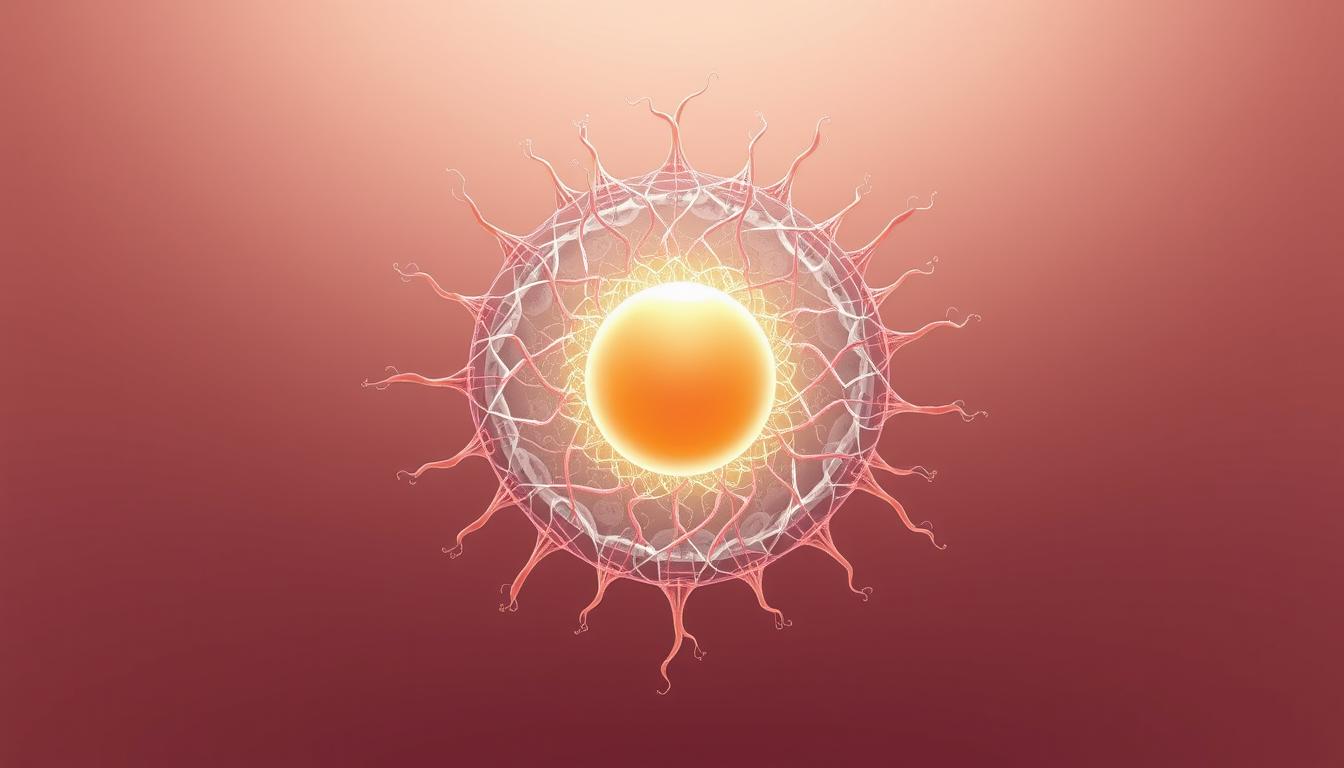
Ever wondered which cell in the human body is the biggest? The answer might surprise you and change what you thought about cells.
The human body has over 100 trillion cells, each with its own role. The female ovum is the largest, measuring about 120 micrometers in diameter. It’s a giant in the world of cells.
Learning about the largest cell in the human body shows us a lot about how our bodies work. The ovum is not just big; it’s also key to making babies.
Red blood cells are much smaller, measuring only 6-8 micrometers. But the ovum is 20 times bigger than a sperm cell. This shows how special reproductive cells are.
Key Takeaways
- The female ovum is the largest cell in the human body
- It measures approximately 120 micrometers in diameter
- Females are born with around 1 million eggs
- The ovum is 20 times larger than a sperm cell
- Cell size varies dramatically across different cell types
Understanding Cells and Their Functions
Cells are the basic units of life. They are the smallest parts that work together in living things. The human body has about 50-100 trillion cells. Each cell is vital for our health and how our body works.
The human body has many different cell types, about 200. These cells are tiny but powerful. They range from small sperm cells to long neurons that can be up to 1 meter long.
Definition of a Cell
A cell is a tiny unit of life. It has several important parts:
- Nucleus with genetic material
- Cytoplasm with energy-changing structures
- Specialized organelles for different tasks
- Ability to make copies and react to signals
Types of Cells in the Human Body
Each cell type has its own structure and job. Neurons, for example, are key for sending signals in our body. The biggest cell in us is the female egg cell, important for making babies.
| Cell Type | Primary Function | Unique Characteristics |
|---|---|---|
| Blood Cells | Oxygen transport and immune defense | Move freely in bloodstream |
| Muscle Cells | Movement and support | Firmly attached to each other |
| Nerve Cells (Neurons) | Signal transmission | Can extend up to 1 meter |
| Skin Cells | Protection and regeneration | Rapidly dividing |
“Cells are the building blocks of life, each with a unique purpose and incredible potential.” – Scientific Research Insight
Learning about cells helps us understand human biology. It shows how complex life is at its smallest level.
The Classification of Human Cells
The human body is made up of many different cells. Scientists have found over 200 types of cells. Each type has its own role in keeping our bodies working right.
Cells are grouped into main types, each with its own job. The main types are:
- Epithelial cells: They protect organs and tissues.
- Connective tissue cells: They give support and connect things.
- Muscle cells: They help us move and contract.
- Nerve cells: They send signals.
Major Cell Types in Detail
Muscle fibers are a special type of cell. They are long and strong, helping us move. They are the largest cells in the human body.
Specialized Cells and Their Significance
Specialized cells are made for specific jobs. Muscle fibers, for example, can grow long to help us move. They show how different cells can work together.
“Every cell is a miracle of complexity, waiting to be understood.” – Unknown Cellular Biologist
As we learn more, we find out about more cell types. This helps us understand how our bodies work.
Size Range of Human Cells
The human body has cells of all sizes, from tiny to very large. Learning about cell sizes shows us how complex and diverse life is.
Cells come in all shapes and sizes. Most are between 10 and 100 micrometers wide. That’s like 635 cells lined up across a penny.
Comparative Cell Dimensions
Each cell type is different in size:
- Red blood cells: Tiny, around 7-8 micrometers
- Adipocyte (fat cell): Larger, typically 100 micrometers
- Ovum (egg cell): Approximately 0.1 millimeters in diameter
- Motor neurons: Can extend up to one meter in length
Factors Influencing Cell Size
Several things affect how big a cell is:
- Cellular function
- Metabolic requirements
- Genetic programming
- Environmental conditions
“The diversity of cell sizes reflects the remarkable adaptability of biological systems.” – Cell Biology Research Team
The adipocyte is a great example of how size changes with needs. These fat cells grow or shrink based on what we eat and our body’s needs.
Studying cell sizes helps scientists understand life better. It also leads to new ways to help our bodies.
Discovering the Largest Cell in the Human Body
The human body is full of different cells, each with its own role. Among these, the ovum, or egg cell, is truly unique.
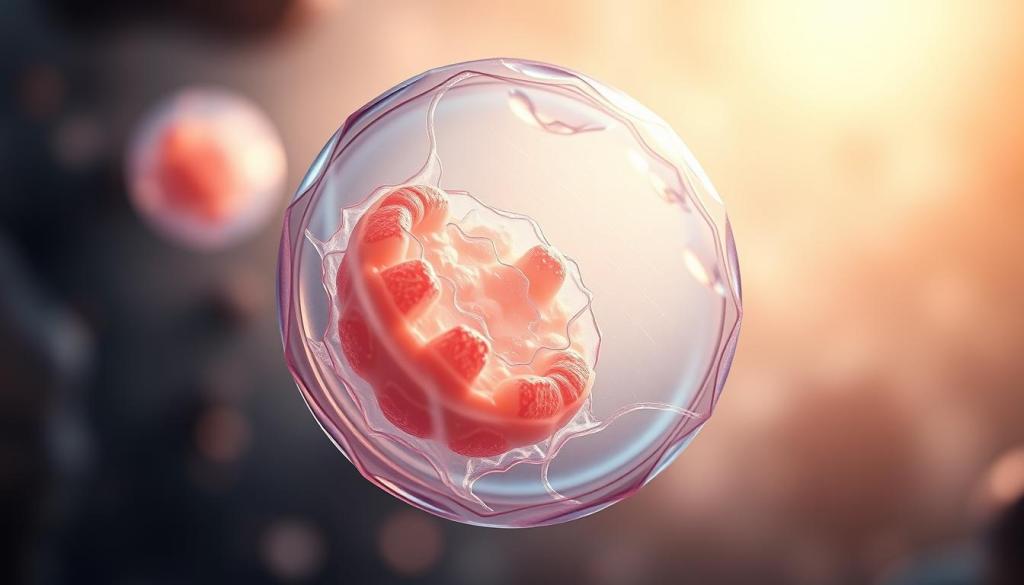
The ovum is the biggest cell in the human body. It’s about 0.1 mm in diameter. This makes it stand out from all other cells.
Unique Characteristics of the Ovum
The ovum has some special features:
- Size: 20 times larger than a sperm cell
- Nucleus: Contains a large germinal vesicle bloated with nucleoplasm
- Polarity: Features two distinct poles – animal and vegetal
Reproductive Significance
The ovum’s size is not just random. It’s big for a reason. It plays a key role in reproduction.
“The ovum represents nature’s intricate design for potential human life, encapsulating genetic potential in its remarkable cellular structure.”
Some follicles can wait up to 40 years to mature. This shows how complex human reproduction is.
Cellular Development
Creating a follicle for the ovum takes about four months. This shows how complex human cells are.
The Role of the Largest Cell
The ovum is the biggest cell in the human body. It plays a key role in making new life. This cell is a wonder of nature, full of potential.
Learning about the ovum helps us understand how we are made. It does many important things for our growth:
- Stores genetic information for future offspring
- Provides nutrients for early embryonic development
- Initiates the complex process of fertilization
- Supports initial cell division stages
Reproductive Functions of the Ovum
The ovum is a huge cell, much bigger than sperm. Its size lets it do important jobs:
- Contains 23 chromosomes for genetic inheritance
- Supports initial embryonic cell divisions
- Provides essential nutrients for early development
Importance to Reproductive Health
Keeping the ovum healthy is key for fertility. The quality of this cell affects our chances of getting pregnant and having a healthy baby.
The ovum represents nature’s intricate design for potential human life.
| Ovum Characteristic | Biological Significance |
|---|---|
| Size | Largest human cell (approximately 100 micrometers) |
| Genetic Content | 23 chromosomes for genetic inheritance |
| Nutritional Capacity | Supports initial embryonic development |
Scientists keep studying the ovum. They see its vital role in making us and passing on our genes.
Variability in Cell Size
Cell size is a fascinating topic that shows how genetics and environment work together. It helps us understand how our cells work and how our body stays healthy.

Genetics are key in deciding how big cells can get. The megakaryocyte, one of the biggest cells in us, shows how genetics can affect size. These genetic rules also shape what each cell can do.
Genetic Influences on Cell Dimensions
- DNA sequences control cell growth potential
- Specific genes regulate maximum cell size
- Chromosomal variations impact cellular expansion
Environmental Effects on Cellular Growth
Things outside us also affect how big and how well cells work. What we eat, how stressed we are, and our surroundings can change how cells grow and function.
| Environmental Factor | Impact on Cell Size |
|---|---|
| Nutritional Status | Direct correlation with cellular growth |
| Oxidative Stress | Potential reduction in cell volume |
| Hormonal Changes | Triggers cellular expansion or contraction |
“Cells are not static entities but dynamic systems responsive to their genetic blueprint and environmental context.” – Cellular Biology Research Institute
Studies show that the biggest cell in us can grow up to 100 micrometers wide. This shows how complex and detailed the science of cells is.
Comparative Analysis with Other Organisms
The world of cells is vast and full of surprises. It shows us how different life forms grow and change. Looking at cell sizes in different species helps us understand evolution and complexity.
Researchers have found amazing differences in cell sizes across species. The human body has about 30 trillion cells. Among these, neurons are particularly interesting. They can be very long, stretching great distances.
Largest Cells in Different Species
Various organisms have unique cell adaptations:
- Ostrich eggs are among the biggest single cells in nature
- Some neurons in big animals can be feet long
- Marine life has huge cells for special tasks
Implications for Human Biology
Studying cell sizes gives us important insights into human biology. Neurons, the largest human cells, show incredible complexity. They help our nervous system communicate, showing the detailed design of human cells.
“Cell size is not just a matter of dimensions, but a testament to evolutionary adaptation and functional specialization.” – Cellular Biology Research Team
By looking at cell sizes in different species, scientists learn a lot. They understand diversity and how cells evolve in different life forms.
Implications of Studying Cell Size
Studying cell size is a key area in biology. Scientists delve into the tiny world of cells, finding new insights. These discoveries change how we understand medicine and science.

Research Advancements in Cell Biology
Researchers have found links between cell size and function. The study of the largest human cell shows great promise for medicine. Muscle fiber research also sheds light on how cells work.
- Detailed mapping of cellular dimensions
- Innovative techniques for cellular measurement
- Advanced imaging technologies
Applications in Medicine and Health
Studying cell size helps us understand diseases and treatments. By looking at cell size differences, doctors can create better treatments.
| Research Area | Medical Potential |
|---|---|
| Muscle Fiber Analysis | Regenerative Medicine Strategies |
| Cell Size Variation | Disease Diagnosis Techniques |
| Cellular Dimensional Research | Personalized Treatment Development |
“Understanding cellular dimensions is like deciphering the body’s most intricate language.” – Dr. Elena Rodriguez, Cell Biology Researcher
Exploring cell size leads to new treatments for many diseases. Every small measurement brings us closer to big medical breakthroughs.
Challenges in Measuring Cell Size
Measuring cell size, like the biggest cell in humans, adipocyte, is tough. Scientists use advanced methods to get cell dimensions right.
Measuring cell sizes is hard. The biology is complex, and cells are fragile. So, scientists need the latest tech.
Advanced Measurement Techniques
Researchers use several ways to measure cell sizes:
- High-resolution microscopy
- Flow cytometry
- Digital image analysis
- Laser scanning techniques
Accuracy Challenges in Cell Size Measurement
Measuring cell size is full of challenges. Adipocytes, the biggest cell in humans, need special methods.
| Measurement Technique | Precision Level | Primary Limitation |
|---|---|---|
| Optical Microscopy | Moderate | Resolution constraints |
| Electron Microscopy | High | Complex sample preparation |
| Flow Cytometry | Good | Limited 3D visualization |
“Precision in cell size measurement is crucial for understanding cellular biology and potential health implications.” – Dr. Research Scientist
Today’s research is working on better ways to measure cells. This will help us understand cells better.
The Future of Cell Research
Scientists are diving deep into the world of cells, uncovering new things. They are finding ways to change how we see cells and how we treat diseases.
New studies are helping us learn more about cell sizes and what they do. The megakaryocyte, the biggest cell in us, is especially interesting to study.
Cutting-Edge Research Directions
- Advanced single-cell analysis techniques
- Stem cell therapy development
- Exploring cellular differentiation mechanisms
- Investigating large cell formation processes
Potential Scientific Discoveries
Scientists are getting closer to understanding why cells are different sizes. They are looking into:
- How cells grow
- How genes affect cell size
- Creating new treatments
*”The future of cell research lies in our ability to decode the complex mechanisms governing cellular development and function.”* – Dr. Sarah Reynolds, Cell Biology Research Institute
| Research Area | Current Focus | Potential Impact |
|---|---|---|
| Stem Cell Therapy | Pluripotent stem cell development | Treatment for previously untreatable diseases |
| Cellular Size Research | Megakaryocyte formation studies | Enhanced understanding of blood cell production |
| Single-Cell Analysis | Advanced detection techniques | Precision medicine development |
Studying the biggest cell in us is leading to amazing discoveries. These studies are changing how we see cells and opening new doors in medicine.
Conclusion
Exploring cell biology opens a world of wonder inside us. The ovum, the largest cell, is only 0.12 to 0.14 millimeters wide. It shows us how complex and functional cells can be.
Our study of cells shows how amazing our bodies are. There are about 3.7 trillion cells in us, each with its own role. The ovum is especially unique, with a huge cytoplasm compared to other cells.
Key Insights in Cell Research
Science keeps uncovering new things about cells. From the tiny sperm to the long nerve cells, each cell is vital. Studying cells helps us find new treatments and understand our bodies better.
The Future of Cell Science
As technology grows, so does our knowledge of cells. Research in cell biology is leading to big discoveries. These could change how we treat diseases and understand life at its core.
FAQ
What is the largest cell in the human body?
The ovum, or egg cell, is the biggest cell in the human body. It’s much larger than other cells, with a size of about 100 micrometers. This makes it big enough to see with the naked eye.
How does the size of an ovum compare to other cells?
The ovum is way bigger than most human cells. While regular cells are tiny, around 10-100 micrometers, the ovum can be up to 10 times bigger. This makes it stand out as very large among human cells.
Why is the ovum so large compared to other cells?
The ovum’s size is key for its job in reproduction. It has to hold nutrients, genetic material, and support early embryo growth. Its big cytoplasm gives the embryo the resources it needs at the start.
Are there other large cells in the human body?
Yes, besides the ovum, there are other big cells. Megakaryocytes, muscle fibers, and some neurons are also quite large. Each of these cells has special traits that help them grow bigger.
How do genetic factors influence cell size?
Genes play a big role in how big cells can get. For example, megakaryocytes grow big because of their genes. Different genes can affect how big and what a cell looks like.
Can environmental factors affect cell size?
Yes, things like what we eat, stress, and our metabolism can change cell size. For example, fat cells can get much bigger or smaller based on our diet and how our body works.
How do researchers measure cell sizes?
Scientists use tools like microscopes, flow cytometry, and digital images to measure cell sizes. These tools help them get exact measurements of cells, including the big ovum and muscle fibers.
What is the significance of understanding cell sizes?
Knowing cell sizes is very important for science, understanding how we grow, and finding new treatments. It helps scientists learn about how cells work, what goes wrong in diseases, and how to fix it.






Leave a Comment
Your email address will not be published. Required fields are marked *