



Ever thought about how tiny germs can mess up important science work? Bacterial contamination in media is a hidden danger. It can turn clean lab spaces into places where bad microbes grow.
Finding bacterial contamination in media needs careful watching and knowing small signs. Bacteria can show up in tiny changes that might not be noticed by everyone. The area between cells might look a bit grainy, with tiny movements hinting at microbes.
Lab workers must always be on the lookout. What bacterial contamination looks like can change a lot. Small changes in color, clarity, and texture are big warning signs.
Key Takeaways
- Bacterial contamination can be hard to spot visually
- Small changes in the microscope suggest microbes might be there
- Lab spaces need constant checking
- Different bacteria show different signs of contamination
- Catching it early stops big problems in research
Understanding Bacterial Contamination in Media
Microbiological research uses media to study bacteria. Media is a nutrient-rich environment for growing and studying microorganisms. It’s key for scientific discovery and diagnosis.
Bacterial media varies, each for different research needs. Scientists pick media based on the microorganism and research goals.
Definition of Laboratory Media
Laboratory media is a nutrient-rich solution for microorganisms to grow. It has essential nutrients for survival and reproduction. Researchers must ensure the media is clear to avoid contamination signs.
Types of Laboratory Media
- Liquid media for suspension cultures
- Solid media using agar or gelatin
- Selective media targeting specific bacterial strains
- Enrichment media supporting rare microorganism growth
Significance in Microbiology
Microbiological media are crucial for:
- Identifying bacterial species
- Studying bacterial metabolism
- Developing diagnostic techniques
- Conducting scientific research
“The quality of media determines the accuracy of microbiological investigations.” – Microbiology Research Institute
| Media Type | Primary Use | Typical Characteristics |
|---|---|---|
| Nutrient Broth | General bacterial cultivation | Rich in peptones and meat extracts |
| MacConkey Agar | Identifying enteric bacteria | Differentiates lactose-fermenting bacteria |
| Blood Agar | Studying hemolytic properties | Contains mammalian blood |
Knowing media composition helps spot contamination signs like discoloration and turbidity. These signs can mean bacteria are present, affecting the study’s results.
Common Signs of Bacterial Contamination
It’s key to spot bacterial contamination in lab media to keep research honest. Scientists need to watch for small changes that show microbes are there. Catching these signs early stops big problems in experiments.
Visual Indicators of Contamination
Bacteria show up in a few ways. The most common signs are:
- Unexpected cloudiness in liquid media
- Pellicle formation on liquid surfaces
- Unusual sediment development
- Changes in media color or transparency
Color and Clarity Changes
Color changes in media can mean bacteria are growing. Phenol red pH indicators are especially useful. They change color when contamination happens.
Aerobic bacteria make media turn yellow because it gets acidic. Anaerobic bacteria make it pink because it gets basic.
Pellicle Formation and Sensory Cues
Pellicle formation is a big warning sign. These thin films form on liquid surfaces and go away when moved. Also, a bad smell means there’s a lot of bacteria.
| Contamination Type | Visual Indicator | pH Change |
|---|---|---|
| Aerobic Bacteria | Cloudy Medium | Acidic (Yellow) |
| Anaerobic Bacteria | Surface Film | Basic (Pink) |
“Early detection of bacterial contamination can save weeks of research and prevent potential data corruption.”
Knowing these signs helps lab workers quickly find and fix contamination. This keeps experiments safe and research money well spent.
Types of Bacteria That Cause Contamination
Bacterial contamination is a big problem in labs. It’s important for researchers to know about different types of bacteria. These bacteria can harm the quality of lab media.

Common Contaminants in Laboratory Settings
Labs face many types of bacteria that can cause problems. These bacteria are usually small, ranging from 0.5 to 1.0 µm in size. Some can grow up to 10-20 µm long.
- Rod-shaped bacteria measuring approximately 1 µm in diameter
- Spiral bacteria with extended lengths up to 20 µm
- Bacteria with varying morphological structures
Opportunistic Pathogens
Opportunistic bacteria grow fast when they can. E. coli is a common example. It’s about 2 µm long and 0.5 µm wide, posing a big risk.
| Bacterial Type | Typical Size | Contamination Characteristics |
|---|---|---|
| Rod-shaped Bacteria | 1 µm x 4 µm | Rapid growth, pH changes |
| Spiral Bacteria | 0.5-1.0 µm x 10-20 µm | Extended morphology |
| E. coli | 2 µm x 0.5 µm | Acidic medium transformation |
Environmental Bacteria
Environmental bacteria are another big problem. They can get into clean labs and ruin experiments. This is a big risk for lab work.
“Understanding bacterial characteristics is crucial for preventing microbial contamination in laboratory settings.”
Lab workers need to be careful. They must follow strict cleaning rules and keep everything clean. This helps prevent bacterial contamination.
Laboratory Conditions Conducive to Contamination
Bacterial contamination in media thrives in certain lab environments. It’s key to prevent bacterial growth and keep research honest. Labs face many challenges that can help microorganisms grow.
Bacterial contamination isn’t just about being clean. Certain environmental factors can greatly affect microbial growth in labs.
Sterilization Practices
Effective sterilization is the first defense against bacterial contamination. Important steps include:
- Thorough cleaning of all lab surfaces
- Regular disinfection of equipment
- Using high-temperature sterilization methods
- Implementing strict decontamination protocols
Handling and Storage Protocols
Proper media handling can greatly reduce contamination risks. Key protocols are:
- Maintaining consistent temperature controls
- Minimizing exposure to potential contaminants
- Using sealed containers
- Implementing restricted access to sensitive areas
Personal Protective Equipment
Personal protective equipment (PPE) is crucial in preventing bacterial growth. Researchers should:
- Wear sterile gloves
- Use protective lab coats
- Utilize face masks and eye protection
- Follow strict personal hygiene protocols
*”Contamination prevention is not just a practice, but a critical scientific discipline.”*
Statistically, about 5 to 30% of cell lines worldwide are infected with mycoplasma. This shows the need for strict lab practices. The economic loss from bacterial contamination can be up to USD 350 million a year in biomanufacturing.
Effects of Contamination on Experimental Results
Bacterial contamination is a big problem in science. It can ruin the results of experiments. It’s important for scientists to know how serious this issue is.
Contamination does more than just mess up experiments. It can make the whole study unreliable. This can have serious effects on scientific research.
Impact on Research Validity
Contamination can harm experimental results a lot. It can bring in unwanted microorganisms. This can cause:
- Unexpected discoloration of media
- Changes in turbidity
- Altered pH levels
- Compromised experimental data
Consequences for Clinical Diagnostics
In hospitals, contamination is even more serious. Wrong test results can lead to:
- Misdiagnosis of patient conditions
- Inappropriate treatment protocols
- Potential health risks for patients
Implications for Quality Control
Labs need to watch closely for contamination. If they miss it, it can cost a lot of money and time.
A single contaminated sample can invalidate months of research and thousands of dollars in resources.
| Contamination Level | Research Impact | Potential Consequences |
|---|---|---|
| Minor | Limited sample loss | Slight experimental delay |
| Serious | Significant data compromise | Potential research restart |
| Critical | Complete result invalidation | Substantial financial and time loss |
Vigilant monitoring and strict aseptic techniques are key to fighting bacterial contamination in science.
Methods for Detecting Bacterial Contamination
Finding bacterial contamination in lab media needs a few steps. Studies show that different ways to detect bacteria can give us important clues about possible threats in cell cultures.

Scientists use many advanced methods to find bacteria. Each method has its own strengths in spotting contamination.
Microscopic Examination
High-power microscopy gives a close look at possible contamination. At about 400X magnification, scientists can see bacteria like cocci or bacilli. They can also spot pellicle formation, which is a sign of microbial growth.
- Reveals bacterial morphology
- Detects initial stages of contamination
- Allows direct visualization of microorganisms
Culture Techniques
Older culture methods are still key for finding bacterial contaminants. These methods help grow and identify microorganisms. A bad smell often comes with bacterial growth, helping us detect it.
| Culture Method | Detection Capability | Time Required |
|---|---|---|
| Agar Plate Cultivation | Bacterial colony identification | 2-5 days |
| Selective Media | Specific bacterial strain detection | 3-7 days |
| Liquid Culture | Rapid initial screening | 24-48 hours |
Molecular Methods
Modern molecular techniques offer fast and accurate bacterial detection. PCR and DNA sequencing can spot bacterial genetic material with high accuracy.
Modern molecular methods can detect bacterial contamination faster and more precisely than traditional techniques.
- PCR amplification
- DNA sequencing
- RNA analysis
Each detection method has its own benefits. This lets researchers pick the best method for their lab needs and goals.
Preventing Bacterial Contamination in Media
Laboratory research needs strict protection against germs. Good prevention is key to keep experiments safe and valuable research safe.
Best Practices for Preparation
To stop contamination, lab media must be carefully prepared. Researchers must stick to strict rules to avoid germs:
- Use sterile equipment and ingredients
- Work in clean, controlled environments
- Implement strict personal hygiene protocols
- Utilize high-quality, validated media components
The Role of Aseptic Techniques
Aseptic techniques are crucial in stopping germs. Important steps include:
- Wearing appropriate personal protective equipment
- Utilizing laminar flow hoods
- Sterilizing work surfaces with 70% ethanol
- Using sterile pipette tips and consumables
“Prevention is always more efficient than correction in laboratory settings.” – Laboratory Safety Expert
Regular Monitoring and Maintenance
Keeping a close eye on things is vital to manage germ risks. Studies show about 70% of germ problems come from mistakes, showing the need for constant watchfulness.
| Maintenance Practice | Contamination Risk Reduction |
|---|---|
| Regular incubator cleaning | Up to 90% bacterial load reduction |
| Water bath maintenance | Prevents microbial growth |
| Filter tip usage | 30% decrease in cross-contamination |
Being proactive can greatly lower the chance of germs in lab media. This protects research and saves valuable resources.
Addressing Contamination Once Detected
Bacterial contamination in media is a big challenge for lab workers. When we see signs of bacterial growth, we must act fast. This is to keep our research safe and stop the contamination from spreading.
Spotting bacterial contamination early is key. We need to be careful and follow strict rules. Here are some steps to handle contaminated media:
Disposing of Contaminated Media
- Immediately isolate contaminated cultures
- Use designated biohazard containers for safe disposal
- Follow institutional biosafety guidelines
- Sterilize contaminated materials before discarding
Decontamination Procedures
Decontamination needs a few key steps:
- Clean all surfaces with the right disinfectants
- Use 70% alcohol or special lab sanitizers
- Make sure to sterilize all equipment
- Check that all bacteria are gone
*”Prevention is always more efficient than remediation in laboratory settings.”*
Documenting Incidents
Keeping detailed records helps avoid future contamination. Each incident should include:
- Date and time of detection
- Potential contamination sources
- Specific decontamination steps taken
- Recommendations for preventing recurrence
Knowing how to spot bacterial contamination in media is crucial. By following strict rules, labs can reduce risks. This helps keep research quality high.
Case Studies of Bacterial Contamination
Bacterial contamination is a big problem in labs. It affects research quality and results. Looking at real cases helps us understand how to stop it.
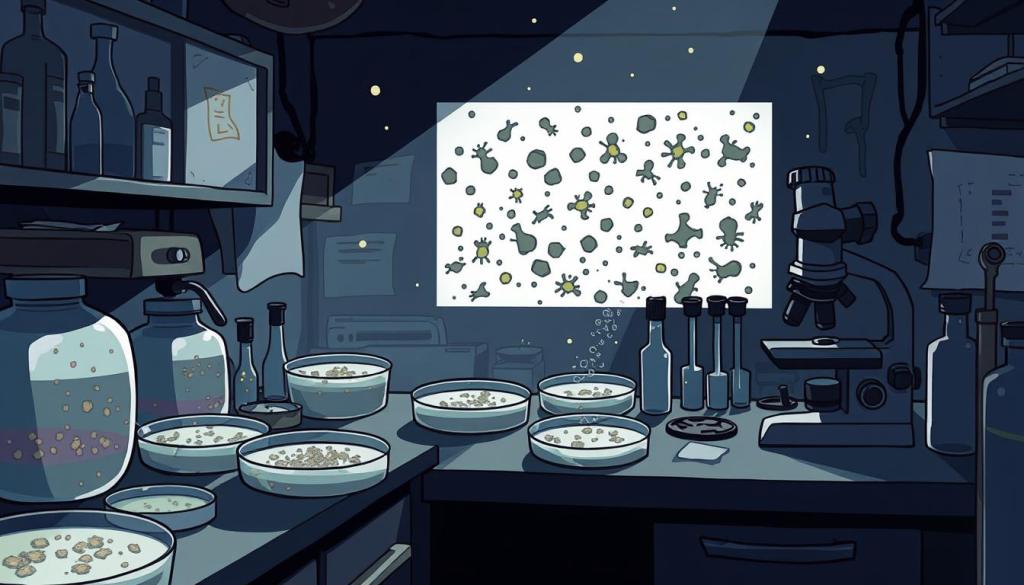
Studies show bacteria are often found in labs. Media that looks different or cloudy might be contaminated.
Historical Contamination Incidents
There have been many big contamination cases in labs:
- Mobile phones are full of bacteria.
- Staphylococci were found in 85% of devices.
- Enterococci were in 37% of phones and other tools.
Contemporary Laboratory Challenges
Today’s labs face new contamination risks. Recent studies found:
- Healthcare infections range from 7.6% to 10.1% worldwide.
- About 33% of infections could be stopped with better hygiene.
- Mycoplasma is the most common lab contaminant.
Lessons Learned
Vigilance is key to stopping bacterial contamination in labs.
Important lessons from research are:
- Spotting turbidity early can save experiments.
- Good hand hygiene cuts infection risk by 80%.
- Regular checks are vital for lab integrity.
These studies show how important it is to know about bacterial contamination. We must use strong ways to prevent it in labs.
Regulatory Guidelines on Media Contamination
Understanding media contamination is key. It protects the quality of scientific research. Lab workers must watch out for contamination risks that can mess up experiments.
Regulatory groups have set up detailed rules to tackle bacterial contamination. These rules aim to stop pellicle formation and find foul odor signs of microbiological problems.
Overview of Relevant Standards
Important standards include strict rules for keeping labs clean. The FDA and CDC offer detailed guides on:
- Preventing contamination
- Keeping accurate records
- Monitoring regularly
- Ensuring quality
Compliance Requirements
Labs must follow strict rules to avoid contamination. These include:
- Regular sterilization
- Correct storage
- Keeping detailed records
- Training staff
Consequences of Non-Compliance
Not following rules can lead to big problems. These include:
- Invalidating research
- Putting people at risk
- Getting fined
- Damage to reputation
“Being careful to avoid contamination is not just a good idea—it’s essential for science.”
By following these guidelines, labs can reduce contamination risks. This helps keep scientific research at its best.
The Future of Bacterial Contamination Management
The world of managing microbial contamination is changing fast. New technologies and research methods are leading the way. Scientists are finding better ways to spot and stop contamination before it starts.
New tools are changing how we tackle contamination. Advanced detection methods are making labs work smarter and faster. This means finding risks quicker and more accurately.
Technological Advances in Prevention
Today’s prevention strategies use the latest tech:
- Next-generation sequencing (NGS) for quick viral detection
- PCR-based assays with ready-mixed primers
- Smart monitoring systems with real-time conductivity measurements
- Automated microbial identification platforms
Emerging Trends in Microbial Testing
New trends in testing are breaking old barriers. For example, advanced molecular techniques have cut culture times for tough bugs like Mycobacterium tuberculosis.
“The future of contamination management lies in proactive, technology-driven approaches that anticipate and neutralize microbial risks before they escalate.”
Ongoing Research and Development
Groups like the Consortium on Adventitious Agent Contamination in Biomanufacturing (CAACB) are tackling contamination head-on. They share important data and create new ways to detect contamination. This helps keep labs safe from harmful microbes.
As tech gets better, lab workers will have even more effective tools. They’ll be able to manage contamination risks more precisely and efficiently.
Conclusion: Importance of Vigilance
Bacterial contamination in media is a big problem in labs. It’s important to know how to spot it and manage it well. If not, it can mess up research and results.
Studies show contamination rates can hit up to 2.4% in biological labs. Bacteria can grow fast in the right conditions. Labs need to be very careful and use strict rules to stop contamination.
Summary of Key Points
Managing bacterial contamination well means using advanced detection, strict cleaning, and constant checks. Researchers must watch out for any signs of contamination. Even a little bit can ruin all the work done.
Best Practices for Prevention
To prevent contamination, labs need to keep training, follow strict rules, and invest in new tech. Keeping things clean, wearing the right gear, and checking regularly can help a lot. This way, labs can lower the risk of contamination.
Future Laboratory Implications
As science gets more advanced, dealing with bacteria will become even more crucial. Future labs will likely use better molecular detection and automated systems. This will help keep research safe and reliable.
FAQ
What are the primary visual signs of bacterial contamination in media?
Signs of bacterial contamination include color changes and increased cloudiness. You might also see sediment or unusual films on the surface.
How quickly can bacterial contamination spread in laboratory media?
Contamination can spread fast, often in 24-48 hours. Temperature, nutrients, and moisture play big roles in how quickly it grows.
What are the most common sources of bacterial contamination in laboratory settings?
Common sources include bad sterilization, dirty equipment, and unclean work areas. Also, not wearing proper gear and environmental exposure are big risks.
Can bacterial contamination be detected by smell?
Yes, it often smells bad. Unusual smells can mean there’s microbial growth, especially in cultures or contaminated media.
What are the potential consequences of using contaminated media in research?
Using contaminated media can ruin experiments and lead to wrong conclusions. It wastes resources, can spread contamination, and sets back research.
How can laboratories effectively prevent bacterial contamination?
Labs can prevent contamination by using strict aseptic techniques and sterile equipment. They should control the environment, wear proper gear, and follow strict sterilization. Regular checks and maintenance are also key.
What advanced methods are used to detect bacterial contamination?
Modern methods include looking under a microscope, culture tests, and PCR for DNA. There are also quick detection systems and advanced imaging for fast and accurate results.
Are some types of media more susceptible to bacterial contamination?
Yes, some media are more likely to get contaminated. This includes media with lots of nutrients, specific pH levels, and those used for a long time. Media that supports complex growth is especially at risk.
What should be done immediately upon detecting media contamination?
If contamination is found, isolate the media right away. Document the incident, safely dispose of the media, and clean the area. Find out where it came from and update protocols to avoid it in the future.
How do regulatory guidelines impact bacterial contamination management?
Guidelines set strict rules for preventing contamination. They require detailed records, specific testing, and quality control. These ensure safety and integrity in labs.






Leave a Comment
Your email address will not be published. Required fields are marked *