


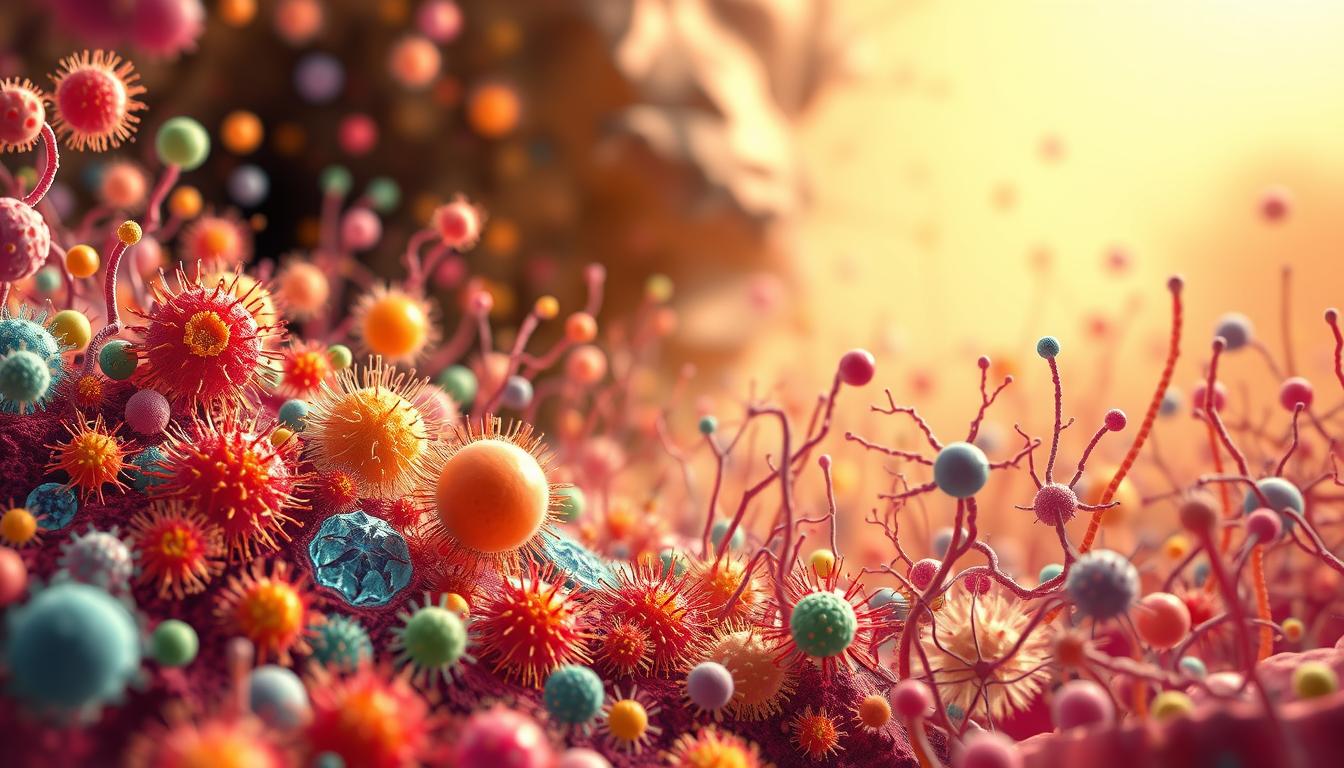
Have you ever thought about how tiny organisms are key to life on Earth? The world of bacteria is full of surprises. It affects our health and the planet’s well-being.
Bacteria are tiny but mighty. They play big roles in many areas. There are about 5 nonillion bacteria on our planet. They do more than just exist; they are vital to life’s processes.
These microbes live in many places, like soil, water, and inside us. Humans have hundreds of bacterial species living in us. We have more bacterial cells than human cells, with about 0.2 kg of microbial biomass. They help us survive in many ways.
Key Takeaways
- Bacteria are fundamental to ecosystem functioning
- Microbial roles extend across multiple environmental domains
- Bacterial functions impact human health significantly
- Bacteria exist in extraordinarily large numbers worldwide
- Different bacteria adapt to extreme environmental conditions
Understanding Bacteria: Basic Characteristics
Bacteria are tiny living things that are very important. They live in almost every place on Earth. These small creatures are very complex and play big roles in our world.
Our bodies have more bacterial cells than human cells. This shows how important they are. Scientists study how bacteria work with their surroundings.
What Are Bacteria?
Bacteria are single-celled organisms with a unique structure. They have:
- No membrane-bound nucleus
- Microscopic size (invisible to naked eye)
- Can grow and multiply quickly
- Live in many different places
Types of Bacteria
Bacteria come in many shapes. The main ones are:
- Cocci: Spherical bacteria
- Bacilli: Rod-shaped bacteria
- Spirilla: Spiral-shaped bacteria
Cellular Structure
Bacteria have important parts that help them survive:
- Cell walls
- Plasma membranes
- Cytoplasm
- Genetic material (DNA)
- Ribosomes
- Optional appendages like flagella
“Bacteria are not just tiny organisms, but complex systems driving life’s fundamental processes.” – Microbiological Research Institute
The Role of Bacteria in Ecosystems
Bacteria are key to keeping our planet’s life in balance. They are the builders of our environment, doing vital jobs that keep ecosystems alive. Their work goes beyond just surviving; they play a big role in supporting life in many places.
Decomposers in Nature
Bacteria are nature’s top recyclers. They break down dead plants and animals into simple nutrients. This process helps other living things get the nutrients they need to survive.
- Convert complex organic materials into basic nutrients
- Accelerate decomposition processes
- Support nutrient availability for other organisms
Nitrogen Fixation
Some bacteria are experts at turning atmospheric nitrogen into a form plants can use. For example, Rhizobium changes nitrogen gas into nitrates and nitrites. This is key for plant growth and helps farms produce more food.
| Bacterial Species | Nitrogen Conversion Function |
|---|---|
| Rhizobium | Converts N2 to plant-usable nitrates |
| Cyanobacteria | Atmospheric nitrogen transformation |
Symbiotic Relationships
Bacteria have amazing partnerships with many living things. They work together with plants and even live in animal guts. These relationships show how life is connected in different environments.
“Bacteria are not merely passive inhabitants but active participants in ecosystem dynamics.” – Environmental Microbiologist
Learning about bacterial ecology shows how important these tiny creatures are. They help change and support life on Earth. Their work is crucial for our planet’s health.
Bacteria in Human Health
The human body is home to a vast ecosystem of microorganisms. These tiny creatures play key roles in keeping us healthy. Trillions of bacteria live inside us, shaping our health in many ways.

Did you know our bodies have 10 times more bacterial cells than human cells? This microbial community, or microbiome, is vital for our body’s functions.
Beneficial Gut Microbiota
Good bacteria in our gut do many important things:
- Help break down tough nutrients
- Make vitamins B and K
- Help our immune system grow
- Keep harmful bacteria away
Pathogenic Bacteria
But, not all bacteria are good. Pathogenic bacteria can make us sick. They can get into our bodies and cause diseases.
“Understanding the delicate balance between beneficial and pathogenic bacteria is key to maintaining optimal health.” – Microbiome Research Institute
Role in Disease Prevention
Good bacteria help prevent diseases by:
- Outcompeting bad bacteria for food
- Strengthening our gut’s defenses
- Helping our immune system work right
- Lowering inflammation
The Human Microbiome Project found that our bacteria add about 8 million unique genes. This is 360 times more than human genes. It shows how complex and crucial our microbial friends are for our health.
Industrial Uses of Bacteria
Bacteria are key in many industrial processes. They show their importance in various sectors. Their roles have changed many industries, from cleaning the environment to making food and advancing biotechnology.
Bioremediation: Environmental Cleanup
Microorganisms are great at solving environmental problems. Bacteria that eat hydrocarbons can clean up oil spills. Studies show they can break down oil 50-90% faster with genetic changes.
- Acidithiobacillus ferrooxidans helps manage acid mine drainage
- Bacteria facilitate metal extraction from low-grade sulfide ores
- Microbial leaching processes recover valuable metals like copper and uranium
Bacteria in Food Production
The food industry uses bacteria a lot for fermentation and processing. Leuconostoc mesenteroides makes dextran from sucrose. Bacillus coagulans creates glucose isomerase for food making.
- Vinegar production using Acetobacter species
- Dairy product fermentation
- Cheese and yogurt production
Biotechnology Applications
Bacteria are vital in biotech and medicine. Escherichia coli was the first to host foreign DNA. This led to new ways to make proteins.
“Bacteria are nature’s most versatile molecular factories” – Modern Microbiology Research
Some big achievements in biotech include:
- Insulin production
- Genetic modification
- Protein engineering
Bacterial Metabolism: How They Obtain Energy
Bacterial metabolism is a world of energy transformation. These tiny organisms have developed ways to survive and grow in many places. They show amazing adaptability in getting energy through different metabolic paths.
- Aerobic respiration
- Anaerobic respiration
- Fermentation
- Photosynthetic processes
Respiration and Energy Production
Respiration is key in bacterial energy making. Heterotrophic bacteria can get up to 38 ATP molecules from one glucose molecule in aerobic respiration. This involves complex reactions that turn organic compounds into energy.
Fermentation Processes
Fermentation is another important way for bacteria to get energy. Species like Lactococcus and Lactobacillus can make energy from glucose, getting about 2 ATP molecules per glucose molecule. This process makes various organic products and gives limited energy for growth.
| Metabolic Process | ATP Yield | Electron Acceptor |
|---|---|---|
| Aerobic Respiration | 38 ATP | Oxygen |
| Anaerobic Respiration | 2-18 ATP | Nitrate, Sulfate, CO2 |
| Fermentation | 2 ATP | Organic Compounds |
Photosynthetic Bacterial Metabolism
Some bacteria can do photosynthesis. This is a light-dependent process that turns carbon dioxide into glucose. It shows how versatile bacterial metabolism is in changing light energy into chemical energy.
“Bacteria are masters of adaptation, transforming environmental challenges into metabolic opportunities.” – Microbiology Research Insights
Learning about bacterial metabolism helps us understand how these microbes survive and affect our world.
Bacteria and the Environment
Bacteria are key to keeping our environment balanced. They help cycle nutrients and keep ecosystems healthy. Their work is vital for life on Earth.
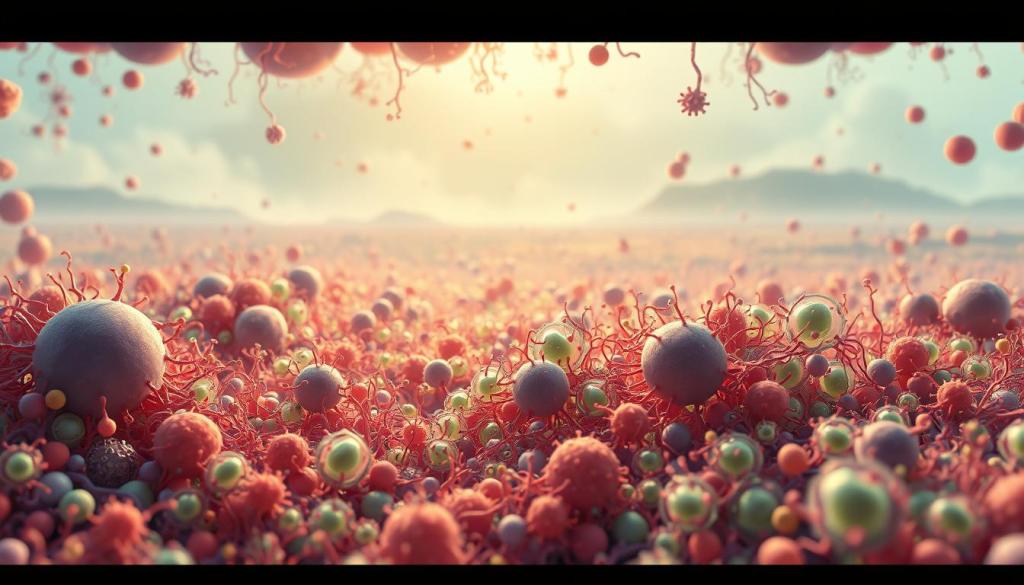
Nutrient Recycling Mechanisms
Bacteria are nature’s recyclers. They break down big organic pieces into nutrients we need. This keeps nutrients flowing in our environment.
- Transform organic matter into usable nutrients
- Convert complex chemical compounds
- Support ecosystem regeneration
Impact on Soil Fertility
In soil, bacteria are vital for keeping it fertile. Nitrogen-fixing bacteria turn air nitrogen into plant food. This boosts soil health and helps crops grow.
| Bacterial Function | Soil Impact |
|---|---|
| Nitrogen Fixation | Increases soil fertility |
| Organic Matter Decomposition | Releases nutrients |
| Root Symbiosis | Enhances plant growth |
Water Quality and Treatment
Bacteria are crucial in cleaning water. They break down pollutants and keep water safe. Their metabolic skills are amazing.
“Bacteria are the unsung heroes of environmental restoration” – Environmental Microbiologist
Learning about bacterial ecology shows how important they are for our planet’s health.
Antibiotics: Combatting Bacterial Infections
Bacterial infections are a big problem for human health. Pathogenic bacteria keep changing and adapting. It’s important to know how antibiotics work and the issue of antibiotic resistance.
Antibiotics are special medicines that fight harmful bacteria. They stop bacteria from growing or killing them off.
How Antibiotics Function
These medicines fight infections by:
- Disrupting bacterial cell wall formation
- Interfering with protein synthesis
- Blocking essential metabolic processes
Understanding Antibiotic Resistance
Antibiotic resistance happens when bacteria find ways to avoid antibiotics. This can occur through:
- Genetic mutations
- Horizontal gene transfer
- Overuse of antibiotics
“Antibiotic resistance is one of the most significant public health challenges of our time.” – Medical Research Council
Responsible Antibiotic Use
To stop antibiotic resistance, we need to be careful:
- Complete entire prescribed antibiotic courses
- Use antibiotics only when absolutely necessary
- Avoid sharing prescription medications
| Antibiotic Type | Primary Function | Resistance Risk |
|---|---|---|
| Penicillins | Cell Wall Disruption | High |
| Cephalosporins | Protein Synthesis Interference | Medium |
| Macrolides | Bacterial Growth Inhibition | Low |
In 2021, doctors wrote over 211 million antibiotic prescriptions in the U.S. This shows how important it is to use antibiotics wisely and keep researching to fight antibiotic resistance.
Bacteria in Agriculture
Bacteria are key in modern farming. They do more than just live in the soil. They help make farming more sustainable.
Scientists have found over 50 types of helpful bacteria in soil. These tiny helpers do important jobs for farmers and the environment.
Biological Pest Control
Bacteria can fight pests without using harmful chemicals. Some bacteria can:
- Keep harmful pathogens away
- Naturally lower pest numbers
- Protect crops by competing with pests
Soil Enrichment Strategies
Soil bacteria are vital for farming. Nitrogen-fixing bacteria turn air nitrogen into a form plants can use. This could cut down on chemical fertilizer use by up to 50%.
“Bacteria are nature’s most sophisticated agricultural engineers” – Agricultural Microbiology Research Institute
Crop Production Enhancement
Helpful bacteria can boost crop yields. Studies show that using bacteria could increase crop yields by up to 25%. They do this by:
- Making phosphorus easier for plants to use
- Improving nutrient availability
- Producing growth hormones for plants
About 30% of farm production could be better with bacterial help. This is a big chance for farming to be more sustainable.
The Importance of Bacterial Diversity
Bacterial diversity is key to keeping our environment balanced. It shows how bacteria work together in different places to support life.
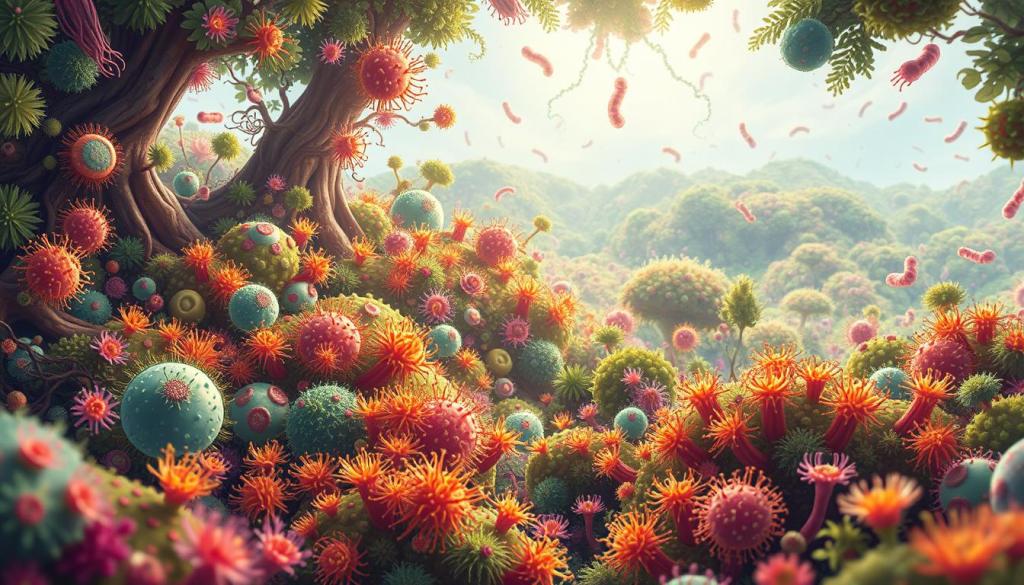
Studies show bacteria are everywhere and very diverse. Soil alone has a huge number of different bacteria. This shows how important they are to our planet.
Impact on Ecosystem Resilience
Bacteria help ecosystems stay strong in many ways:
- They make ecosystems more flexible
- They help cycle nutrients
- They adapt well to changes
Roles in Different Habitats
Bacteria live in many places and do important jobs. They help ecosystems in oceans, grasslands, and even extreme places.
| Habitat | Bacterial Contribution |
|---|---|
| Soil Ecosystems | Nutrient decomposition, soil structure maintenance |
| Aquatic Environments | Oxygen production, pollutant breakdown |
| Extreme Environments | Survival and adaptation in challenging conditions |
Conservation Efforts
Scientists are working hard to save bacterial diversity. They see how crucial bacteria are for our planet’s health.
The complexity of microbial networks influences ecosystem multifunctionality more than simply the number of bacterial taxa present.
Now, we’re focusing on saving these tiny but mighty organisms. They play a huge part in keeping our planet healthy.
Recent Research on Bacteria
Scientists are learning more about bacteria than ever before. They’ve found out how these tiny organisms work. This has changed what we thought we knew about them.
Studies have shown how bacteria interact and pass on traits. This has given us a new view of their world.
Advances in Microbiology
New research has uncovered amazing things about bacteria:
- Bacteria can remember and share changes with their offspring
- They might pass on traits without using DNA
- What’s around them affects how they adapt
Applications in Medicine
A study with 86 people gave us important medical insights:
| Research Parameter | Findings |
|---|---|
| Study Duration | Six years |
| Biological Samples | 5,432 samples |
| Genetic Measurements | 118,124,374 measurements |
| Microbe Population | Approximately 39 trillion microbes |
Innovations in Environmental Science
Bacteria are incredibly adaptable. Escherichia coli research shows that even with just 4,000 genes, they can show complex behaviors.
Bacterial research suggests that non-genetic inheritance might be more common across biological systems than previously understood.
The National Science Foundation’s ongoing support (Award MCB-2206974) shows how vital it is to study bacteria. It helps us learn more about the world.
Bacteria and Technological Innovations
The world of bacterial functions is changing fast. Prokaryotic activities are leading to new discoveries in science. This is changing how we see the power of microbes.
Today, scientists are finding amazing ways to use bacteria for new tech. These tiny creatures are helping solve big scientific problems.
Bioengineering Applications
Bacteria are pushing the limits of bioengineering. Scientists are finding new ways to use bacteria for different needs:
- Creating sustainable biomaterials
- Designing ways to clean up the environment
- Coming up with new ways to make energy
Development of Biosensors
New biosensors use bacteria to spot important health and environmental issues. Recent improvements show great promise:
- They can find bacteria in just 20 minutes
- They only need a tiny bit of sample (three microliters)
- They can measure things very accurately
Synthetic Biology Breakthroughs
Synthetic biology is a new area where bacteria are being reprogrammed for new tech uses. CRISPR-Cas systems are making it possible to change genes with precision. This opens up many possibilities.
“Bacteria are not just microscopic organisms, but powerful technological platforms waiting to be explored.” – Scientific Innovation Journal
The mix of microbiology and technology is leading to big changes. It’s changing many fields, from health to environmental science.
Conclusion: The Vital Functions of Bacteria
Bacteria are a unique part of our world. They play a big role in our ecosystems, health, and technology. For billions of years, they’ve been around, making up over 75% of all species.
Bacteria do more than just survive. They help recycle nutrients and produce food. They’re also key in cleaning up pollution, treating diseases, and saving the environment. Their ability to adapt shows how important they are for life on Earth.
Summary of Key Insights
Bacteria have complex relationships with their surroundings and us. While some can cause harm, many are vital for our health and the environment. Research into bacteria could lead to big breakthroughs in medicine, farming, and technology.
Future Perspectives
As science gets better, we’ll find more ways to use bacteria. They could help solve big problems like pollution and diseases. By studying bacteria, we can find new ways to live sustainably.
FAQ
What exactly are bacteria?
Bacteria are tiny, single-celled organisms found everywhere on Earth. They don’t have a nucleus and can live in extreme conditions. Bacteria come in different shapes and are vital for our health and the environment.
Are all bacteria harmful?
No, not all bacteria are bad. Many are good and help us stay healthy. They aid digestion, make vitamins, and keep harmful bacteria away. In nature, they recycle nutrients and fix nitrogen.
How do bacteria reproduce?
Bacteria reproduce by splitting into two identical cells. This quick process helps them grow fast when conditions are right. They can also share genetic material, making them adaptable.
What is antibiotic resistance?
Antibiotic resistance happens when bacteria become immune to antibiotics. This is due to genetic changes or acquiring resistance genes. Overusing antibiotics speeds up this problem, making infections harder to treat.
How do bacteria obtain energy?
Bacteria get energy in different ways. Some use oxygen, while others don’t. They can also photosynthesize or break down organic matter. This flexibility helps them thrive in many environments.
What role do bacteria play in agriculture?
Bacteria are key in farming. They fix nitrogen, enrich soil, and control pests. Some help plants absorb nutrients and protect crops from diseases. They are also used as natural fertilizers to boost crop yields.
Can bacteria be used in technology?
Yes, bacteria have many uses in tech. They clean pollutants, make enzymes and medicines, and create biosensors. Synthetic biology uses bacteria to solve big challenges.
How do bacteria impact human health?
Bacteria greatly affect our health, especially in the gut. Good bacteria help with digestion and boost our immune system. Bad bacteria can cause infections. Keeping a balance is key to staying healthy.





Leave a Comment
Your email address will not be published. Required fields are marked *