


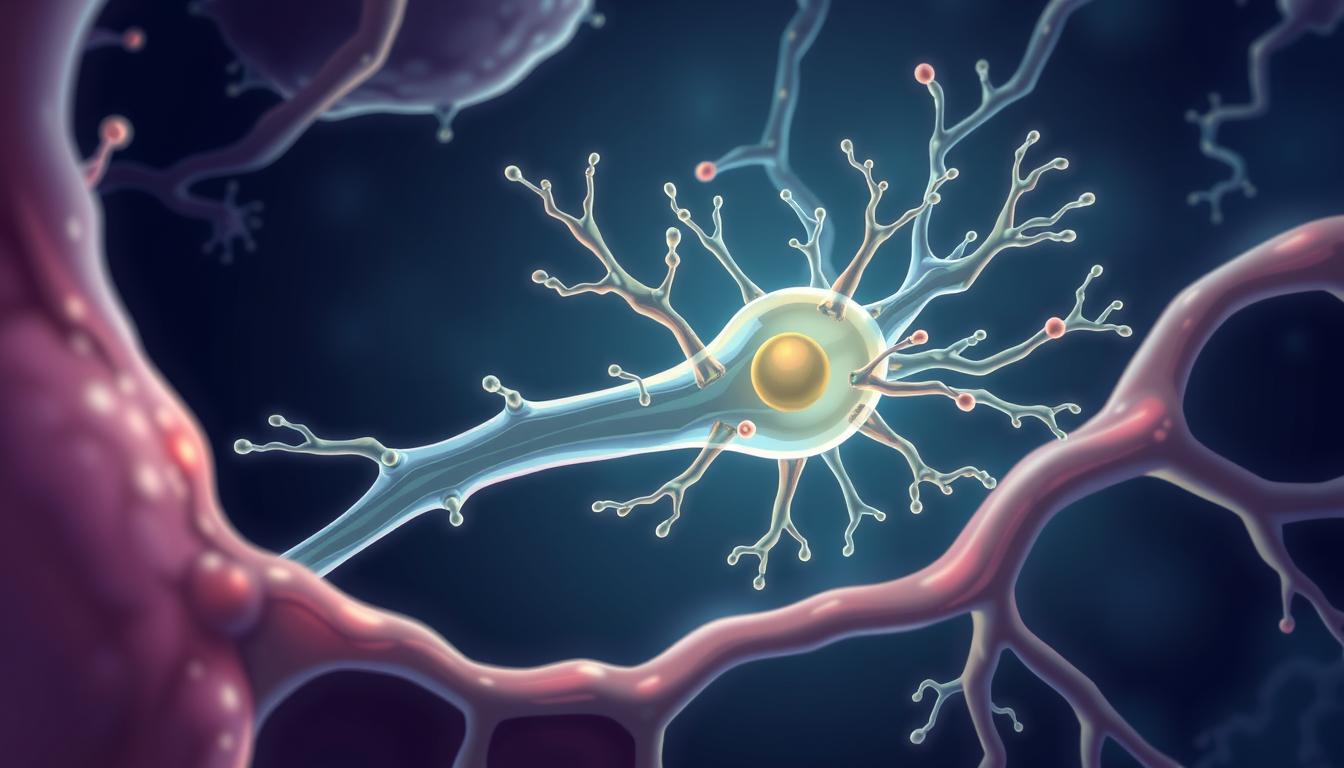
Have you ever thought about the silent builders in your body? Fibroblasts are the hidden heroes of cellular upkeep. They play a key role in keeping and fixing human tissue.
So, what do fibroblasts do? These amazing cells are the main type in connective tissues. They are the main source of the extracellular matrix (ECM). Their role goes beyond just holding things together. They are involved in many complex processes that help our bodies work well.
Fibroblasts are experts at changing and adapting. They make important proteins like collagen and elastin. They also create forces and networks that help other cells in different organs. They are key in healing wounds and managing inflammation, helping our bodies stay in good shape.
Key Takeaways
- Fibroblasts are critical for maintaining tissue structure and repair
- They produce essential extracellular matrix components
- Fibroblasts play a key role in wound healing and inflammation
- These cells can adapt to different tissue environments
- Fibroblast dysfunction is linked to various chronic conditions
1. Introduction to Fibroblasts
Fibroblasts are key cells in our body’s connective tissues. They help keep our body’s structure strong. These cells are like the architects of our body’s tissues.
What Are Fibroblasts?
Rudolf Virchow discovered fibroblasts in 1858. They are the most common cells in connective tissue. These cells have special abilities that help them do important jobs in our body.
- Most common cell type in connective tissues
- Primary producers of extracellular matrix (ECM)
- Crucial for tissue maintenance and repair
The Role of Fibroblasts in Tissue Repair
Fibroblasts are vital in healing. When our body gets hurt, these cells quickly go to the damaged area. They start a complex repair process by making proteins and growth factors.
“Fibroblasts are the body’s master builders, reconstructing and maintaining tissue integrity with remarkable precision.”
| Fibroblast Function | Key Characteristics |
|---|---|
| ECM Production | Synthesize collagen, fibronectin, and ground substance |
| Wound Healing | Migrate to injury sites, promote tissue regeneration |
| Cellular Communication | Release growth factors and cytokines |
Learning about fibroblasts shows how they keep our body’s structure in top shape. They do this through amazing biological processes.
2. Fibroblast Structure and Characteristics
Fibroblasts are key cells that keep tissues healthy. They come from mesenchymal origins. Their unique structure helps them fulfill their important role in our bodies.
Key Features of Fibroblasts
Fibroblasts have special shapes that help them do their job well:
- Elongated spindle or stellate shape
- Multiple cytoplasmic projections
- High capacity for extracellular matrix production
- Adaptable cellular structure
Cellular Structure of Fibroblasts
Fibroblasts are built for making lots of extracellular matrix. Their cytoplasm has:
- Abundant rough endoplasmic reticulum (rER)
- Large Golgi apparatus
- Specialized protein synthesis machinery
“Fibroblasts are the architects of connective tissue, meticulously crafting the structural framework that supports our body’s functions.”
Studies show fibroblasts can apply forces from 11 to 42 nanonewtons. This shows they are not just passive but active in keeping tissues strong.
They make important proteins like collagens and glycoproteins. This is key for tissue health and healing wounds.
3. Types of Fibroblasts in Different Tissues
Fibroblasts are key cells in our bodies, found in many tissues. They have different jobs in each organ system. These cells are special because they fit perfectly into their environments.

Dermal Fibroblasts: Skin’s Cellular Architects
Dermal fibroblasts keep our skin healthy and strong. They come in two types, each with its own job:
- Superficial lineage: They help make hair follicles.
- Deeper lineage: They make the extracellular matrix (ECM).
Cardiac Fibroblasts: Heart’s Structural Support
Cardiac fibroblasts are vital for the heart’s health. What do fibroblasts do in the heart? They make collagen, support the heart’s structure, and help it work right.
Pulmonary Fibroblasts: Lung Tissue Maintenance
Pulmonary fibroblasts help keep our lungs healthy. They fix damaged tissue and keep the lungs working well. They also make important proteins for lung structure and elasticity.
| Fibroblast Type | Primary Location | Key Functions |
|---|---|---|
| Dermal Fibroblasts | Skin | Hair follicle formation, ECM generation |
| Cardiac Fibroblasts | Heart | Collagen synthesis, structural support |
| Pulmonary Fibroblasts | Lungs | Tissue repair, structural protein production |
“Fibroblasts are not just passive cells, but dynamic architects of tissue structure and function.” – Cellular Biology Research
4. Functions of Fibroblasts in the Body
Fibroblasts are key to keeping tissues healthy. They create and maintain the body’s structure. They do this by making important parts of the extracellular matrix.
Synthesis of Extracellular Matrix
Fibroblasts do more than just hold things together. They build the extracellular matrix (ECM). This matrix is a network of proteins and molecules that give tissues their shape and strength.
- Produce multiple types of collagen
- Generate proteoglycans
- Synthesize fibronectin
- Create glycosaminoglycans
Production of Collagen and Elastin
Collagen production is a major job for fibroblasts. They make different types of collagen. This is important for tissue strength and flexibility.
| Collagen Type | Primary Function | Tissue Location |
|---|---|---|
| Type I | Skin and bone structure | Dermis, tendons |
| Type III | Tissue elasticity | Blood vessels, organs |
| Type IV | Basement membrane support | Epithelial layers |
“Fibroblasts are the unsung heroes of tissue maintenance, constantly rebuilding and supporting our body’s structural integrity.” – Research Insights
Genetic studies show fibroblasts are very diverse. Research by Muhl et al. (2020) found that most fibroblast genes are specific to certain tissues. This highlights their role in collagen production and tissue-specific functions.
5. Fibroblasts and Wound Healing
Wound healing is a complex process where cells play a key role. The body’s ability to fix damaged tissue relies on fibroblasts.
The healing journey has three main stages. In each, fibroblasts show their amazing skills:
- Inflammation phase
- Proliferation phase
- Remodeling phase
Process of Wound Healing
In the first stage, inflammation, fibroblasts start working. They move to the wound and begin a series of actions. These actions get the tissue ready for repair.
Importance of Fibroblasts in Healing
Fibroblasts are vital for fixing skin. They do several important jobs:
- Make parts of the extracellular matrix
- Release growth factors
- Help rebuild tissue
“Fibroblasts are the architects of tissue regeneration, meticulously rebuilding damaged structures.”
| Wound Healing Phase | Fibroblast Function |
|---|---|
| Inflammation | Activate and migrate to wound site |
| Proliferation | Produce collagen and promote angiogenesis |
| Remodeling | Restructure tissue and reduce wound size |
Studies show that fibroblast clusters grow from 3.9% in normal skin to 14% in wounded skin. This shows how important they are in healing. Genetic research also points out that without enough fibroblasts, wounds won’t heal.
Learning about fibroblast behavior could lead to better treatments for wounds.
6. Fibroblast Activation and Signaling
Fibroblasts are key to keeping tissues healthy. They use complex ways to start and stop their actions. These cells adjust to their surroundings, controlling what they make and do with great accuracy.

Mechanisms of Fibroblast Activation
Getting fibroblasts to work involves a detailed process. It’s started by different molecular signals. Important steps include:
- Growth factor stimulation
- Mechanical stress responses
- Inflammatory cytokine interactions
- Tissue injury signals
Signaling Pathways in Fibroblast Regulation
Many pathways control how fibroblasts act. Growth factors are especially important. Some key players are:
- Transcription growth factor-alpha (TGF-A)
- Platelet-derived growth factor (PDGF)
- Epidermal growth factor (EGF)
- Tumor necrosis factor (TNF)
“Fibroblasts are dynamic cellular architects, constantly remodeling their environment through precise protein secretion and signaling networks.”
Research into fibroblasts has uncovered interesting facts. Not many genes are the same in different tissues. Yet, two main types of fibroblasts have been found.
Most PDGFRα+ cells in mice have a protein called dermatopontin. This shows they share markers across various tissues. These cells are very flexible, staying active through injury and changes in tissue.
7. Fibroblasts in Inflammation
Fibroblasts are key players in the body’s fight against inflammation. They do more than just hold tissues together. These cells work closely with the immune system, changing how tissues respond to inflammation.
Role in Inflammatory Response
Fibroblasts have a big role in inflammation. They help by:
- Releasing substances that start inflammation
- Producing growth factors
- Changing the environment around tissues
Interaction with Immune Cells
Fibroblasts talk to many types of immune cells. These talks are important for controlling the immune system. Studies show they can:
- Help bring immune cells to the area
- Start and control immune reactions
- Send signals about inflammation
“Fibroblasts are not passive observers but active participants in inflammatory processes” – Modern Immunology Research
In diseases like rheumatoid arthritis, fibroblasts are major players. They make substances that keep inflammation going. This shows how important they are in making the disease worse.
8. Fibroblasts in Regenerative Medicine
Regenerative medicine is a new and exciting field in medical science. Fibroblasts, a type of connective tissue cell, are key to new treatments. They are being studied for their ability to help heal and grow tissues.
The study of fibroblasts has a long history. Important discoveries have been made over the years:
- In 1858, researchers first described “spindle-shaped cells of connective tissue”
- The term “fibroblast” was officially introduced in 1898
- Modern research has revealed their incredible regenerative capabilities
Potential for Tissue Engineering
Fibroblasts are very good at helping tissues grow back. Researchers have found that these cells can be taken from different tissues and grown in the lab. This opens up new ways to heal and repair the body.
“Fibroblasts are not just cells, they are biological architects of repair and regeneration.”
Advances in Fibroblast Research
New discoveries have shown how powerful fibroblasts can be. Scientists have turned these cells into stem cells, which could lead to new treatments. There are different types of fibroblasts, each with its own role:
- Fibrosis-associated fibroblasts (FAF)
- Wound healing-associated fibroblasts (WAF)
- Cancer-associated fibroblasts (CAF)
- Aging-associated fibroblasts (AAF)
Research shows that fibroblasts are important for keeping tissues healthy. They help fix damaged tissues by making and changing the matrix around cells.
9. Disorders Associated with Fibroblast Dysfunction
Fibroblast dysfunction can lead to serious health issues in many body systems. By studying these disorders, researchers can work on new treatments for complex diseases.

Fibroblasts are key to keeping tissues healthy. When they don’t work right, they can cause many serious health problems.
Fibrosis Conditions
Fibrosis is a serious issue caused by wrong extracellular matrix production. It’s marked by:
- Too much collagen
- Tissue scarring
- Organ problems
Myofibroblasts in scar tissue lead to conditions like:
- Hypertrophic scars
- Keloids
- Dupuytren contracture
Role in Cancer Progression
Bad fibroblast behavior can help tumors grow. Abnormal fibroblast function can make it easier for cancer cells to spread.
“Fibroblasts are not passive bystanders but active participants in disease progression” – Research Insights
Skin diseases affect about one-third of the world’s population. Fibroblast problems play a big part in these diseases. Genes like SFRP2, TNC, and OVOL1 are linked to autoimmune skin issues.
Learning how fibroblasts and diseases interact can lead to new treatments.
10. Techniques for Studying Fibroblasts
Studying fibroblasts needs advanced research methods. These methods help us see how these cells work. They show us what fibroblasts do and their role in life.
Looking into fibroblasts is a detailed job. It connects lab work with real-world studies. These methods give us deep insights into how cells talk to each other.
In Vitro Methods for Fibroblast Analysis
In vitro methods let us study fibroblasts in a controlled setting. Scientists use several important ways to do this:
- Cell culture techniques
- Molecular biology approaches
- Genetic manipulation strategies
- Protein expression analysis
In Vivo Approaches to Fibroblast Research
To see how fibroblasts act in living things, we need in vivo research. This includes:
- Animal model studies
- Tissue-specific investigations
- Genetic tracing experiments
- Imaging technologies
| Research Technique | Primary Focus | Key Advantages |
|---|---|---|
| Cell Culture | Isolated fibroblast behavior | Controlled environment |
| Genetic Manipulation | Functional gene analysis | Precise cellular mechanism understanding |
| In Vivo Imaging | Real-time cellular interactions | Dynamic process observation |
“Research techniques are the windows through which we understand cellular complexity.” – Scientific Research Quarterly
Today’s fibroblast research uses the latest tech to uncover their roles. By mixing different methods, scientists keep learning about fibroblast functions.
11. Future Directions in Fibroblast Research
Fibroblast research is growing, showing how these cells are linked to many biological systems. Scientists are finding new ways to use fibroblasts for medical breakthroughs.
Emerging Therapeutic Strategies
New tools like single-cell RNA sequencing have shown fibroblasts are very different in each tissue. Researchers are looking into new ways to use them for healing.
- Targeted cellular therapies for tissue repair
- Precision approaches to modulate fibroblast activity
- Advanced genetic engineering techniques
Challenges and Opportunities
Fibroblasts are complex, offering both big challenges and great chances for medical science. Cutting-edge studies have given us key insights into their roles.
| Research Area | Current Focus | Potential Impact |
|---|---|---|
| CNS Fibroblasts | Neurological Disease Mechanisms | Understanding Injury Responses |
| Cardiac Research | Tissue Regeneration | Cardiovascular Healing Strategies |
| Genetic Profiling | Molecular Characterization | Personalized Treatment Development |
The future of fibroblast research lies in understanding their remarkable adaptability and potential for transformative medical interventions.
Research shows fibroblasts are more than just structural cells. They play a key role in healing and maintaining tissues. This opens up new paths for medical treatments.
12. Conclusion: The Importance of Fibroblasts
Fibroblasts are key cells in our bodies, playing a big role in many tissues. They do more than just hold things together. They help heal wounds, keep tissues healthy, and are involved in many important processes.
These cells make a lot of the stuff that holds our bodies together, like collagen. It’s a big part of what makes up our bodies.
When it comes to skin repair, fibroblasts are superheroes. They turn into myofibroblasts to help fix wounds. They make sure tissues are strong and healthy again.
They also help blood vessels grow and support healing. This is all thanks to their amazing ability to make forces and send out signals.
Scientists are still learning about fibroblasts and their role in diseases. They think these cells could be key to finding new treatments. This could lead to big advances in understanding our bodies.
Summary of Key Functions
Fibroblasts are like the builders of our bodies. They make the stuff that holds us together and respond to signals. They are crucial for keeping us healthy.
More research will help us learn even more about these cells. It could lead to new ways to treat diseases.
Implications for Health and Disease
Fibroblasts have many uses that could help us in the future. By studying how they help with skin repair and healing, scientists can find new treatments. This could help with many health problems.
The possibilities for new treatments are exciting. It shows how important fibroblasts are for our health.
FAQ
What are fibroblasts and what is their primary function?
Fibroblasts are special cells in our body. They make and keep the matrix outside our cells. This matrix is key for our tissues to work right and heal wounds.
How do fibroblasts contribute to wound healing?
When we get hurt, fibroblasts move to the spot. They grow and make proteins like collagen. This helps fix the tissue and close the wound.
Where are different types of fibroblasts found in the body?
You can find fibroblasts in many places. They are in our skin, heart, lungs, and more. Each place has its own job for these cells.
What is the extracellular matrix, and how do fibroblasts produce it?
The matrix is a web of proteins and molecules. It supports our cells. Fibroblasts make this matrix by secreting proteins like collagen and elastin.
How do fibroblasts interact with the immune system?
Fibroblasts help with inflammation. They make substances that attract immune cells. They also talk to these cells, helping our body heal.
What happens when fibroblast function goes wrong?
If fibroblasts don’t work right, we can get scarring and trouble healing wounds. It might even help cancer grow. This messes up our tissues.
Can fibroblasts be used in medical treatments?
Yes, scientists are looking at fibroblasts for new treatments. They might help fix damaged tissues and heal wounds. It’s a promising area for medicine.
How do fibroblasts become activated?
Many things can turn on fibroblasts, like growth factors and tissue damage. When they’re on, they start making more matrix and help fix tissues.






Leave a Comment
Your email address will not be published. Required fields are marked *