



Ever thought about the tiny hero behind big scientific wins in labs? It’s the 50 ml centrifuge tube.
Lab supplies are key in science, and 50 ml centrifuge tubes are a must-have. They can handle extreme cold and heat, from -80°C to 120°C.
These tubes are more than just containers. Made from high-clarity polypropylene, they help scientists do precise work. You can buy them in bulk, 500 per case, for various research needs.
Key Takeaways
- 50 ml centrifuge tubes are versatile lab consumables critical for scientific research
- Tubes can withstand extreme temperature ranges from -80°C to 120°C
- High-clarity polypropylene ensures optimal sample visibility
- Bulk packaging supports large-scale research needs
- Centrifuge tubes feature advanced design for precise scientific work
Importance of 50 ml Centrifuge Tubes in Laboratories
Centrifuge tubes are key tools in scientific research. They help separate and analyze complex biological samples. This is done with great precision and efficiency.
Laboratory experts use different sizes of centrifuge tubes for many important tasks. These containers are versatile and support various research methods in different fields.
Critical Applications in Biological Research
Researchers use centrifuge tubes for many specific tasks:
- Cell culture sample processing
- Protein purification protocols
- DNA and RNA extraction
- Blood component separation
- Microbial research techniques
Common Laboratory Techniques
The main techniques that use centrifuge tubes are:
- Sedimentation: Separating different cellular components
- Density gradient centrifugation: Isolating specific molecular fractions
- Pelleting: Concentrating cellular materials
- Sample preparation: Preparing specimens for advanced analysis
Today’s molecular biology supplies have made these tubes into precise tools. They help researchers do more complex and accurate scientific work.
Material Composition and Features of Centrifuge Tubes
Laboratory research needs precise tools, and 50 ml centrifuge tubes are key. They are made with advanced materials and special features for complex scientific tasks.
Polypropylene tubes are the top choice for lab containers. Made from high-quality USP Class VI medical-grade polypropylene, they perform well in many research settings.
Material Characteristics
The main material choice is polypropylene tubes with impressive specs:
- Temperature range from -80°C to +121°C
- Can handle up to 18,000 x g RCF
- Meets US FDA 21 CFR standards
- Surface is chemical and scratch-resistant
Key Design Features
Conical tubes have special designs to boost research:
- Large white area for writing sample details
- Flat thread cap for tight closure
- Available in clear and amber colors
- Can be sterile and nonpyrogenic
These carefully designed tubes are vital for lab work in molecular biology, clinical chemistry, and research. They offer reliable and precise tools for managing samples.
Choosing the Right 50 ml Centrifuge Tube
Choosing the right centrifuge tube is key for lab success. Biotechnology needs precision, and the right plastics are crucial. When picking 50 ml centrifuge tubes, think about performance and sample safety.

- Material compatibility with specific research protocols
- Maximum centrifugal force tolerance
- Temperature resistance
- Seal quality
- Sample volume requirements
Critical Factors in Tube Selection
Each experiment has its own needs. Different biotechnology tools need tubes with special features. Polypropylene tubes can handle speeds up to 12,000 x g, making them great for many labs.
Centrifuge Compatibility Considerations
It’s vital to match tubes with centrifuges. Important points include:
- Rotor type matching
- Tube shape and dimensions
- Maximum operational speed limits
- Chemical resistance requirements
Laboratory plastics have improved a lot. This means more specialized tubes for scientists. Always check tube specs against your experiment to get the best results.
Proper Usage Guidelines for Centrifuge Tubes
Laboratory experts use 50 ml centrifuge tubes for storing and processing samples. Knowing how to use them right is key for good research and keeping samples safe.
Best Practices for Sample Preparation
Getting samples ready for 50 ml centrifuge tubes is very important. Here are some tips to follow:
- Fill tubes at least 75% to prevent material stress
- Check tubes for cracks or damage before use
- Ensure equal sample volumes to maintain centrifuge balance
- Use appropriate personal protective equipment
Recommendations for Centrifugation Settings
Choosing the right settings for centrifugation is crucial for success. Different needs call for different settings:
- Match centrifuge speed to sample type
- Control deceleration to prevent sample disruption
- Consider temperature sensitivity of samples
- Verify rotor compatibility
50 ml centrifuge tubes work well from -80°C to 120°C. This makes them useful for many research tasks. Storing samples right depends on following these guidelines.
Precision in sample handling determines the quality of scientific research.
Maintaining Centrifuge Tubes for Longevity
Keeping lab supplies in good shape is key for reliable research. Microcentrifuge tubes are crucial in science, needing careful care to last longer.
Researchers must find smart ways to keep centrifuge tubes in top shape for many uses.
Cleaning Procedures for Optimal Performance
Good maintenance of centrifuge tubes means following strict cleaning steps:
- Rinse tubes right after use with the right solvents
- Use mild detergents that won’t harm the tubes
- Stay away from rough cleaning that could scratch the tubes
- Check tubes for tiny cracks or wear
Sterilization and Storage Recommendations
Keeping tubes clean is vital to stop contamination in labs. Most good lab supplies can handle many cleanings:
- Autoclave tubes at 121°C
- Use UV light for extra cleaning power
- Keep sterilized tubes in sealed, clean places
- Keep storage areas at a steady temperature
By following these detailed care tips, scientists can make their microcentrifuge tubes last longer. This helps keep their experiments consistent.
Safety Considerations When Using Centrifuge Tubes
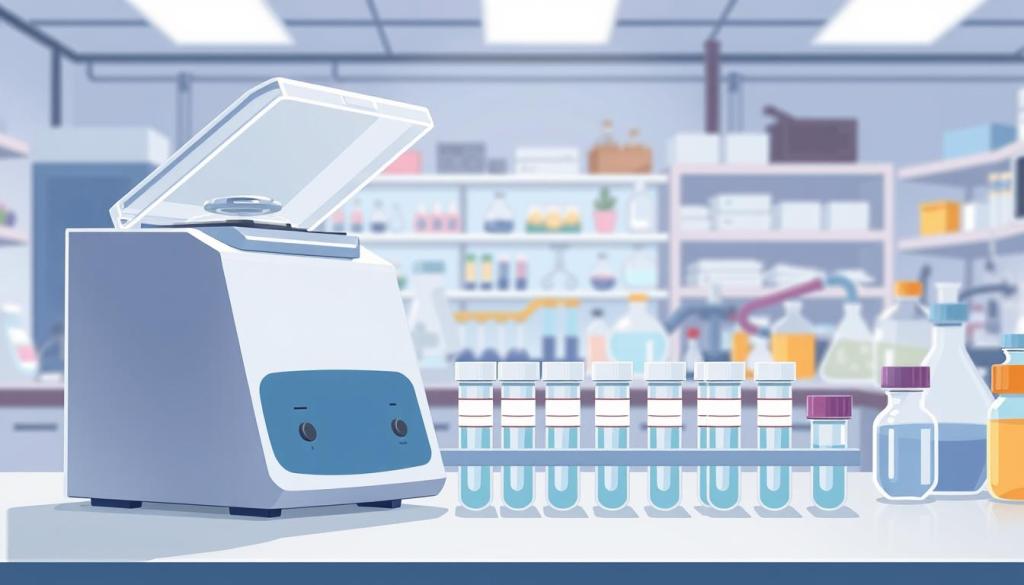
Laboratory safety is crucial when using molecular biology supplies. Centrifuge tubes are key in research but need careful handling. It’s important to follow safety rules to avoid risks.
Handling Hazardous Biological Samples
Working with dangerous biological materials requires careful steps. Here are some key safety tips:
- Always wear the right personal protective equipment (PPE)
- Use sealed centrifuge tubes to stop aerosols
- Check tubes for cracks or damage before use
- Follow proper containment for infectious materials
Preventing Contamination
Contamination can ruin research. Here’s how to keep samples clean:
- Choose non-pyrogenic and DNase/RNase-free tubes
- Use strict aseptic techniques
- Clean centrifuge rotors and tools often
- Store tubes in clean areas
By following these safety steps, researchers can work safely with sensitive samples. This helps protect their health and research results.
Innovations in Centrifuge Tube Design
The world of biotechnology equipment is always changing. Centrifuge tube sizes are getting better. Now, researchers have new tools that make their work more precise and efficient.
Today’s centrifuge tubes are a big step forward in lab tech. They offer new ways to handle and analyze samples. This is a big win for scientists.
Recent Advancements in Lab Equipment
- Ergonomic designs enabling one-handed operation
- Enhanced leak-resistant construction
- Improved sample visibility with clear graduations
- Expanded maximum relative centrifugal force (RCF) capabilities
The newest centrifuge tubes are a result of amazing engineering. Nunc EZFlip Conical Centrifuge Tubes show how far tube technology has come.
Impact of Design on Research Outcomes
| Design Feature | Research Benefit |
|---|---|
| Maximum RCF of 15,000 x g | Enhanced separation capabilities |
| Large writing area | Improved sample traceability |
| Nonpyrogenic materials | Reduced contamination risk |
“Innovation drives scientific discovery, and centrifuge tube design is no exception.” – Laboratory Research Quarterly
These updates in biotechnology show how small changes can make a big difference. They help scientists work more precisely and efficiently.
Comparison of Centrifuge Tubes vs. Other Lab Containers
Choosing the right container is key in lab research. Centrifuge tubes, like polypropylene ones, are crucial. They offer benefits over other containers.
Lab containers vary in what they’re good for. Knowing these differences helps researchers pick the best.
Advantages of Centrifuge Tubes
Centrifuge tubes have big pluses over other containers:
- They last well under high-speed spinning
- They handle a wide range of temperatures (-80°C to 121°C)
- They’re low-risk for contamination
- They’re affordable and disposable
Situational Appropriateness
Choosing containers depends on the research needs. Key factors include:
- How well they handle centrifugal force
- Chemical resistance
- Temperature range
- Sample size
Polypropylene tubes are great in many cases. They’re strong against many centrifugation cycles. They also work well over a wide temperature range, making them top picks in biology.
The right container can greatly affect research results and accuracy.
While glass is good for chemicals, plastic tubes are more flexible and perform better in labs.
Future Trends in Centrifuge Tube Technology
The world of lab research is changing fast, with 50 ml centrifuge tubes leading the way. New trends show big improvements in design and use, thanks to biotech and clinical research needs. The market for these tubes is set to hit USD 2.5 billion by 2032, showing how vital they are for science.
Scientists are making smart conical tubes with sensors for real-time data. These advanced tubes will change how we do research, making it more precise. There’s also a move towards using eco-friendly materials and better manufacturing methods.
New areas in biology are pushing tube technology even further. They’re working on tubes that can handle harsh chemicals and extreme temperatures. The goal is to keep samples safe and intact, especially for pharma and biotech.
The future of centrifuge tubes looks bright, with tech making research more complex. As labs need better tools, these tubes will keep being key. The ongoing innovations mean 50 ml centrifuge tubes will stay essential in labs everywhere.
FAQ
What are 50 ml centrifuge tubes primarily used for in laboratory research?
50 ml centrifuge tubes are key tools in labs. They help prepare samples, grow cells, and store liquids. They’re used in many areas of biology and biotech.
What materials are typically used to manufacture centrifuge tubes?
Mostly, they’re made from polypropylene. This material is strong, can handle chemicals well, and stays stable in different temperatures.
How do I choose the right 50 ml centrifuge tube for my experiment?
When picking a tube, think about what you need. Look at the material, temperature range, and if it fits your centrifuge. Also, consider the volume and your experiment’s needs.
What are the key features to look for in a high-quality centrifuge tube?
Look for clear marks for measuring, sterile packaging, and the ability to handle different temperatures. It should also be leak-proof and work with many centrifuges.
How should 50 ml centrifuge tubes be properly maintained?
To keep them in good shape, clean them well and sterilize them after each use. Store them in a clean, dry place. Avoid extreme temperatures and harsh chemicals.
What safety precautions should be taken when using centrifuge tubes?
Always wear protective gear and handle samples carefully. Use the right seals and follow strict protocols to avoid contamination.
Can 50 ml centrifuge tubes be used across different temperature ranges?
Yes, most polypropylene tubes can handle -80°C to 121°C. This makes them useful for freezing, refrigeration, and autoclaving.
What recent innovations have improved centrifuge tube design?
New designs include better leak resistance and clearer tubes for easier viewing. They’re also easier to hold and have special coatings for certain research needs.
How do centrifuge tubes differ from other laboratory containers?
Centrifuge tubes are made for high-speed spinning. They have precise measurements and protect samples well during separation and storage.
What are the future trends in centrifuge tube technology?
Future trends include smart tubes with sensors, eco-friendly materials, and designs for specific research areas. These advancements will help in molecular biology and biotechnology.




Leave a Comment
Your email address will not be published. Required fields are marked *