


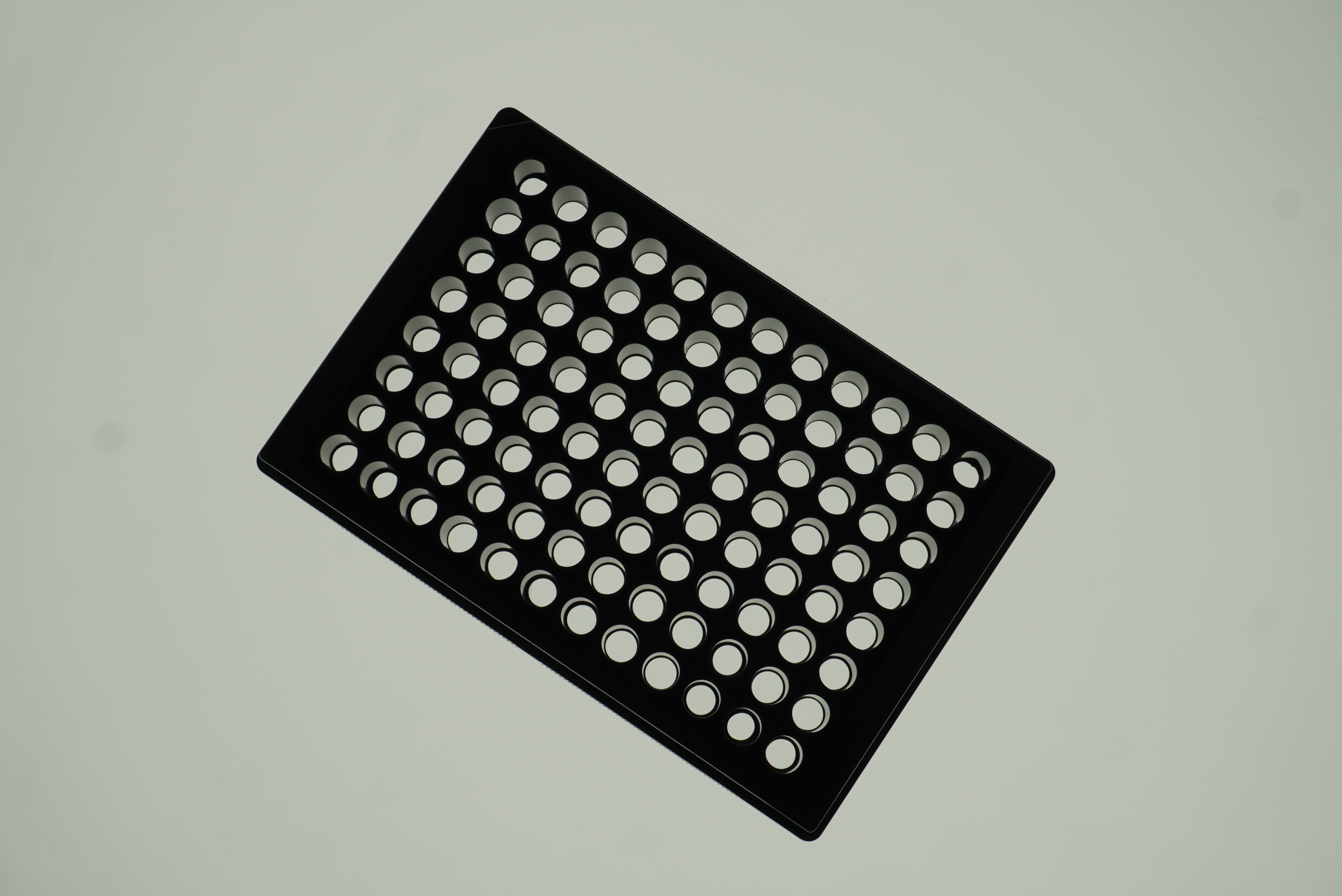
These advanced microtiter plates are true examples of precision engineering. With 96 wells, they let researchers do many tests at once. This boosts efficiency and cuts down on mistakes.
They’re used in cell studies and complex tests, becoming a must-have in science. Their standard design fits well with automated systems. This makes them a key part of fast and efficient research.
Key Takeaways
- 96 microwell plates enable simultaneous multi-sample testing
- Supports advanced research across biological disciplines
- Compatible with automated laboratory systems
- Provides consistent experimental reproducibility
- Reduces overall research time and potential errors
Introduction to 96 Microwell Plates
Microwell plates are a big step forward in lab research. They give scientists a solid base for precise biological tests. These special plates have changed how we do cell culture, make assays, and screen samples.
The 96-well plate is a key breakthrough in science. It lets researchers do many tests at once in an efficient way. With a 12 x 8 setup, these plates help scientists do more with their work.
Overview of Microwell Technology
Today’s microwell plates are made from top-notch polystyrene. They are designed for great optical quality and consistent results. The key features of these plates are:
- Standardized 9 mm well-to-well spacing
- Precise 14.35 mm plate height
- Versatile volume capacity between 0.1 to 0.3 mL per well
- Compatible with automated laboratory systems
Importance in Laboratory Settings
The assay plate is a must-have in many scientific fields. Researchers use these plates for:
- Consistent experimental reproducibility
- Efficient sample processing
- Reduced material consumption
- Enhanced data collection capabilities
With 96-well microplates, scientists can run complex tests with great precision and speed.
Key Features of 96 Microwell Plates
96 microwell plates are a big step forward in lab research. They offer a standard way for high-throughput screening and precise experiments. These tools have changed science by making it more consistent and efficient.
The design of 96 microwell plates makes them work well with modern lab tech. Their 8×12 grid helps with many important research methods, like:
- Microarray analysis
- Bioassay development
- Cell culture investigations
- Immunological testing
Standardization in Experiments
Standardization is key for reliable science. 96 microwell plates help by having the same size wells and materials. Researchers can trust that their experiments will work the same way in different labs, making results more reliable.
Compatibility with Automated Systems
Today’s science needs to be precise and fast. 96 microwell plates work great with advanced robots and automated tools. This makes experiments more accurate and quicker, especially in big screening projects.
The standardized 96-well format has become the gold standard for systematic scientific investigation.
These plates are made to fit many research needs. They are a must-have for scientists looking for reliable and efficient ways to do their work.
Applications of 96 Microwell Plates
The use of microplates has changed biological research a lot. It has made labs more efficient in many fields. These plates are key for scientists who need accurate and quick ways to do experiments.
Today’s 96 microwell plates come with many special surface treatments. This lets scientists pick the best plate for their research needs.
Cell Culture Applications
Cell culture research gets a big boost from these plates. There are different surface treatments for various cell types:
- cellGrade™ standard surface for routine cell cultures
- cellGrade™ plus for challenging adherent cell lines
- cellGrade™ premium mimicking poly-D-lysine characteristics
- inertGrade™ for preventing cell adhesion
Enzyme-Linked Immunosorbent Assays (ELISA)
ELISA techniques use special microplate surfaces to improve immunology research. BRANDplates® offers surfaces made just for detecting and measuring proteins:
- immunoGrade™ for optimal IgG immobilization
- hydroGrade™ hydrophilic surfaces
- lipoGrade™ hydrophobic configurations
These advanced plates help avoid contamination and get better results in many experiments. Scientists can get sample plates to find the best surface for their research.
Advantages of Using 96 Microwell Plates
Laboratory researchers have found big benefits in using 96 microwell plates. These special plates are a big step forward in high-throughput screening. They help scientists work more efficiently and accurately.
- Exceptional capacity for simultaneous experimental testing
- Dramatic reduction in sample and reagent consumption
- Enhanced reproducibility of research results
- Seamless integration with automated laboratory equipment
High Throughput Screening Capabilities
Now, researchers can run many experiments at once. Some 96-well plates can handle up to 90 different tests in one go. This is a big leap from old methods that took more time and money.
Cost-Effectiveness in Research
Using 96 microwell plates saves a lot of money. They make tests smaller and use less reagent. Sample volumes can drop from 200-250 μl to 40-150 μl per test. This is a huge win for lab budgets.
Modern scientific research demands innovative solutions that optimize both performance and resource utilization.
Scientists using these plates see faster work, better data, and more productivity. It’s a win-win for research.
Material and Design Considerations
Choosing the right microplate is key to good research. Scientists use special plates for cell culture and assays to get accurate results.
Today’s microplates are made with advanced materials for different lab needs. Medical-grade virgin polypropylene is the main choice. It’s great for its chemical resistance and lasting quality.
Common Materials in Microplate Manufacturing
- Polystyrene: Ideal for standard cell culture and diagnostic applications
- Polypropylene: Provides superior chemical resistance
- Cyclic olefin copolymer (COC): Excellent for UV-sensitive experiments
- Quartz: Optimal for high-precision optical measurements
Surface Treatments for Enhanced Performance
Surface changes are vital for better microplate use. They affect how cells and biomolecules stick to the plate.
- Nunclon Delta Surface: Enhances cell attachment properties
- Collagen I coating: Promotes cell growth in specific research contexts
- Poly-D-Lysine treatment: Improves neuronal cell culture performance
Researchers need to think about material and surface treatments when picking a microplate. The right one can make a big difference in assay results and research success.
Choosing the Right 96 Microwell Plate
Choosing the right well plate is key for good scientific research and bioassay experiments. It’s important to look at many factors to get the best results in your microarray and lab tests.
When picking a 96 microwell plate, several important things to consider come up. What you need for your research will decide the best plate for you.
Key Factors for Selection
Here are the main things to think about:
- What kind of assay you’re doing and what you need
- The shape of the well bottom
- How the surface is treated
- How well it lets light through
- If it needs to be sterile
Well Bottom Configurations
There are different well shapes for different needs:
| Well Bottom Type | Recommended Application | Volume Range |
|---|---|---|
| Flat Bottom | General cell culture and ELISA | 50-200 μL |
| U-Bottom | Immunological assays | 100-300 μL |
| V-Bottom | Liquid handling precision | 75-250 μL |
Performance Considerations
The right well plate can really make a difference in your results. Choosing wisely means you get consistent results, less variation, and better research efficiency.
Focus on finding plates that fit your bioassay needs. Think about surface chemistry, how well it lets light through, and if it works with your detection systems.
Best Practices for Handling 96 Microwell Plates
Handling lab equipment like microplates is key to keeping experiments clean and reliable. 96 microwell plates are very sensitive. They need careful handling to work well in cell culture and research.
Researchers must follow certain rules to keep their cell culture plates in top shape. This helps make sure their scientific experiments are trustworthy.
Sterilization Techniques
Keeping microplates clean is vital. Here are some ways to keep them free from contamination:
- Autoclave sterilization for heat-resistant materials
- UV light treatment for surface decontamination
- Chemical disinfection using 70% ethanol
- Sterile filtration for sensitive solutions
Proper Storage Conditions
Storing 96 microwell plates right is important. Here are some tips for keeping them in good condition:
- Store plates in clean, dust-free environments
- Maintain consistent temperature (typically 20-25°C)
- Protect from direct sunlight
- Keep plates in sealed packaging until use
When working with microplates, always wear gloves and use clean techniques. Consistent pipetting and careful manipulation are crucial for accurate and reliable results.
Precision in handling laboratory equipment defines the quality of scientific research.
Troubleshooting Common Issues
Researchers often face problems when using microtiter plates. These issues can affect the accuracy and reliability of bioassays. It’s important to know these challenges to keep experimental results high quality.
Problematic Assay Results: Identifying and Resolving Challenges
Laboratory professionals deal with several critical issues in assays on microwell plates. The main problems are:
- Pipetting errors leading to missed wells
- Cross-contamination risks
- Signal inconsistencies
- Background interference
Pipetting is a big challenge. Interruptions and handling small, colorless liquids make it hard to track filled and empty wells.
Mitigating Contamination Risks
To reduce contamination and ensure reliable bioassay results, researchers should follow these steps:
- Use electronic pipettes with plate tracking functions
- Calibrate multichannel pipettes regularly
- Follow strict washing protocols
- Check reagent expiration dates
Important strategies include increasing wash steps and keeping proper incubation temperatures. Also, make sure all reagents are at room temperature (15-20 minutes on the bench) before use.
Precision in microwell plate handling determines the quality of scientific research outcomes.
By understanding these common issues and using strict quality control, researchers can greatly improve their microwell plate experiments’ reliability and reproducibility.
Regulatory Compliance and Standards
The world of lab equipment needs strict standards for accuracy and reliability. 96 microwell plates are key in modern research. They must meet strict rules to keep research honest.
Scientific research relies on quality control and standard lab tools. The American National Standards Institute (ANSI) sets rules for using microarrays and well plates in labs.
Industry Guidelines for Usage
Researchers must follow specific rules when using microwell plates. Important things to consider include:
- Precise dimensional specifications
- Material composition requirements
- Surface treatment protocols
- Performance validation processes
Importance of Quality Control
Quality control is crucial for reliable science. Labs must have strong checks to make sure well plates work right.
| Quality Parameter | Verification Method | Acceptable Range |
|---|---|---|
| Dimensional Accuracy | Precision Measurements | ±0.1 mm |
| Material Consistency | Chemical Composition Analysis | 99.9% Purity |
| Surface Treatment | Microscopic Evaluation | Uniform Coating |
Following ANSI standards (ANSI/SBS 1-2004) makes sure microwell plates are up to scientific standards. This gives researchers dependable and consistent testing options.
Conclusion and Future Trends
The world of scientific research is always changing, with 96 microwell plates leading the way. These microplates have changed how we do high-throughput in many fields. They let researchers do complex experiments with great accuracy and speed.
New technologies are making microplates even better. For example, the HT-μUPS system shows great promise. It keeps cells alive and supports detailed research. Also, new microfluidic covers and systems are being developed. These advancements allow for constant cell monitoring and complex experiments.
The future of biological research looks bright with microplates. We can expect better performance, like less stress on cells and faster flow. New materials and systems will help scientists do even more detailed work.
Innovations in Microplate Design
Research places are working hard to create the next big thing in 96 microwell technology. They want to make microplates more flexible, better at collecting data, and more reliable. This means microplates will keep being a key tool in science, helping us find new things in medicine and biotech.
The Future of Laboratory Testing Solutions
Scientists will see even more improvements in microplates soon. They’ll focus on being more precise, needing less sample, and adding new sensors. The future of 96 microwell technology is full of promise, leading to faster discoveries and new ideas.
FAQ
What is a 96 microwell plate?
A 96 microwell plate is a tool used in labs. It has a 12 x 8 grid with 96 wells. These plates are made of high-quality polystyrene. They help run many experiments at once, making research more precise and efficient.
What are the primary applications of 96 microwell plates?
96 microwell plates are used in many ways in research. They help with cell culture, ELISA tests, protein analysis, and drug screening. They also support molecular biology and biochemical research, helping in various fields.
How do surface treatments impact microwell plate performance?
Surface treatments like Nunclon Delta and coatings like Collagen I improve cell adhesion. They also help biomolecules attach better. These treatments make the plate’s surface better for specific research needs, enhancing results.
What factors should researchers consider when selecting a 96 microwell plate?
When choosing a 96 microwell plate, consider the assay type and cell culture needs. Look at well shape, optical properties, and surface treatment. Also, think about sterility and compatibility with lab equipment.
How can researchers prevent contamination in microwell plates?
To avoid contamination, use strict sterile techniques and sterilization methods. Store plates in controlled environments and handle them carefully. Use plate sealing options and follow strict protocols to keep plates clean.
What are the advantages of using 96 microwell plates in research?
96 microwell plates offer many benefits. They allow for high-throughput screening, use less reagent, and increase efficiency. They provide consistent results, work with automated systems, and let you run many experiments at once.
Are there different types of 96 microwell plates?
Yes, there are many types of 96 microwell plates. They vary in material, surface treatment, well shape, and coatings. These differences help meet specific research needs in different fields.
How do 96 microwell plates contribute to standardization in scientific research?
96 microwell plates help standardize research by offering a consistent platform. They ensure uniform well dimensions and material properties. This makes it easier to compare and validate scientific results across labs.
What regulatory standards govern the use of 96 microwell plates?
Microwell plates follow industry standards from groups like the American National Standards Institute (ANSI). These standards ensure quality, consistency, and reliable performance in research.
What are emerging trends in microwell plate technology?
New trends include better materials, specialized surface treatments, and integration with microfluidic systems. There’s also focus on 3D cell culture and working better with automated systems.





Leave a Comment
Your email address will not be published. Required fields are marked *