


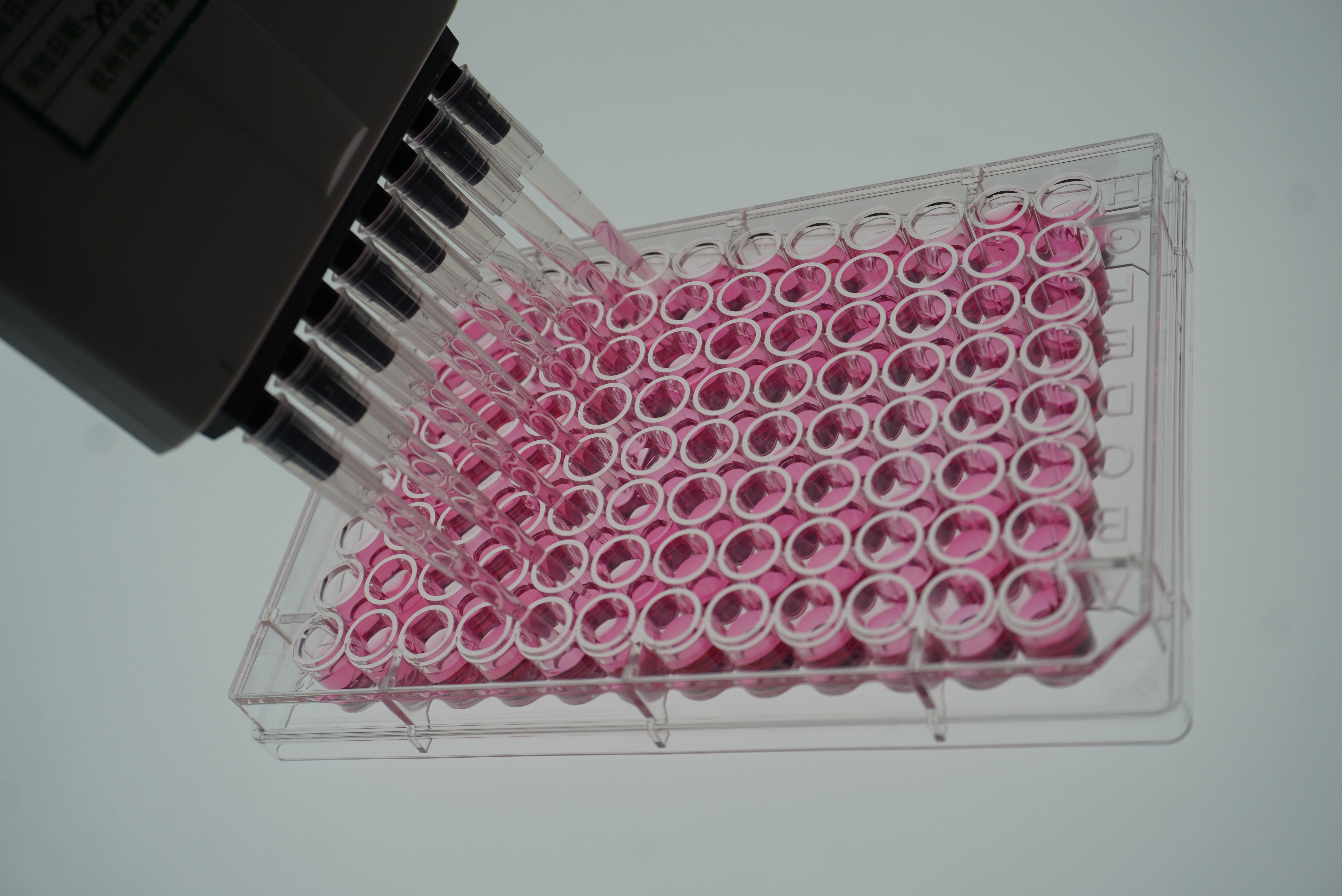
Could the humble 96-well microplate be the unsung hero of modern biological research? These precision instruments are key in labs around the world. They help scientists do complex experiments efficiently.
96-well microplates are a big step forward in science. They are made of polystyrene and are great for cell culture, drug discovery, and screening. Their standard size makes it easy to analyze lots of data in many fields.
The non-treated surface variants of these microplates are very useful in research. Scientists use them for detailed experiments. This lets them work with high accuracy and get the same results every time.
Key Takeaways
- 96-well microplates are essential research instruments
- Polystyrene plates enable precise scientific investigations
- Non-treated surfaces provide unique experimental advantages
- Microplates support diverse research applications
- Standardized design enhances research consistency
Introduction to 96-Well Microplates
Microplate readers have changed biological research a lot. They let scientists do many experiments at once. The 96-well microplate is key to this, making it easy to handle lots of samples.
The story of microplates started in 1950 with Dr. Gyula Takatsy’s 72-well design. By 1955, it changed to the 96-well format we know today. This change made it a big part of science.
Importance in Biological Research
Bioassay plates are very useful in research. They help scientists do many things at once. This includes:
- Handling many samples at once
- Using less reagent
- Doing experiments faster
- Keeping research methods the same
Overview of Non-Treated Surfaces
Non-treated microplates are made from polystyrene. They have special surfaces that are good for certain studies. Their surface is hydrophobic, which helps with some experiments.
“The 96-well microplate has become an indispensable tool in modern scientific research.” – Laboratory Research Quarterly
Use Cases in Laboratories
Scientists use these microplates in many areas. This includes:
- Testing for immunity
- Finding new drugs
- Studying cells
- Doing molecular biology
The 96-well microplate is very flexible. It helps scientists do complex studies more efficiently and accurately.
Types of Non-Treated 96-Well Microplates
Cell Culture Microplates come in many types to meet the needs of science. They are designed for High-Throughput Screening and special lab work. This variety helps researchers get the best results.
The 96-well microplate format has many options. It supports different research needs. Scientists can pick the right one for their experiments.
Standard Non-Treated Microplates
Standard non-treated microplates are great for basic research. They have features that are useful for many studies:
- Volume range of 330-360 µl per well
- Chimney well design to minimize cross-contamination
- Available in transparent, black, and white color options
Specialized Non-Treated Microplates
Specialized microplates have unique designs for advanced research:
- Bottom Shape Variations:
- V-bottom
- U-bottom
- F-bottom
- C-bottom
| Microplate Format | Well Volume | Color Options |
|---|---|---|
| 96-Well | 330-360 µl | Transparent, Black, White |
| 384-Well | 100-120 µl | Transparent, Black, White |
| 1536-Well | 10 µl | Transparent, Black, White |
These designs help researchers pick the best microplate for their needs. They ensure the right surface for Cell Culture Microplates and High-Throughput Screening.
Advantages of Non-Treated Surfaces
Non-treated surfaces in microplates bring big benefits to science, especially in immunoassay and ELISA plates. These special surfaces help scientists get more precise and reliable results.
Enhanced Cell Attachment Characteristics
Non-treated polypropylene microplates have special surface features for cell research. Their hydrophobic nature creates a unique setting for cell culture and experiments.
- Supports specific cell type attachment
- Provides controlled surface interactions
- Enables precise experimental manipulation
Improved Experimental Consistency
Using non-treated ELISA plates, scientists can get very consistent results. The surface chemistry of these plates helps control how proteins and biomolecules interact.
| Performance Metric | Value |
|---|---|
| Protein Recovery Range | 68% to 100% |
| Well-to-Well Recovery | 90% to 100% |
| Batch Consistency | Standard Deviation: 2% |
Reduced Background Interference
Non-treated surfaces cut down on background noise in scientific tests. The unique surface properties of these plates lead to clearer, more reliable results.
- Lower optical interference
- Improved signal-to-noise ratios
- Enhanced data reliability
The physical properties of microplates greatly affect experimental results. Choosing the right surface is key in research.
Applications in Cell Culture
Non-treated microplates are key in advanced biological research. They offer flexible solutions for complex cell culture experiments. These specialized microplates are essential in modern science, supporting important research in many fields.
Researchers use non-treated microplates for many advanced applications. They need precision and reliability in Microplate Analysis. The unique surface of these plates allows for detailed studies in various research areas.
Adherence Studies
Studying cell adherence needs careful planning. Non-treated microplates are perfect for this. Scientists can study:
- Cell surface interactions
- Attachment kinetics
- Membrane protein dynamics
Toxicology Testing
Toxicology research gets a big boost from these microplates. The combination of Automated Liquid Handling and non-treated surfaces helps researchers:
- Check how compounds affect cell viability
- Look at changes in cell function
- Find new drugs
Drug Discovery Processes
In drug discovery, non-treated microplates are vital. They help researchers quickly test many compounds. This speeds up the search for new medicines.
Non-treated microplates are a game-changer in cell culture research. They give us new insights into how cells work.
The flexibility of these microplates, especially with Automated Liquid Handling systems, opens new doors in cell research.
Surface Chemistry of Non-Treated Microplates
Understanding the surface chemistry of 96-well microplates is key for researchers. Polystyrene plates are a basic tool in biology. Their surface properties greatly affect how cells interact.
The molecular traits of non-treated microplates are vital in science. Polystyrene surfaces have unique chemical properties. These properties impact results in many research areas.
Characterization of Surface Properties
Surface properties of 96-well microplates can be studied in several ways:
- Contact angle measurements
- Surface energy analysis
- Hydrophobicity assessments
- Molecular surface mapping
Impact on Cell Behavior
The chemistry of polystyrene plates affects cell interactions. Researchers see big differences in:
- Cell adhesion mechanisms
- Protein absorption rates
- Cellular spreading patterns
- Differentiation potential
By understanding these complex interactions, scientists can make their experiments better. This helps make research results more reliable in cell culture and molecular studies.
Compatibility with Assays
Non-treated microplates are key in today’s biological research. They offer flexible solutions for complex lab tasks. These plates are vital for ELISA Plates and High-Throughput Screening.
Scientists use these microplates for many important research tasks. Their unique surface is perfect for different experiments.
Application in ELISA
ELISA Plates work great in immunology tests. They support many detection methods:
- Direct protein binding
- Antibody capture techniques
- Quantitative analyte measurement
The non-treated surface helps researchers improve protein interactions. It also reduces background noise in sensitive tests.
High-Throughput Screening Capabilities
High-Throughput Screening needs precise, consistent plates. Non-treated microplates meet these needs by:
- Supporting automated robotic handlers
- Facilitating rapid screening of molecular libraries
- Enabling consistent experimental results
Researchers can quickly test multiple samples at once. This speeds up finding new medicines and scientific breakthroughs.
Environmental Considerations
Scientific research is now looking at how lab supplies affect the environment. Microplate Readers and Bioassay Plates are being checked for their green impact. This shows the need for eco-friendly lab practices.
Biodegradability of Microplates
Modern labs are looking for ways to cut down on waste. Microplate technologies are moving towards using biodegradable materials instead of old polystyrene.
- Plant-based resins are seen as a green option
- These materials can break down in 84 days
- They also cut down on carbon emissions
Sustainability Initiatives
Companies are working hard to lessen their environmental footprint. They’re making eco-friendly Bioassay Plates using closed-loop systems and renewable resources.
| Sustainability Feature | Environmental Benefit |
|---|---|
| Plant-based Resin Usage | Reduces fossil fuel dependency |
| Closed-loop Water Systems | Minimizes industrial water waste |
| Low-toxicity Incineration | Reduces harmful emissions |
The future of lab supplies is about being precise and green.
Research keeps pushing for better, greener lab tools. This ensures Microplate Readers and other tech help science and protect the planet.
Best Practices for Using Non-Treated Microplates
Cell Culture Microplates need careful handling for the best results. Researchers face many challenges when using non-treated microplates. This is to ensure their experiments are reliable and can be repeated.
Getting good results from Microplate Analysis depends on following key best practices. These practices can greatly affect the outcome of experiments.
Handling Recommendations
Managing microplates properly involves several important steps:
- Always handle plates with clean, sterile gloves
- Store plates in controlled environmental conditions
- Protect surfaces from direct light exposure
- Minimize temperature fluctuations during experiments
Experimental Design Considerations
Researchers need to plan their experiments carefully to account for variability in non-treated microplates:
- Implement rigorous quality control protocols
- Standardize plate preparation techniques
- Use consistent seeding densities
- Minimize edge effects through strategic sample placement
| Parameter | Recommended Practice |
|---|---|
| Temperature Control | Maintain consistent 37°C for cell culture |
| Humidity | Keep at 95% to prevent evaporation |
| Storage | Store in sterile, sealed containers |
Understanding these detailed considerations helps ensure better performance from Cell Culture Microplates. This leads to more precise research and better experimental results.
Innovations in Microplate Technology
The world of lab research is changing fast with new microplate tech. Scientists are making big steps in Automated Liquid Handling and High-Throughput Screening. They’re creating smarter tools for tough research problems.
New ideas in microplate tech are changing the game. They bring fresh designs that meet key research needs. Now, scientists have tools that make their work more precise and quick.
Emerging Surface Coating Technologies
New surface coatings are making microplates better. These advancements improve:
- Molecular interaction capabilities
- Cellular attachment properties
- Reduced background interference
- Improved experimental reproducibility
Future Laboratory Techniques
The future of microplate tech is exciting. It includes:
- 3D-printed microplates with customized geometries
- Integrated sensor systems for real-time monitoring
- Artificial intelligence-driven plate design
- Advanced materials supporting complex research protocols
These new techs are key for High-Throughput Screening. They make sure experiments are precise and fast. Automated Liquid Handling systems also get better, helping scientists do more accurate work.
Conclusion
Bioassay plates have changed science a lot. They offer a way to do complex experiments easily. The 96-well microplates are a big step forward in lab tech.
These plates have made research better in many areas. They can hold from 50 μL to 200 μL per well. This lets scientists do lots of tests at once, saving time and effort.
Key Research Advantages
Modern 96-well microplates are very flexible. They work well in many areas, like finding new medicines and studying cells. They have special surfaces for different tests.
These plates help scientists learn more about life. They are key to finding new things in biology.
Future Perspectives
96-well microplates will keep being important in science. They will get even better, making experiments more precise and efficient. This will help a lot in medical research.
FAQ
What are non-treated 96-well microplates?
Non-treated 96-well microplates are made of polystyrene. They have a hydrophobic surface. This means they keep their chemical properties unchanged. They are used in biological research where cells don’t need to attach.
When should researchers choose non-treated microplates?
Choose non-treated microplates for experiments needing little surface change. They’re good for homogeneous assays, suspension cell cultures, and immunoassays. They’re also great for high-throughput screening where controlled interactions are key.
What are the key advantages of non-treated microplates?
The main benefits include less background interference and consistent results. They work well with many assay types. This makes them versatile for research, from drug discovery to toxicology testing.
How do non-treated surfaces differ from treated microplates?
Non-treated surfaces stay hydrophobic, unlike treated plates that are modified for cell adhesion. The untreated surface is neutral. This makes them perfect for experiments needing controlled surface chemistry.
Can non-treated microplates be used in automated liquid handling systems?
Yes, they work well with automated systems and robots. Their consistent surface and design are ideal for high-throughput screening. This ensures precise workflows in labs.
What types of cell culture experiments are suitable for non-treated microplates?
They’re great for suspension cell cultures, toxicology testing, and drug discovery. They’re also good for experiments with cells that don’t need strong attachment. They’re perfect for studying cell behavior in a minimal environment.
Are there environmental considerations with non-treated polystyrene microplates?
Yes, there’s growing concern about the environmental impact of polystyrene plates. Research is underway to find eco-friendly alternatives. This aims to reduce the environmental footprint of lab supplies.
How should non-treated microplates be stored and handled?
Store them in a clean, dry place at room temperature. Keep them away from sunlight and extreme temperatures. Always use clean gloves and follow sterile techniques to avoid contamination. Proper care ensures their performance and reliability.





Leave a Comment
Your email address will not be published. Required fields are marked *