


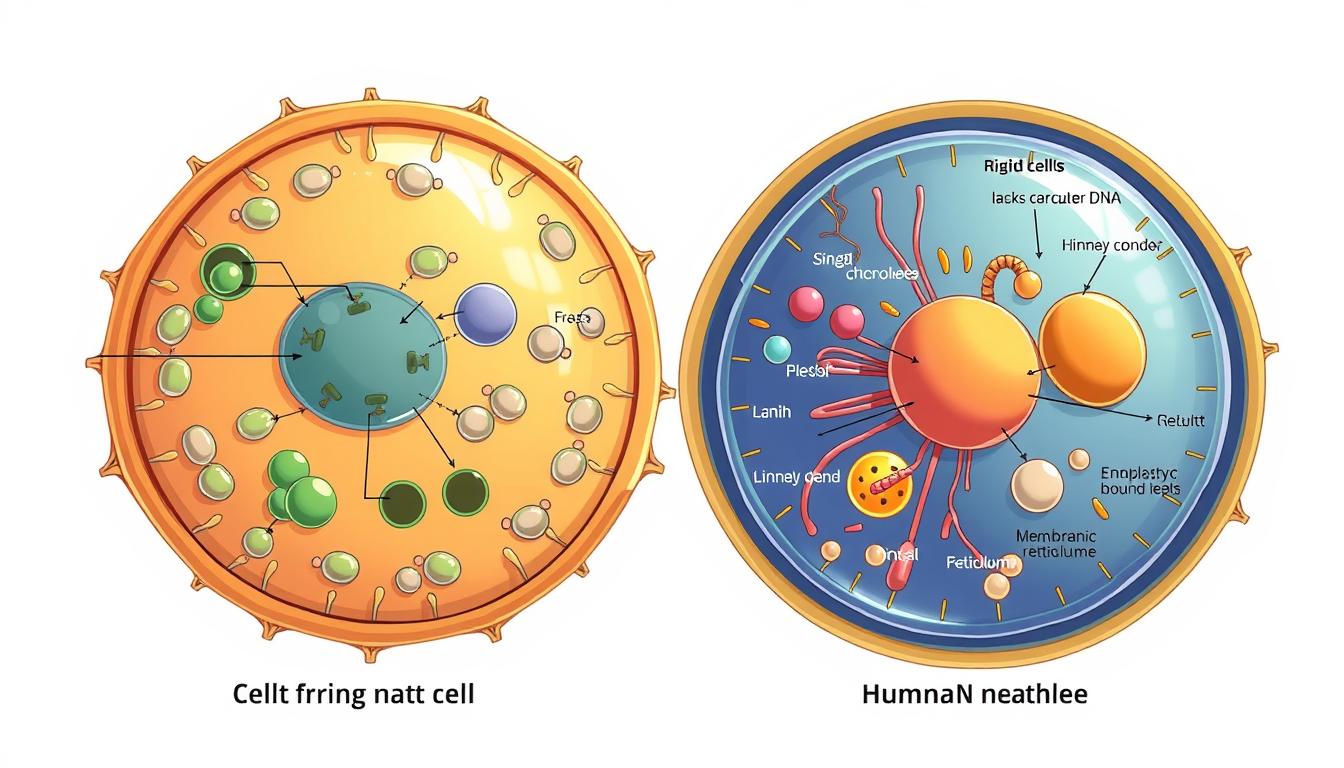
Ever wondered why bacterial cells are so different from human cells? Learning about these differences could change how we study medicine and cells.
The human body is home to trillions of microorganisms. They outnumber human cells by a huge 10 to 1. This discovery has led to new insights into how cells work.
Bacterial cells are a special group of simple organisms. They don’t have the complex parts that human cells do. Their structure is much simpler, with just one circular chromosome.
Bacterial cells are incredibly flexible. They make up only 1 to 3 percent of our body’s mass. Yet, they play a big role in understanding how our bodies work.
Key Takeaways
- Bacterial cells lack membrane-bound organelles
- Microorganisms significantly outnumber human cells
- Bacterial cells have a simpler genetic structure
- Cell wall composition differs between bacterial and human cells
- Bacterial cells demonstrate remarkable adaptability
Overview of Cellular Structures
Exploring the microscopic world of cells is fascinating. We find two main types of cells: prokaryotic and eukaryotic. These cells have shaped life on Earth for billions of years. Bacteria, being prokaryotic, are among the oldest living things on our planet.
Prokaryotic cells are smaller and simpler. Eukaryotic cells, on the other hand, are more complex. This difference is key to understanding life.
Introduction to Cell Types
Prokaryotic cells, found in bacteria and archaea, have unique features. They come in various shapes and sizes:
- Spherical bacteria (cocci)
- Rod-shaped bacteria (bacilli)
- Spiral or curved bacteria
- Filamentous bacterial chains
Importance of Understanding Cellular Differences
Knowing the differences between prokaryotic and eukaryotic cells is vital. It helps in many fields:
- Medical research
- Biotechnology innovations
- Evolutionary biology
- Microbial ecology
| Cell Characteristic | Prokaryotic Cell | Eukaryotic Cell |
|---|---|---|
| Size Range | 0.1 – 10 µm | 10 – 100 µm |
| Genetic Material Location | Nucleoid (not membrane-bound) | Membrane-enclosed nucleus |
| Cellular Complexity | Simple structure | Complex organelles |
Understanding these differences helps scientists. They can create new treatments and understand life’s basics better.
Fundamental Differences in Composition
Bacterial and human cells are two different worlds. Each has its own special structure. Knowing these differences helps us understand life and how it has evolved.
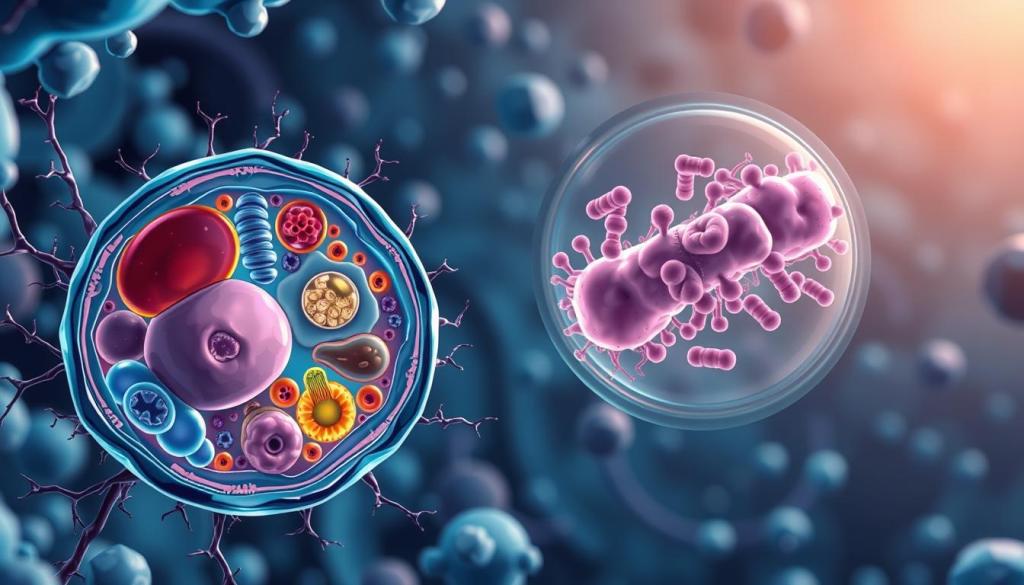
Bacteria are much simpler than human cells. Their basic structure shows how they are different. These differences affect how they work and survive.
Cell Wall Characteristics in Bacterial Cells
Bacteria have a strong cell wall made of peptidoglycan. This wall is key for their structure and protection. It makes them different from human cells in many ways:
- It gives bacterial cells strength
- It keeps them safe from changes in pressure
- It stops their cell membrane from bursting
Membrane Structure: Bacterial vs Human
The cell membrane is another big difference. Bacterial membranes are simpler, while human membranes are more complex. The main differences are:
- Bacterial membranes don’t have complex proteins
- Human membranes have more kinds of lipids
- Bacterial membranes are better at making energy
Genetic Material Organization
How genetic material is organized is a big difference. Bacteria don’t have a membrane around their nucleus. Their DNA is in a part called the nucleoid in the cytoplasm. Human cells have a clear nucleus that keeps their DNA safe.
These differences show how diverse life is. They also show the complex paths life has taken to evolve.
Size and Shape Variations
The world of cells shows us how different bacterial and human cells are, especially in size and shape. These differences help us understand their unique roles and how they adapt.
Bacteria come in all sizes and shapes. They are usually between 0.5 to 5 micrometers wide. Their shapes vary greatly.
Bacterial Cell Dimensions and Shapes
Bacteria have many shapes:
- Spherical (cocci) cells
- Rod-shaped (bacilli) cells
- Spiral-shaped cells
- Exotic forms including star and branching structures
Human Cell Size and Morphology
Human cells are bigger and more varied. They are 10 to 100 micrometers wide. Their shapes help them do their jobs.
The diversity of cellular morphology represents an evolutionary strategy for optimizing environmental adaptation and survival.
Bacteria are incredibly adaptable. Here are some interesting facts:
- E. coli can grow 0.01% faster, giving it a 10% advantage
- Thiomargarita namibiensis can be up to 750 micrometers long
- Mycoplasma are the smallest cells, about 200-300 nanometers
The way bacteria interact with their environment shows nature’s clever design in cell evolution.
Reproduction Methods
Cell reproduction is a fascinating journey of genetic transmission and cellular division. It shows how bacterial cells differ from human cells in their reproductive strategies. This diversity highlights the amazing variety of life’s fundamental processes.

Bacterial and human cells have different ways to multiply and keep their genes safe.
Asexual Reproduction in Bacteria
Bacteria use a fast and efficient way to reproduce called binary fission. This method lets bacteria divide quickly and make genetically identical offspring. Key features of bacterial reproduction include:
- Reproduction happens every 10-15 minutes under the best conditions
- Creates exact genetic clones of the parent cell
- Allows for fast population growth in stable environments
Mitosis in Human Cells
Human cells have a more complex way to reproduce called mitosis. This method ensures genetic stability and controlled cell division through multiple stages.
| Reproduction Characteristic | Bacterial Cells | Human Cells |
|---|---|---|
| Reproduction Method | Binary Fission | Mitosis |
| Genetic Variation | Minimal | Significant |
| Time for Division | 10-15 minutes | 24-48 hours |
The main differences in bacterial and human cell reproduction show the unique adaptations of these cellular systems. Bacteria focus on speed and efficiency, while human cells value genetic accuracy and controlled growth.
Metabolic Processes
The world of cellular metabolism shows interesting differences between prokaryotic and eukaryotic cells. Bacteria and human cells use unique ways to make and use energy. This highlights the amazing variety in how cells work.
Energy Production in Bacterial Cells
Bacterial metabolism is very flexible in making energy. There are two main types of bacteria:
- Autotrophs: These bacteria make their own food from inorganic compounds.
- Heterotrophs: These bacteria need organic molecules for energy and carbon.
Metabolic Strategies in Bacterial Energy Generation
Bacteria use different ways to make energy, such as:
- Fermentation
- Aerobic respiration
- Anaerobic respiration
- Photosynthesis
| Metabolic Process | ATP Yield | Electron Acceptor |
|---|---|---|
| Fermentation | 2 ATP molecules | Organic compounds |
| Aerobic Respiration | 38 ATP molecules | Oxygen |
| Anaerobic Respiration | 16-24 ATP molecules | Nitrate, Sulfate |
Metabolic Differences in Human Cells
In human cells, energy production mainly happens in mitochondria. This is different from bacteria. Human cells use a more complex way to turn nutrients into ATP.
The proton motive force creates a charge of 150 to 200 millivolts across the plasma membrane. This helps in sending energy efficiently within human cells.
Genetic Organization
The genetic setup of bacterial and human cells shows interesting differences. These differences help us understand how cells work and evolve. They show the complexity and strategies behind life.
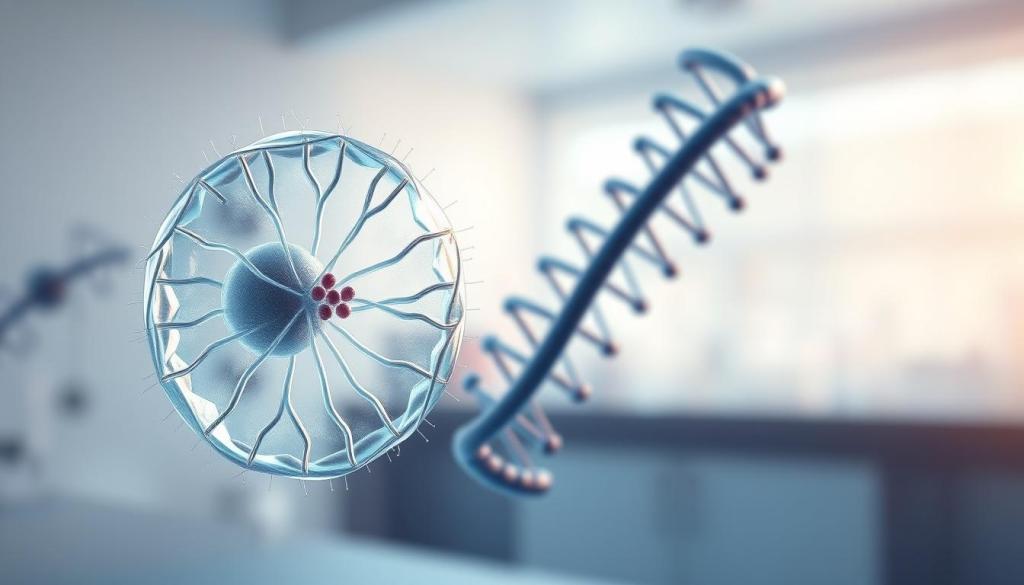
Bacterial cells have a unique genetic setup. Their chromosomes are circular and found in the nucleoid area. This is different from human cells, which have linear chromosomes. These genetic differences are key to how cells function and reproduce.
Bacterial Chromosome Characteristics
Bacterial genomes vary a lot in size and makeup:
- Genome sizes range from 580,000 to 13 million base pairs
- E. coli chromosome contains approximately 4,500 kilobase pairs
- Bacterial chromosomes account for 2-3% of cell dry weight
Plasmid Dynamics in Bacterial Cells
Bacterial cells have something special called plasmids. These are small, circular DNA pieces that are separate from the main chromosome. They come in different sizes:
- Plasmid sizes range from less than 5 to 2 million base pairs
- Large plasmids typically have low copy numbers
- Small plasmids often have high copy numbers (10-20 per chromosome)
Human Chromosomal Composition
Human cells, on the other hand, have linear chromosomes in the nucleus. The human genome is much bigger, about 1,000 times larger than bacterial genomes. This shows the complex genetic setup needed for complex life forms.
Response to Environmental Changes
It’s interesting to see how bacterial cells and human cells react to changes in their environment. They adapt in different ways, showing how each cell type is special.
- Rapid reproduction cycles
- Horizontal gene transfer
- Phenotypic heterogeneity
- Stochastic gene expression
Bacterial Adaptations and Resilience
Studies show that phenotypic heterogeneity helps bacteria survive tough times. A small part of the bacteria can prepare for changes before they happen. This helps them live longer. It’s very different from how human cells handle changes.
Human Cells and Homeostasis
Human cells keep things stable with complex systems and talking between cells. Bacteria can change fast, but human cells use detailed control systems to stay balanced.
| Characteristic | Bacterial Cells | Human Cells |
|---|---|---|
| Adaptation Speed | Extremely Fast | Relatively Slow |
| Response Mechanism | Gene Transfer/Mutation | Regulatory Networks |
| Survival Strategy | Rapid Reproduction | Homeostatic Regulation |
The way bacterial and human cells respond to their environment shows their unique ways of adapting. It highlights the complexity of life at the cellular level.
Immune System Interactions
The battle between prokaryotic and eukaryotic cells is complex. Microorganisms and human cells use clever tactics to fight or invade each other. This is a molecular dance of survival and defense.
- Innate immune response (immediate protection)
- Adaptive immune response (specialized protection)
Bacterial Interaction with Immune Cells
Prokaryotic cells have developed ways to avoid being detected by the immune system. They use:
- Biofilm formation
- Antigenic variation
- Production of virulence factors
Human Cell Defenses Against Infection
The eukaryotic cell immune system has many specialized parts:
| Immune Component | Response Time | Key Function |
|---|---|---|
| Phagocytes | Immediate | Stop bacterial invasion |
| T Cells | 2-3 Days | Specific germ targeting |
| B Cells | Rapid | Antibody production |
The ongoing battle between prokaryotic and eukaryotic cells keeps evolving. This drives new ideas in medical research and possible treatments.
Application in Biotechnology
The study of bacterial and human cell structures has changed biotechnology. It has opened new ways for scientific progress. Researchers use these cells to create new medical and industrial products.
Bacterial cells are key in genetic engineering because of their special traits:
- Rapid reproduction cycles
- Simple genetic manipulation
- Efficient protein production
Bacterial Usage in Genetic Engineering
Scientists use bacterial cells to find new solutions. E. coli, with its large genome, is a main study subject. These microbes can grow fast, making it easy to change their genes and make proteins.
“Bacteria are nature’s microscopic factories, capable of producing complex molecules with incredible efficiency.”
Human Cells in Research and Medicine
Human cell studies are vital for medical research. The human genome, with its billions of base pairs, helps in many studies. This includes:
- Drug development
- Regenerative medicine
- Personalized therapeutic strategies
The Human Genome Project, finished in 2003, showed how understanding human cells can help medicine.
Conclusion
Exploring how bacterial cells differ from human cells shows us a world of cell diversity. Prokaryotic cells have unique structures and functions compared to eukaryotic cells. This highlights the complex paths of evolution for tiny organisms.
Size is a big difference, with bacterial cells being 0.2 to 2 µm and human cells 10 to 100 µm. These sizes give us key insights into how cells work.
Knowing the differences between prokaryotic and eukaryotic cells is important. It affects science, medicine, and technology. Bacterial cells have smaller ribosomes and cell walls, unlike human cells with larger ribosomes and complex structures.
Scientific and Medical Implications
Studying these cell differences can lead to new medical treatments. Scientists can create better antibiotics and treatments by understanding cell differences. This research helps us understand life’s basics.
Future Research Directions
The study of cell differences is still growing. Future research will likely reveal more about cells. This could change how we fight diseases and understand how cells adapt.
This ongoing research will open new areas of study in biology and health. It promises to bring us closer to understanding life.
FAQ
What are the main differences between bacterial and human cells?
Bacterial cells are simpler and smaller than human cells. They lack a nucleus and have a cell wall. Human cells, on the other hand, are larger and have a complex structure.
Human cells have multiple chromosomes in a nucleus and specialized parts like mitochondria. This makes them more complex than bacterial cells.
How do bacterial and human cells differ in reproduction?
Bacteria reproduce by dividing into two identical cells. Human cells reproduce through a more complex process called mitosis. This involves separating chromosomes and forming a spindle.
Human cells also reproduce sexually, which increases genetic diversity. This is different from bacterial reproduction.
What makes bacterial cells unique in their metabolic processes?
Bacterial cells can adapt to many environments. They can make their own food or eat external nutrients. This flexibility is not seen in human cells.
Human cells mainly use mitochondria for energy production. Their metabolic processes are more specialized.
Why are bacterial cells considered more adaptable than human cells?
Bacterial cells can evolve quickly. They reproduce fast and can share genes easily. This helps them adapt to new environments.
Human cells adapt slower. They rely on longer generational changes and complex cellular communication.
How do bacterial and human cells interact differently with the immune system?
Bacteria have ways to avoid the immune system. They can form biofilms and change their genetic makeup. Human cells have a strong immune system with many defense mechanisms.
This creates a constant battle between pathogens and the immune system.
What are the key structural differences between bacterial and human cell membranes?
Bacterial membranes are simple, made mostly of phospholipids. Human membranes are more complex, with cholesterol and proteins. This complexity is not seen in bacterial cells.
Bacterial cells have a rigid cell wall. Human cells have a flexible membrane. This affects how they interact with their environment.
How do the genetic organizations differ between bacterial and human cells?
Bacterial cells have one circular chromosome and small plasmids. Human cells have many linear chromosomes in a nucleus. Their genomes are much larger and more complex.
This difference affects how genes are expressed and replicated.
What makes bacterial cells important in biotechnology?
Bacterial cells are key in biotechnology. They are easy to grow and can be genetically modified. They are used in genetic engineering and producing proteins.
They are also used in biofuel production and making medicines. Their ability to reproduce quickly makes them useful for research and applications.





Leave a Comment
Your email address will not be published. Required fields are marked *