



Ever wondered how scientists find secrets in a single drop of blood? The world of buffy coat vs peripheral blood mononuclear cells (PBMCs) is key in medical research and tests.
Blood is much more complex than we think. White blood cells and platelets, making up less than 1% of blood, are crucial for understanding our bodies. Scientists use special methods to separate these tiny parts, leading to big discoveries in immunology and clinical studies.
The buffy coat is a thin layer with lots of white blood cells. It has 10-20 times more leukocytes than regular blood samples. This area is full of scientific possibilities.
Key Takeaways
- Blood has many cellular parts with special research value
- Buffy coat has more white blood cells for deeper studies
- Separation techniques are vital for medical research
- Less than 1% of blood is white blood cells and platelets
- Special methods improve cell analysis
Introduction to Blood Separation Techniques
Blood component analysis is key in medical research and diagnostics. Scientists use advanced methods to study blood samples. This helps them understand blood’s complex makeup and develop new treatments.
Today’s blood separation methods can isolate specific cells with great accuracy. Leukocyte separation is a complex process that extracts important cells for analysis.
Importance of Blood Component Analysis
Blood is full of different cells that are vital for research. Separation techniques let scientists study these cells closely. This helps them understand complex biological processes.
- Enables targeted cellular research
- Provides insights into disease mechanisms
- Supports advanced diagnostic techniques
Overview of Buffy Coat and PBMC
There are two main ways to extract blood components: buffy coat and PBMC isolation. Ficoll density gradient centrifugation is a key method for precise separation.
| Blood Component | Typical Concentration | Isolation Method |
|---|---|---|
| PBMCs | 2 million cells/mL | Density Gradient Centrifugation |
| Buffy Coat | 1% of total blood volume | Low-Speed Centrifugation |
These methods help researchers get concentrated cellular suspensions. These suspensions offer deep insights into human health and new treatments.
Understanding Buffy Coat
The buffy coat is key in blood separation, giving scientists and doctors a rich source of cells. It’s a layer full of white blood cells that are vital for research and tests.
Buffy coat is a thick layer of white blood cells and platelets. It’s made by spinning whole blood carefully. Its special mix is great for getting lymphocytes and enriching mononuclear cells.
Cellular Composition of Buffy Coat
The buffy coat has a mix of immune cells, including:
- Lymphocytes (T cells, B cells, NK cells)
- Monocytes
- Granulocytes (neutrophils, eosinophils)
- Platelets
Clinical Applications
Researchers use buffy coat for many important uses:
- Genetic studies to explore cell functions
- Immunology research to track immune reactions
- Studies on infectious diseases
- Platelet concentration for treatments
The buffy coat is about 1% of the blood sample. But it has white blood cells 10-20 times more concentrated than in the blood. This makes it crucial for medical tests and research.
Understanding PBMC
Peripheral Blood Mononuclear Cells (PBMCs) are key in medical research and diagnostics. They help us understand the immune system and diseases. This is done through advanced cell preparation and blood sample processing.
PBMCs are a group of white blood cells important for the immune system. They are isolated using density gradient centrifugation. This method ensures high-quality cell samples.
Composition of PBMCs
PBMCs include several important immune cells:
- Lymphocytes (T cells, B cells, and NK cells)
- Monocytes
- Low levels of granulocyte contamination
Clinical Applications of PBMCs
Researchers use PBMCs in many medical studies, including:
- Vaccine development research
- Autoimmune disease studies
- Cellular therapy investigations
- Immunological response analysis
“PBMCs provide an unparalleled window into the intricate workings of the human immune system.”
The exactness of PBMC isolation is crucial for targeted research. It’s especially useful for studying lymphocytes and monocytes. Their ability to be frozen for long-term storage opens up more research possibilities.
Key Differences Between Buffy Coat and PBMC
It’s important to know the differences between buffy coat and peripheral blood mononuclear cells (PBMCs) in immunology research methods. These two parts of blood have different roles in lab tests. Each gives unique insights into cell analysis.
Isolation Techniques
Getting buffy coat and PBMCs involves different methods. Buffy coat is easy to get with just a spin in a centrifuge. But, getting PBMCs needs a more complex method called density gradient centrifugation.
- Buffy coat: Separated by basic centrifugation
- PBMCs: Isolated using density gradient medium with 1.077 g/ml density
- Centrifugation for PBMCs typically occurs at 400×g for 25 minutes
Cellular Composition
PBMCs and buffy coat have different cell types. PBMCs are more specific, with:
- Lymphocytes (70–90%)
- Monocytes (10–20%)
- Dendritic cells (1–2%)
Buffy coat, on the other hand, has a mix of white blood cells. Less than 1% of whole blood contains white blood cells. But, buffy coat has 10-20 times more white blood cells than the whole blood.
Functionality in Research
Researchers pick between buffy coat and PBMCs based on their goals. PBMCs are better for detailed cell studies. They have a clear mix of cells, including:
- CD3+ T cells comprise 70–85%
- B cells make up 5–10%
- NK cells account for 5–20%
The choice between buffy coat and PBMCs depends on how specific and complex the research is in immunology.
Advantages of Using Buffy Coat
Buffy coat is a key tool in separating white blood cells. It gives researchers and doctors a focused look at these cells. This helps a lot in studying and diagnosing diseases.
The buffy coat has a lot of white blood cells. Studies show these cells are 10-20 times more concentrated than in whole blood. This layer makes up about 1% of the blood sample after it’s spun down.
Clinical Study Benefits
There are many benefits to using buffy coat in research:
- It has a high concentration of cells for detailed immune system studies.
- It’s easier to isolate cells.
- It’s cheaper to prepare samples.
- It saves time compared to traditional methods.
Hematologic Assessment Capabilities
Buffy coat is very useful in blood studies. It has many types of cells. This lets researchers:
- Find cancer cells in the blood.
- Look at genetic markers.
- Study how the immune system works.
| Characteristic | Buffy Coat Performance |
|---|---|
| DNA Preservation | Viable for up to 9 years at -80°C |
| Cell Viability | Comparable to PBMC isolation methods |
| Processing Time | Approximately 1.5 hours shorter than PBMC |
The buffy coat is a crucial tool for advanced medical research and diagnosis.
Advantages of Using PBMC
Peripheral blood mononuclear cells (PBMCs) are a key tool in today’s immunology research. They give us deep insights into how our bodies work. This helps scientists learn more about the immune system and find new treatments.
By isolating lymphocytes from PBMCs, scientists can study many health areas. These cells are very useful. They help us understand complex immune reactions and create specific treatments.
Immune Response Studies
PBMCs are essential for understanding our immune system. Researchers use them to:
- Analyze vaccine effectiveness
- Study how autoimmune diseases progress
- Make personalized immunotherapies
- Look into inflammatory reactions
Role in Advanced Therapeutics
PBMCs are not just for research. They also help in creating new treatments. Their special traits are crucial for:
| Therapeutic Area | PBMC Contribution |
|---|---|
| Cancer Immunotherapy | CAR-T cell development |
| Precision Medicine | Biomarker identification |
| Drug Development | Immune system interaction studies |
PBMCs make it possible to isolate lymphocytes precisely. This keeps changing how we see human immunology and treatment options.
Method of Collection for Buffy Coat
Blood sample processing uses special clinical lab methods. These methods help separate blood components accurately. The buffy coat collection is key in medical research and tests.
To get a buffy coat, you need careful preparation and advanced spinning. Researchers handle whole blood samples with great care. This ensures the cells stay intact and avoids contamination.
Blood Sample Preparation
Preparing blood samples for buffy coat extraction involves several key steps:
- Collect whole blood in special tubes with anticoagulant
- Keep the sample at a consistent temperature
- Handle the sample as little as possible to avoid damage
- Use clean equipment for collection
Centrifugation Process
The spinning method is vital in processing blood samples. Researchers follow these steps:
| Parameter | Specification |
|---|---|
| Centrifugation Speed | 800 × g |
| Duration | 10 minutes |
| Buffy Coat Volume | 1 mL from 10 mL whole blood |
When spinning, blood parts separate by density. White blood cells and platelets gather in the buffy coat. This layer is less than 1% of the blood but holds important cells.
Lab protocols suggest processing no more than 8 samples at once. This helps keep the separation process precise and error-free.
Method of Collection for PBMC
Peripheral blood mononuclear cell (PBMC) isolation is key in biomedical research. It needs precision and special techniques. Researchers use ficoll density gradient centrifugation to get these cells from whole blood samples accurately.
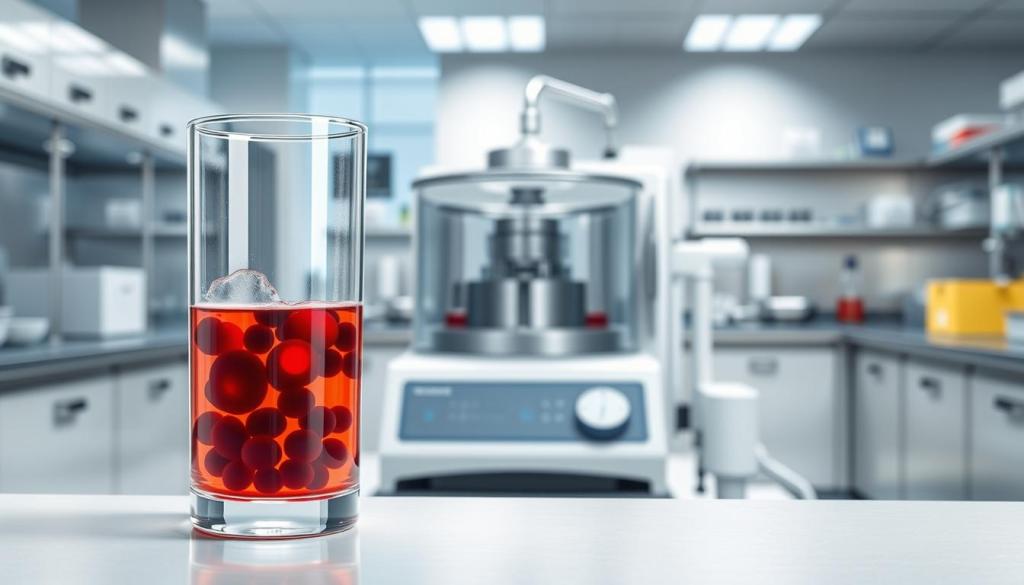
The process starts with preparing the blood sample carefully. PBMCs are about 2 million cells per milliliter in our blood. Getting them out is crucial for many scientific studies.
Blood Sample Preparation
Preparing the blood sample is important:
- Collect fresh whole blood in special tubes with anticoagulant
- Dilute the blood with phosphate-buffered saline
- Keep the sample at the right temperature and handle it carefully
- Make the density gradient medium with a 1.077 g/ml concentration
Density Gradient Centrifugation Technique
The ficoll density gradient centrifugation method sorts blood parts by density. This detailed process includes several steps:
- First, spin at 400×g for 25 minutes
- Then, spin again at 300×g for 10 minutes to remove platelets
- Finally, spin at 200×g for 15 minutes for purification
“Precision in cell separation determines the quality of downstream research applications.”
Researchers must carefully take out the buffy coat layer. It has lots of PBMCs. These cells are mostly lymphocytes, monocytes, and dendritic cells. They are great for studying the immune system.
Conclusion: Choosing Between Buffy Coat and PBMC
Choosing the right blood separation method in immunology research is key. It depends on what you want to study. Buffy coat and PBMCs each have their own benefits for different studies.
The choice between buffy coat and PBMCs is based on several factors. PBMCs are better for studying immune cells because they have a specific mix of cells. A PBMC sample has about 60% T Cells, 15% Monocytes/Macrophages, 10% B Cells, and 15% Natural Killer Cells. This makes them great for detailed studies.
New technologies are changing how we separate blood cells. For example, Akadeum’s buoyancy activated cell sorting (BACS) makes it easier to isolate cells. These new methods could make cell separation faster and more accurate. Now, scientists can remove RBCs in about 10 minutes, making their work easier.
In the end, picking between buffy coat and PBMCs will always depend on the research goals. New technologies will give scientists better tools to study immune cells. This will help us understand how our bodies fight off diseases better.
FAQ
What is the difference between buffy coat and peripheral blood mononuclear cells (PBMCs)?
Buffy coat is a layer with white blood cells and platelets from whole blood. PBMCs are a specific type of white blood cell, like lymphocytes and monocytes, isolated by density gradient centrifugation. PBMCs are more refined and specific than buffy coat’s mixed cells.
Why are blood separation techniques important in medical research?
Blood separation techniques help researchers study specific blood parts. They allow for detailed studies of the immune system, genetics, and disease diagnostics. By separating blood, scientists can study cell interactions and disease mechanisms more precisely.
How are PBMCs isolated from whole blood?
PBMCs are isolated using density gradient centrifugation, often with Ficoll. The process layers blood over the medium and spins it. This separates cells by density, creating a distinct layer of mononuclear cells that can be purified.
What are the main clinical applications of buffy coat?
Buffy coat is used in genetic studies, immunology, infectious disease research, and hematologic assessments. Its diverse cells make it great for analyzing white blood cells and studying immune responses.
What types of cells are found in PBMCs?
PBMCs mainly have lymphocytes (T cells, B cells, and natural killer cells) and monocytes. These cells are key to the immune system, involved in responses and inflammation. Their specific composition makes PBMCs valuable for immunological research.
What factors should be considered when choosing between buffy coat and PBMCs for research?
Consider the research question, needed purity, available resources, and the depth of study. PBMCs are best for precise immune studies, while buffy coat offers a broader view. The choice depends on the research goals and needed specificity.
How does the centrifugation process affect blood component separation?
Centrifugation separates blood components by density and molecular weight. Speed, duration, and temperature affect separation quality. Proper technique is crucial to preserve cellular integrity and avoid damage or contamination.
Are there any limitations to using buffy coat or PBMCs in research?
Both have limitations. Buffy coat’s mixed cells are less precise, while PBMCs require complex isolation and are sensitive to processing. Researchers must consider these when choosing the best blood component for their research.





Leave a Comment
Your email address will not be published. Required fields are marked *