


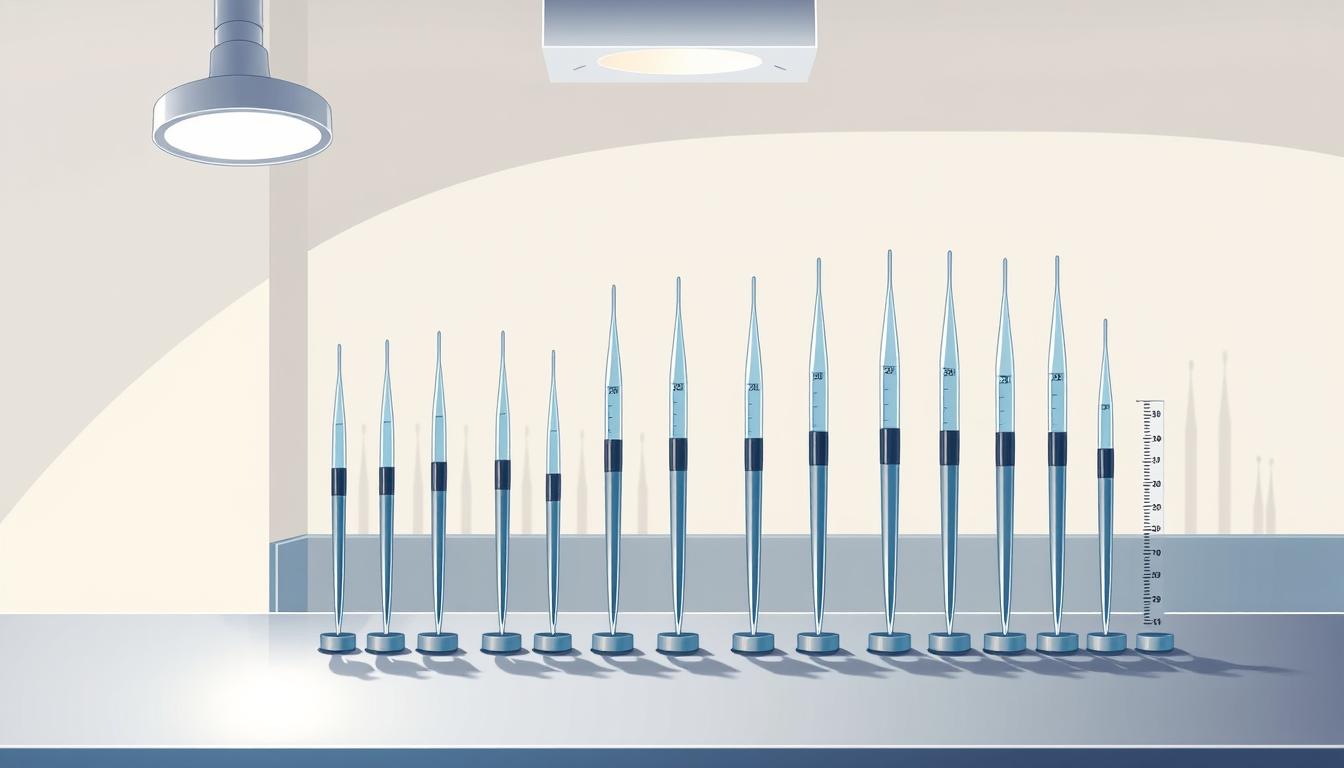
Can precision in liquid measurement truly define scientific success? Serological pipette volumes play a critical role in transforming laboratory research from ordinary to extraordinary.
Scientific laboratories rely on specialized tools to ensure accurate measurements. Serological pipette types range from 1 mL to 50 mL. This allows researchers to transfer precise liquid volumes across multiple disciplines. These versatile instruments are fundamental to maintaining experimental integrity.
Modern laboratories depend on serological pipette volumes for critical tasks. These include cell distribution, chemical solution mixing, and creating density gradients. Researchers carefully select pipette types based on specific experimental requirements. They understand that even minimal measurement errors can significantly impact research outcomes.
Key Takeaways
- Serological pipettes range from 1 mL to 50 mL in volume capacity
- Precise volume measurement is crucial for scientific accuracy
- Single-use pipettes minimize cross-contamination risks
- Different pipette types serve specific laboratory needs
- Proper technique ensures reliable experimental results
Overview of Serological Pipettes
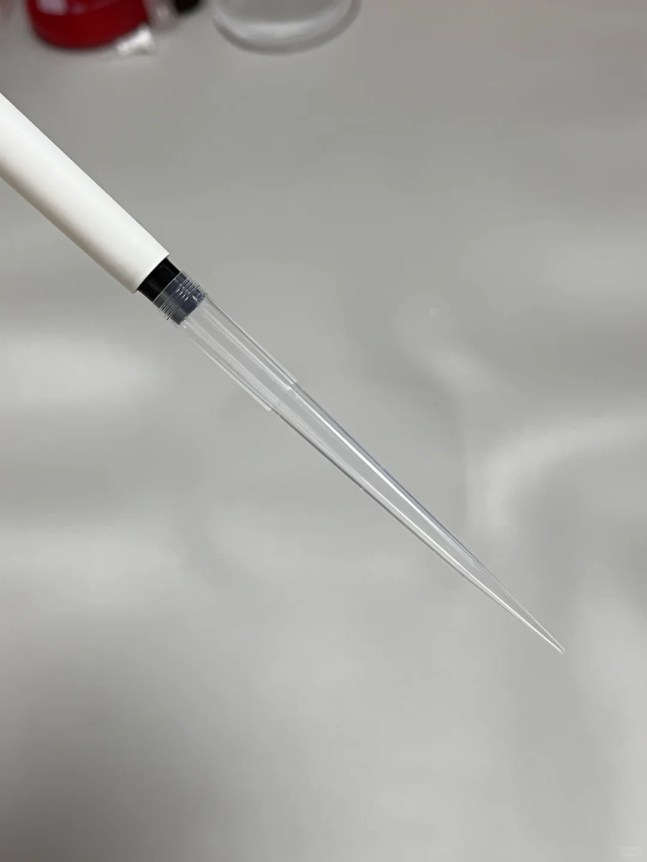
Serological pipettes are key tools in labs for handling liquids. They help scientists measure and move liquids with great accuracy. This is important in many scientific fields.
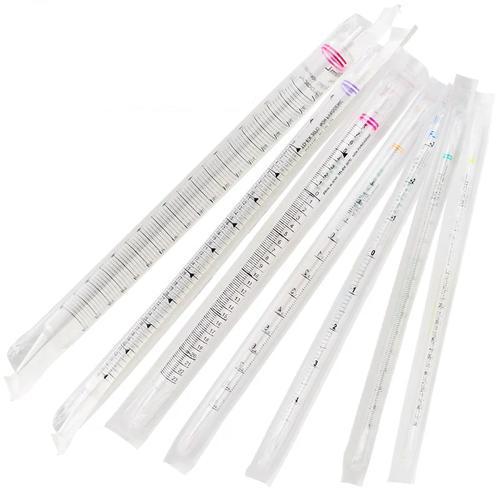
Scientists use serological pipettes for their ability to handle liquids well. These tools come in two types: disposable plastic and reusable glass. Each type has its own benefits for lab work.
Types and Characteristics
Serological pipettes have special features for precise scientific work:
- Volumes ranging from 1 mL to 50 mL
- Calibration marks for accurate measurements
- Available in plastic and glass configurations
- Suitable for multiple laboratory processes
Material Considerations
The choice between plastic and glass pipettes depends on lab needs:
| Material | Key Characteristics | Typical Applications |
|---|---|---|
| Plastic Serological Pipettes | Disposable, lightweight, pre-sterilized | Cell culture, microbiology |
| Glass Serological Pipettes | Reusable, autoclavable, precise | Analytical chemistry, sensitive research |
Laboratory Importance
Using pipettes correctly is crucial for good lab work. Researchers use serological pipettes in about 75% of microbiology lab processes. This shows how important they are in science.
Standard Volumes of Serological Pipettes
Serological pipettes are key in labs, helping with precise liquid transfers. They are used in many scientific fields. Knowing the standard volumes helps pick the right pipette for each experiment.
Labs use different serological pipette volumes for different needs. The common ones are:
- 1 mL pipettes
- 2 mL pipettes
- 5 mL pipettes
- 10 mL pipettes
- 25 mL pipettes
- 50 mL pipettes
Selecting the Right Pipette Volume
Choosing the right serological pipette volume is important. It depends on precision needs, sample size, and the experiment’s details. Making sure the pipette is calibrated is also key for accurate measurements.
Accuracy and Calibration Considerations
Different pipette volumes have different accuracy levels. For example:
- 1 and 2 mL pipettes: ±3% accuracy at full volume
- 5, 10, 25, and 50 mL pipettes: ±2% accuracy at full volume
Calibrating pipettes right ensures reliable results in science. It’s important to check pipettes often to keep experiments accurate.
Application in Laboratory Testing
Serological pipettes are key tools in today’s science and medicine. They help in handling liquids with great accuracy. This is crucial in labs everywhere.
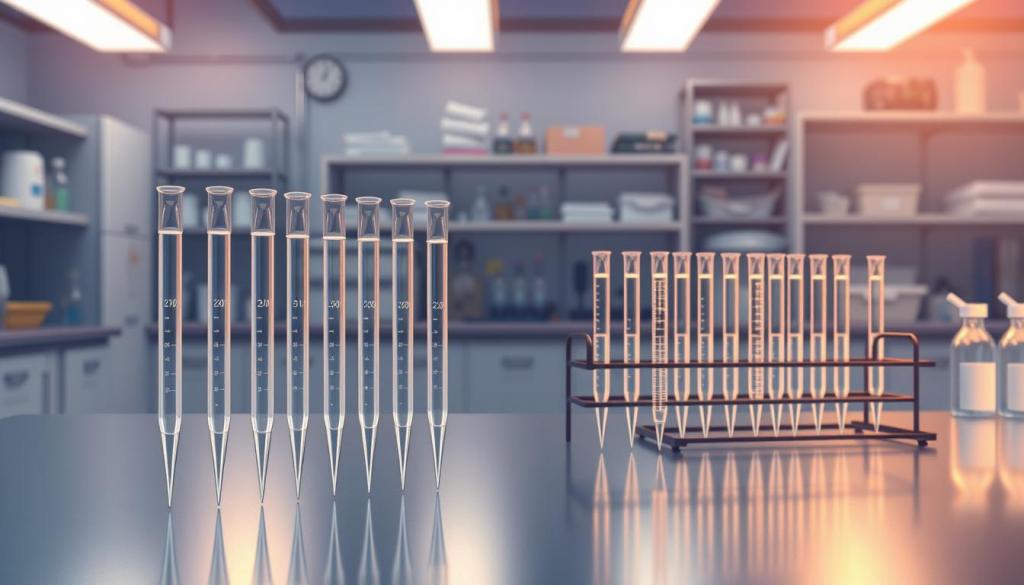
These pipettes are vital in many fields of science. They are used for precise measurements and moving liquids in important tasks.
Clinical Laboratory Applications
In hospitals, serological pipettes are vital for many tests. They are used for:
- Blood sample preparation
- Disease screening
- Chemical analysis
- Pharmaceutical research
Research Environment Utilization
Scientists in research labs use different pipettes for specific tasks. They use them for:
- Cell culture experiments
- Microbiological testing
- Chemical and biological research
- Genetic analysis
| Pipette Volume | Laboratory Application | Typical Accuracy |
|---|---|---|
| 1-5 mL | Microbiology | ±1% |
| 10-25 mL | Cell Culture | ±0.5% |
| 50-100 mL | Chemical Analysis | ±0.2% |
Getting liquids right is crucial in science. Serological pipettes help scientists move small to big amounts with high precision. This leads to reliable results in their work.
Accuracy and Precision in Measurement
Laboratory measurements depend a lot on pipette accuracy and precision. These are key to the quality and trustworthiness of scientific studies in many fields.
Pipette accuracy is how close a measurement is to the real volume. Pipette precision is about how consistent these measurements are. Scientists need to grasp these differences well.
Importance of Accurate Volumes
Getting accurate volume measurements is crucial for:
- Ensuring results can be repeated
- Keeping scientific work honest
- Avoiding mistakes in research
- Helping lab work run smoothly
Calibration Techniques
Regular calibration keeps pipettes working well. Experts suggest certain ways to calibrate for reliable measurements.
| Calibration Parameter | Recommended Frequency | Key Considerations |
|---|---|---|
| Standard Calibration | Every 3-6 months | Verify volume accuracy |
| Post Deep Cleaning | After reassembly | Check systematic errors |
| Performance Check | Quarterly | Ensure consistent results |
Precision in scientific measurement is not a luxury—it’s a necessity.
The ISO 8655-2 standards set limits for micropipette errors. Labs must follow these to keep their work reliable and trustworthy.
By using strict calibration methods and knowing about pipette accuracy and precision, scientists can make their research more reliable.
Maintenance of Serological Pipettes
Keeping pipettes in good shape is key for accurate lab results. Scientists know that well-kept pipettes are vital for precise work. Regular care stops contamination and makes these tools last longer.
Lab technicians need to follow a few important steps for pipette care:
- Check for wear signs
- Clean after each use
- Calibrate every 6-12 months
- Store upright in stands
Cleaning and Sterilization Procedures
Cleaning is the first step in pipette care. Different methods are needed for glass and plastic:
- Plastic: Throw away in sharps bins
- Glass: Clean with 10% bleach
- Use the right cleaning solutions
- Take apart for deep cleaning
Signs of Wear and Tear
Spotting early signs of pipette wear is important for accuracy. Look out for:
- Inconsistent liquid pickup
- Rough piston movement
- Damage to seals or O-rings
- Hard tip attachment
Regular upkeep can make pipettes last 20-30% longer. This saves money on lab equipment. Training and careful use are the best ways to keep these tools in top shape.
Techniques for Effective Use
Mastering pipette technique is key for accurate liquid handling in labs. It needs skill, attention to detail, and a grasp of basic principles. These ensure reliable scientific results.
Essential Pipetting Skills
Researchers must develop careful liquid handling strategies. This is to avoid errors and keep experiments reliable. Successful pipetting involves several key considerations:
- Maintain a consistent vertical position during pipetting
- Use smooth, controlled plunger movements
- Select appropriate pipette for specific volume ranges
- Understand the two-stop plunger system
Avoiding Common Pipetting Errors
Common mistakes can greatly affect experimental accuracy. Some critical errors to prevent include:
- Incorrect angle during liquid transfer – especially with volumes under 50 μL
- Inconsistent plunger pressure
- Improper tip immersion depth
- Neglecting tip pre-wetting techniques
Best Practices for Precision
To enhance pipette technique, lab professionals should:
- Pre-wet pipette tips to reduce evaporation
- Calibrate equipment annually
- Use filter tips for specialized applications
- Control ambient temperature during liquid handling
By following these strategies, researchers can greatly improve their liquid handling precision and experimental reliability.
Alternatives to Serological Pipettes
Laboratory professionals often face different challenges when handling liquids. They need tools beyond traditional serological pipettes. It’s important to know about other pipette types for precise and efficient measurements.
Micropipettes are a key alternative for handling liquids. They offer great precision for small volumes. This makes them essential in many scientific fields.
Micropipette Volume Ranges
There are different micropipette types for various volume needs:
- P2: 0.2-2 μl ultra-small volumes
- P10: 1-10 μl minimal liquid handling
- P20: 2-20 μl small sample transfers
- P200: 20-200 μl standard laboratory work
- P1000: 200-1000 μl larger volume preparations
Selecting Alternative Liquid Handling Tools
Choosing the right pipette depends on several factors:
| Consideration | Micropipette Selection Criteria |
|---|---|
| Volume Range | Match pipette capacity to experimental requirements |
| Precision Needs | Select tool ensuring highest measurement accuracy |
| Sample Characteristics | Consider liquid viscosity and potential contamination risks |
Scientists must carefully choose the right tool for their needs. This ensures reliable results in their experiments.
Regulatory Compliance
Keeping up with regulatory standards is key for top-notch scientific work. Equipment like serological pipettes must meet strict rules. This ensures results are reliable and can be repeated.
Essential Standards for Laboratory Equipment
Labs must follow strict guidelines for pipette accuracy and precision. The main standards are:
- EN ISO 9001 quality management standards
- EN ISO 13485 medical device regulations
- ISO 8655 pipette calibration and testing protocols
- ASTM E934 volumetric accuracy requirements
Importance of Compliance in Testing
Calibrating pipettes is crucial for scientific integrity. The ISO 8655 guidelines have been updated. They now cover nine parts, setting clear error limits at different volumes.
These standards help keep pipette accuracy consistent in all research and clinical settings.
Important compliance points include:
- Precise volumetric measurements
- Regular calibration procedures
- Documentation of maintenance records
- Adherence to environmental condition specifications
Labs need to use six-place balances for volumes under 20 μL. For volumes between 20-199 μL, five-place balances are required. This ensures accurate calibration.
Regulatory Documentation Requirements
Keeping detailed records is vital to show compliance. Labs should log pipette calibration, including error measurements and environmental conditions. They should also keep a record of maintenance history.
Innovations in Pipette Design
The world of liquid handling has seen big changes lately. Now, scientists and lab workers get to use advanced pipettes. These tools make work more precise, efficient, and easier to do.
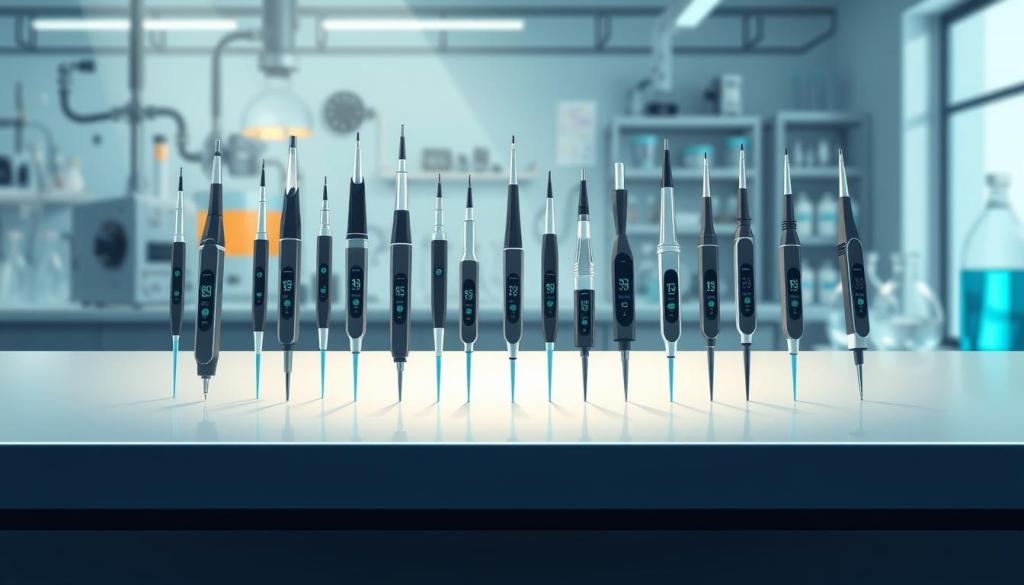
New pipette designs are changing lab work for the better. They tackle old problems in handling liquids. These updates focus on a few key areas:
- Enhanced material technologies
- Ergonomic design improvements
- Advanced electronic integration
- Precision liquid transfer capabilities
Material and Functional Advancements
New pipette designs use special materials. These materials help keep samples safe and work better. Low-retention plastics let scientists handle fragile or sensitive samples with great care.
Electronic Precision in Liquid Handling
Electronic pipettes are a big step up in lab tech. They bring:
- Automated volume calibration
- Digital precision tracking
- Less chance of human error
- Tools for managing data
Impact on Laboratory Efficiency
The latest pipette tech makes lab work less tiring and more reliable. Scientists can tackle harder tasks with less effort. This speeds up finding new things in science and improving how we handle liquids.
Training Requirements for Users
Learning to use a pipette well takes a lot of training and practice. People working in labs need to be very precise. This is key for doing good science and testing.
Good training teaches you how to handle liquids right. You learn how to avoid mistakes and keep labs clean.
Essential Skills for Pipette Users
- Understanding pipette mechanics
- Practicing aseptic techniques
- Recognizing potential contamination risks
- Performing calibration checks
- Maintaining equipment integrity
Training Program Components
Training covers many ways to learn about pipettes. You get to learn from books and practice in labs.
| Training Stage | Key Focus Areas |
|---|---|
| Initial Training | Equipment familiarization, basic techniques |
| Intermediate Level | Advanced liquid handling methods, error prevention |
| Advanced Certification | Specialized techniques, precision calibration |
Continuous Education Importance
The ISO 8655 standards say you should always keep learning. Labs should check how well you’re doing and offer more training when needed.
Precision in pipetting is not just a skill, but a continuous learning journey.
Labs need to focus on training that covers all the important skills. This includes being safe, using new tech, and being very precise.
Conclusion
Laboratory experts know that serological pipette volumes are key to accurate science. Different pipettes are vital for precise liquid transfer in fields like microbiology and biochemistry.
It’s crucial to understand how to use pipettes correctly. This ensures the integrity of experiments. Researchers must handle pipettes well, calibrate them often, and keep them in good shape to avoid mistakes.
The ability to accurately transfer liquids between 0.5 and 50 milliliters is essential. It’s a cornerstone of reliable scientific work.
Key Insights for Laboratory Excellence
Future trends in serological pipetting include more technology and better precision. New materials and digital systems will change how labs handle liquids. This will make processes smoother and less prone to errors.
Scientists can look forward to more innovations. These will improve accuracy and lower the risk of contamination.
Advancing Scientific Methodology
The growth of serological pipettes shows a deep commitment to scientific quality. By following best practices and staying up-to-date with new tech, labs can keep advancing research. They do this through precise and reliable liquid handling.
FAQ
What are serological pipettes and why are they important in laboratory testing?
Serological pipettes are precise tools for moving liquids in labs. They help get accurate results by measuring volumes well. This is key in many scientific and medical tests.
What volume ranges are typically available for serological pipettes?
You can find serological pipettes in sizes from 1 mL to 50 mL. They come in different sizes like 1 mL, 5 mL, 10 mL, 25 mL, and 50 mL. This lets researchers pick the right one for their needs.
How do accuracy and precision differ in pipette measurements?
Accuracy is how close a measurement is to what it should be. Precision is how consistent those measurements are. Good pipettes help keep measurements the same, leading to better science.
What are the key considerations when maintaining serological pipettes?
Keeping pipettes in good shape means regular checks, cleaning, and storage. It’s also important to avoid damage. Labs should check them often, use the right cleaning methods, and replace worn-out ones.
How often should serological pipettes be calibrated?
Labs usually calibrate pipettes once a year. But, if they’re used a lot, it might be more often. This keeps them working well and meets rules.
What are the primary applications of serological pipettes?
Serological pipettes are used a lot in labs. They help with things like preparing samples, mixing solutions, and growing cells. They’re key in many areas of science.
What techniques can improve pipetting accuracy?
To pipette better, keep the pipette straight, move the plunger smoothly, and avoid air bubbles. Choose the right pipette size and practice a lot. This helps get precise results.
How do electronic pipettes differ from traditional manual pipettes?
Electronic pipettes are more accurate and easier to use. They have settings you can change and track volumes digitally. They’re better for complex tasks and reduce hand strain.
What are common sources of pipetting errors?
Errors can come from using the wrong pipette, bad technique, or changes in temperature. Liquid type, lack of practice, and worn-out tools also play a part. Training and following rules can help fix these issues.
Are there specific regulatory standards for serological pipettes?
Yes, there are rules like ISO 8655 and GLP. They set standards for how pipettes should work, be calibrated, and checked in labs.




Leave a Comment
Your email address will not be published. Required fields are marked *