


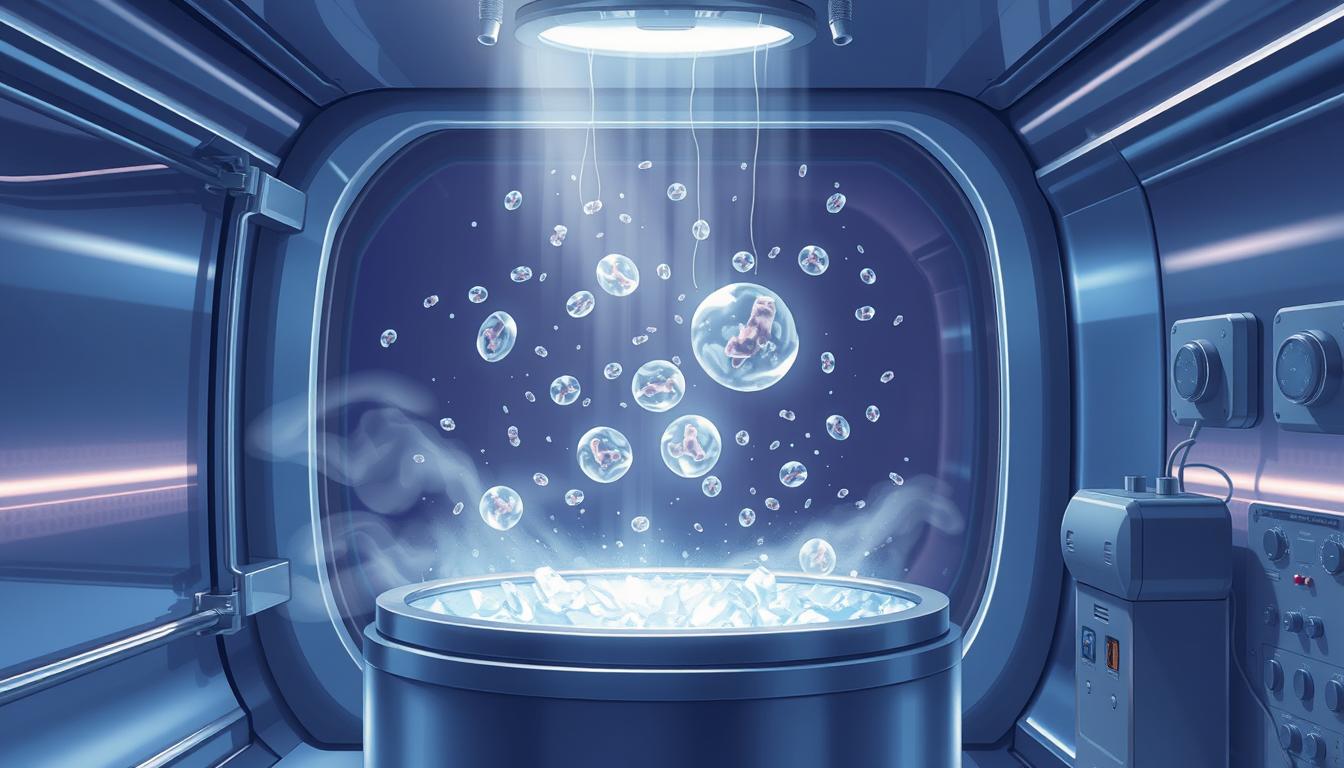
Imagine freezing life’s clock and keeping cells alive forever. Cryopreservation is more than just freezing. It’s a cutting-edge science that lets experts store living things at very cold temperatures.
This method, known as cryopreservation, cools cells and tissues to stop life’s activities. It’s a game-changer for scientists. It keeps cells and tissues alive and healthy for a long time.
Cryopreservation has changed many fields, like medicine and fertility. It slows down cells’ activities, keeping them safe and sound. This helps scientists study and store important biological samples.
Key Takeaways
- Cryopreservation stops biological processes at extremely low temperatures
- Enables long-term storage of cells, tissues, and genetic materials
- Crucial for medical research and reproductive technologies
- Preserves genetic integrity of biological samples
- Supports advances in regenerative medicine
What is Cryopreservation?
Cryopreservation is a cutting-edge science that freezes biological materials at very low temperatures. It helps keep cells, tissues, and genetic materials alive for a long time. This is crucial for research and medical care.
The cryopreservation process carefully lowers the temperature to protect biological samples. Experts use special techniques to keep cells safe during freezing and thawing.
Definition of Cryopreservation
Cryopreservation is about freezing biological materials at very cold temperatures, often with liquid nitrogen. The main goal is to stop biological activity without harming cells.
- Freezes biological samples at ultra-low temperatures
- Prevents cellular degradation
- Maintains potential future viability
Historical Context
The history of cryopreservation started in the mid-20th century. Scientific breakthroughs have made it possible to preserve more complex biological systems over time.
- 1950s: Initial experiments with simple cell preservation
- 1990s: Vitrification method development
- 2000s: Advanced cryopreservation for complex tissues
Importance in Science
Cryopreservation has changed many scientific fields. It’s key in medical research, reproductive technologies, and genetic conservation. It allows for the storage of biological materials forever, opening new doors for science and medicine.
Cryopreservation represents the intersection of advanced technology and biological preservation.
Scientists have made big strides, like preserving embryos leading to over 150,000 healthy births worldwide. The vitrification method, which stops ice crystal formation, has been a game-changer in reproductive medicine.
How Cryopreservation Works
Cryopreservation is a complex science that keeps cells and tissues alive at very cold temperatures. It uses special methods to protect these materials from harm when they freeze and thaw.
The Cryopreservation Process
The cryopreservation process has key steps to keep cells alive:
- Preparation of biological samples
- Addition of protective chemical agents
- Controlled cooling to ultra-low temperatures
- Safe storage
- Careful thawing and recovery
Role of Cryoprotectants
Cryoprotectants play a vital role in cryopreservation. These special chemicals stop ice crystals from forming that could harm cells. Scientists pick different cryoprotectants to reduce damage during freezing and thawing.
Cooling and Warming Rates
Managing temperature is key to successful cryopreservation. Researchers found that certain cooling and warming speeds are crucial for cell survival.
| Temperature Range | Preservation Technique | Cellular Survival Rate |
|---|---|---|
| -14°C | Standard Freezing | Moderate |
| -80°C | Deep Freezer Storage | High |
| -196°C | Liquid Nitrogen Storage | Excellent |
Studies show cells can live over a decade with the right cryopreservation. Success depends on precise cooling and warming to protect cells from damage.
Applications of Cryopreservation
Cryopreservation has changed science and medicine by letting us store biological materials for a long time. This method is used in many areas, offering new ways to preserve and study things.
This method has changed how scientists and doctors handle biological samples. It keeps these materials safe and intact in many fields.
Medical Applications
In medicine, cryopreservation has led to big steps forward in patient care and research. Some key uses are:
- Stem cell preservation for regenerative medicine
- Storage of reproductive cells for fertility treatments
- Preservation of rare blood cell types
- Maintaining genetic material for future clinical interventions
Agricultural Innovations
Agricultural scientists use cryopreservation to save genetic diversity and improve plant breeding. It helps with:
- Seed and plant tissue preservation
- Conservation of rare crop varieties
- Maintenance of genetic resources
Research Frontiers
Cryopreservation research is exploring new areas, offering chances for study and preservation:
| Research Area | Cryopreservation Impact |
|---|---|
| Genetics | Long-term specimen storage |
| Biodiversity | Genetic material conservation |
| Biomedical Studies | Cellular integrity preservation |
Freezing temperatures range from –80 °C to −196 °C. Recovery rates are 20% to 60%, depending on the cell type and preservation method.
Benefits of Cryopreservation
Cryopreservation is a game-changer for science, medicine, and keeping biological samples safe. It offers new ways to store things for a long time and save genes. Plus, it’s a cost-effective method.
Long-term Storage Capabilities
Cryopreservation does more than just keep things safe. It stores biological materials at very cold temperatures, around -196°C. This way, it keeps the genetic information almost perfect.
- Preserves cell viability up to 95% after freezing and thawing
- Maintains genetic materials for extended periods
- Reduces continuous cell culture maintenance requirements
Preservation of Genetic Diversity
Keeping genetic diversity safe is key in cryopreservation. It helps store rare genetic samples. This supports important scientific studies.
Cost-Effectiveness in Scientific Research
Cryopreservation is cheaper than keeping biological samples alive all the time. It saves money by cutting down on the need for constant preparation and extraction.
| Preservation Method | Cost Efficiency | Sample Integrity |
|---|---|---|
| Continuous Cell Culture | High Ongoing Expenses | Moderate Degradation |
| Cryopreservation | Low Maintenance Costs | High Genetic Preservation |
Using cryopreservation, scientists and doctors can use resources better. They keep biological samples in top condition without breaking the bank.
Challenges and Limitations
Cryopreservation research faces big challenges that affect cell survival and how well they are preserved. Scientists work hard to solve these problems. They look at many areas where technical and biological issues make it hard to keep cells safe during freezing and thawing.
Cell Viability Challenges
Keeping cells alive during cryopreservation is a big problem. Biological samples are very sensitive. Even small changes in temperature can harm them a lot. Some main risks include:
- Potential membrane disruption during freezing
- Intracellular ice crystal formation
- Osmotic stress from rapid temperature changes
- Potential genetic alterations
Cryoprotectant Toxicity Concerns
Cryoprotectants are key for preservation but can harm cells. Research shows that chemicals like dimethylsulfoxide (DMSO) can change cells’ genes. The harm depends on:
- Concentration of cryoprotective agents
- Exposure duration
- Specific cell type characteristics
- Molecular interactions
Technical Preservation Difficulties
There are big technical challenges in cryopreservation. It’s hard to control cooling and warming rates well. Optimal preservation needs microsecond-level precision in temperature management. But, current tech can’t always do this for all types of cells.
The future of cryopreservation lies in developing more nuanced, cell-specific preservation protocols.
Research keeps going to find new ways to reduce damage to cells. They aim to improve long-term preservation methods.
Advances in Cryopreservation Techniques
The field of cryopreservation research is growing fast. Scientists are finding new ways to keep cells alive in extreme cold. They aim to solve big problems in cell preservation.
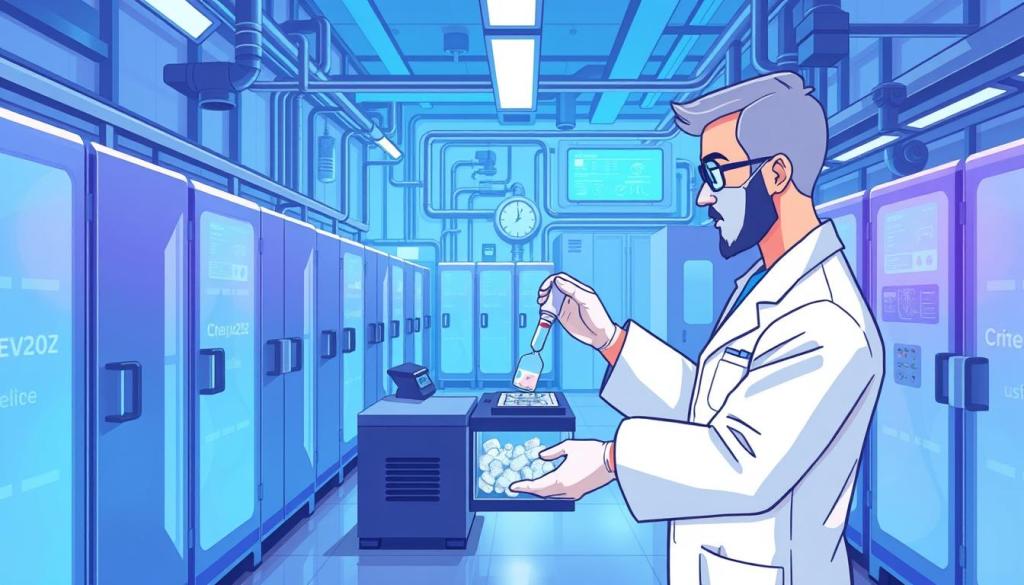
New discoveries in cryopreservation are changing how we store cells. These breakthroughs help cells survive better and reduce damage when frozen and thawed.
Vitrification: A Cutting-Edge Approach
Vitrification is a big step forward in cryopreservation. It turns biological materials into glass, reducing ice damage to cells. The benefits are:
- Near 100% survival rates for some cells
- Less damage to cells during freezing
- Fast cooling and warming
Automation in Cryopreservation
New tech is making cryopreservation easier with automation. Robots help with:
- Exact temperature control
- Even cryoprotectant use
- Less human mistake
Emerging Technologies
Research is looking into new ways to preserve cells. These include:
- Magnetic nanoparticle use for better cell survival
- Electromagnetic rewarming methods
- Antifreeze proteins
These new methods could change medical research and cell storage. They promise to help in many scientific fields.
Ethical Considerations
Cryopreservation research faces complex ethical challenges. It blends scientific progress with human values. This mix requires careful thought.
Ethical Implications for Human Cells
Researchers in cryopreservation companies must tackle big ethical questions. They deal with human reproductive materials. This raises deep moral issues:
- Consent and autonomy of genetic material donors
- Rights of potential future offspring
- Psychological impacts of long-term genetic storage
Regulatory Frameworks
Guidelines protect people in cryopreservation research. Important rules include:
- Strict informed consent protocols
- Privacy protection mechanisms
- Transparent documentation processes
Public Perception
The public’s view on cryopreservation is mixed. Views are influenced by:
- Scientific literacy
- Cultural and religious beliefs
- Ethical concerns about genetic manipulation
Ethical considerations represent the critical bridge between scientific innovation and human values.
Cryopreservation in Reproductive Health
Cryopreservation has changed reproductive health a lot. It lets people keep their fertility and plan their families better. This technology has changed how we deal with reproductive issues and life choices.
IVF Treatments and Reproductive Cell Storage
Today, cryopreservation is key in reproductive medicine for fertility treatments. It stores reproductive cells at very cold temperatures, usually around -320 degrees Fahrenheit.
- First successful human birth from a frozen egg occurred in 1986
- Clinical pregnancy rates range between 4-12% per frozen egg
- Vitrification has become the standard freezing technique
Sperm and Egg Preservation Strategies
Cryopreservation helps a lot with fertility problems. Surgical sperm extraction and egg freezing have gotten better. This lets people save their reproductive chances.
- Optimal egg freezing occurs before age 40
- Egg supply declines rapidly around age 37
- 90% of eggs are considered abnormal by age 43
Impact on Family Planning
Cryopreservation has opened up new ways to plan families. People getting treatments like chemotherapy can save their fertility. Others can plan when to have kids based on their own schedule.
Cryopreservation represents a transformative approach to reproductive health, offering hope and flexibility for future family creation.
Future of Cryopreservation
The world of cryopreservation is changing fast, with new discoveries that could change many fields. New trends show that cryopreservation will grow in ways we can’t imagine yet.
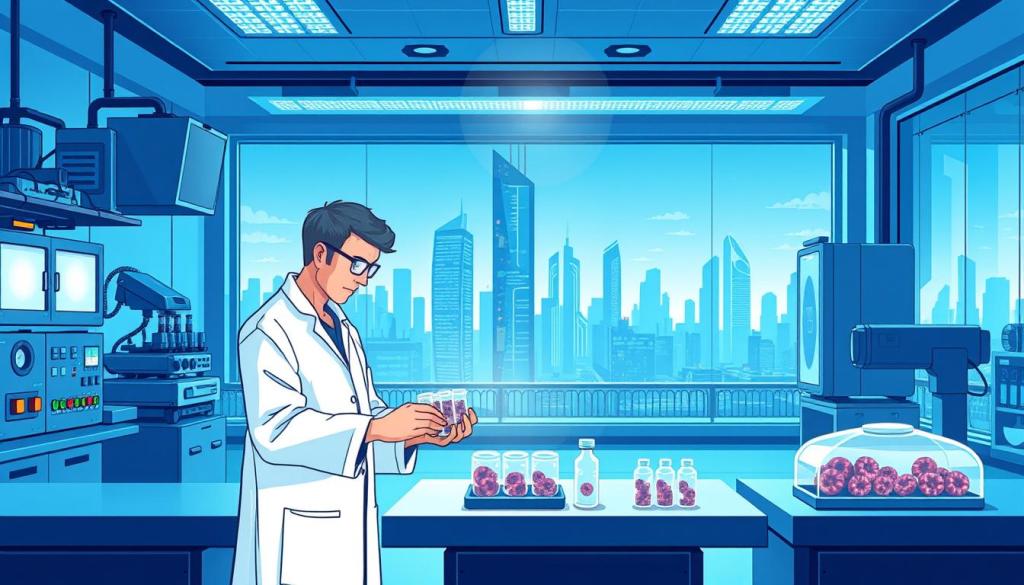
Top cryopreservation companies are leading the way with new research. They are working on:
- Advanced vitrification techniques with minimal cellular damage
- Development of next-generation cryoprotectants
- Exploration of whole organ preservation methods
- Potential applications in space exploration biomedical research
Emerging Technological Innovations
The global cryopreservation market is expected to hit $4.5 billion by 2025, growing at 12.5% annually. Research is focusing on stem cell preservation and regenerative medicine.
Potential New Applications
Scientists are exploring new uses for cryopreservation. This could change many scientific areas. The possibilities include:
- Comprehensive organ preservation techniques
- Advanced biobanking methodologies
- Innovative approaches to long-term biological sample storage
Research Directions
About 50% of academic research institutions are working on better preservation methods. The main goals are to improve cell therapy preservation, solve scaling issues, and keep products viable in complex supply chains.
The future of cryopreservation lies in our ability to push technological boundaries and create more resilient preservation methods.
Case Studies in Cryopreservation
Cryopreservation research has led to amazing breakthroughs and lessons in many fields. These examples show how cryopreservation can solve big biological problems.
Successful Human Applications
Reproductive medicine has seen huge progress in cryopreservation. The first baby from a frozen egg was born in 1986. By 2013, freezing eggs was seen as a common solution for fertility issues.
- Live birth rates per transfer reached 38.6% using cryopreserved oocytes
- Successful fertilization rates approached 70%
- Implantation rates showed promising results, especially for younger patients
Impact on Endangered Species
Cryopreservation is key for saving endangered species. About 90% of plants can be saved through cold storage. Today, over 1,700 seed banks worldwide help keep genetic diversity alive.
Historical Failures and Lessons Learned
Not every cryopreservation effort has worked. Early methods often harmed cells during freezing and thawing. Scientists found that precise cooling and warming rates are key to keeping cells alive.
- Initial failures showed the need for cryoprotectants
- Vitrification techniques became a better way to preserve
- Improving protocols has raised success rates
The growth of cryopreservation shows our ability to tackle preservation challenges.
These examples show how cryopreservation is changing medicine, agriculture, and conservation. They highlight the ongoing progress in science.
Resources for Further Learning
Researchers and professionals can dive deeper into cryopreservation research through various educational paths. Academic publications share the latest in techniques, from cellular preservation to advanced biotechnology. These resources are a treasure trove for those eager to learn.
Leading universities offer detailed programs in cryobiology and related fields. Students can find specialized courses that explore the world of cryopreservation companies. Online platforms also provide flexible workshops and certification programs, allowing professionals to grow their skills without leaving their jobs.
Scientific libraries and digital databases are key for in-depth knowledge of cryopreservation. Researchers can find peer-reviewed journals, conference papers, and digital archives. Institutions like Stanford University and Harvard Medical School publish groundbreaking research, expanding our scientific understanding.
Professional organizations and scientific networks offer more learning and collaboration chances. Researchers can join groups focused on cryopreservation, attend conferences, and work on projects. These networks provide valuable connections and insights for those pushing the scientific boundaries.
FAQ
What exactly is cryopreservation?
Cryopreservation is a way to keep biological materials like cells and tissues cold. It cools them to very low temperatures, below -130°C. This helps keep them in good shape for a long time.
How do cryoprotectants work in the preservation process?
Cryoprotectants are special chemicals. They stop cells from getting damaged when frozen. They keep the cells from drying out and stay stable during freezing and thawing.
What are the primary applications of cryopreservation?
Cryopreservation is used in many areas. It helps in medical research, reproductive medicine, and conservation. It’s also used in agriculture and genetic research. It’s used to store stem cells, embryos, and genetic materials of endangered species.
Is cryopreservation safe for biological materials?
Yes, cryopreservation can be safe if done right. It needs careful control of cooling and warming. The right cryoprotectants and techniques are also important to avoid damage.
What are the potential risks of cryopreservation?
Risks include damage to cell membranes and ice crystal formation. There’s also the chance of cryoprotectant toxicity and reduced cell viability. But, advanced techniques like vitrification can help reduce these risks.
How long can biological materials be preserved through cryopreservation?
Biological materials can be kept for decades or even centuries under the right conditions. Some samples have stayed viable for 30-50 years in cryogenic storage.
What is the difference between slow-freezing and vitrification?
Slow-freezing cools down gradually. Vitrification cools quickly, turning materials into a glass-like state. This can reduce ice crystal formation and damage to cells.
Are there ethical considerations in cryopreservation?
Yes, there are ethical concerns, especially in human reproductive cell preservation. Issues include consent, ownership, and future use of stored cells. There are also laws and regulations to follow.
What medical fields benefit most from cryopreservation?
Fields like reproductive medicine, oncology, and stem cell research greatly benefit. It also helps in regenerative medicine and genetic conservation. It opens up new treatment and research possibilities.
How expensive is cryopreservation?
Costs vary based on the material, technique, and storage time. While it can be pricey upfront, it can be more cost-effective than other methods. It saves money in the long run.




Leave a Comment
Your email address will not be published. Required fields are marked *