


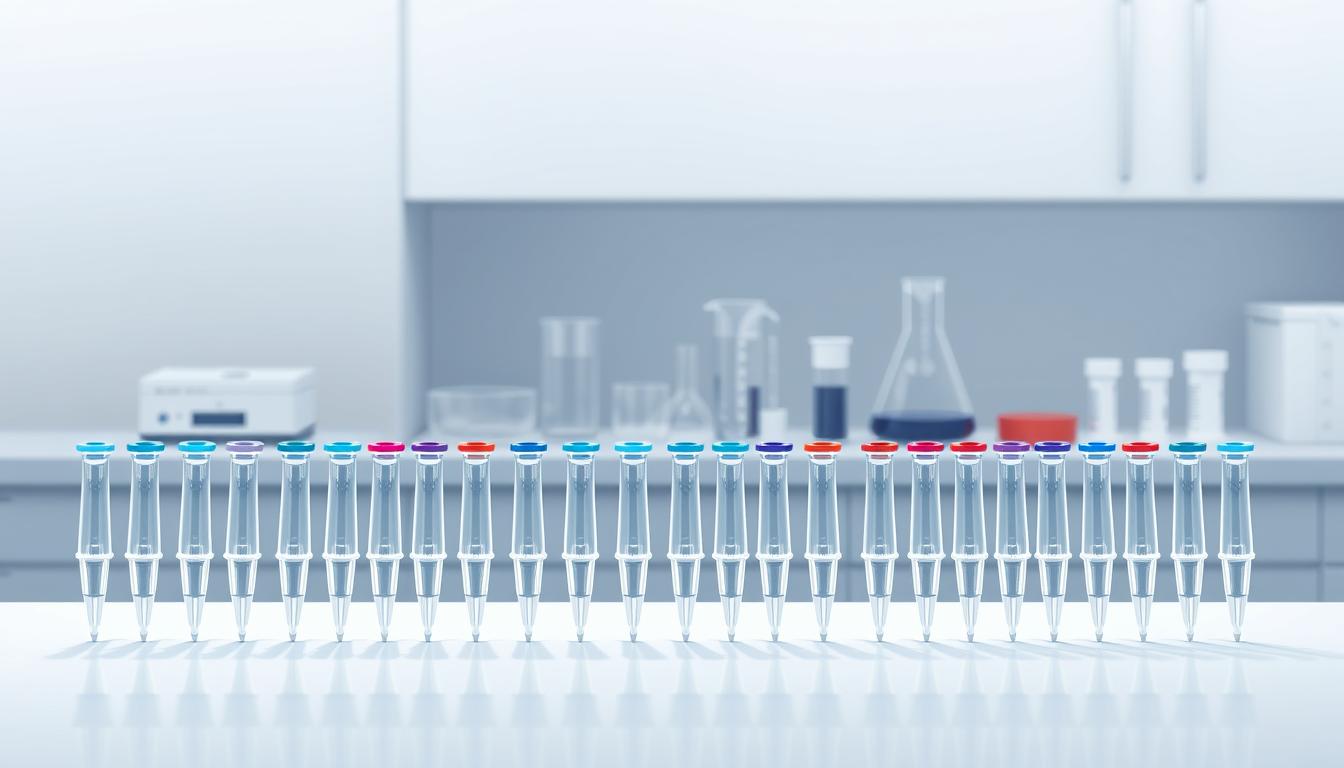
Could something as small as a pipette tip silently affect your lab’s research? Filter pipette tips are key to keeping research accurate and safe. They protect the integrity of scientific work in many labs.
Today’s labs need advanced tools to keep experiments precise. Filter pipette tips are crucial for this. They stop contamination and help get reliable results. These tips shield researchers from cross-contamination risks in delicate procedures.
75% of researchers say filter tips make results more reliable. These tools are changing how labs work. They are vital in clinical diagnostics and pharmaceutical research, helping avoid mistakes.
Key Takeaways
- Filter pipette tips reduce contamination risks by up to 99%
- Pre-sterilized and DNase/RNase-free for sensitive applications
- Critical for maintaining experimental precision
- Essential in clinical diagnostics and research settings
- Protect both samples and laboratory equipment
Overview of Filter Pipette Tips
Laboratory research needs precision and must avoid contamination. Filter pipette tips are key lab supplies that keep samples and researchers safe during precise scientific work.
Scientists use these special pipette tools to keep experiments reliable and results accurate. They are vital for many research tasks.
Understanding Filter Pipette Tips
Filter pipette tips are advanced lab tools with special features. They have a barrier that stops liquids and aerosols from getting in during pipetting. This keeps samples and researchers safe.
- Pre-sterilized design
- DNase/RNase-free composition
- Built-in filtration mechanism
- Compatible with multiple pipette types
Critical Role in Scientific Research
Filter tips do more than just move liquids. They act as a strong defense against contamination. This is crucial in fields like molecular biology, forensics, and clinical diagnostics.
| Application | Contamination Risk | Filter Tip Effectiveness |
|---|---|---|
| qPCR | High | Excellent Protection |
| Genetic Research | High | Superior Barrier |
| Clinical Diagnostics | Critical | Proven Reliability |
Filter tips stop liquids from getting into pipette parts. This protects expensive gear and keeps experiments precise. They are especially helpful for new lab workers who might accidentally contaminate samples.
Types of Filter Pipette Tips Available
Precision liquid handling needs special filter pipette tips for different lab tasks. Researchers have many tip options to keep samples safe and prevent contamination. This is crucial for important scientific work.
There are many filter pipette tips for various research needs. They help with precise pipetting in many fields. Knowing the different types helps scientists pick the best tool for their work.
Universal Filter Tips
Universal filter tips are great for general lab work. They have key features like:
- Work with many pipette brands
- FlexFit tech for better accuracy
- Fit different pipette sizes
Filtered PCR Tips
Molecular biology needs special tips for sensitive work. Filtered PCR tips protect against:
- 99% of aerosols
- Prevent contamination
- Perfect for qPCR and genetic studies
Specialty Filter Tips
Advanced research needs special tips with unique features:
| Tip Type | Volume Range | Special Feature |
|---|---|---|
| Micro Tips | 0.5 µL – 1,250 µL | Low liquid retention |
| Extended Length Tips | Multiple volumes | Enhanced contamination control |
| Wide Orifice Tips | Variable | Reduce cell shearing |
Choosing the right filter pipette tip is key for the best results. It protects samples and ensures reliable research.
Advantages of Using Filter Pipette Tips
Filter pipette tips have changed how labs work. They protect samples and equipment from harm. These tools help make research more accurate and keep labs clean.
Scientists see filter pipette tips as key for keeping samples safe. They fight off contamination and keep labs clean. Their design tackles big challenges in lab work.
Contamination Prevention Strategies
Filter pipette tips block many contaminants. They stop:
- Aerosol transmission
- Cross-sample interference
- Potential microbial intrusion
Sample Protection Mechanisms
Keeping samples safe is crucial. Filter pipette tips do this well. They:
- Are pre-sterilized
- Don’t have DNase/RNase
- Use materials that don’t hold onto things
Enhanced Accuracy and Precision
Labs need tools that work perfectly. Filter pipette tips are top-notch. They handle liquids with great care.
| Feature | Benefit | Impact |
|---|---|---|
| Aerosol Barrier | Prevents liquid splashing | Reduces contamination risk |
| Filter Membrane | Blocks microscopic particles | Ensures sample purity |
| Precise Measurement | Consistent liquid volume | Improves experimental reproducibility |
Choosing the right filter pipette tips can greatly lower mistakes in experiments. It also saves valuable research money.
How Filter Pipette Tips Work
Filter pipette tips are a big step forward in lab work. They keep samples safe from contamination. This is key for many types of scientific research.
These tips have a special design. They use a filter to stop bad particles from getting into samples.
Mechanism of Filtration
Filter pipette tips use a smart filter to protect samples. They have:
- A porous plastic filter barrier
- A zigzag pathway for air circulation
- Particle capture technology
The filter’s design traps tiny particles. It’s shown to block:
- Aerosol particles between 0.3-0.7 µm
- Potential bacterial contaminants
- Viral fragments
Compatibility with Various Pipettes
Filter tips work well with many pipettes. Laboratories can pick tips that fit their needs. This ensures the best results for different experiments.
These tips filter out about 85% of big particles. They’re vital for keeping research clean and stopping contamination in sensitive work.
Choosing the Right Filter Pipette Tips for Your Needs
Choosing the right filter pipette tips is key for good lab work and precise handling of liquids. Scientists need to look at many factors to get the best results in their research.
When picking filter pipette tips, scientists should think about a few important things. These things can affect how well their experiments work:
- Volume range compatibility
- Sample characteristics
- Experimental requirements
- Sterility needs
Key Factors in Tip Selection
The selection process is about knowing what you need for your research. Different studies need different tips to keep samples safe and clean.
| Tip Type | Recommended Application | Special Characteristics |
|---|---|---|
| Sterile Filter Tips | Molecular Biology | Aerosol barrier protection |
| Low Retention Tips | Expensive Reagent Handling | Minimized sample loss |
| Extended Length Tips | Deep Container Sampling | Reduced contamination risk |
Common Applications in Research
Filter pipette tips are vital in many scientific fields, including:
- Molecular biology techniques
- Clinical diagnostics
- Cell culture research
- Genomic studies
Choosing the right pipette tip for your specific needs ensures accurate and reliable results.
Researchers should make sure the tips fit their lab equipment and research needs. This helps pick the best filter pipette tips for their work.
Proper Handling and Use of Filter Pipette Tips
Precision pipetting is key in labs, where the quality of tools matters a lot. Knowing how to handle filter pipette tips right is crucial. It helps make sure experiments are accurate and clean in many fields of science.
Researchers need to learn the fine details of using filter pipette tips well. It’s not just about moving the pipette. It’s about paying close attention to every step.
Best Practices for Pipetting
- Always check tip compatibility with your specific pipette model
- Inspect filter tips for any visible damage before use
- Hold the pipette vertically during aspiration and dispensing
- Use smooth, consistent pressure when pipetting
- Avoid touching the filtered end of the tip
Avoiding Common Mistakes
New lab workers often struggle with filter pipette tips. Common mistakes to avoid include:
- Improper tip attachment that compromises the seal
- Rapid or jerky pipetting motions
- Reusing disposable filter tips
- Failing to pre-rinse tips with sample liquid
- Incorrect angle during pipetting
Using filter pipette tips can cut contamination rates by up to 95%. By following these tips, labs can keep samples safe. This makes research in biotech, clinical diagnostics, and academia more reliable.
Maintenance and Disposal of Filter Pipette Tips
Laboratory experts know how vital it is to handle pipette tips right. These plastics are key for research accuracy and keeping our planet clean.
Dealing with filter pipette tips is a big task. It involves science and caring for our environment. Researchers must find the right balance to keep their work precise and eco-friendly.
Reusable vs. Disposable Tips: A Strategic Approach
Labs have to choose between reusable and disposable tips:
- Disposable tips keep samples safe from contamination
- Reusable tips can cut down on plastic waste
- Filtered tips add extra protection for samples
While reusing tips might save money, most studies say to use them once. Cleaning and sterilizing filter tips is hard and often not worth it.
Environmental Considerations in Laboratory Practices
Today, labs must focus on being green. Here are some ways to manage pipette tips better:
- Choose tips that can be recycled
- Sort waste correctly
- Go for tips from eco-certified makers
By picking sustainable tips, researchers can lessen their impact on the planet. Using refill plates and compact packaging also cuts down on plastic use without sacrificing quality.
Properly disposing of filter pipette tips is more than a habit. It’s a promise to uphold scientific standards and protect our environment.
Innovations in Filter Pipette Tip Technology
The world of lab research is changing fast with new filter tips and pipette accessories. New tech has made liquid handling more precise and efficient. This helps scientists with complex research tasks.
Science has made big strides in filter tips, improving materials and making them better. Now, scientists have tools that make their work more reliable and their samples safer.
Material Science Breakthroughs
Today’s filter tips are made with new materials that solve big research problems:
- They resist chemicals better
- They hold less sample
- They block aerosols better
- They can be made to fit specific needs
Advanced Manufacturing Techniques
Companies like Eppendorf have brought in new ways to make filter tips. The ep Dualfilter T.I.P.S. 384 shows these improvements, with:
- Almost 100% aerosol and biomolecule blockage
- A two-phase filter for full protection
- Less force needed to attach tips
- Better pipetting results
These new technologies are a big step up in filter tips. They give scientists tools that are more precise and safe for their work.
Regulatory Standards for Filter Pipette Tips
Laboratory research needs precision and reliability. The rules for filter pipette tips are key to keeping science accurate in many fields.
The world of keeping things clean and safe in labs has changed a lot. Now, there are strict rules for making and using filter pipette tips.
Compliance Requirements Overview
Labs must follow important rules to keep their research top-notch:
- ISO 8655 standards for pipette and tip compatibility
- ISO 14644-1 cleanroom manufacturing validation
- Gamma radiation sterilization protocols
- Quality control for RNase, DNase, and human DNA elimination
Importance in Research Integrity
“Compliance is not just a requirement, it’s a commitment to scientific excellence.”
Following the rules is more than just paperwork. Sterile filtration and strict contamination control are key to reliable research results.
About 85% of lab workers say following rules is a big deal when buying things. Also, 30% of pipetting mistakes happen because of not following the rules.
| Regulatory Aspect | Impact on Research |
|---|---|
| Sterility Assurance | Reduces contamination risk by up to 99% |
| Manufacturing Standards | Ensures consistent tip quality and performance |
| Quality Control | Minimizes experimental variability |
The demand for filter pipette tips is rising fast. It’s expected to grow by 5.2% each year from 2023 to 2030. This shows how crucial strict rules are in science.
Conclusion: The Role of Filter Pipette Tips in Modern Research
Filter pipette tips are key to keeping research accurate and reliable. They are a big step forward in lab technology. They help researchers control the quality of their samples and the results of their experiments.
The development of filter pipette tips shows how far technology has come. They have features like aerosol barriers and surfaces that help liquids flow better. This makes them safer and more precise. They also meet strict scientific standards, making them vital in today’s labs.
Key Research Benefits
These advanced tips offer many benefits for science. They help prevent contamination and reduce the loss of samples. This means researchers can do more precise work in areas like molecular biology and genetics.
Future Laboratory Practices
Filter pipette tips will keep changing the game in science. New technologies will make them even better. As labs around the world aim for more reliable results, these tips will be crucial for making discoveries.
FAQ
What are filter pipette tips, and why are they important in laboratory research?
Filter pipette tips are special tools used in labs to keep samples safe. They have a filter that stops harmful particles from getting in. This helps keep the samples pure and the research accurate.
How do filter pipette tips differ from standard pipette tips?
Filter pipette tips have a special filter that stops liquids and particles from moving up the pipette. This extra protection is key for sensitive work like PCR and cell culture.
What types of filter pipette tips are available for researchers?
There are many types of filter pipette tips, like universal and PCR tips. Each is made for different lab needs, offering the right level of protection and fit.
How do filter pipette tips prevent contamination?
These tips have a fine membrane that blocks liquids and particles. This keeps the sample and pipette safe, reducing contamination risks.
What factors should researchers consider when selecting filter pipette tips?
When picking tips, think about the volume, compatibility, and sterility needed. Also, consider the material, filter quality, and certifications for your specific research.
Are filter pipette tips suitable for all types of liquid handling?
Filter tips are great for many lab tasks, especially sensitive ones like PCR. But, they might not work for all liquids, especially those that could affect the filter.
How should researchers maintain and store filter pipette tips?
Keep tips in their packaging, away from light and moisture. Use clean hands or gloves and store them in a clean area to keep them sterile.
What are the environmental considerations for filter pipette tips?
Many tips are now made to be eco-friendly, like recyclable materials. Labs can choose green options and recycle tips to help the environment.
How do recent technological innovations impact filter pipette tip design?
New tech has improved tip materials and filters. It also makes tips more reliable and efficient, leading to better lab results.
What regulatory standards apply to filter pipette tips?
These tips must meet strict quality standards, like sterility and safety. Good manufacturers provide proof that their tips meet these important rules.




Leave a Comment
Your email address will not be published. Required fields are marked *