


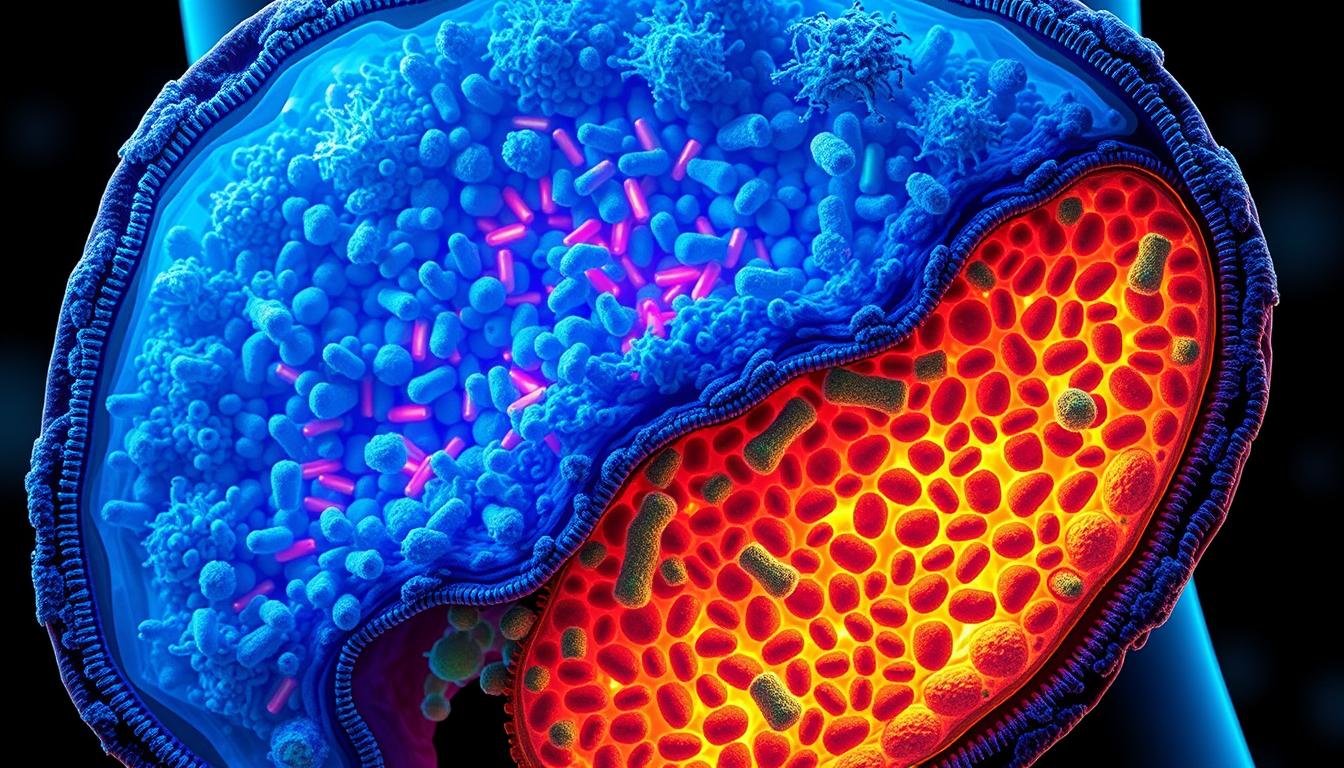
Ever thought about the tiny world living in your stomach? The gut microbiome is a complex mix of life that changes how we see our bodies.
Every teaspoon of stool has about 100 billion microbes. This creates a huge ecosystem inside us. The gut microbiome is more than just bacteria. It’s a network that helps with digestion, keeps us healthy, and fights off sickness.
Scientists say our gut has about 100 trillion microbes. This is almost as many as human cells in our body. This mix includes bacteria, fungi, and viruses, and it’s different for everyone.
The variety in our gut microbiome is amazing. In healthy people, certain bacteria types make up most of it. Each person’s gut is unique, with different amounts of bacteria.
Key Takeaways
- The gut contains approximately 100 trillion microbes
- Microbial cells are nearly equal to human cells in the body
- Gut microbiome composition is unique to each individual
- Bacteria play critical roles in digestion and immune function
- Microbiome diversity indicates overall health status
The Importance of Gut Bacteria
Gut bacteria are key to our health, doing more than just digesting food. They form a complex ecosystem in our intestines. This ecosystem greatly affects our overall well-being.
In our digestive system, gut bacteria do many important jobs. They help us digest food, make nutrients and vitamins, support our immune system, and control our metabolism.
Critical Roles in Digestion
Gut bacteria help us digest food better by breaking down nutrients our body can’t handle. They make short-chain fatty acids. These acids give us energy and keep our intestines healthy.
| Bacterial Function | Digestive Impact |
|---|---|
| Carbohydrate Breakdown | Converts complex fibers into digestible compounds |
| Nutrient Production | Generates essential vitamins like B and K |
| Metabolic Regulation | Helps control energy absorption |
Effects on Overall Health
Gut bacteria affect more than just digestion. Researchers have discovered they impact our mental health, immune system, and heart health. Having a balanced gut bacteria population is key to our overall health.
Learning about the connection between our bodies and gut bacteria is fascinating. It shows how important these tiny organisms are to our health.
The Size of the Microbiome
The human gut microbiome is a vast ecosystem of tiny life forms. It goes beyond what we thought was possible. New studies have shown how big the bacterial populations in our bodies are. They have changed how we see our cellular makeup.
Scientists have found amazing facts about the human gut bacteria count. Our bodies have about 40 trillion bacterial cells. This is three times more than human cells. It shows how complex our internal world is.
Estimated Bacterial Populations
The diversity of gut bacteria is also impressive. Experts think there are up to 1,000 different bacterial species in our digestive system. These tiny creatures are vital for many body functions, like:
- Digestion of complex nutrients
- Immune system regulation
- Metabolic processes
- Protection against harmful microorganisms
Comparative Body System Analysis
The gut is the most crowded ecosystem in our bodies. The large intestine has between 100 billion to one trillion cells per milliliter. It’s one of the most dense microbial places ever seen.
The weight of gut bacteria can be 2-5 pounds. This is as heavy as the human brain. It shows we are mostly made of bacteria.
Diversity of Gut Bacteria
The human gut is home to a complex ecosystem filled with microbes. Scientists have found out a lot about the bacteria in our gut. They show how important these bacteria are for our health.
It’s amazing how many bacteria live in our gut. Over 400 types of bacteria call the colon home. With new methods, scientists have found over 3,000 possible species, spread across just 130 types.
Prominent Bacterial Types in the Human Gut
The main types of bacteria in our gut are:
- Bacteroidetes
- Firmicutes
- Proteobacteria
- Verrucomicrobia
- Actinobacteria
Health Implications of Microbial Diversity
Having more types of bacteria is linked to better health. Specific bacteria like Faecalibacterium prausnitzii and Roseburia intestinalis add special functions to our gut.
Even though we have trillions of microbes, each person has only 1,000 to 3,000 different types. This shows how unique our microbiome is.
The human gut microbiota is a dynamic landscape, continuously influenced by factors such as diet, geography, and lifestyle.
Learning about the different bacteria in our gut helps scientists find new ways to help us. They’re working on treatments that fit each person’s microbiome.
Factors Influencing Gut Bacteria
The gut microbiome is a dynamic ecosystem. It is shaped by many factors. Knowing how these factors affect gut health is key to a balanced gut microbiome.
Dietary Influences on Microbiome
Nutrition is crucial for gut bacteria. Different diets can change the types of bacteria in our gut:
- Vegetarian diets promote diverse bacterial populations
- High-fat diets can reduce bacterial species diversity
- Fiber-rich foods support beneficial bacterial growth
Lifestyle Factors
Lifestyle choices greatly affect gut health. Important factors include:
- Regular exercise increases microbial diversity
- Chronic stress can negatively alter bacterial populations
- Sleep patterns affect bacterial composition
Medication Impacts
Medications, especially antibiotics, can change gut bacteria. Broad-spectrum antibiotics can lower bacterial diversity. This can lead to more harmful bacteria.
Studies show that antibiotics can change gut bacteria for up to two years.
The human gut has more than 10^14 microbes. This shows how complex and sensitive our gut bacteria are.
Measuring the Microbiome
Exploring the world of gut flora needs advanced science. Researchers use new methods to study the complex intestinal microbiota. These methods are more precise than old ways.
Today’s microbiome research uses new molecular techniques. These methods let scientists study gut bacteria in great detail. They don’t need old methods like growing bacteria in labs.
Advanced Quantification Methods
Scientists use several advanced ways to study the gut microbiome:
- 16S rRNA Gene Sequencing
- Whole-Genome Shotgun Sequencing
- Metagenomic Analysis
- Single-Cell Sequencing
Research Techniques and Their Impact
Each method gives unique insights into gut bacteria. Researchers can:
- Find specific bacteria
- Learn about their genes
- See how bacteria work together
- Discover what gut bacteria can do
| Research Method | Key Characteristics | Primary Application |
|---|---|---|
| 16S rRNA Sequencing | Targets bacterial identification | Taxonomic classification |
| Shotgun Sequencing | Comprehensive genomic analysis | Functional gene exploration |
| Metabolomics | Analyzes microbial metabolites | Functional interaction studies |
These new methods have changed how we see gut flora. They let researchers understand the complex world of gut bacteria very well.
The Gut-Brain Connection
The connection between the gut and brain is fascinating. Scientists have found that the diversity of gut microbes is key to our mental health and brain function.
The human body has a special network in the digestive system. The enteric nervous system has over 500 million neurons. This creates a complex way for the gut and brain to talk to each other.
Neurotransmitter Production in the Gut
Gut bacteria make important neurotransmitters that affect our mental health:
- Serotonin: About 90% is made in the gut
- GABA: Helps control anxiety and fear
- Dopamine: Affects our mood and thinking
Mental Health Connections
Studies show strong links between the gut microbiome and mental health:
| Condition | Gut Microbiome Impact |
|---|---|
| Depression | 25% of patients with digestive issues have it |
| Anxiety | Related to lower neurotransmitter levels |
| Stress Response | Affects by bacterial metabolites |
The vagus nerve is a key messenger between the gut and brain. It carries about 80% of sensory info. This shows how important our digestive health is to our mental well-being.
Emerging Research Insights
Scientists are still learning about how gut bacteria affect our brains. Psychobiotics and specific probiotics might help manage mental health by changing the gut microbiome.
Health Conditions Linked to Gut Microbiome
The world of gut bacteria is complex and deeply connected to our health. Scientists have found strong links between our gut bacteria and many health issues. This shows how important our internal microbial world is.
Dysbiosis, or an imbalance in gut bacteria, is a big problem. It can lead to many serious health issues. Studies show that this imbalance can cause:
- Inflammatory Bowel Disease (IBD)
- Obesity and metabolic disorders
- Type 2 diabetes
- Autoimmune conditions
Understanding Gut Dysbiosis and Disease
Our gut bacteria interact in complex ways, leading to inflammation and metabolic problems. Approximately 100 trillion microbes live in our gut. Each one could play a part in disease or prevention.
Autoimmune Conditions and Microbiome
New research links gut microbiome to autoimmune diseases. The balance of our gut bacteria might affect our immune system. This could start or stop autoimmune reactions.
The gut microbiota has been classified as a “vital organ” due to its intricate connections with other bodily systems.
While research on gut bacteria and disease is exciting, more study is needed. We must learn more about these complex relationships.
Probiotics and Prebiotics
Knowing how many bacteria in our gut is key to staying healthy. Probiotics and prebiotics are two important tools for a balanced gut. They each have special roles in keeping our digestive system well.
Probiotics are live, good bacteria that help our health. They keep our gut healthy and support our body’s functions.
Defining Probiotics and Prebiotics
- Probiotics: Living microorganisms that improve gut health
- Prebiotics: Specialized plant fibers that feed good bacteria
Probiotics add good bacteria to our gut. Prebiotics feed the good bacteria we already have.
Benefits of Supplementation
Adding probiotics and prebiotics to our diet can help in many ways:
- Improve digestive function
- Enhance immune system response
- Support mental health
- Reduce inflammation
We can find these helpful microbes in foods like yogurt, sauerkraut, and whole grains. Most adults can safely add these foods to their diet to help their gut health.
Research continues to explore the potential of probiotics and prebiotics in maintaining optimal health.
Gut Bacteria and Immune Function
The connection between gut bacteria and the immune system is very interesting. Gut bacteria are key to keeping our immune system strong. Almost 70-80% of our immune cells live in our digestive tract.
The gut is like a dynamic ecosystem that helps our immune system. Scientists have found several ways this works:
- Producing antimicrobial peptides
- Competing with harmful pathogens
- Regulating inflammatory responses
- Supporting immune cell development
Understanding Microbiome and Immunity
A diverse gut microbiome is important for our immune system. Short-chain fatty acids from good bacteria help make more immune cells. They also help control inflammation.
Strategies for Maintaining Immune Health
To keep our gut bacteria healthy, we need a complete plan. Here are some ways to support our immune system:
- Eat foods rich in probiotics
- Use antibiotics only when needed
- Eat a balanced, nutritious diet
- Keep stress levels down
By taking care of our gut bacteria, we can boost our immune system. This can lead to better overall health.
Future of Microbiome Research
The study of gut microorganisms is changing fast, leading to new discoveries about our health. Scientists are finding amazing links between our gut bacteria and our bodies. This is opening up new areas in medicine.
- Advanced ways to check the microbiome
- Custom treatments for each person
- Studying viruses in the gut
- Creating new probiotics
Emerging Scientific Breakthroughs
Scientists are coming up with new ways to study gut bacteria. Cutting-edge sampling technologies let them get direct data from the gut. This gives them better insights into how bacteria work together.
Personalized Medicine Potential
The future of health care is about treating each person differently. By looking at each person’s gut bacteria, doctors can:
- See who might get sick
- Make treatments that fit each person
- Give advice on what to eat
| Research Area | Potential Impact |
|---|---|
| Microbiome Diagnostics | Early disease detection |
| Therapeutic Interventions | Precision treatment strategies |
| Viral Microbiome Studies | Enhanced understanding of host-virus interactions |
As science gets better, we’ll learn more about gut bacteria. This could lead to big changes in how we take care of our health.
Conclusion: The Role of Gut Health
The gut microbiome is a complex system in our bodies. It has over 35,000 bacterial species and 10 million unique genes. This ecosystem is key to understanding human health and how it affects our bodies.
Studies show that the gut microbiome is crucial for our metabolism, immune system, and overall health. The balance of bacteria, mainly Firmicutes and Bacteroidetes, affects how we digest food and even our mental state. Keeping a diverse and strong gut microbiome can help prevent metabolic diseases and support long-term health.
Key Research Findings
Research keeps finding new links between gut bacteria and our bodies. The gut microbiome’s genes are 150 times more than ours, showing its importance. As we learn more, we’ll find ways to improve health based on each person’s unique microbiome.
Advancing Scientific Understanding
By studying the gut microbiome, we can make choices to improve our gut health. Eating right, managing stress, and checking our microbiome can help. These steps are important for keeping our gut microbiome diverse and healthy.
FAQ
How many bacteria are actually in the human gut?
The human gut is home to about 38 trillion bacteria. This number is more than the total number of human cells. These microbes are key to digestion, immunity, and health.
What is the gut microbiome?
The gut microbiome is a mix of bacteria, archaea, fungi, and viruses in our gut. It’s unique to each person. It has over 1,000 different species that help our body work right.
Why is gut bacteria diversity important?
Having a diverse gut microbiome is vital for health. It helps our immune system, metabolism, and lowers disease risk. Less diversity is linked to obesity, inflammation, and mental health issues.
How does diet influence gut bacteria?
Our diet shapes our gut microbiome. Foods high in fiber and fermented foods help good bacteria. But, processed foods and sugar can harm our gut diversity.
Can antibiotics permanently damage the gut microbiome?
Antibiotics can disrupt the gut microbiome, but it usually recovers. Yet, long-term use can cause lasting changes. This might raise the risk of health problems.
What is the gut-brain connection?
The gut-brain axis connects our gut and brain. Gut bacteria can make neurotransmitters and affect brain function. This can influence mood, thinking, and mental health.
Are probiotics effective in improving gut health?
Probiotics can help, but it depends on the strain and individual microbiome. Some studies show they can improve digestion and mental health. More research is needed.
How quickly can the gut microbiome change?
The gut microbiome changes quickly, often in days, with diet or lifestyle changes. Big shifts can happen in weeks. But, building a stable, diverse microbiome takes time and effort.
Can stress affect gut bacteria?
Yes, stress can harm the gut microbiome. Stress hormones can change bacterial types and reduce diversity. This can lead to inflammation and gut function changes.
What are the future research directions for the microbiome?
Future research will focus on personalized medicine and advanced sequencing. It will also explore the virome and microbiome-based treatments. The goal is to find targeted treatments for health issues based on individual microbiomes.






Leave a Comment
Your email address will not be published. Required fields are marked *