



Ever thought about how clean lab tools affect your science experiments? In analytical chemistry, a clean burette is key for precise measurements and trustworthy results.
Cleaning a burette needs careful attention. It’s a vital step in keeping scientific research reliable. Burettes are important in titrations, where even a tiny bit of dirt can change the results.
Scientists know that cleaning well is not just a routine. It’s a must for keeping experiments accurate. The cleanliness of lab tools directly affects the precision of measurements.
Key Takeaways
- Proper burette cleaning is essential for accurate scientific measurements
- Multiple rinse cycles with deionized water are crucial for residue removal
- Temperature and specific solvents play a significant role in effective cleaning
- Avoiding contamination is key to maintaining experimental integrity
- Regular maintenance prevents equipment degradation
Introduction to Burette Cleaning
In the world of chemical analysis, cleaning burettes is key to getting accurate measurements. This cleaning is crucial for keeping chemistry equipment in top shape. It ensures the results of scientific experiments are reliable.
Lab experts know a clean burette is vital for titration success. Any contamination can mess up the results. So, cleaning it well is a must.
Significance of Proper Cleaning
Clean burettes offer big advantages in chemical analysis:
- They stop chemicals from mixing up
- They help measure chemical amounts accurately
- They keep scientific research trustworthy
- They cut down on mistakes in experiments
Common Cleaning Challenges
Scientists often face several hurdles when cleaning burettes:
- Residue Buildup: Hardened chemicals can mess up measurements
- Water Spots: Mineral leftovers can affect solution amounts
- Contamination Risk: Bad cleaning can bring in unwanted chemical reactions
To keep chemistry equipment in good shape, you need to be very careful and follow cleaning steps closely. By tackling these issues, scientists can make sure their results are exact and reliable.
Preparing for the Cleaning Process
Cleaning a volumetric analysis apparatus needs careful planning and strict safety rules. This ensures accurate measurements and keeps experiments clean.
Researchers must clean burettes with great care and attention to detail. The right steps can greatly improve the quality of scientific work.
Essential Materials for Cleaning
- Laboratory-grade cleaning solutions
- Distilled or deionized water
- Soft cleaning brushes
- Protective personal equipment
- Clean storage containers
Safety Precautions for Laboratory Glassware Maintenance
Keeping safety first is key when cleaning volumetric analysis apparatus. Scientists must protect themselves and avoid chemical dangers.
| Safety Item | Purpose | Recommended Practice |
|---|---|---|
| Protective Goggles | Eye Protection | Always wear during cleaning process |
| Chemical-Resistant Gloves | Hand Protection | Use nitrile or neoprene gloves |
| Lab Coat | Body Protection | Wear closed-front protective clothing |
Important for safe cleaning: work in a well-ventilated area and use lab-grade detergents, not household cleaners.
Recommended Cleaning Environment
Choose a clean, organized space with good drainage and low risk of contamination. Make sure all cleaning tools are within reach before starting.
Step-by-Step Guide to Cleaning a Burette
Keeping a burette clean is key for accurate lab measurements. The cleaning process needs precision and attention to detail. This ensures the burette works well and gives reliable results.
Cleaning solutions are vital for glassware like burettes. Labs use specific methods to remove dirt and keep their tools in top shape.
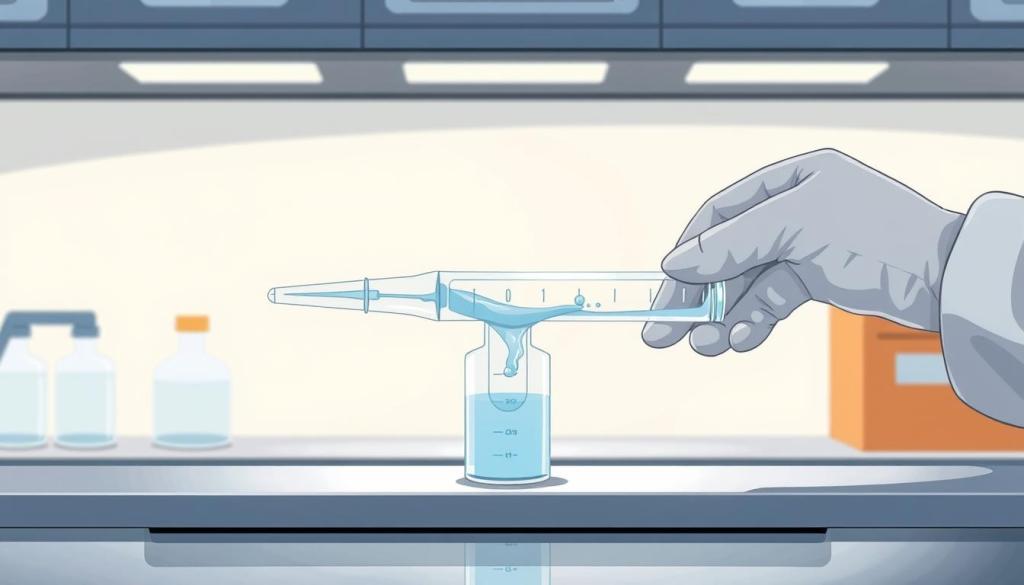
Initial Water Rinsing Technique
The first step is to rinse the burette well with water. Here’s how to do it right:
- Use room temperature distilled water
- Rinse several times to get rid of loose particles
- Rotate the burette to make sure all parts get wet
- Drain all water before rinsing again
Applying Effective Cleaning Solutions
Choosing the right cleaning solution is crucial. Different dirt needs different treatments:
- For organic dirt, use chromic acid solution
- Use mild acid to remove mineral buildup
- Lab detergents are also good
- Stay away from things that might scratch the glass
Final Rinsing Procedures
The last step is very important. Rinse with deionized water to get rid of any leftover chemicals. This step is key to avoiding contamination and keeping measurements accurate.
Precision in cleaning directly impacts experimental results and scientific reliability.
Experts say to rinse with deionized water several times. This makes sure no cleaning solution is left behind. By sticking to these steps, scientists can keep their glassware in top condition.
Drying Techniques for Burettes
Proper drying is key in cleaning laboratory glassware. It keeps precision tools accurate and reliable. Choosing the right drying method stops contamination and keeps the burette in good shape.
- Avoid using paper towels or forced air, which can introduce unwanted fibers or impurities
- Utilize controlled air-drying techniques
- Implement careful wiping methods for specific situations
Air-Drying Considerations
Air-drying is the top choice for cleaning glassware. Experts say to put clean burettes on a clean shelf or drying rack. This method lowers the chance of bringing in outside dirt.
Recommended Drying Methods
For the best care of precision tools, try these drying methods:
- Natural air-drying on a clean, dust-free surface
- Using acetone for quick evaporation (when appropriate)
- Gentle drainage to ensure complete liquid removal
The standard test for cleanliness involves ensuring that deionized water drains uniformly in a smooth sheet without droplet formation.
Be extra careful with delicate spots like the burette tip and stopcock. Labs usually advise gentle handling to avoid damage during drying.
Tips for Maintaining a Clean Burette
Keeping chemistry equipment clean is key for accurate lab work. Burettes need careful and consistent care to work well in scientific tests.
Storing burettes right helps scientists avoid contamination. It keeps their tools precise. A good maintenance plan can make lab glassware last longer.
Establishing a Regular Maintenance Routine
Creating a cleaning plan is vital for lab equipment care. Scientists should follow these important steps:
- Rinse burettes right after each use
- Do a two-step cleaning process:
- Rinse with clean water
- Final rinse with distilled water
- Dry them well using special methods
- Check for any damage or leftover stuff
Avoiding Critical Maintenance Mistakes
Lab workers must watch out for common mistakes in burette care. These errors can mess up experiments and harm the tools.
- Don’t store burettes with leftover liquid
- Stay away from the wrong cleaning solutions
- Clean them right after each use
- Keep them upright to avoid getting dirty
Proper maintenance is not just a recommendation—it’s a scientific necessity.
By sticking to these storage tips, scientists can keep their equipment working well. This makes their lab tools last longer.
Troubleshooting Cleaning Issues
Cleaning a burette can be tricky. It needs special techniques and careful steps. Cleaning lab glassware well takes patience and precision, especially with tough stains.

Experts have tips for cleaning a burette well. They suggest several ways to tackle common problems:
- First, figure out what’s causing the mess before you start cleaning.
- Choose the right cleaning solution for each type of mess.
- Use both mechanical and chemical methods carefully.
Addressing Stubborn Residues
Dealing with tough residues is a big challenge. Experts recommend a few key steps:
- Soak the burette in a strong detergent solution overnight.
- For oil-based messes, try a warm biological washing powder solution.
- Use a nichrome wire gently to clear out blockages.
Dealing with Stains and Contamination
Removing stains needs special care to avoid damaging the burette. Experts advise on the following methods:
| Contaminant Type | Recommended Cleaning Method | Potential Challenge |
|---|---|---|
| Oil-based residues | Warm decon 90 solution | Potential surface film |
| Organic compounds | Specialized detergent soak | Complete removal difficulty |
| Inorganic deposits | Acid rinse | Potential glass etching |
When cleaning lab glassware, it’s key to know each mess’s unique traits. Choose the right cleaning method. Good upkeep keeps your glassware working right and your science accurate.
Addressing Specific Types of Contaminants
Keeping chemistry equipment clean is key. Labs face many types of dirt that need special cleaning. This ensures accurate results in scientific tests.
It’s important to know what dirt you’re dealing with. Each type needs its own cleaning method. This keeps equipment working well and prevents contamination.
Organic Contaminants
Things like oils, greases, and solvents can harm burette performance. Labs must follow strict cleaning steps:
- Use ethanol or acetone for water-insoluble solutions
- Rinse 2-3 times with organic solvents
- Follow with 3-4 rinses of deionized water
- Ensure complete removal of organic traces
Inorganic Contaminants
Mineral deposits and metal salts need special care. The right cleaning solutions can handle these tough dirt:
- Utilize acid-based cleaning agents for mineral deposits
- Select appropriate chemical solutions based on specific contaminant type
- Implement thorough rinsing procedures
- Check uniform wetting as an indicator of cleanliness
Good maintenance means knowing each dirt type and using the right cleaning. This keeps labs running smoothly.
Certification and Quality Control
Laboratory standards are key to ensuring accurate scientific measurements. Proper burette calibration and following safety protocols are vital for quality research.
The quality control for lab equipment involves many steps. Scientific groups follow strict guidelines to ensure precise and consistent measurements.
Importance of Laboratory Standards
Quality control for burettes covers several important areas:
- Compliance with ISO 8655 standards
- Regular calibration intervals
- Precise dimensional accuracy checks
“Accurate measurement is the foundation of scientific research” – Laboratory Quality Management Principle
Laboratories follow key quality control steps:
| Quality Control Stage | Frequency | Key Requirements |
|---|---|---|
| Initial Calibration | Every 2-10 years | Dimensional verification |
| Visual Inspection | Annually | Check for structural integrity |
| Re-verification | Up to 5 years | Confirm measurement accuracy |
Documenting Cleaning Procedures
Keeping detailed records is essential for lab safety. Labs must document:
- Cleaning methods used
- How often they clean
- Materials and solutions used
- Results of inspections and verifications
Accurate documentation is key for traceability and maintaining scientific accuracy in burette calibration and upkeep.
Conclusion
Cleaning a burette is key for lab workers who need exact measurements. This guide shows how to clean a burette with care and method. Keeping it clean is vital for precise measurements and avoiding contamination in research.
Storing a burette right is more than just cleaning. Scientists need a routine for cleaning, rinsing, and drying. These steps protect the glass and keep the burette working well for precise tests.
Seeing burette care as an investment in research quality is important. By cleaning and storing it well, researchers keep their tools in good shape. This guide helps turn burette care into a crucial part of scientific work.
Essential Maintenance Practices
Regular checks, gentle handling, and following cleaning rules make burette care essential. Each cleaning shows a dedication to scientific excellence and precise measurements.
FAQ
Why is cleaning a burette so important in laboratory work?
Cleaning a burette is key because leftover chemicals can mess up measurements. This can lead to contamination and affect the results of experiments. Cleaning it well ensures accurate measurements and keeps experiments clean and reliable.
How often should a burette be cleaned?
A burette needs cleaning right after each use. It should also be thoroughly cleaned between different chemicals or experiments. For burettes used a lot, a deep clean and check should happen weekly. This helps keep the glassware in good shape.
What are the most common mistakes when cleaning a burette?
People often make mistakes like using the wrong cleaning solution or not rinsing well enough. They might also not get rid of all cleaning agents or dry it wrong. These errors can cause contamination and damage the instrument.
What type of water should be used for final burette rinsing?
For the final rinse, use deionized water. This water type prevents mineral buildup and keeps the burette clean. It’s important for maintaining precision in the lab.
How can I remove stubborn chemical residues from a burette?
For tough residues, you need special cleaning methods. Use chromic acid solution or lab cleaning mixes for organic residues. For inorganic deposits, try acid washes or enzymatic cleaners. Always wear safety gear and follow safety rules.
What safety precautions should be taken when cleaning a burette?
When cleaning a burette, wear goggles, gloves, and a lab coat. Work in a place with good air flow. Have an eye wash and safety shower ready. Follow all safety rules for handling chemicals.
Can I use regular household cleaning agents to clean a burette?
No, household cleaners are not good for burettes. They can leave behind residues or particles. Use lab-grade cleaners to keep the burette clean and accurate.
How should a burette be stored after cleaning?
After cleaning and drying, store burettes upright in a clean cabinet. Keep them away from temperature changes and sunlight. Use racks to protect them from damage.
What are the signs that a burette needs replacement?
Replace a burette if you see etching, scratches, chips, or stains that won’t go away. Any damage that affects accuracy means it’s time for a new one. Regular checks can help you know when to replace it.
Are there different cleaning procedures for glass and plastic burettes?
Yes, glass and plastic burettes need different cleaning methods. Glass can handle stronger cleaners, but plastic needs gentler ones. Always follow the manufacturer’s instructions to avoid damage.





Leave a Comment
Your email address will not be published. Required fields are marked *