


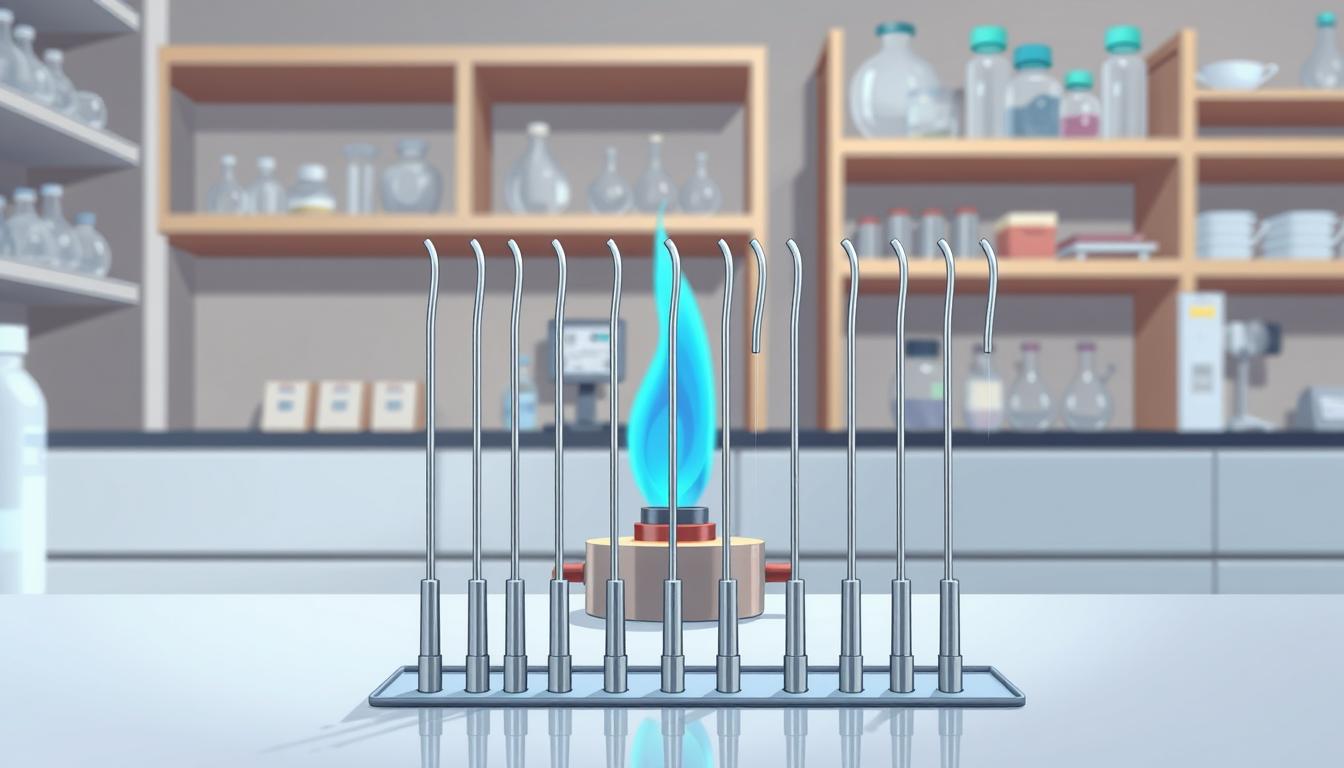
Have you ever wondered how scientists keep their research clean? They use a special method to make sure their tools are free from germs. This is key for their work.
In labs, keeping things clean is super important. Scientists use special ways to make sure their tools are germ-free. They use heat to kill off any bacteria that might get in the way of their research.
They use different ways to clean their tools, like fire, special machines, and high heat. For example, some machines can get as hot as 816°C. This heat kills germs fast.
To sterilize, they heat the tool until it glows red. This makes sure no germs can mess up their results.
Key Takeaways
- Sterilization prevents cross-contamination in microbiological research
- Microincinerators provide rapid and effective loop sterilization
- Proper technique is critical for maintaining experimental integrity
- Temperature plays a crucial role in effective sterilization
- Multiple sterilization methods exist for different laboratory needs
Understanding the Importance of Sterilization
Sterilization is key in scientific research, especially in microbiology. It keeps labs clean of unwanted microorganisms. This is crucial for the accuracy of lab work.
Scientists use strict sterilization to keep their materials clean. This stops contamination. Each lab faces its own challenges, needing special ways to stay clean.
Why Sterilization Matters in Laboratories
Good sterilization stops many problems:
- It stops unwanted microbial interactions
- It makes sure experiments can be repeated
- It keeps sensitive samples safe
- It keeps results accurate
Types of Contaminants in Microbial Research
Labs face many risks of contamination. These can ruin important research. The main threats are:
- Bacterial cells that grow fast
- Fungal spores that spread without being seen
- Viral particles that can mess up experiments
- Unintentional environmental particles
Today’s sterilization methods are better than ever. They use new technologies to remove all contaminants. Researchers must be careful with their cleaning methods to keep their work safe.
Common Methods for Sterilizing Inoculating Loops
Laboratory experts use many ways to sterilize inoculating loops. This is key for clean and precise microbial research. It keeps experiments safe from contamination.
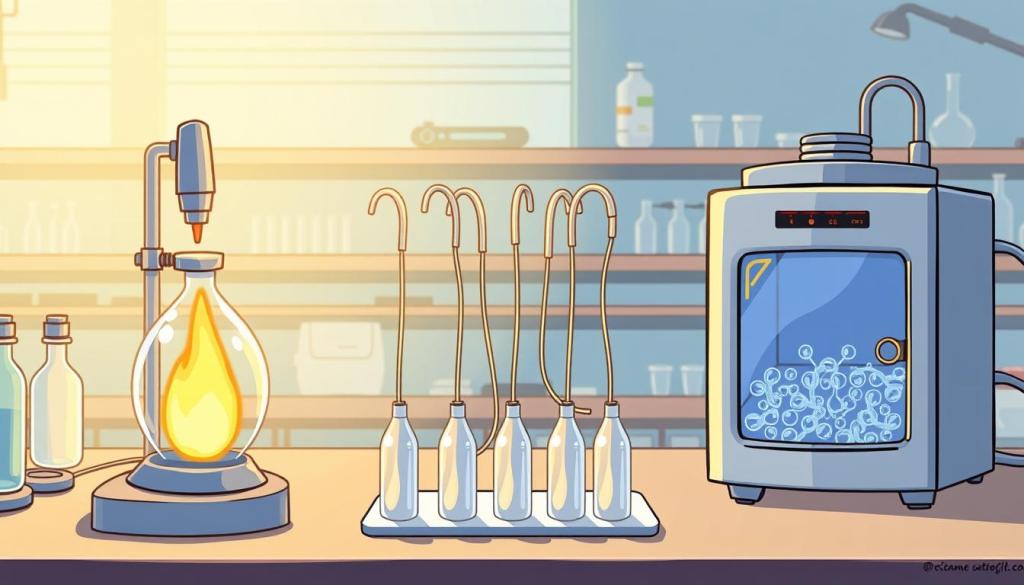
- Flame sterilization using a Bunsen burner
- Autoclave sterilization
- Hot air oven treatment
- Chemical sterilization techniques
Autoclaving: The Gold Standard
Autoclaving is the top choice for sterilizing inoculating loops. In lab inoculating loops are sterilized using steam under high pressure. This kills all bacteria and spores in just 20 minutes.
Dry Heat Sterilization: An Alternative Method
Hot air ovens are another good way to sterilize. They use heat from an open flame or oven to kill germs. This method needs constant heat to work well.
Chemical Sterilization: When to Use It
Chemical methods are used when heat can’t be used. They use special cleaners that kill germs without harming the tools.
Proper sterilization is the cornerstone of reliable scientific research and laboratory safety.
Autoclaving Inoculating Loops
Sterilization is key in microbiology labs to ensure accurate results. Autoclaving is a top method for sterilizing lab tools, like inoculating loops.
The autoclave uses heat and pressure to kill microorganisms. It’s more than just heating. It creates a perfect environment for sterilizing tools.
Process Overview: How Autoclaving Works
Autoclaving uses high-pressure steam to sterilize. The steps include:
- Heating steam to 121°C
- Keeping pressure at 15 pounds per square inch
- Steaming inoculating loops for a set time
- Killing all microbial life
Advantages of Autoclaving in Research
Researchers choose autoclaving for good reasons:
- Consistent sterilization on various materials
- Quickly kills bacteria, viruses, and spores
- Low risk of contamination in experiments
- Cost-effective compared to other methods
Autoclave sterilization is crucial in today’s science. It helps maintain lab hygiene and ensures reliable results.
The Role of Heat in Sterilization
Heat is key in sterilization in microbiology. Knowing how heat moves is vital for dry heat sterilization in labs.

- Conduction: Direct heat transfer through touch
- Convection: Heat moves through liquids or gases
- Radiation: Heat spreads through waves
Mechanisms of Heat Transfer
Each method has its own role in killing germs. Conduction is best for metal tools like inoculating loops. Convection is key in autoclaves and incubators.
Factors Affecting Sterilization Efficacy
Several things affect how well heat kills germs:
| Factor | Impact on Sterilization |
|---|---|
| Temperature | Higher temps kill germs quicker |
| Exposure Time | Longer time ensures all germs are killed |
| Heat Distribution | Even heat kills all germs |
Studies show different germs need specific heat and time to be killed. For example, some spores can live up to 20 hours in boiling water. This shows how complex sterilization can be.
Maintaining a Sterile Environment
Keeping a lab clean is key in microbiology. Aseptic techniques help stop contamination and keep research safe. Labs need to be very clean and handle things carefully to protect their work.
Creating Clean Workspaces
Managing a workspace well is important. Researchers use special cleaning methods to avoid contamination. They clean thoroughly to keep their work safe.
- Thoroughly disinfect work surfaces before and after each use
- Use alcohol-based cleaning solutions for surface sterilization
- Organize workspace to minimize unnecessary movement
- Maintain dedicated areas for specific research activities
Best Practices for Lab Personnel
Lab workers must follow strict rules to keep things clean. Consistent and careful practice helps avoid contamination. This ensures reliable results.
- Wear appropriate personal protective equipment
- Practice rigorous hand hygiene
- Follow standardized sterilization procedures
- Use laminar flow cabinets for sensitive procedures
Precision and attention to detail are the cornerstones of successful microbiology research.
By using detailed aseptic techniques, labs can lower contamination risks. This helps keep research at its best.
Regular Maintenance of Sterilization Equipment
Keeping sterilization equipment in good shape is key to microbiological techniques. It makes sure lab work is reliable and effective. Without it, scientific research could be at risk.
Lab workers need to follow strict maintenance plans. This keeps the equipment running smoothly. Regular checks and calibrations are crucial.
Routine Checks and Calibration Procedures
Here are some important steps for maintaining sterilization equipment:
- Do weekly visual checks for wear signs
- Check temperature and pressure gauges for accuracy
- Make sure seals and gaskets are in good shape
- Run calibration tests regularly
Identifying Equipment Malfunction Signs
Spotting problems early can avoid big research delays. Look out for these signs:
- Unusual temperature readings
- Strange noises when it’s running
- Hard to keep the right pressure
- Visible damage to seals or parts
| Maintenance Parameter | Recommended Frequency | Critical Checks |
|---|---|---|
| Temperature Calibration | Quarterly | Verify 121°C (250°F) standard |
| Pressure Validation | Monthly | Confirm 15 psi standard |
| Seal Inspection | Weekly | Check for wear and integrity |
“Preventive maintenance is the cornerstone of reliable scientific research.” – Laboratory Safety Expert
Microbiology lab protocols demand meticulous equipment maintenance to guarantee reproducible and accurate experimental results. Regular inspections and proactive management of sterilization equipment are fundamental to maintaining the highest standards of laboratory practice.
Safety Precautions During Sterilization
Microbiology lab protocols need strict safety rules to protect workers and keep experiments safe. Sterilization methods must be handled with care to avoid risks and keep the lab safe.
Professional labs use detailed safety plans when using in lab inoculating loops. They use special equipment and techniques for this.
Personal Protective Equipment (PPE) Guidelines
Wearing the right personal protective equipment is key for lab safety. Researchers must follow strict rules to avoid getting sick from germs.
- Wear disposable gloves when handling cultures
- Use protective eyewear to prevent splash exposure
- Utilize lab coats with long sleeves
- Wear closed-toe shoes
Handling Autoclaves and Equipment Safely
Keeping equipment safe is vital in microbiology labs. Researchers need to know how to sterilize and handle equipment correctly.
| Safety Requirement | Procedure |
|---|---|
| Autoclave Operation | Wear heat-resistant gloves |
| Equipment Inspection | Check for damage before use |
| Temperature Control | Maintain 121°C at 15 psi for 15 minutes |
Important safety steps include reducing aerosol creation, telling someone right away if there’s an accident, and cleaning work areas well.
Safety is not an option but a fundamental requirement in laboratory research.
Labs need to offer thorough training. This ensures everyone knows and follows important safety rules when working with microbiological tools and materials.
Documentation and Compliance in Sterilization Practices
Being precise in microbiology lab protocols means you need to document everything carefully. You also have to follow all the rules. Keeping good records is key to keeping research honest and results reliable.
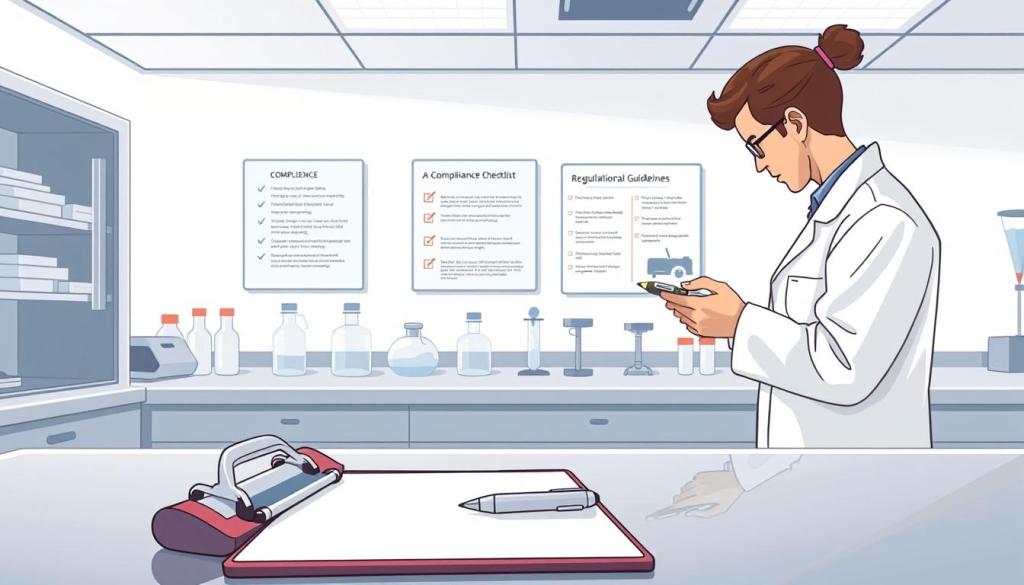
Lab workers must know how to track sterilization and aseptic techniques well. Good records are very important in science and medicine.
Importance of Record-Keeping
Keeping accurate records has many benefits for labs:
- It helps track sterilization steps
- It supports quality control
- It makes audits easier
- It shows you follow scientific rules
Regulatory Standards for Sterilization
The FDA has strict rules for sterilization. Important things to remember include:
- Keeping detailed records of sterilization steps
- Tracking when equipment is maintained
- Checking if sterilization works well
- Keeping logs of lab work
Good documentation is not just for rules. It’s essential for honest science.
Lab workers must focus on keeping detailed records. This is how they ensure top science and safety.
Innovations in Sterilization Techniques
The world of laboratory sterilization is changing fast. New technologies are making it better and safer. Scientists are finding new ways to keep labs clean and free from germs.
New methods are changing how labs work. These new tools help keep labs clean and stop germs from spreading.
Emerging Technologies in Laboratory Sterilization
Here are some new technologies changing sterilization:
- Plasma sterilization systems
- Advanced nitrogen dioxide gas treatments
- Ultraviolet light decontamination
- Nanotechnology-based sterilization methods
Future Trends in Microbial Research
Scientists are working on even better ways to sterilize labs. These new methods are faster and gentler on equipment.
*The future of laboratory sterilization lies in intelligent, adaptive technologies that can provide comprehensive microbial elimination.*
| Technology | Key Advantages | Potential Applications |
|---|---|---|
| Plasma Sterilization | Low temperature processing | Delicate medical instruments |
| Nitrogen Dioxide Treatment | Rapid decontamination | Sealed research environments |
| UV Light Sterilization | Chemical-free process | Surface and air purification |
These new ways of sterilizing labs are a big step forward. They promise safer and more efficient work for lab workers.
Conclusion: The Essential Role of Sterilization in Lab Work
In lab inoculating loops are sterilized using precise techniques. These ensure the integrity of microbiological research. Sterilization is critical, as it is the base of safe and accurate scientific work.
Since 1984, guidelines from the CDC and NIH have shaped lab safety. These guidelines have evolved to protect researchers and keep experiments reliable.
Microbiology lab protocols require strict adherence to aseptic techniques. This minimizes contamination risks. Sterilization, like flaming, is quick and effective in killing bacteria.
Each sterilization step is crucial for the quality of scientific results. It prevents cross-contamination and helps isolate bacterial strains successfully.
Laboratory safety goes beyond just sterilization. It also includes regular equipment checks, proper protective gear, and training. The future holds advancements in sterilization, like AI and biodegradable materials, promising better safety and efficiency.
Summary of Best Practices
Keeping up with strict sterilization protocols is key to top-notch scientific research. By focusing on precise methods and staying updated on new technologies, researchers can advance microbiology safely.
Final Thoughts on Ensuring Laboratory Safety
The future of microbiological research relies on improving lab safety. As science evolves, so must our sterilization and contamination prevention methods.
FAQ
Why is sterilizing inoculating loops so important in microbiology laboratories?
Sterilizing inoculating loops is key to stop cross-contamination. It keeps research clean and accurate. This ensures the results are reliable and true to the science.
What are the most common methods for sterilizing inoculating loops?
Main methods are autoclaving, dry heat, and chemical sterilization. Autoclaving is top because it kills all microbes, including spores, with heat and pressure.
How does an autoclave work to sterilize laboratory equipment?
Autoclaves use steam under pressure to sterilize. High temperature and moisture kill all microbes, including spores, in a short time.
What are the key safety considerations when sterilizing inoculating loops?
Safety first means wearing the right gear like gloves and goggles. Follow the right steps and know the risks of high heat and pressure.
How often should sterilization equipment be maintained?
Equipment needs regular checks and maintenance. Do this at least once a year or as the maker suggests. Fix any issues right away.
What factors affect the effectiveness of heat sterilization?
Temperature, time, and moisture matter a lot. Different microbes need different heat and time to be killed. Good heat transfer is also key.
Are there emerging technologies in laboratory sterilization?
Yes, new tech like plasma sterilization and faster methods are coming. They aim to be quicker, greener, and less harsh than old ways.
Why is documentation important in sterilization practices?
Keeping records is vital for quality and rules. It helps prove research is sound and meets standards. It’s also good for audits and tracking lab history.
What are the risks of improper sterilization?
Bad sterilization can ruin experiments and harm people. It lets in bad microbes that mess up research and can be dangerous.
How can laboratory personnel ensure optimal sterilization?
For best sterilization, get good training and follow rules. Use the right tools, keep areas clean, and stick to aseptic methods. Always pay attention and follow best practices.






Leave a Comment
Your email address will not be published. Required fields are marked *