


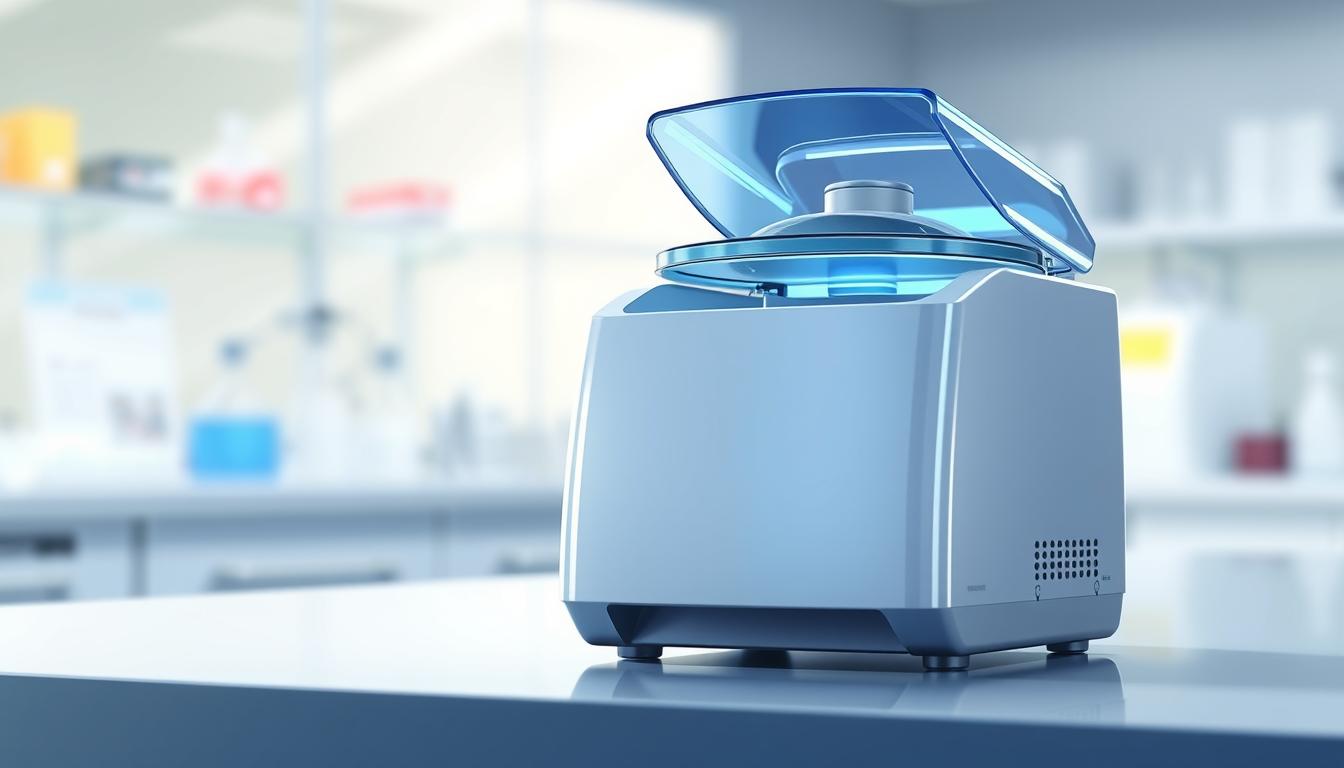
Ever wondered how scientists separate tiny particles in seconds? The mini centrifuge leads in lab innovation, changing how we prepare samples in biology.
A mini centrifuge is a small lab tool for handling tiny samples fast. It uses high-speed spinning to quickly separate parts. This makes complex science easier.
Lab experts use these small but mighty tools for key separations. They’re crucial in molecular biology, medical tests, and research. Despite their size, they handle tiny biological samples with great skill.
Key Takeaways
- Mini centrifuges provide rapid sample separation in compact laboratory settings
- Versatile equipment supporting multiple research disciplines
- Enables precise processing of small sample volumes
- Reduces workspace requirements compared to traditional centrifuges
- Essential tool for modern scientific research and diagnostics
Overview of Mini Centrifuges in Laboratories
Mini centrifuges are key tools in today’s science labs. They are small and efficient for preparing samples. These benchtop centrifuges have changed lab work by spinning small samples precisely.
Lab experts use mini centrifuges for many important tasks. These tools help spin samples fast and well in many fields of science.
Definition and Core Purpose
A mini centrifuge is a small lab tool for quick sample work. It mainly does:
- Separates liquid parts
- Concentrates tiny sample amounts
- Preps biological samples
- Helps with micro-filtration
Key Features of Mini Centrifuges
Mini centrifuges stand out with several cool features:
- Compact Design: Takes up little space in labs
- High-Speed Capabilities: Goes up to 6000 RPM
- Versatile Sample Handling: Works with 0.2ml to 2.0ml tubes
- Precise Centrifugal Force: Creates up to 2000xg
These advanced benchtop centrifuges let researchers do detailed sample prep tasks with great accuracy and speed.
Applications in the Biological Field
Microcentrifuges are key in today’s biological research. They help prepare samples with great care and use advanced techniques. These small tools have changed how labs work, making high-speed spinning a standard.
Sample Preparation Techniques
Scientists use microcentrifuges for detailed sample prep. They can handle different volumes well. For example, they spin:
- Up to 8 microfuge tubes
- Sample sizes from 0.2ml to 2.0ml
- Spinning speeds up to 6000 rpm
- Relative centrifugal force up to 2000xg
Cell Culture Applications
In cell culture, high-speed spinning is crucial. Microcentrifuges help separate cell parts with high precision. They allow scientists to:
- Pellet cells fast
- Concentrate cell materials
- Get pure cell fractions
- Reduce sample contamination
Nucleic Acid Extraction
Molecular biology depends a lot on microcentrifuges for DNA and RNA extraction. These tools make quick and efficient genetic material separation possible. They help with delicate extractions, keeping samples intact.
Microcentrifuges are a big step forward in biological research. They offer unmatched precision and efficiency.
Modern microcentrifuges can reach 30,000 x g. They help scientists make new discoveries in many fields. This includes clinical, molecular, and bacteriological research.
Advantages of Using Mini Centrifuges
Mini centrifuges have changed the game in labs with their smart design and function. These small tools bring big benefits, making them key in today’s research labs.
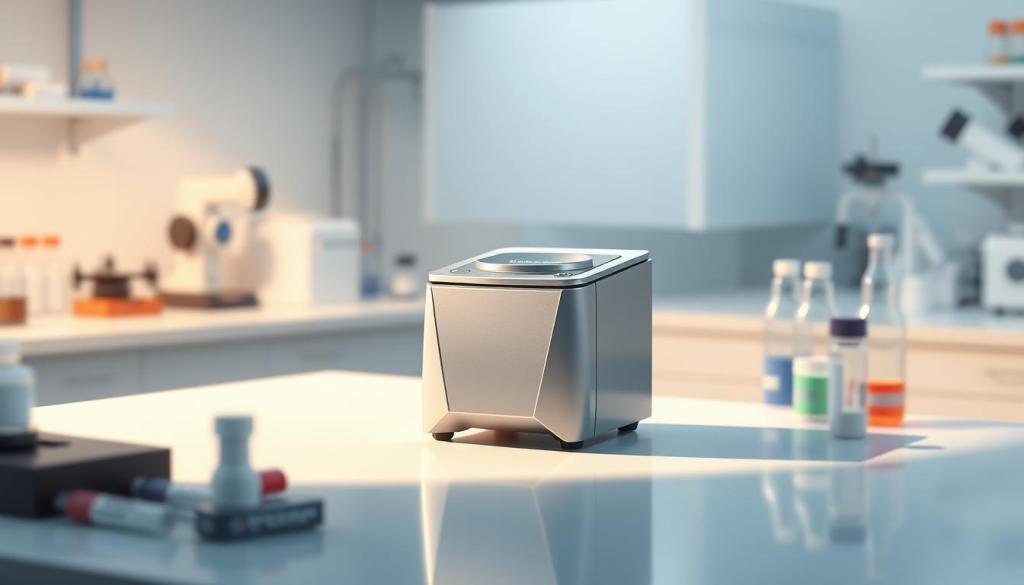
Space Efficiency: Maximizing Laboratory Workflow
Mini centrifuges save space, which is huge for labs with tight spots. They’re small, taking up less than a square foot. This makes them perfect for small workstations and tight spaces.
- Compact dimensions: Approximately 11.4 x 15 x 11.4 cm
- Fits easily on benchtops
- Allows flexible laboratory configuration
Energy Savings and Performance
Mini centrifuges are not just space-saving. They’re also energy-smart. They use less power than big centrifuges but still perform well.
| Performance Metric | Mini Centrifuge Specifications |
|---|---|
| Maximum Spinning Speed | 6,000-15,000 RPM |
| Relative Centrifugal Field (RCF) | Up to 2,000 x g |
| Noise Level | 45-50 decibels |
User-Friendly Design
Modern mini centrifuges are made for researchers. They have intuitive interfaces, are light, and safe. This makes them easy for experts in many fields.
- Automatic lid-locking mechanisms
- Built-in imbalance detection
- Accommodates 0.2-2.0 ml sample tubes
From molecular biology to clinical diagnostics, mini centrifuges are a smart choice. They’re efficient and compact, meeting the needs of today’s labs.
Operational Principles of Mini Centrifuges
Mini centrifuges are advanced lab tools that spin samples fast. They use clever mechanics to sort things out based on their density and size.
At the heart of mini centrifuges is the power to create strong forces. They spin samples at super speeds. This makes it possible to separate things with great accuracy.
Centrifugal Force Mechanics
Centrifugal force works on basic physics. It includes:
- Creating forces up to 15,000 RPM
- Sorting out things with different densities
- Doing it all in just 10 minutes
Rotor Types and Functions
Mini centrifuges come with different rotors for various needs:
| Rotor Type | Capacity | Primary Function |
|---|---|---|
| Fixed-Angle Rotor | 12 tubes of 1.5-2 ml | Efficient sample pelleting |
| Swing-Out Rotor | Multiple tube sizes | Versatile sample processing |
Each rotor helps scientists spin samples with precision. This supports many kinds of research.
“Centrifugation transforms complex mixtures into cleanly separated components through strategic rotational mechanics.” – Laboratory Science Quarterly
Today’s mini centrifuges are built with advanced tech. They run quietly, vibrate little, and process samples well.
Types of Mini Centrifuges
Laboratory experts use different mini centrifuges for various research needs. Knowing the types helps pick the right one for each task.
Mini centrifuges have several setups, each designed for better sample handling and research. The main types are:
- Fixed-Angle Rotors
- Swing-Out Rotors
- Multi-Use Centrifuges
Fixed-Angle Rotors
Fixed-angle rotors are the most common. They keep a constant angle between the tube and rotor axis, usually between 20 to 45 degrees. They work best when you need little mixing during spinning.
Swing-Out Rotors
Swing-out rotors offer special benefits. They let tubes swing out during spinning, reducing contamination and improving separation.
Multi-Use Centrifuges
Multi-use centrifuges are very versatile. They can handle different tube sizes and volumes. This makes them perfect for labs with varied research needs.
The global mini centrifuge market is expected to grow at a 5.8% CAGR from 2021 to 2028. This shows the rising need for these flexible tools.
There’s a wide choice of mini centrifuges, with speeds from 3,000 to 15,000 RPM. This ensures precise handling for many scientific fields.
Important Considerations When Choosing a Mini Centrifuge
Choosing the right mini centrifuge is key for good sample prep in labs. Researchers need to look at several important factors. This ensures the best performance and results.
When picking a mini centrifuge, scientists should focus on key traits. These traits affect lab workflows and results.
Sample Volume and Capacity Requirements
Mini centrifuges are made for small samples. They handle:
- Sample volumes from 0.2 to 2.0 mL
- Tube capacities of 12-24 tubes
- Maximum capacity up to 15,000 x g
Speed and Maximum Relative Centrifugal Force
Performance specs are crucial for choosing the right lab gear. Researchers should think about:
- Speed range: 3,000 to 15,000 RPM
- Maximum relative centrifugal force (RCF): Up to 15,000 x g
- Precision in rotational speed for consistent results
Temperature Control Considerations
Keeping samples at the right temperature is vital. Important points include:
- Temperature range: -20°C to 40°C
- Refrigeration capabilities
- Thermal stability during centrifugation
Choosing the right mini centrifuge needs careful thought of these key points. This supports scientific research well.
Maintenance and Care for Mini Centrifuges
Keeping laboratory equipment in good shape is key for mini centrifuges. These small machines need regular care to avoid damage and keep working well.
Regular upkeep is a must for your mini centrifuge. If you ignore it, you might face big problems and costly fixes.
Daily and Weekly Maintenance Protocols
- Check the rotor lid for scratches, spills, and dust before and after use
- Look for any damage or odd shapes
- Clean the outside with safe lab cleaners
- Make sure the lid closes right
Comprehensive Cleaning Strategies
Cleaning well is key for keeping lab gear in shape. Using a cloth for disinfection is better than spraying liquids, which can cause electrical problems.
“Regular upkeep stops 90% of centrifuge problems” – Lab Safety Experts
Troubleshooting Common Issues
- Find out why it’s making strange noises
- Check if the rotor is balanced
- Watch for too much vibration
- Look at the electrical connections
Experts say to get a yearly check-up from a pro. This keeps your mini centrifuge running smoothly, protecting your important samples.
Sterilization Recommendations
If you need a sterile lab, autoclaving is best:
- Use 121°C at 2-bar pressure for 15-20 minutes
- For extra cleaning, try 134°C for at least 18 minutes
By sticking to these care tips, scientists can make their mini centrifuges last longer. This ensures they work well in lab work.
Safety Protocols in Mini Centrifuge Usage
Mini centrifuges need strict safety rules to keep researchers safe and experiments accurate. High-speed spinning is complex and requires careful safety steps.
Keeping labs safe starts with knowing risks and using strong safety steps. OSHA says most accidents come from mistakes, showing how key training and following rules are.
Personal Protective Equipment (PPE)
Researchers must wear the right gear when spinning at high speeds. Key PPE includes:
- ANSI Z87.1-compliant safety glasses or goggles
- Long pants and closed-toed shoes
- Chemical-resistant gloves specific to materials being processed
- Lab coat for additional protection
Handling Hazardous Samples
When dealing with risky samples, researchers must follow strict rules:
- Get approval from Principal Investigator before starting
- Check all safety data sheets for materials
- Make sure tubes are balanced by mass
- Wait 10 minutes after spinning before opening the lid
- Use special rotors for Biosafety Level 2+ materials
Modern lab tools like the Frontier FC5306 Mini Centrifuge have safety features. They have imbalance sensors that stop if something’s off. These techs help lower risks from fast spinning.
Emerging Trends in Mini Centrifuge Technology
The world of mini centrifuges is changing fast. New designs and a focus on green labs are leading the way. The market is growing, with a forecast of USD 2.79 billion by 2031. This shows how much people want better, smaller lab tools.
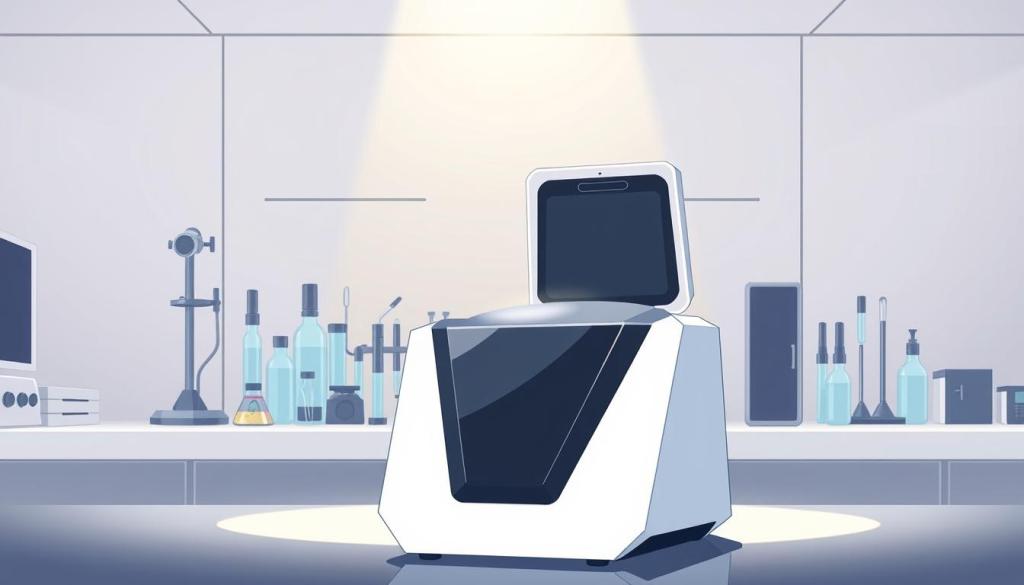
There are exciting changes in mini centrifuge tech. These changes are making lab tools better in many ways:
- Enhanced user-friendly interfaces
- Improved energy efficiency
- Reduced equipment footprint
- Advanced sample handling capabilities
Innovations in Design
Companies are making mini centrifuges more advanced. Touchscreen interfaces, like Eppendorf AG’s Multipurpose Centrifuge 5910 Ri, are becoming common. These updates aim to make lab tools more efficient and space-saving.
Eco-Friendly Options
Now, making mini centrifuges green is key. New tech is tackling environmental issues by:
- Energy-efficient motor systems
- Recyclable component materials
- Reduced power consumption
| Technology Trend | Key Advantages | Market Impact |
|---|---|---|
| Smart Interfaces | Improved User Experience | High |
| Eco-Design | Reduced Environmental Footprint | Medium |
| Compact Performance | Space Efficiency | Very High |
The future of mini centrifuges is bright. Analysts predict a 4.36% growth rate from 2024 to 2031. New designs focus on being both efficient and eco-friendly.
Conclusion: The Value of Mini Centrifuges in Modern Biology
Mini centrifuges have changed the game in labs. They offer powerful tools for preparing samples, making work more efficient and precise. These small devices help scientists work with tiny amounts accurately, leading to big breakthroughs in biology.
These mini machines pack a big punch, despite their small size. They can spin at speeds up to 16,000 g, making them key for handling delicate biological samples quickly and reliably.
Enhancing Laboratory Workflow
Today’s labs depend on mini centrifuges to speed up sample prep. Their small size lets researchers do fast separations and get DNA and cell cultures ready quickly. They’re crucial for modern biology research.
Supporting Research Advancements
Mini centrifuges come with a 24-month warranty, showing they’re built to last. They help scientists delve deeper into biology, uncovering secrets of cells and molecules. These tools are essential for pushing research forward.
FAQ
What is a mini centrifuge and how is it used in laboratories?
A mini centrifuge is a small device used in labs. It separates samples by spinning them fast. It’s used for quick sample prep and spinning small amounts of liquid.
It’s key for working with microtubes and small samples. It does this with great precision and speed.
What are the primary applications of mini centrifuges in biological research?
Mini centrifuges are vital for many lab tasks. They help with cell culture, DNA extraction, and fast spinning. They’re used in many fields to separate and concentrate samples.
This makes it easier to analyze specimens further.
How do mini centrifuges differ from standard laboratory centrifuges?
Mini centrifuges are smaller and more compact. They fit well in small labs and on personal workstations. They’re made for small samples and spin fast but use less energy.
They still offer high-precision separation.
What should researchers consider when selecting a mini centrifuge?
When choosing a mini centrifuge, consider a few things. Look at the sample volume it can handle and the maximum speed. Check if it has temperature control and works with different tubes.
Think about what you need for your research. This will help you pick the right one.
What safety precautions are essential when using mini centrifuges?
Always wear protective gear when using mini centrifuges. Make sure samples are balanced and use sealed containers for dangerous materials. Follow the manufacturer’s guidelines.
These devices often have safety features like automatic braking and clear lids. This helps prevent accidents.
How do researchers maintain mini centrifuges?
To keep mini centrifuges in good shape, clean them regularly. Check the rotors and electrical connections. Follow the manufacturer’s calibration advice.
Clean the device after each use. Look for wear and damage. Make sure rotors are balanced and undamaged.
What types of rotors are available for mini centrifuges?
Mini centrifuges come with different rotors. You can find fixed-angle, swing-out, and multi-use rotors. Each is designed for specific tasks and tube sizes.
They help with the best sample separation for your research.
What recent innovations are emerging in mini centrifuge technology?
New mini centrifuges are getting greener and more efficient. They have better user interfaces and more versatile rotors. You’ll see digital controls, compact electronics, and features for diverse lab uses.
These advancements keep the devices precise and reliable.






Leave a Comment
Your email address will not be published. Required fields are marked *