


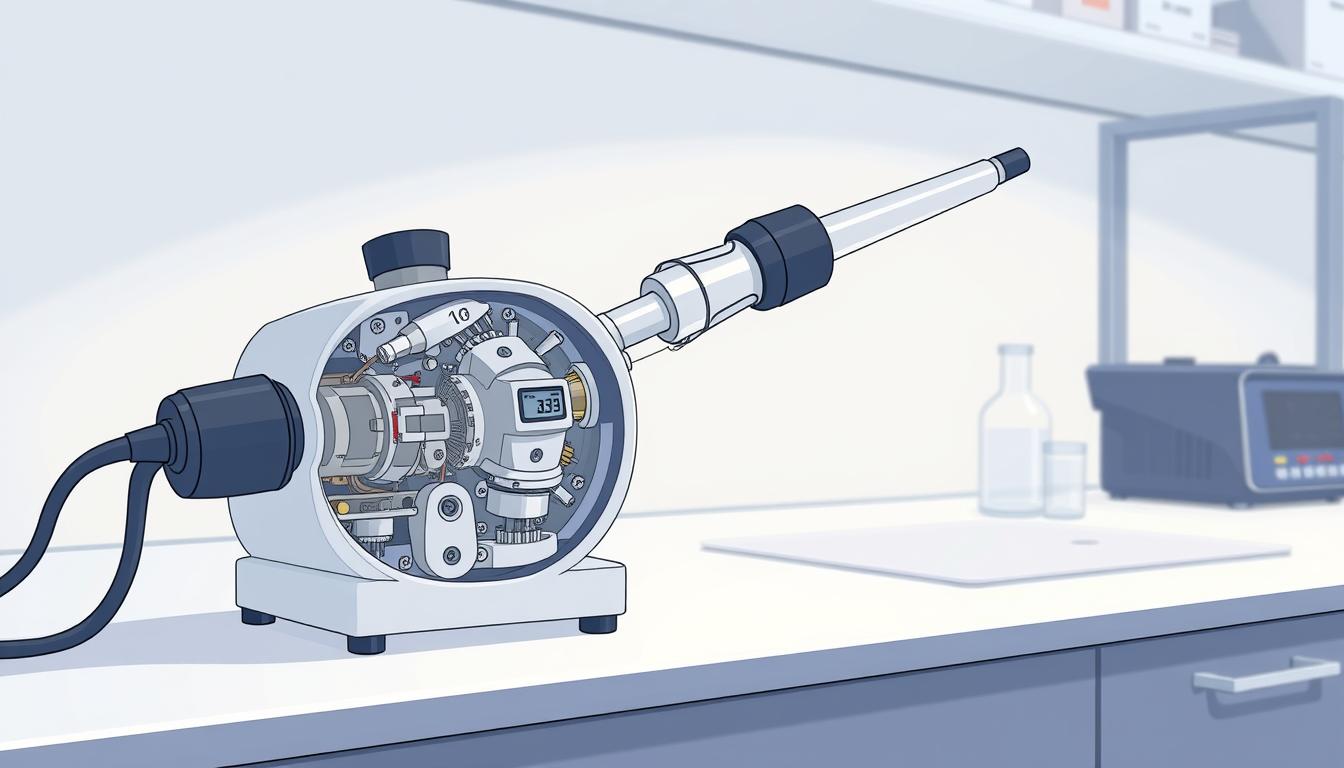
Ever thought about how scientists handle hundreds of liquid samples at once? The multichannel micropipette is key in modern lab work. It makes handling liquids fast and easy.
Liquid handling is vital in science, and the multichannel micropipette has changed the game. These tools let scientists move many liquids at once. This saves time and cuts down on mistakes.
Multichannel micropipettes are crucial in many fields, like molecular biology and immunology. They make tasks like PCR and DNA sequencing faster and more accurate.
Key Takeaways
- Multichannel micropipettes can transfer liquids across 8-16 channels simultaneously
- They significantly reduce pipetting time in laboratory settings
- Critical for advanced research in molecular biology and genomics
- Helps minimize human error during liquid handling
- Supports complex scientific procedures with high precision
Understanding Multichannel Micropipettes
Multichannel micropipettes are a big step forward in lab work. They make handling samples more precise and efficient. This is key for scientists in many fields.
Today’s labs use these tools to make research easier. They have 8 to 12 channels. This lets them handle many samples at once.
Key Defining Characteristics
The main features of multichannel micropipettes are:
- They can handle samples all at once
- They dispense liquids with great precision
- You can adjust how much liquid is dispensed
- They are designed to be easy on your hands
Critical Laboratory Applications
These tools are essential in many labs:
- They’re used in diagnostic labs for blood tests
- In pharmaceutical research for drug testing
- For studying DNA and RNA in genomics
- In microbiology studies
Performance Advantages
Multichannel micropipettes improve lab work in many ways:
- They cut down on mistakes
- They help do more tests faster
- They make sure results are the same every time
- They reduce the strain on researchers
Using multichannel micropipettes changes how labs work. It lets scientists do their jobs better and faster.
Types of Multichannel Micropipettes
Multichannel pipettes are key tools in today’s labs. They help scientists accurately move small amounts of liquid. These tools come in different types, each for a special use.
There are many kinds of multichannel micropipettes. Each has its own features and uses:
Fixed Volume vs. Variable Volume Micropipettes
Multichannel pipettes fall into two main types:
- Fixed Volume Micropipettes: Set to one volume, great for repeated tasks
- Variable Volume Micropipettes: Can be adjusted, more flexible
Electronic Multichannel Micropipettes
Electronic multichannel pipettes are the latest in liquid handling. The Transferpette® electronic pipette has cool features:
- PIP Mode for regular pipetting
- PIPmix Mode for mixing samples
- revPIP Mode for thick liquids
- GEL Mode for gel work
- DISP Mode for equal parts
Manual Multichannel Micropipettes
Manual multichannel pipettes are still loved for their dependability and value. They let users control the process and work well in many labs.
| Pipette Type | Volume Range | Channels |
|---|---|---|
| Transferpette® S Fixed | 0.1 μl to 10 ml | 8 models |
| Transferpette® S Variable | 0.1 μl to 10 ml | 10 models |
Each type of multichannel pipette has its own benefits. This lets researchers pick the best one for their needs.
Applications of Multichannel Micropipettes in Biology
Multichannel micropipettes have changed biological research a lot. They let scientists do complex experiments quickly and easily. These tools help make new discoveries in many fields, like molecular biology and genomics.
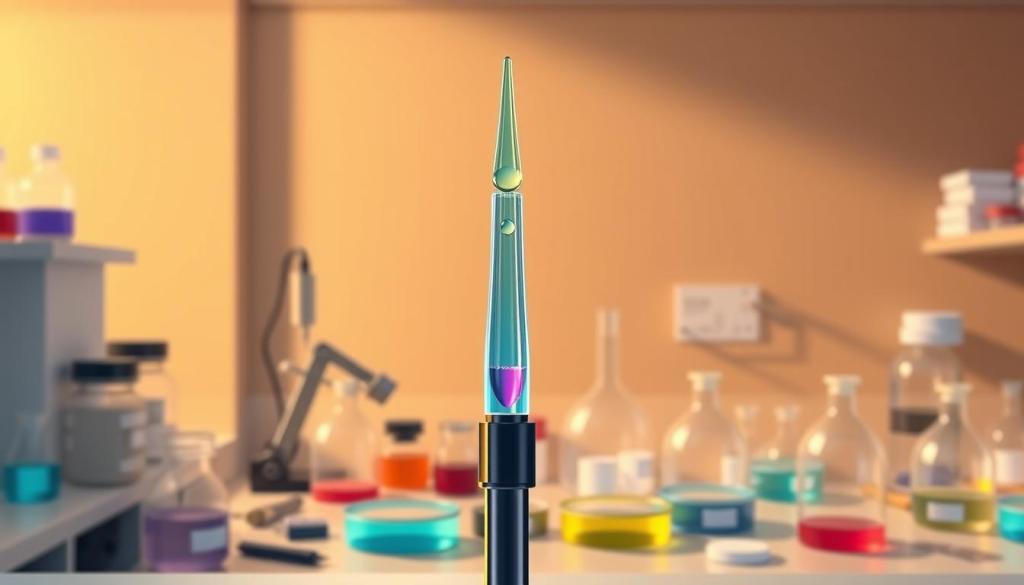
Scientists use multichannel micropipettes for fast screening and small-scale tests. They can handle many samples at once. This makes them very important in today’s labs.
Role in Molecular Biology
In molecular biology, multichannel micropipettes are very helpful. They support many important experiments:
- PCR setup and DNA/RNA extraction
- Enzyme assay preparation
- Genomic library construction
- Rapid sample processing
Use in Cell Culture
Cell culture also benefits a lot from multichannel micropipettes. They help with:
- Efficient media changes
- Consistent cell seeding
- Drug screening assays
- Precise cellular manipulation
Applications in Genomics and Proteomics
Multichannel micropipettes are key in advanced research areas. They make complex techniques possible in:
- Genome sequencing projects
- Protein interaction analyses
- Large-scale screening processes
- Miniaturized experimental protocols
The speed and accuracy of multichannel micropipettes push innovation in biology. They make complex experiments easier and faster.
Benefits of Using Multichannel Micropipettes
Multichannel micropipettes have changed how we handle liquids in labs. They make research more efficient. These tools are designed to improve workflows with their unique features.
Scientists use multichannel micropipettes to make pipetting easier. They offer big improvements in several key areas:
Increased Throughput
Multichannel micropipettes make pipetting faster and less time-consuming. Here are some numbers that show how efficient they are:
- Single-channel pipettes need 576 steps for 6 reagents in a 96-well plate
- 8-channel pipettes cut steps to 72
- 12-channel pipettes reduce steps to 48
Improved Precision and Accuracy
The design of multichannel micropipettes ensures accurate volume transfer. They handle liquids with precision in various volumes:
| Pipette Type | Volume Transfer Range |
|---|---|
| Single-channel Pipettes | 0.1 µL – 10,000 µL |
| Multi-channel Pipettes | 0.2 µL – 1,200 µL |
Reduced Risk of Contamination
Multichannel micropipettes reduce contamination risks by needing fewer handling steps. Less handling means less chance of sample contamination.
“Precision in liquid handling is not just about speed, but about maintaining scientific integrity.” – Laboratory Research Journal
Today’s multichannel micropipettes are designed for comfort. They have short 12.5 mm stroke lengths. This helps prevent injuries while keeping performance high.
Choosing the Right Multichannel Micropipette
Choosing the right multichannel micropipette is key for precise work in biotechnology. Researchers need to look at several factors for the best results and lab efficiency.
The right micropipette can greatly affect research results. So, picking the right one is a big deal for lab experts.
Key Factors to Consider
- Research needs and how complex the experiments are
- How often you’ll use it
- What your budget is
- If it fits with your lab’s protocols
Volume Range and Capacity
Choosing the right volume range is key for accurate work in biotechnology. Most micropipettes can handle volumes from 0.1 µl to 1000 µl. Here are some specific tips:
| Pipette Type | Recommended Use | Volume Range |
|---|---|---|
| Single Channel | For small sample volumes | 0.1-10 µl |
| Multichannel | For high volume work | 10-300 µl |
| Electronic | For complex tasks | 0.5-1000 µl |
Ergonomics and User Comfort
Ergonomic design is very important for precise work. Think about:
- Light materials
- Adjustable finger rests
- Low force needed for pipetting
- Even weight for easy handling
Good ergonomics can prevent injuries and boost lab work.
Professional tip: Always try out different models before deciding. This ensures you find the most comfortable and effective one for your research setting.
Maintenance and Care of Multichannel Micropipettes
Keeping lab equipment in top shape is key for accurate pipetting. It also helps extend the life of multichannel micropipettes. Scientists and researchers depend on these tools for reliable results in their work.

Essential Cleaning Procedures
Cleaning multichannel micropipettes right involves several important steps:
- Use lab-approved cleaning solutions
- Clean the outside with 70% ethanol every day
- Take it apart for a deep clean
- Stay away from harsh chemicals that can harm it
Calibration Importance
Calibration is vital for accurate volume delivery. Lab pros should:
- Calibrate every month
- Use precise weighing tools
- Aim for accuracy between 99% and 101%
- Keep records of all calibration steps
Storage Best Practices
Storing multichannel micropipettes right keeps them safe from damage. It also keeps them working well:
| Storage Condition | Recommended Parameters |
|---|---|
| Temperature Range | -20°C to 50°C |
| Humidity | 5% to 95% |
| Position | Vertical, in protective cases |
“Consistent maintenance turns good lab equipment into top-notch precision tools.”
By sticking to these care tips, researchers can make their multichannel micropipettes last longer. This ensures precise and reproducible results in their studies.
Troubleshooting Common Issues
Laboratory workers often face problems with liquid handling tools. Multichannel micropipettes can have issues that need quick fixes. Knowing these problems helps keep research precise and reliable.
Identifying Malfunctions
Common issues with multichannel micropipettes can mess up research. Look out for these signs:
- Inconsistent volume delivery
- Liquid leakage
- Difficulty in aspiration or dispensing
- Uneven performance across different channels
Solutions for Performance Issues
For liquid handling problems, try these steps:
- Check for piston contamination
- Inspect sealing rings and o-rings
- Verify tip attachment and seal
- Clean with 70% ethanol or isopropanol
- Lubricate moving parts according to manufacturer guidelines
When to Seek Professional Help
Some issues need a pro’s touch. Look for these signs:
- Calibration adjustments exceed manufacturer specifications
- Multiple channels show persistent performance problems
- Internal mechanical components appear damaged
- Precision testing reveals consistent inaccuracies
Lab managers should focus on regular upkeep and training. Getting things fixed by experts can avoid many problems.
Innovations in Multichannel Micropipette Technology
The world of biotechnology tools is always changing. This brings big steps forward in multichannel micropipette tech. Now, scientists have better tools for high-throughput screening. These tools make labs work better and research more precise.
New micropipette tech is changing science in big ways. It brings digital smart features and designs. These changes help labs work faster and more accurately.
Digital Technology Advancements
Recent updates in multichannel micropipettes are huge:
- Touchscreen interfaces for easy use
- Wireless options for connection
- Tracking and managing data in real-time
- Systems for automatic calibration
Laboratory Software Integration
Today’s micropipettes work well with lab software. This lets researchers:
- Make experiments more reliable
- Keep data organized
- Lower the chance of mistakes
- Make labs run smoother
Future Design Trends
Future micropipettes will use new materials and designs. They will be stronger, last longer, and be easier to use. This will help with complex research in many fields.
Conclusion: The Essential Role of Multichannel Micropipettes in Research
Multichannel pipettes have changed lab work by making it more precise and efficient. They are key in miniaturized assays, helping scientists do complex tests quickly and accurately.
Lab experts need to see how multichannel micropipettes can change science. By learning to use these tools well, researchers can make their work more reliable. This means fewer mistakes in important biological studies.
These pipettes are getting better all the time, helping scientists explore more. As technology grows, these tools will help with detailed studies in biology and more. It’s important for scientists to keep learning and using these advanced tools.
Research Impact
Multichannel pipettes are vital in many fields, from biology to drug research. They help scientists make new discoveries by handling tiny amounts of liquid with great care.
Future Perspectives
It’s important for scientists and labs to keep up with the latest in multichannel pipettes. They need to stay trained to keep doing groundbreaking research. The future of science depends on mastering these advanced techniques.
FAQ
What is a multichannel micropipette?
A multichannel micropipette is a tool for scientists. It can move many liquids at once. This makes lab work faster and more precise.
How do multichannel micropipettes differ from single-channel pipettes?
Multichannel micropipettes can handle many samples at once. Single-channel pipettes only handle one. This makes multichannel pipettes faster and more accurate.
What are the main types of multichannel micropipettes?
There are different types of multichannel micropipettes. Some have fixed volumes, while others can be adjusted. There are also electronic and manual models. Each type has its own benefits.
In which scientific fields are multichannel micropipettes commonly used?
Scientists use multichannel micropipettes in many fields. This includes molecular biology and drug discovery. They are useful for tasks like PCR setup and DNA extraction.
How do I choose the right multichannel micropipette?
Choosing the right micropipette depends on your needs. Consider the volume, ease of use, and cost. Think about how often you’ll use it and what it’s for.
What maintenance is required for multichannel micropipettes?
Keeping your micropipette in good shape is important. Clean it regularly and check it often. Follow the manufacturer’s instructions for maintenance.
What are the primary advantages of using multichannel micropipettes?
Multichannel micropipettes are fast and accurate. They reduce the chance of mistakes and make lab work easier. They save time and ensure consistent results.
How can I troubleshoot common multichannel micropipette issues?
If your micropipette isn’t working right, check a few things. Make sure the volume is consistent and the tips are attached. If problems persist, get help from the manufacturer.
What recent innovations exist in multichannel micropipette technology?
New micropipettes have cool features like digital controls and wireless connections. They also work better with lab systems and are more comfortable to use. Future models will likely include even more advanced technology.
Are electronic or manual multichannel micropipettes better?
It depends on your lab’s needs. Electronic micropipettes are great for big labs because they’re fast and precise. Manual micropipettes are better for smaller labs because they’re cheaper and easy to use.




Leave a Comment
Your email address will not be published. Required fields are marked *