


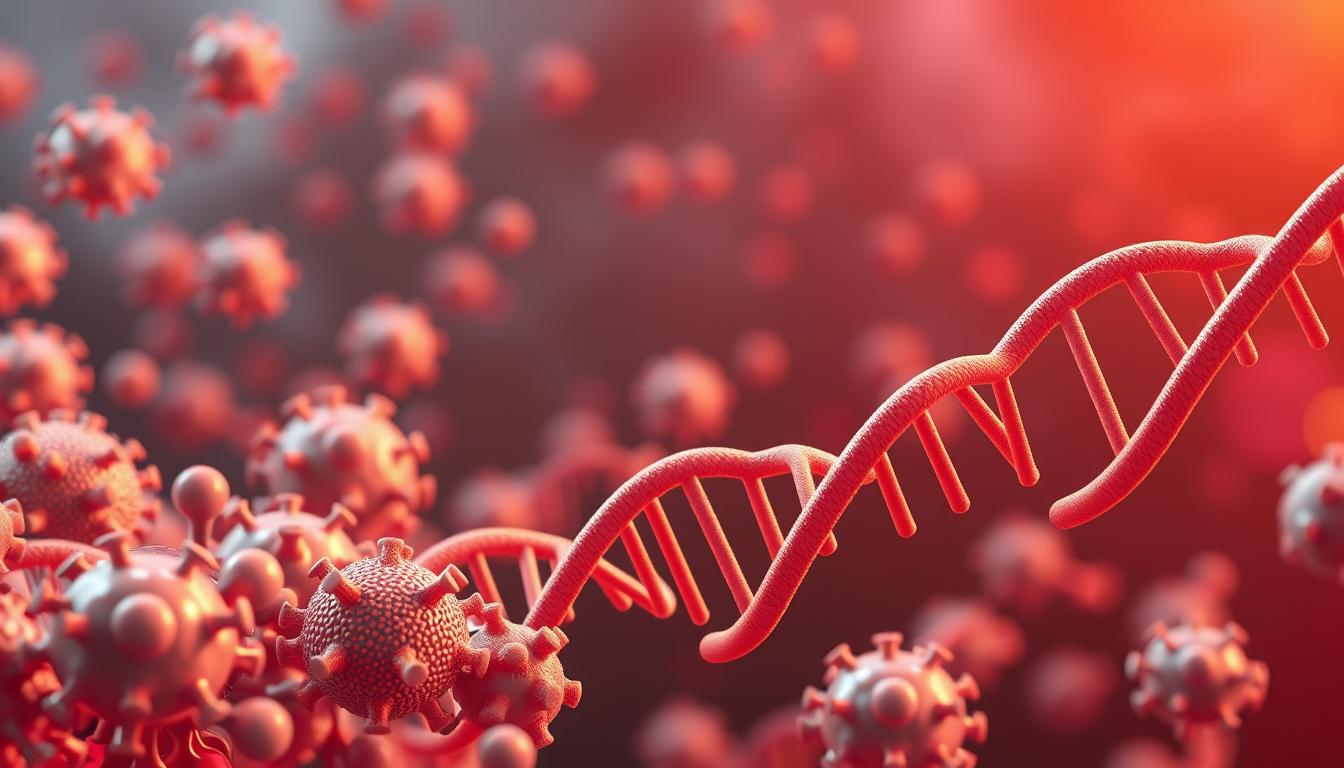
Imagine a single technique that can reveal secrets in tiny genetic material. Polymerase Chain Reaction (PCR) is a groundbreaking method for DNA amplification. It has changed molecular biology and medical research.
PCR ingredients are key for precise genetic analysis. Scientists use specific parts to study DNA sequences with great accuracy. This process lets researchers make millions of DNA copies from just a little material, changing genetic research.
The technique’s strength is in its ability to multiply genetic material a lot. PCR ingredients work together perfectly, creating a complex molecular copying machine. This machine can find genetic differences, diagnose diseases, and answer complex biological questions.
Key Takeaways
- PCR enables rapid DNA sequence multiplication
- Precise ingredient combinations are crucial for successful amplification
- DNA amplification supports advanced genetic research
- PCR techniques can detect minute genetic variations
- The method is used across multiple scientific disciplines
Overview of PCR Ingredients
Polymerase Chain Reaction (PCR) is a key technique in molecular biology. It lets scientists make lots of DNA copies from just one sample. This has changed how we do genetic research and tests.
PCR ingredients are vital for making DNA copies. The main things needed are:
- Template DNA
- DNA polymerase
- Specific primers
- Nucleotides (dNTPs)
- Buffer solution
Definition and Purpose of PCR
PCR is a way to make lots of DNA copies quickly. It uses 20-30 cycles to make about one billion copies in 2-3 hours. It starts with template DNA and uses DNA polymerase to copy it.
“PCR has transformed genetic research by enabling rapid and precise DNA amplification” – Molecular Biology Insights
Significance in Molecular Biology
PCR is important in many areas of science. It helps study genes, find diseases, and do genetic tests. It lets us understand genetics better because it makes lots of DNA from a little bit.
Applications in Research and Medicine
PCR ingredients are used in many ways, like:
- Genetic disease screening
- Forensic DNA analysis
- Infectious disease detection
- Evolutionary biology research
- Personalized medicine development
PCR’s accuracy helps scientists study complex genetics. It’s a crucial tool in today’s molecular research.
Essential Ingredients for PCR
Polymerase Chain Reaction (PCR) needs four key ingredients to amplify DNA sequences accurately. Knowing these components is vital for successful experiments in molecular biology.
Scientists mix these elements carefully to replicate DNA accurately. Let’s look at the main ingredients that make PCR a powerful tool.
DNA Template: The Starting Material
The DNA template is the base for PCR amplification. Researchers use different DNA sources, such as:
- Genomic DNA
- Complementary DNA (cDNA)
- Plasmid DNA
The right amount of template varies by DNA type. For plasmid DNA, 0.1-1 ng is recommended in a 50 µL reaction. Genomic DNA needs 5-50 ng.
Primers: Sequence-Specific Guides
Primers are short DNA pieces that target specific genetic areas. They are crucial in PCR by:
- Defining the DNA segment to be amplified
- Providing a starting point for DNA synthesis
- Ensuring precise genetic replication
Ideal primers are 15-30 bases long. They have a melting temperature of 55-70°C and a GC content of 40-60%.
DNA Polymerase: The Replication Engine
DNA polymerase is the enzyme that amplifies DNA by making new strands. Taq DNA polymerase is the most used enzyme. It is used at 1-2 units per 50 µL reaction.
Nucleotides: Building Blocks of DNA
Nucleotides (dNTPs) are the basic units that build new DNA strands. A balanced concentration of 50-200 μmol/L is used. 0.2 mM is standard in most PCR applications.
By choosing and balancing these ingredients, scientists can get precise DNA amplification. This is crucial for research and diagnostic work.
Role of DNA Template in PCR
The DNA template is key in PCR, acting as the starting point for genetic copying. Knowing about template DNA is crucial for PCR success.
PCR uses different DNA types, each with its own needs. It’s important for researchers to pick the right DNA for their experiments.
Types of DNA Templates
PCR needs specific DNA types for amplification. Here are some examples:
- Genomic DNA
- Plasmid DNA
- Complementary DNA (cDNA)
- Viral DNA
Quality and Quantity Considerations
PCR’s success depends on DNA quality and amount. For the best results, you need:
- 10-100 ng of DNA per reaction
- A purity ratio of 1.80 at 260/280 nm
- A target region with less than 45% GC content
Each DNA type has its own concentration needs:
- Genomic DNA: 10-100 ng
- Plasmid DNA: 0.1-1 ng
- cDNA: 100 pg-10 ng
Bad DNA quality can ruin PCR. It might cause wrong results. So, using top-notch DNA is vital for PCR success.
Importance of Primers in PCR
Primers are key in PCR, helping to amplify DNA with great precision. These short DNA sequences target specific genetic areas. This makes it easier for scientists to study DNA with high accuracy.
Primers are made of short DNA sequences, 15-30 bases long. Their design is crucial for PCR success. Scientists must design these molecular starters carefully for accurate genetic analysis.
Strategic Primer Design Principles
When designing PCR primers, several important factors must be considered:
- Optimal length between 18-22 nucleotides
- GC content between 40-60%
- Balanced melting temperatures
- Avoiding repetitive sequences
Primer Concentration Dynamics
Primer concentration greatly affects PCR results. It usually ranges from 0.1–1 μM. Finding the right concentration is key for successful DNA amplification.
“Precision in primer design determines the molecular success of PCR experiments.” – Molecular Biology Research Team
| Primer Concentration | Potential Outcome |
|---|---|
| 0.1-0.5 μM | Low amplification efficiency |
| 0.5-1.0 μM | Optimal amplification |
| >1.0 μM | Increased nonspecific binding |
Understanding primer dynamics helps researchers optimize PCR ingredients. This leads to precise DNA amplification in various scientific fields.
Functionality of DNA Polymerase
DNA polymerase is key in PCR, making sure genetic material is copied accurately. It creates new DNA strands, crucial for amplifying genes. This process ensures the genetic information is duplicated correctly.
Scientists have created various DNA polymerases for different research needs. Each enzyme’s traits affect how well PCR works and how reliable it is.
Exploring Polymerase Variations
Different DNA polymerases have unique abilities in molecular biology:
- Taq Polymerase: The most common, known for its heat stability
- Pfu Polymerase: Offers high fidelity for precise genetic work
- Q5 Polymerase: Designed for better performance in complex amplifications
Key Stability and Fidelity Considerations
The success of DNA polymerase relies on several important factors:
- Temperature resistance (best at 72°C)
- Error correction abilities
- Specific amplification accuracy
- Processivity during DNA replication
Researchers pick DNA polymerases based on their project needs. They look for a balance between speed, accuracy, and reliability in genetic amplification.
Nucleotides in PCR
Nucleotides are key in polymerase chain reaction (PCR). They are the basic parts needed for DNA to be copied. These components are crucial for the success and accuracy of genetic studies.
In PCR, nucleotides are the essential parts that help DNA copy itself. They come in four main types:
- Deoxyadenosine triphosphate (dATP)
- Deoxycytidine triphosphate (dCTP)
- Deoxyguanosine triphosphate (dGTP)
- Deoxythymidine triphosphate (dTTP)
Composition of Nucleotides
Each nucleotide has a base that pairs with its match during DNA making. The right mix of these nucleotides is vital for precise DNA copying in PCR.
Concentration Impact on Amplification
The amount of nucleotides greatly affects PCR’s success. Studies show that the best dNTP amounts are between 50-200 μmol/L. Having the same amount of each nucleotide helps avoid mistakes and boosts accuracy.
“Precision in nucleotide concentration is key to successful DNA amplification.” – Molecular Biology Research Team
To get the best PCR results, it’s important to balance nucleotide amounts. Too little, around 0.010-0.015 mM of free dNTPs, can make DNA polymerase work better and cut down on copying errors.
Additives and Modifiers in PCR
When working with PCR, it’s important to think about the additives and modifiers. These special parts help make PCR better and more reliable.
Scientists pick specific buffer solutions for PCR. These solutions create the perfect chemical setting for PCR. They do many important things:
- Stabilize enzyme activity
- Maintain optimal pH levels
- Protect DNA template integrity
- Prevent unwanted molecular interactions
Role of Buffer Solutions in PCR
A buffer solution keeps the chemical balance during DNA amplification. Ingredients like Tris-HCl and potassium chloride keep the reaction steady. Magnesium chloride is also key for DNA polymerase to work well.
Enhancers and Performance Modifiers
Some additives really boost PCR performance, especially for tough DNA samples. DMSO and betaine help deal with DNA’s complex structures. This makes amplification easier in hard-to-work-with genetic material.
- DMSO reduces DNA secondary structures
- Betaine stabilizes PCR reaction dynamics
- Glycerol can enhance enzyme processivity
Researchers pick these buffer solutions and additives with care. They do this to tackle specific challenges in PCR. This ensures their molecular biology work is strong and dependable.
Optimization of PCR Conditions
To get the best results in PCR, you need to tweak many settings. It’s important to adjust the temperature and cycle numbers. This ensures the highest amplification efficiency in your thermal cycler.
- Understanding the DNA you’re working with
- Choosing the right temperature settings
- Deciding on the number of cycles
Temperature Profile Optimization
Temperature is vital for PCR success. The usual cycle includes three main steps:
- Denaturation (94-98°C)
- Annealing (52-58°C)
- Extension (70-80°C)
Cycle Number Considerations
The number of PCR cycles affects how well you amplify DNA. Most studies use 25-30 cycles. This can create about 10^4 DNA copies.
| Parameter | Optimal Range |
|---|---|
| Cycle Number | 25-30 cycles |
| Initial Denaturation | 1-5 minutes |
| Denaturation Step | 10-60 seconds |
| Annealing Time | 30 seconds |
It’s crucial to adjust the PCR ingredients and thermal cycler settings for consistent results. The complexity of the DNA, the design of the primers, and the length of the target sequence all play a role in finding the best cycling conditions.
Common Challenges in PCR and Solutions
Polymerase chain reaction (PCR) experiments face several big challenges. These can affect how reliable and accurate they are. Researchers must watch out for contamination risks and technical issues that could mess up their work.
One big problem is primer dimer formation. This happens when primers bind to each other instead of the DNA they’re meant to. This can lower the efficiency of the PCR and create unwanted products. To avoid this, researchers should make sure primer lengths are right and G-C content is balanced.
Amplification problems can come from many sources. These include the quality of DNA, how well the polymerase works, and the conditions of the reaction. Issues like non-specific binding, low DNA amounts, and wrong thermal cycling can cause problems. To fix these, researchers can use hot-start polymerases, adjust magnesium levels, and use strict negative controls.
Doing advanced molecular biology well means paying close attention to every detail. By knowing the challenges and using smart strategies, researchers can make their PCR experiments more precise and reliable. This is important for many scientific and medical fields.
FAQ
What is PCR and why is it important in molecular biology?
Polymerase Chain Reaction (PCR) is a key technique in molecular biology. It makes millions of copies of a DNA segment. This is vital in genetic research, medical diagnostics, forensic science, and DNA analysis.
What are the essential ingredients needed for a successful PCR reaction?
For PCR to work well, you need four main things: template DNA, primers, DNA polymerase, and nucleotides (dNTPs). Each plays a big role in making copies of DNA accurately and efficiently.
How do primers work in PCR?
Primers are short DNA sequences that start DNA synthesis. They match specific DNA parts, helping the DNA polymerase to start replication in PCR.
What type of DNA polymerase is typically used in PCR?
Taq polymerase, from Thermus aquaticus bacteria, is often used. It’s heat-stable, making it perfect for PCR’s high temperatures.
What factors can affect PCR success?
Many things can affect PCR’s success. These include DNA quality, primer specificity, polymerase type, nucleotide concentration, magnesium chloride levels, and temperature. Optimizing these is key for good results.
How long does a typical PCR reaction take?
PCR usually takes 2-3 hours. It involves 25-35 cycles of heating and cooling. Each cycle has denaturation, annealing, and extension steps, controlled by a thermal cycler.
What are common challenges in PCR?
Challenges in PCR include contamination, non-specific amplification, primer-dimer formation, and low yield. These can be solved with careful technique, quality reagents, and control measures.
Where is PCR used in real-world applications?
PCR is used in many areas. It helps in medical diagnostics, forensic science, genetic research, paternity testing, archaeological DNA analysis, and environmental monitoring.
What additional components might be added to a PCR reaction?
To improve PCR, researchers might add buffer solutions, enhancers, or specific additives. These help with challenging templates, reduce secondary structures, or boost amplification efficiency.
How do I ensure high-quality PCR results?
For top-quality PCR results, use pure DNA, well-designed primers, high-fidelity polymerase, fresh nucleotides, precise temperature cycling, and proper controls.





Leave a Comment
Your email address will not be published. Required fields are marked *