


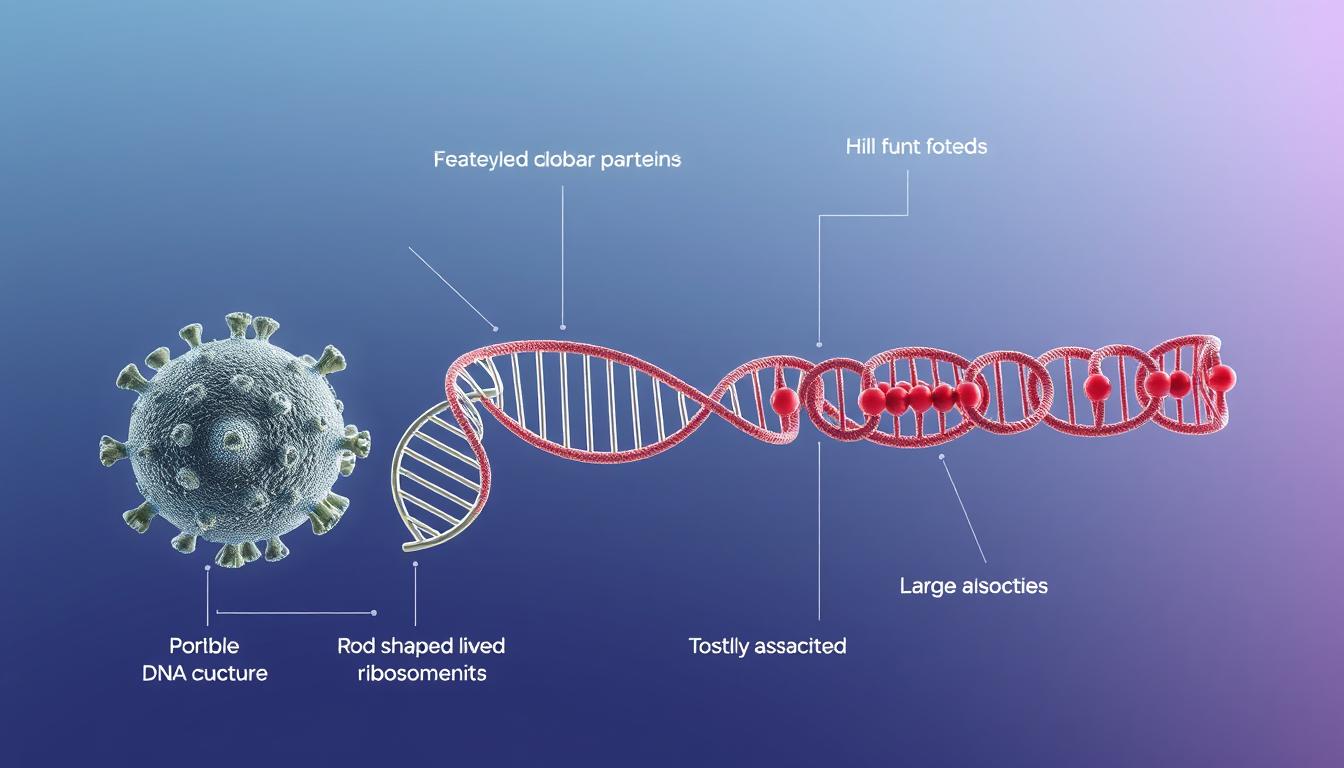
Ever wondered how a simple DNA sample turns into millions of exact genetic copies? The secret lies in the world of PCR reaction ingredients. They are the magic behind many scientific breakthroughs.
PCR, or Polymerase Chain Reaction, is a complex technique in molecular biology. It needs specific ingredients to work well. These include a chosen DNA template, special primers, strong DNA polymerase, a buffer solution, and key molecular parts.
Knowing how these ingredients work together is key to successful genetic research. Each one is vital for making accurate copies of DNA. This lets scientists ask and answer complex biological questions with great precision.
Key Takeaways
- PCR needs specific molecular ingredients for accurate DNA amplification
- DNA template quality significantly impacts reaction success
- Precise primer design is crucial for targeted genetic replication
- DNA polymerase serves as the primary enzymatic catalyst
- Buffer solutions stabilize the molecular environment
Overview of PCR Reaction
Polymerase Chain Reaction (PCR) is a key technique in molecular biology. It was created in the 1980s by Kary Mullis. This method lets scientists make many copies of specific DNA segments. They use special ingredients and a thermal cycler for this.
PCR makes DNA copies through a complex process. It allows researchers to create millions of copies of a specific genetic sequence. The process has three main steps:
- Denaturation: Separating DNA strands at high temperatures
- Annealing: Binding specific primers to target DNA regions
- Extension: Synthesizing new DNA strands using DNA polymerase
Understanding PCR Fundamentals
The heart of PCR is based on enzymatic reactions that multiply genetic material. Taq DNA polymerase, from Thermus aquaticus, is key. Each PCR cycle doubles the DNA, making billions of copies in hours.
Significance in Molecular Biology
PCR’s role in molecular biology is huge. It’s used in many fields, like medical diagnostics and forensic science. It helps scientists analyze DNA quickly and accurately.
PCR has revolutionized our ability to study genetic information, providing insights that were previously impossible to obtain.
Key Ingredients in PCR
The polymerase chain reaction (PCR) needs a special mix of ingredients to work well. Knowing these key parts is vital for scientists and biologists to get accurate DNA results.
PCR works with four main ingredients. Each one has a special job in making more DNA:
- DNA Template
- Primers
- DNA Polymerase
- Buffer Solution
DNA Template: The Starting Material
The DNA template is the starting point for making more DNA. Choosing the right DNA template is important:
- Plasmid DNA needs 0.1-1 ng
- Genomic DNA requires 5-50 ng
- Smaller DNA pieces (100-2000 bp) work better
Primers: Targeting Specific DNA Sequences
Primers are short DNA pieces that start the amplification. Making good primers means paying attention to a few things:
- Ideal melting temperature (Tm): 55-70°C
- Recommended Tm difference: No more than 5°C between primer pairs
- Optimal GC content: 40-60%
DNA Polymerase: The Amplification Enzyme
DNA polymerase is the enzyme that makes DNA during PCR. It has some important features:
- Standard concentration: 2.5 units per 100 µL reaction
- DNA synthesis rate: 1-2 kb/minute
- Modified polymerases are more sensitive
Buffer Solution: Maintaining Optimal Conditions
The buffer solution helps create the best environment for PCR. It has some key traits:
- Tris-HCl concentration: 50-100 mM
- KCl concentration: 20-50 mM
- Magnesium ion range: 1-5 mM
Knowing how to use these ingredients well is key for accurate DNA copying in science.
Role of DNA Template in PCR
The DNA template is key for successful PCR. Knowing its traits and quality is crucial for precise genetic copying in science.
Scientists say the DNA template greatly affects PCR success. Its quality and amount are vital for genetic copying.
Characteristics of an Ideal DNA Template
An ideal DNA template for PCR has certain traits for reliable results:
- Purity with a 260/280 nm ratio of about 1.80
- Concentration between 10 to 100 ng per reaction
- Target sequence length usually 100-5,000 base pairs
- GC content under 45%
Importance of Template Quantity and Quality
The DNA template’s amount greatly affects PCR results. Studies show:
- For a 25 µL PCR reaction, 30-50 ng of template DNA is best
- For a 50 µL reaction, 80-100 ng of template DNA is ideal
- Even as little as 10 pg can work under perfect conditions
Researchers must find the right balance in DNA template amount. Too much can lead to wrong copying, too little might fail. Different DNA types need specific amounts:
- Genomic DNA: 10-100 ng
- Plasmid DNA: 0.1-1 ng
- cDNA: 100 pg to 10 ng
Choosing the right DNA template ensures accurate PCR results.
Importance of Primers in PCR
Primers are key in PCR, starting DNA amplification. They are synthetic pieces of DNA that help target specific genes. This makes PCR very precise.
Choosing the right primers is crucial for PCR success. Researchers must think about several important factors when making these tools.
Types of Primers in Molecular Biology
There are different types of primers for various research needs:
- Forward primers
- Reverse primers
- Nested primers
- Degenerate primers
Optimizing Primer Design
Designing primers well is important. It involves paying close attention to several key points:
| Parameter | Recommended Range |
|---|---|
| Primer Length | 18-25 nucleotides |
| GC Content | 40-60% |
| Melting Temperature | 50-65°C |
| Primer Concentration | 0.1-1 μM |
“Primer design is an art that combines molecular precision with strategic computational analysis.” – Dr. Jane Rogers, Molecular Genetics Research Institute
Researchers should avoid certain issues when designing primers:
- Self-complementary regions
- Excessive GC or AT content
- Potential for primer-dimer formation
- Non-specific binding potential
Advanced bioinformatics tools have greatly improved primer design. They help make primers that are very specific. This reduces background noise and boosts amplification efficiency.
Understanding DNA Polymerase
DNA polymerase is key in PCR reactions. It’s the enzyme that makes DNA copies. This tool helps scientists make millions of DNA copies fast and accurately.
The enzyme works like a molecular copying machine. It makes new DNA strands during PCR. Its special abilities are vital for genetic research and diagnostics.
Types of DNA Polymerases in PCR
Different DNA polymerases have unique traits for various research needs:
- Taq Polymerase: Highly heat-stable, ideal for standard PCR reactions
- Pfu Polymerase: Provides high-fidelity DNA replication
- Q5 Polymerase: Offers superior accuracy for complex genetic studies
Selecting the Right Polymerase
Choosing the right DNA polymerase depends on several factors:
- Thermal stability: Essential for withstanding high-temperature PCR cycles
- Fidelity: Crucial for maintaining genetic sequence accuracy
- Amplification speed: Determines the efficiency of DNA copying
Researchers must carefully evaluate their specific experimental requirements. This ensures the best PCR reaction results.
The Function of Buffer Solution in PCR
Buffer solutions are key in polymerase chain reaction (PCR). They keep the chemical conditions right for DNA to multiply. This stable environment is vital for the complex processes in PCR.
The main job of a buffer solution in PCR is to control pH and ionic strength. Scientists carefully make these solutions. They want to make sure DNA replication is consistent and reliable.
Role of Ionic Strength
Ionic strength is very important for PCR. Buffer solutions have specific ions in them:
- Potassium chloride (KCl): 35-100 mM
- Magnesium chloride (MgCl2): 0.5-5.0 mM
- Tris-HCl: Kept at about pH 8.3
“The right ionic balance can make or break a PCR reaction” – Molecular Biology Research Team
pH Considerations
pH is very important for enzyme stability and DNA polymerase activity. Most PCR buffer solutions aim for a pH of 8.3. This is the best for DNA amplification.
The different parts of the buffer solution work together. Magnesium ions, for example, help keep DNA polymerase stable. This is important for DNA synthesis to happen well.
- Optimal pH ensures enzyme efficiency
- Prevents protein denaturation
- Supports consistent chemical reactions
Choosing the right buffer solution is very important for PCR success. It directly affects how well DNA is amplified.
Additional Components in PCR
PCR reactions include more than just basic ingredients. They also have special additives that help DNA amplify better. Scientists use the right mix of nucleotides and extra substances to get the best results in their experiments.
Nucleotides: Building Blocks of DNA Synthesis
Nucleotides are key in PCR reactions. They are the building blocks for DNA making and copying. The four main dNTPs (deoxyadenosine triphosphate, deoxycytidine triphosphate, deoxyguanosine triphosphate, and deoxythymidine triphosphate) are essential for PCR.
- Typical dNTP concentration range: 50-200 μmol/L
- Standard final concentration: 0.2 mM
- Storage recommended at -20°C to prevent degradation
DMSO and Specialized Additives
Dimethyl sulfoxide (DMSO) and other special additives can really help PCR work better. They make it easier to deal with tough template conditions and boost amplification.
| Additive | Purpose | Typical Concentration |
|---|---|---|
| DMSO | Reduces DNA secondary structures | 1-5% |
| Betaine | Improves amplification of GC-rich templates | 0.5-1.0 M |
| Glycerol | Enhances polymerase processivity | 5-10% |
Selecting the right PCR reaction ingredients can dramatically improve experimental outcomes and genetic analysis precision.
Researchers need to find the right balance of nucleotides and additives for the best PCR results. Each part plays a role in the complex process of DNA amplification. Choosing carefully is key for successful molecular biology experiments.
Troubleshooting PCR Reaction
Getting PCR reactions right is key for good results. Scientists often face problems that can mess up their experiments.
PCR works best when everything is just right. This means the right denaturation and annealing temperatures. Knowing how to fix common problems can make a big difference.
Common PCR Challenges and Strategic Solutions
- Low DNA template quality can be checked with gel electrophoresis
- Primer concentration should be between 0.1–1 μM
- Adjust the cycling conditions to boost specificity
- Use hot-start DNA polymerases to stop primer damage
Optimization Strategies
There are a few main ways to make PCR better:
- Make sure primer design is 15-30 nucleotides long
- Keep magnesium levels between 0.5-5.0 mM
- Change the annealing temperature by 1-2°C at a time
- Pick the right polymerase for your DNA
| PCR Parameter | Recommended Range | Optimization Tip |
|---|---|---|
| Cycle Number | 25-35 cycles | Go up to 40 cycles for less DNA |
| Denaturation Temperature | 94-98°C | Adjust based on DNA complexity |
| Annealing Temperature | 52-58°C | Optimize in 1-2°C increments |
“Precision in PCR setup is the key to successful molecular research”
By tackling common PCR problems and tweaking settings, scientists can greatly enhance their results. This makes their experiments more reliable.
Applications of PCR
Polymerase chain reaction (PCR) has changed many scientific fields. It uses ingredients like magnesium chloride to amplify DNA. This helps researchers in many areas.
- Clinical Diagnostics: Detecting genetic disorders
- Forensic Investigations: Identifying individuals
- Medical Research: Analyzing gene expression
- Agricultural Biotechnology: Studying crop genetics
Clinical Diagnostics Breakthrough
In medical settings, PCR helps find pathogens fast. Doctors can spot genetic issues, viruses, and bacteria quickly. The right amount of magnesium chloride makes these tests very sensitive.
“PCR has transformed diagnostic medicine by providing rapid, accurate genetic analysis” – Molecular Biology Research Institute
Forensic Investigations
Forensic scientists use PCR to study DNA from tiny samples. This lets them create detailed genetic profiles from very small DNA samples.
Key forensic PCR uses include:
- Human identification through short tandem repeat analysis
- Criminal investigation evidence processing
- Paternity testing
- Archaeological genetic research
PCR’s power to make millions of DNA copies from a little bit of DNA is key. It’s a vital tool in many scientific areas.
Future Trends in PCR Technology
The world of PCR is changing fast, with new discoveries in molecular biology. Scientists are making better polymerase enzymes. These new enzymes will help find things more easily and work faster.
New PCR ingredients are being made to be stronger and more flexible. Researchers are making DNA polymerases that can handle tough conditions better. They’re also working on new ways to design primers and probes. This will help find genetic changes more accurately, especially in complex research and medical tests.
Real-time PCR is getting more use in fields like medicine, microbiology, and biotechnology. Adding artificial intelligence to PCR will change how we analyze genes. This could make genetic tests faster and more detailed.
Advancements in PCR Ingredients
Future PCR will have even better ingredients for tough genetic tasks. Scientists hope to make enzymes that make fewer mistakes and amplify DNA better. This could lead to more precise genetic studies and new ways to diagnose diseases.
Innovations in PCR Applications
New PCR will be smaller and easier to carry around. Researchers aim to make PCR devices for quick genetic tests anywhere. This could make genetic testing more accessible and useful in many areas.
FAQ
What exactly is a PCR reaction?
PCR stands for Polymerase Chain Reaction. It’s a way to make lots of copies of a specific DNA segment. This is done by heating and cooling the DNA over and over. This process makes millions of copies of a genetic sequence in a short time.
What are the essential ingredients required for a PCR reaction?
You need a few key things for PCR. These include DNA, primers, DNA polymerase, nucleotides, a buffer, and magnesium chloride. Each one is important for making copies of DNA. The primers tell the DNA what to copy, and the polymerase does the copying.
How does temperature cycling work in PCR?
PCR uses three main temperatures: denaturation, annealing, and extension. These steps are repeated many times. A machine called a thermal cycler controls the temperatures. This helps make lots of copies of the DNA.
What factors affect PCR reaction efficiency?
Several things can affect how well PCR works. These include the design of the primers, the quality of the DNA, the type of polymerase, and the concentration of magnesium chloride. Getting these right helps make accurate copies of DNA.
References and further readings:
1.Ehtisham, M., Wani, F., Wani, I., & Kaur, P. (2016). Polymerase chain reaction (PCR): Back to basics. Indian Journal of Experimental Biology.
https://www.researchgate.net/publication/306276499
2.Kadri, K. (2019). Polymerase chain reaction (PCR): Principle and applications. In Synthetic Biology – New Interdisciplinary Science. IntechOpen.
https://www.intechopen.com/chapters/67558
3.Erlich, H. A. (1989). Polymerase chain reaction. Journal of Clinical Immunology, 9(5), 338–347.
https://link.springer.com/article/10.1007/BF00918012
Where is PCR commonly used?
PCR is used in many fields. It helps in medical tests, genetic studies, forensic science, and more. It’s used to find genetic diseases, identify pathogens, and study gene expression.
What makes a good DNA template for PCR?
A good DNA template should be pure and intact. The quality of the DNA is key. It should be free from proteins and RNA that could mess up the PCR.
How do primers work in PCR?
Primers are short DNA sequences that tell the PCR where to start. They bind to the DNA and help the polymerase start copying. Good primer design is important for a successful PCR.
What challenges might researchers encounter during PCR?
Researchers might face problems like non-specific amplification and primer-dimer formation. They can solve these by improving primer design and adjusting the reaction conditions. Using hot-start polymerases and controlling the reaction also helps.
Leo Bios
Hello, I’m Leo Bios. As an assistant lecturer, I teach cellular and
molecular biology to undergraduates at a regional US Midwest university. I started as a research tech in
a biotech startup over a decade ago, working on molecular diagnostic tools. This practical experience
fuels my teaching and writing, keeping me engaged in biology’s evolution.






Leave a Comment
Your email address will not be published. Required fields are marked *