


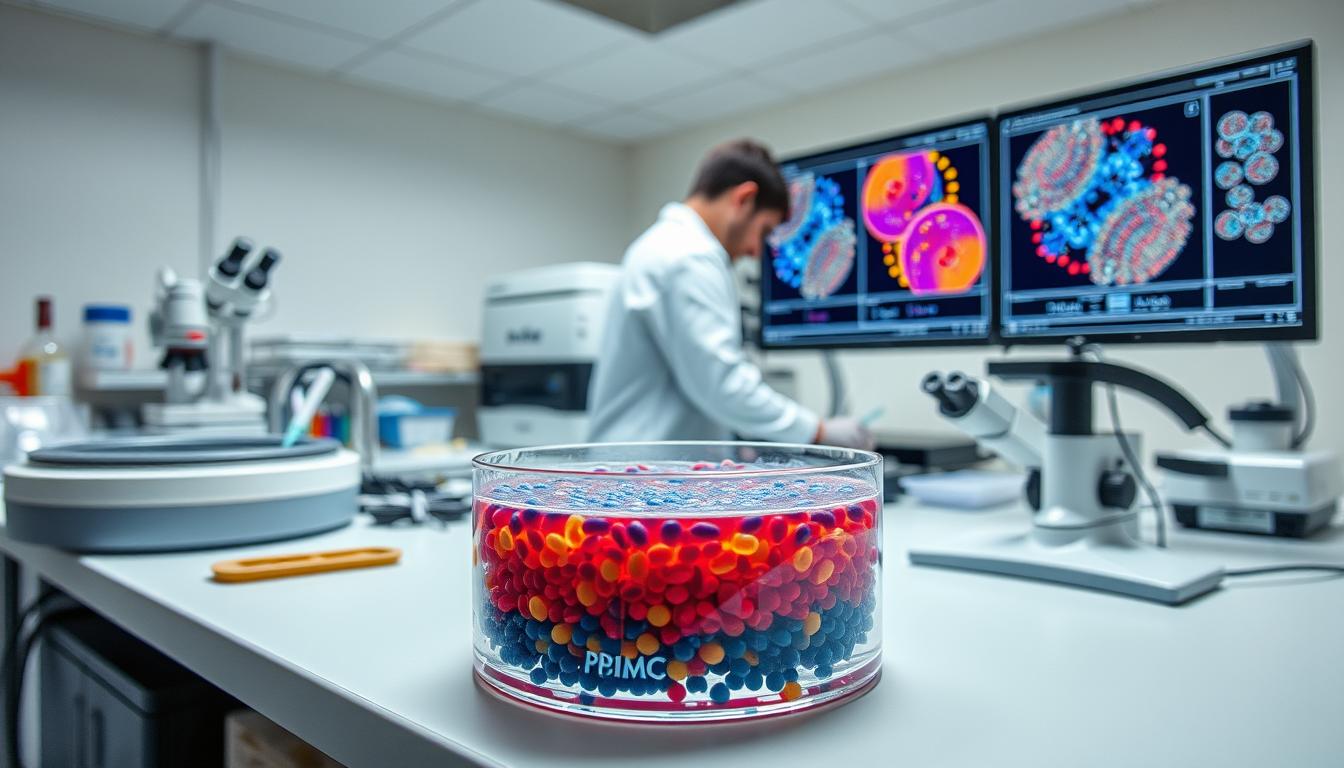
Are you ready to explore the complex world of immune system defense? Human peripheral blood mononuclear cells (PBMCs) are key to understanding how our bodies fight off diseases.
PBMCs are special white blood cells that help protect us from harmful invaders. They include T cells, B cells, natural killer cells, monocytes, and dendritic cells. Each type has its own role in our immune system.
Scientists use advanced methods to isolate and study these cells. The EasySep™ Direct Human PBMC Isolation Kit can isolate PBMCs in just 20 minutes. This has changed how researchers study the immune system.
By studying these cells, scientists gain deep insights into how our immune system works. This knowledge helps us understand diseases better and find new treatments.
Key Takeaways
- PBMCs are complex white blood cells critical for immune defense
- Modern isolation techniques can extract PBMCs rapidly and efficiently
- Cell composition includes T cells, B cells, NK cells, monocytes, and dendritic cells
- PBMC research supports understanding disease mechanisms
- Advanced isolation methods improve research precision
Overview of Human PBMCs
Peripheral blood mononuclear cells (PBMCs) are key to the human immune system. They play a big role in studying immune cells and doing research. These cells help us understand how the immune system works and how to treat diseases.
PBMCs are made up of different immune cells that move around in our bodies. Their mix lets scientists do detailed RNA sequencing. This helps us learn about how our immune system reacts to different things.
Cellular Composition of PBMCs
PBMCs have several important immune cell types:
- Lymphocytes (70-90% of total PBMCs)
- T cells (CD4+ and CD8+)
- B cells
- Natural Killer (NK) cells
- Monocytes (10-30%)
- Dendritic cells (1%)
Significance in Immunology Research
PBMCs are very important for studying the immune system. They give scientists a way to look at how our immune system works. This helps them:
- Learn about diseases
- Make new treatments
- See how the immune system talks to other parts of the body
“PBMCs are the key to unlocking the mysteries of human immune function.” – Immunology Research Institute
| Cell Type | Percentage in PBMCs | Primary Function |
|---|---|---|
| CD4+ T cells | 25-60% | Helper immune response |
| CD8+ T cells | 5-30% | Cytotoxic immune response |
| B cells | 5-15% | Antibody production |
| NK cells | 5-10% | Innate immune defense |
Studying PBMCs leads to new discoveries in immunology. It helps us understand health and how to prevent diseases.
Techniques for PBMC Isolation
Peripheral blood mononuclear cell (PBMC) isolation is key in studying leukocytes and single-cell RNA sequencing. Researchers use advanced methods to get pure cells from blood. This ensures top-notch results in their studies.
Scientists employ several methods to isolate PBMCs. Each method has its own benefits:
- Density gradient centrifugation
- Leukapheresis
- Magnetic-activated cell sorting (MACS)
- Fluorescence-activated cell sorting (FACS)
Common Isolation Methods
Density gradient centrifugation is the top choice for PBMC separation. It uses special media to separate blood components based on density.
Benefits of Density Gradient Centrifugation
This technique brings many benefits to single-cell RNA sequencing research:
- High cell recovery rates (up to 13 x 10^5 cells/ml of whole blood)
- Consistent 100% cell viability
- Minimal cellular stress
- Efficient processing of large blood volumes
Choosing the right density media, like Ficoll-Paque or SepMate tubes, can greatly improve PBMC purity. The method used affects cell function and study results.
Optimization of PBMC Isolation Protocols
Getting good results in transcriptomics and gene expression profiling starts with effective PBMC isolation. It’s important to think about several factors that affect how many cells you get and how well they survive during the process.
- Carefully controlling centrifugation parameters
- Managing blood sample processing time
- Selecting appropriate anticoagulants
- Maintaining consistent temperature conditions
Critical Factors Affecting PBMC Yield
The quality of the blood sample is key to successful cell isolation. Here are the recommended centrifugation settings:
- Speed: 700 g for 20 minutes
- Temperature range: 15°C to 30°C
- Consistent cell count agreement within ± 15%
Strategies for Enhanced Isolation Efficiency
To better isolate PBMCs, researchers can use special techniques. Density gradient centrifugation is the best method for separating these cells. Here are some tips:
- Use fresh blood samples when possible
- Minimize processing time
- Ensure precise temperature control
- Verify cell viability through Trypan Blue staining
Proper PBMC isolation is fundamental to accurate transcriptomics research and subsequent gene expression profiling studies.
By following strict protocols and keeping an eye on important details, researchers can get the most PBMCs and keep them alive for further use.
Storage and Maintenance of Isolated PBMCs
Keeping peripheral blood mononuclear cells (PBMCs) safe is key for immunology studies. The right storage methods keep these cells alive and working well. This lets researchers study them for a long time.
Storing PBMCs right needs careful steps and strict rules. Every detail matters to keep the cells healthy and useful for research.
Recommended Cryopreservation Techniques
Freezing PBMCs involves important steps:
- Choose the best cryopreservation medium
- Get the right cell concentration
- Freeze slowly and carefully
- Keep the storage cold and steady
The best freezing method uses a slow −1°C per minute rate. Cryovials are stored at −80°C for 12–24 hours before moving to liquid nitrogen.
Thawing and Reviving Frozen PBMCs
Thawing frozen PBMCs needs a careful plan to keep them alive. Important steps include:
- Thaw quickly at 37°C
- Mix gently
- Dilute with warm medium right away
- Spin to remove ice
“Proper handling during thawing is as crucial as the initial freezing process.” – Immunology Research Expert
| Parameter | Recommended Value |
|---|---|
| Freezing Rate | −1°C/minute |
| Initial Storage Temperature | −80°C (12–24 hours) |
| Final Storage Location | Liquid Nitrogen |
| Thawing Temperature | 37°C |
| Average Viability Post-Thaw | 90-95% |
By sticking to these exact methods, researchers can keep PBMCs in top shape. This is crucial for detailed immunology studies, ensuring the best samples for future research.
Characterization of PBMCs
Scientists use advanced methods to study human PBMCs. This helps them understand the immune system better. They learn about the different types of cells and how they work together.
Studying human PBMCs involves many detailed steps. These steps help scientists see how cells interact and respond to threats.
Surface Marker Profiling Techniques
Flow cytometry is key for finding and counting specific cells in human PBMCs. It lets researchers look at many cell features at once:
- Physical cell complexity
- Cell size measurement
- Biomarker expression analysis
Functional Assays for Comprehensive Analysis
Advanced tests are needed to fully understand immune cells. Scientists use several important methods:
- Cytokine production assays
- Proliferation assessments
- Cytotoxicity evaluations
Studying PBMCs helps doctors understand diseases better:
| Cell Type | Percentage Range |
|---|---|
| Lymphocytes | 70-90% |
| Monocytes | 10-20% |
| Dendritic Cells | 1-2% |
Within lymphocytes, scientists can look at specific cell types. For example, CD3+ T cells make up 70-85% of lymphocytes. This detailed knowledge helps scientists study the immune system more accurately.
Applications of PBMCs in Research
Peripheral blood mononuclear cells (PBMCs) are key in today’s biomedical research. They give deep insights into how our bodies work. Their use is widespread, especially in studying genes and RNA in PBMCs.

- Vaccine development strategies
- Infectious disease mechanisms
- Immunological response characterization
- Cancer research
- Personalized medicine approaches
Use in Vaccine Development
PBMCs are crucial in vaccine research. They help scientists see how our immune system reacts to vaccines. Advanced RNA sequencing lets researchers check how well vaccines work.
Role in Disease Mechanism Studies
PBMCs help scientists understand diseases. With about 70-90% lymphocytes, they offer a detailed look at our immune system. Studies of genes and RNA help uncover disease causes.
This knowledge leads to new treatments. It could change how we fight diseases in many ways.
Challenges in PBMC Analysis
Peripheral blood mononuclear cell (PBMC) research comes with its own set of challenges. The complexity of human biological samples introduces a lot of variability. This variability can affect the results of experiments and how well they can be repeated.
Researchers face several key challenges when they do single-cell RNA sequencing and gene expression profiling. These challenges include:
- Donor-specific biological variations
- Sample handling complexities
- Temporal changes in cellular composition
- Preservation of cellular integrity
Variability Among Donors
Individual differences are a big deal in PBMC research. Things like age, nutrition, and past immune experiences can change cell populations a lot. Studies show that white blood cell counts can change by about 6% in just 24 hours after a sample is taken.
Sample Handling Influences
The way samples are handled can greatly affect the accuracy of research. Important things to keep in mind include:
- Processing time should not go over 8 hours after the sample is taken
- Keep the temperature steady (above 22°C)
- Try to reduce stress on cells during isolation
How skilled the technician is can account for nearly 60% of the difference in cell recovery. This shows how important it is to have clear, standard protocols for single-cell RNA sequencing and gene expression profiling.
Advances in PBMC Research Technologies
The world of leukocyte studies has seen big changes thanks to new technologies. Modern immunology research is now able to understand cells better than ever before. This is thanks to advanced analytical tools.
New tools in flow cytometry and sequencing have changed how we study PBMCs. These tools give us deep insights into how cells work and interact.
Innovations in Flow Cytometry
Spectral flow cytometry is a big step forward in studying cells. It lets researchers:
- Look at many cell features at once
- See the details of immune cells
- Get a clearer picture of cells
Next-Generation Sequencing Applications
Single-cell RNA sequencing is a key tool in immunology. It lets us study genes in great detail.
| Technology | Key Capabilities | Research Impact |
|---|---|---|
| Single-Cell RNA Seq | Genetic profiling | Detailed immune cell heterogeneity |
| High-Dimensional Analysis | Multifactor cellular examination | Comprehensive immune system mapping |
“The future of leukocyte studies lies in our ability to decode cellular complexity at unprecedented resolution.” – Immunology Research Consortium
These new technologies are changing how we see the immune system. They open up new areas in personalized medicine and treatments.
Ethical Considerations in PBMC Research
Research with human peripheral blood mononuclear cells (PBMCs) must follow strict ethical rules. This is to protect donors and keep science honest. Working with human PBMC samples is complex and requires careful handling of ethics.
Good ethics in research means following a few key rules:
- Respecting the rights of participants
- Getting full and clear consent
- Keeping information private
- Protecting data well
Informed Consent Requirements
Getting real informed consent is key to ethical PBMC research. Researchers need to share:
- The study’s purpose
- Risks and benefits
- How PBMCs will be used
- The right to pull out
Responsible Sample Management
Handling human PBMC samples needs careful attention to ethics. Responsible use means storing them right, controlling access, and sharing them carefully. It’s important to keep donor privacy while still learning from the samples.
Ethical research is not just a legal requirement, but a moral imperative in scientific exploration.
Researchers with human PBMCs must follow IRB rules. This ensures every step of the research respects human dignity and freedom.
Future Directions in PBMC Studies
The world of biomedical research is changing fast, with PBMC studies leading the way. New technologies are helping us understand the human immune system better. They do this by using advanced ways to analyze data.
Scientists are now using multi-omics strategies to learn more about cells. PBMC rna sequencing and transcriptomics are key in figuring out how the immune system works.
Integration of Multi-Omics Approaches
Multi-omics methods are changing how we do science. They give us a full picture of cells. The main ways include:
- Genomics: Looking at all the genes
- Transcriptomics: Studying RNA patterns
- Proteomics: Examining proteins
- Metabolomics: Looking at how cells work
Personalized Medicine and PBMC Profiling
New research is moving towards personalized medicine. It uses detailed PBMC profiles. This lets scientists:
- Predict who might get sick
- Make treatments that fit each person
- Plan treatments that work best
| Research Focus | Key Technological Advances |
|---|---|
| Transcriptomics Analysis | High-throughput RNA sequencing |
| Immunological Profiling | Single-cell molecular characterization |
| Precision Medicine | Personalized immune system mapping |
The future of PBMC studies looks bright. It will give us new insights into the human immune system. This will help us make better treatments and tests.
Regulatory Guidelines for PBMC Research
Understanding the rules for immune cell and leukocyte studies is key. The world of PBMC research is complex. It needs strict rules to keep science honest and people safe.
Researchers must follow important rules for working with human samples. The FDA and NIH have set these standards. They help keep research safe and accurate.
Critical Compliance Requirements
- Get approval from Institutional Review Boards (IRBs)
- Make sure participants know what they’re agreeing to
- Keep detailed records of how samples are handled
- Follow Good Laboratory Practices (GLP)
Supplier Evaluation and Quality Control
Drug makers need to check PBMC suppliers carefully. They should look at:
- If the donor center is licensed
- If they follow ethical rules
- If they have good quality records
Following rules is not just a formality. It’s a way to protect science and patients.
The field of leukocyte studies is always changing. New rules like GDPR and updates to the Common Rule affect research. It’s important for researchers to keep up with these changes.
Emerging Best Practices
| Regulatory Aspect | Key Requirements |
|---|---|
| Donor Screening | Check their medical history well |
| Sample Tracking | Use a detailed tracking system |
| Ethical Oversight | Get approval from IRB/IEC |
By following these guidelines, researchers can do their best work. This is true for immune cell and PBMC studies.
Conclusion and Implications for Future Research
Exploring peripheral blood mononuclear cells (PBMCs) is key in immunology. Gene expression profiling has given us deep insights. It shows PBMCs are mostly T and B cells, with some natural killer cells and monocytes.
Studies have found complex ways the immune system responds. This knowledge helps us understand different health issues.
New technologies have greatly improved our understanding of PBMCs. RNA sequencing has found over 2,400 genes that change in these cells. This shows how complex PBMCs are.
Immunology research is getting even more exciting. New methods let us study how the immune system works and diseases better.
The next steps in PBMC research involve better methods. Scientists need to improve how they isolate and study these cells. They also need better tools to analyze the data.
By doing this, we can learn more about how our immune system works. This could lead to new ways to diagnose and treat diseases.
Working together and combining different fields of study is crucial. This will help us understand PBMCs even better. It will lead to new medicines, vaccines, and treatments.
FAQ
What are Peripheral Blood Mononuclear Cells (PBMCs)?
PBMCs are a type of white blood cells. They include lymphocytes, monocytes, and dendritic cells. These cells are key to our immune system. They are often taken from whole blood for research and tests.
How are PBMCs isolated from whole blood?
PBMCs are usually isolated through density gradient centrifugation. This method uses Ficoll or similar media. It separates PBMCs from other blood parts by density, giving researchers a clean sample.
Why are PBMCs important in scientific research?
PBMCs are vital for many research areas. They help in vaccine making, studying diseases, and understanding immune responses. They offer insights into how our immune system works and our individual immune health.
How can researchers preserve PBMCs for long-term storage?
To keep PBMCs for a long time, researchers use cryopreservation. They add cryoprotectants like DMSO and cool the cells slowly. Then, they store them in liquid nitrogen to keep them alive and working well.
What techniques are used to characterize PBMCs?
Researchers use several methods to study PBMCs. Flow cytometry helps identify surface markers. They also do functional tests and advanced techniques like single-cell RNA sequencing. These methods help fully understand PBMC populations.
What challenges do researchers face when working with PBMCs?
Researchers face many challenges. These include donor variability, keeping sample quality, and losing cell function during handling and storage. They also struggle to get the same results. Using standard protocols and quality control helps solve these problems.
What ethical considerations are important in PBMC research?
Ethical issues are crucial in PBMC research. It’s important to get donors’ consent, handle samples responsibly, and protect their privacy. Researchers must follow strict guidelines and adhere to laws from organizations like FDA and NIH.
How are PBMCs used in personalized medicine?
In personalized medicine, PBMCs help tailor treatments. They analyze a patient’s immune cells to predict disease risk and develop targeted therapies. This approach creates treatments based on a patient’s unique immune profile.
What are the latest technological advances in PBMC research?
New technologies include high-dimensional flow cytometry and single-cell RNA sequencing. These tools, along with multi-omics and advanced analysis, offer deep insights into immune cell functions.
How do researchers ensure the quality of isolated PBMCs?
Researchers ensure quality by handling samples carefully and using the best isolation methods. They test for viability and function, follow quality control, and adhere to Good Laboratory Practices (GLP).






Leave a Comment
Your email address will not be published. Required fields are marked *